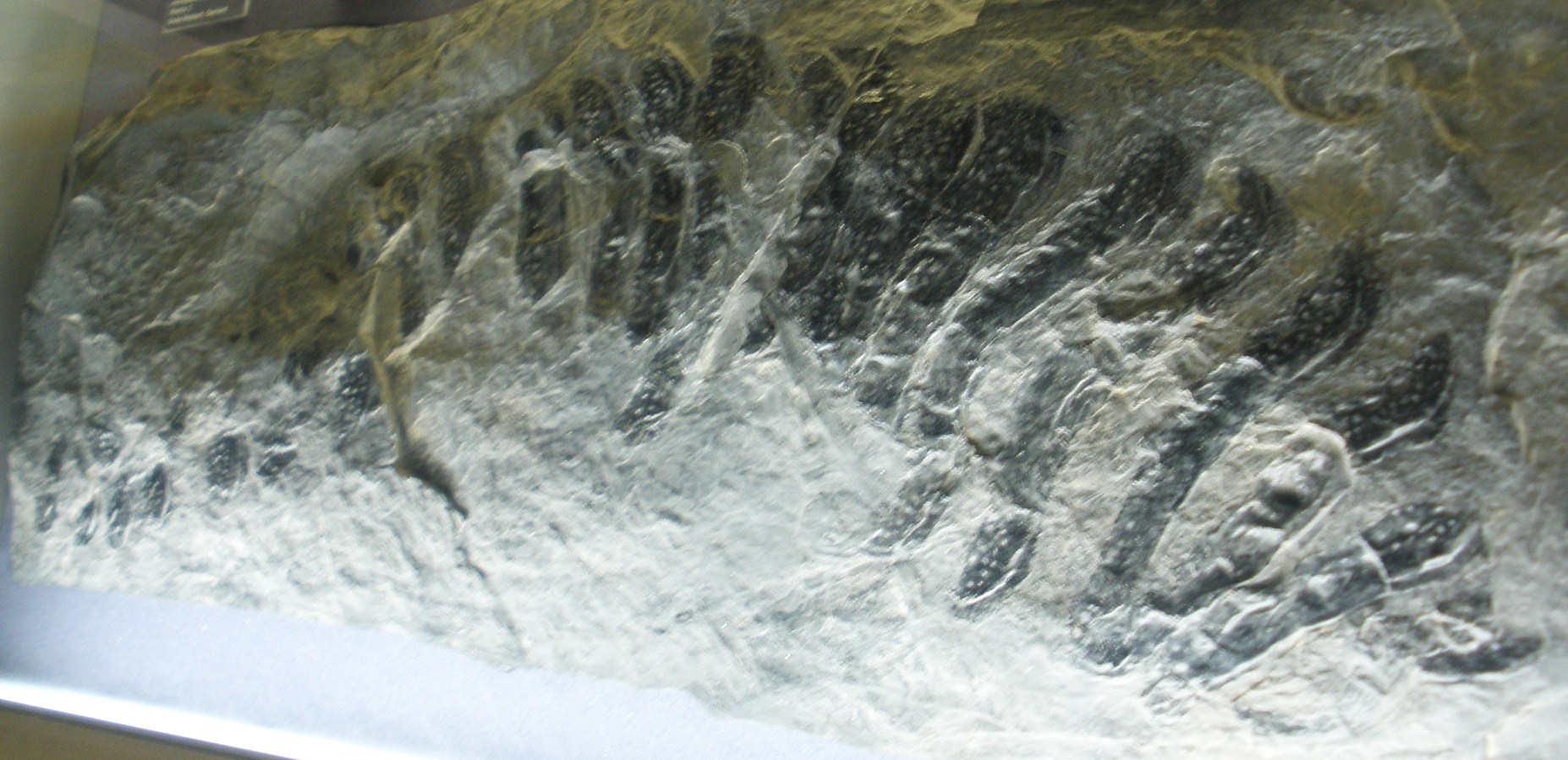
Arthropleura
Arthropleura armata
Image: File:Arthropleura armata.jpg - Wikimedia Commons (CC BY-SA)
About Arthropleura
Arthropleura was a genus of colossal, millipede-like arthropods that thrived during the Carboniferous Period, approximately 345 to 295 million years ago. As the largest known terrestrial invertebrate in Earth's history, it stands as a testament to the unique environmental conditions of the Paleozoic Era, inhabiting the vast, swampy coal forests that once covered parts of North America and Europe. Its sheer size and alien appearance make Arthropleura a captivating subject of paleontological study, offering profound insights into the limits of arthropod evolution and the dynamics of ancient ecosystems.
The physical anatomy of Arthropleura was nothing short of astonishing, representing the zenith of arthropod gigantism. The most well-known species, *Arthropleura armata*, could attain a length of up to 2.3 meters (approximately 7.5 feet) and a width of around 50 centimeters (20 inches), with some estimates suggesting lengths approaching 2.6 meters. Its estimated weight could have reached 50 kilograms (110 pounds), comparable to a large dog or a small capybara. The body was dorsoventrally flattened and composed of roughly 30 articulated segments, known as tergites. Each of these segments was protected by a tough, sclerotized exoskeleton and featured a pair of jointed legs, meaning a fully grown adult could have possessed around 60 legs in total. The dorsal plates were broad and flanked by prominent lateral extensions called paratergal folds, which likely offered protection from predators and may have played a role in respiration. The head was relatively small compared to its immense body and is poorly known from the fossil record, but it would have housed simple eyes and a pair of antennae for navigating its environment. Unlike modern centipedes, Arthropleura lacked venomous fangs, a key anatomical detail that supports theories about its herbivorous nature. Its overall appearance was that of a flattened, armored train, a truly formidable creature crawling across the primeval forest floor.
The paleobiology of Arthropleura reveals an organism well-adapted to its role as a mega-decomposer. For many years, its diet was a subject of debate, with its intimidating size leading some to speculate it was a fearsome predator. However, compelling evidence points overwhelmingly towards herbivory. Fossilized gut contents from disarticulated specimens have revealed pteridophyte spores, particularly from lycopod trees and ferns, which were dominant plants in the Carboniferous landscape. Furthermore, coprolites (fossilized feces) attributed to Arthropleura contain similar plant matter, confirming its diet consisted of decaying vegetation, spore-rich litter, and possibly soft, nutrient-dense plant tissues. This feeding strategy places it in an ecological niche similar to that of modern millipedes, but on a vastly magnified scale. Its locomotion is vividly preserved in the fossil record through extensive trackways, known by the ichnogenus *Diplichnites*. These tracks show a creature moving with a direct, purposeful gait, capable of navigating complex terrain and even rearing up to climb over obstacles like fallen logs. The sheer number of legs would have provided powerful, rhythmic propulsion. Like other arthropods, Arthropleura would have grown by molting its exoskeleton, a vulnerable process that required it to shed its old armor and wait for a new, larger one to harden.
Arthropleura lived within a unique and vibrant ecological context, the great coal forests of the Carboniferous Period. During this time, the supercontinents of Gondwana and Euramerica were converging, creating vast, low-lying equatorial wetlands. The climate was warm, humid, and characterized by atmospheric oxygen levels that soared to as high as 35%, compared to today's 21%. This oxygen-rich environment is considered the primary enabler of arthropod gigantism, as it allowed the relatively inefficient tracheal respiratory systems of creatures like Arthropleura to oxygenate their massive bodies. The habitat was a dense, swampy forest dominated by towering lycopod trees like *Lepidodendron* and *Sigillaria*, giant horsetails such as *Calamites*, and a thick understory of ferns. Arthropleura shared this world with other giant invertebrates, including the dragonfly-like *Meganeura* with its 75-centimeter wingspan and the sea scorpion *Hibbertopterus*. Its primary predators would have been large tetrapods, such as the formidable amphibian-like predators *Eryops* or early reptiles that were beginning to diversify. As a primary decomposer, Arthropleura occupied a crucial position at the base of the detrital food web, breaking down enormous quantities of dead plant material and recycling vital nutrients back into the ecosystem, fueling the immense productivity of the coal swamps.
The discovery and scientific understanding of Arthropleura have evolved over nearly two centuries. The first fossils attributed to the genus were described in 1854 by the Canadian geologist John William Dawson and the renowned British geologist Charles Lyell from the Joggins Fossil Cliffs in Nova Scotia, a UNESCO World Heritage site famous for its upright fossilized trees. However, it was the German paleontologist Hermann Jordan who, in 1854, formally named the genus *Arthropleura* based on fragmentary remains found in the coal measures of Saarland, Germany. For over a century, knowledge of the animal was based almost exclusively on these fragments and its impressive trackways. A significant breakthrough occurred in the 1960s with the discovery of more complete, albeit still disarticulated, specimens in Scotland and the Saarland region of Germany by researchers like Wilhelm Gothan and Hermann Schmidt. These finds helped reconstruct its general body plan. The most spectacular discovery to date was made in 2018 at Howick Bay in Northumberland, UK. A large block of sandstone containing a partial but articulated exoskeleton, measuring 75 centimeters long, was found by a former PhD student, Dr. Neil Davies. This specimen, described in a 2021 paper led by Davies, represents the largest Arthropleura fossil ever found and provided unprecedented anatomical detail, confirming its colossal size and robust build.
From an evolutionary standpoint, Arthropleura occupies a significant position within the myriapods, the group that includes modern millipedes and centipedes. It belongs to an extinct class called Arthropleuridea, which are considered a sister group to the Diplopoda (millipedes). While not a direct ancestor of modern millipedes, it shares a common ancestry and represents a highly successful, albeit extinct, branch of the myriapod family tree. Its body plan, with numerous repeated segments each bearing a pair of legs, is a hallmark of myriapods. However, its immense size and flattened, heavily armored tergites distinguish it from any living relative. The evolutionary success of Arthropleuridea was intrinsically linked to the unique environmental conditions of the Carboniferous. The high oxygen levels allowed them to overcome the physiological constraints that limit the size of modern terrestrial arthropods. The subsequent decline in atmospheric oxygen at the beginning of the Permian Period, coupled with a shift to a drier climate that reduced the swampy forests they depended on, is believed to be the primary cause of their extinction. Arthropleura thus serves as a powerful case study in how environmental factors can drive evolutionary trends, in this case, gigantism, and how changes in those factors can lead to the extinction of even the most dominant organisms.
Despite its status as a well-known prehistoric animal, several scientific debates continue to surround Arthropleura. The precise details of its diet, while generally accepted as herbivorous, are still discussed. Some researchers propose that it may have been more omnivorous, supplementing its diet with small invertebrates or carrion, though direct evidence for this is lacking. Another area of controversy involves its respiratory system. While the high-oxygen theory is widely accepted, the exact mechanics of how it breathed are not fully understood. Some paleontologists have suggested the presence of specialized spiracle-like structures or even rudimentary "book lungs" under its paratergal folds to aid in gas exchange for such a large body. The exact number of species within the genus *Arthropleura* is also a subject of taxonomic debate, with some named species potentially representing different growth stages or regional variations of a single, widespread species like *A. armata*. The 2018 Northumberland fossil has helped clarify some anatomical questions but has also raised new ones about its maximum potential size and growth rate.
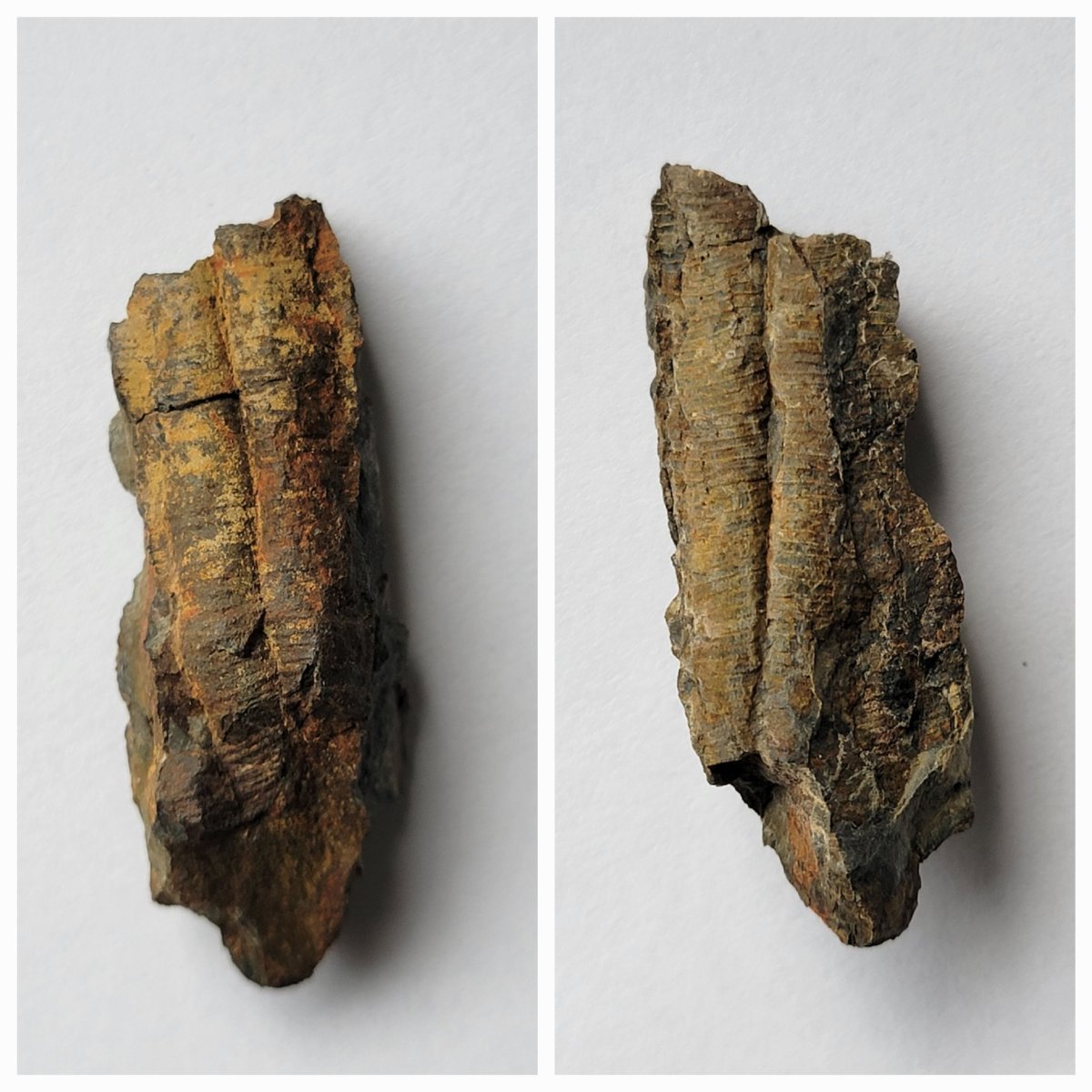
The fossil record of Arthropleura is both frustratingly incomplete and tantalizingly revealing. Its geographic distribution spans the equatorial regions of the Carboniferous supercontinent Euramerica, with key fossil sites located in present-day Scotland, England, Germany, France, Pennsylvania, Ohio, and Illinois. The most common fossils are not of the animal itself, but its trace fossils—the distinctive trackways known as *Diplichnites*. These tracks can be several meters long and provide invaluable data on the creature's gait, speed, and behavior. Body fossils are exceptionally rare because the exoskeleton was composed of numerous segments held together by soft tissue, which would rapidly decay after death, causing the animal to disarticulate and scatter. The tough but thin nature of the exoskeleton meant it was often fragmented before fossilization. Famous sites that have yielded significant Arthropleura material include the Mazon Creek fossil beds in Illinois, the Joggins Fossil Cliffs in Nova Scotia, and the coal measures of Saarland, Germany, and Northumberland, UK. The rarity of articulated specimens makes each new discovery, like the one at Howick Bay, a major scientific event.
Due to its incredible size and otherworldly appearance, Arthropleura has made a significant cultural impact. It is a staple feature in museum exhibits on Paleozoic life, with life-sized reconstructions often serving as awe-inspiring centerpieces that capture the imagination of visitors. It has been prominently featured in numerous television documentaries, including the BBC's "Walking with Monsters," where it was depicted as a gentle giant navigating the Carboniferous forest floor. This portrayal has helped cement its public image as one of the most iconic creatures of its time. Its inclusion in video games and popular science books further introduces this prehistoric marvel to new generations, making it a powerful educational tool for teaching concepts like gigantism, ancient ecosystems, and the profound ways in which Earth's environment has changed over geological time.
Classification
Time Period
Discovery
Location
Europe (e.g., Germany, Scotland) and North America
Formation
Pennsylvanian Coal Measures
Frequently Asked Questions
What is Arthropleura?
Arthropleura was a genus of colossal, millipede-like arthropods that thrived during the Carboniferous Period, approximately 345 to 295 million years ago. As the largest known terrestrial invertebrate in Earth's history, it stands as a testament to the unique environmental conditions of the Paleozoic...
When did Arthropleura live?
Arthropleura lived during the carboniferous period of the paleozoic era approximately 345-295 million years ago.
Where was Arthropleura discovered?
Fossils of Arthropleura were discovered in Europe (e.g., Germany, Scotland) and North America in the Pennsylvanian Coal Measures.
What did Arthropleura eat?
Arthropleura was a herbivore. It lived in terrestrial habitats.
What type of fossil is Arthropleura?
Arthropleura is preserved as a trace fossil. The preservation quality is good.
Related Specimens
From the paleozoic era · trace fossils

/cc86f4a1bc00.jpg)