Receptaculites
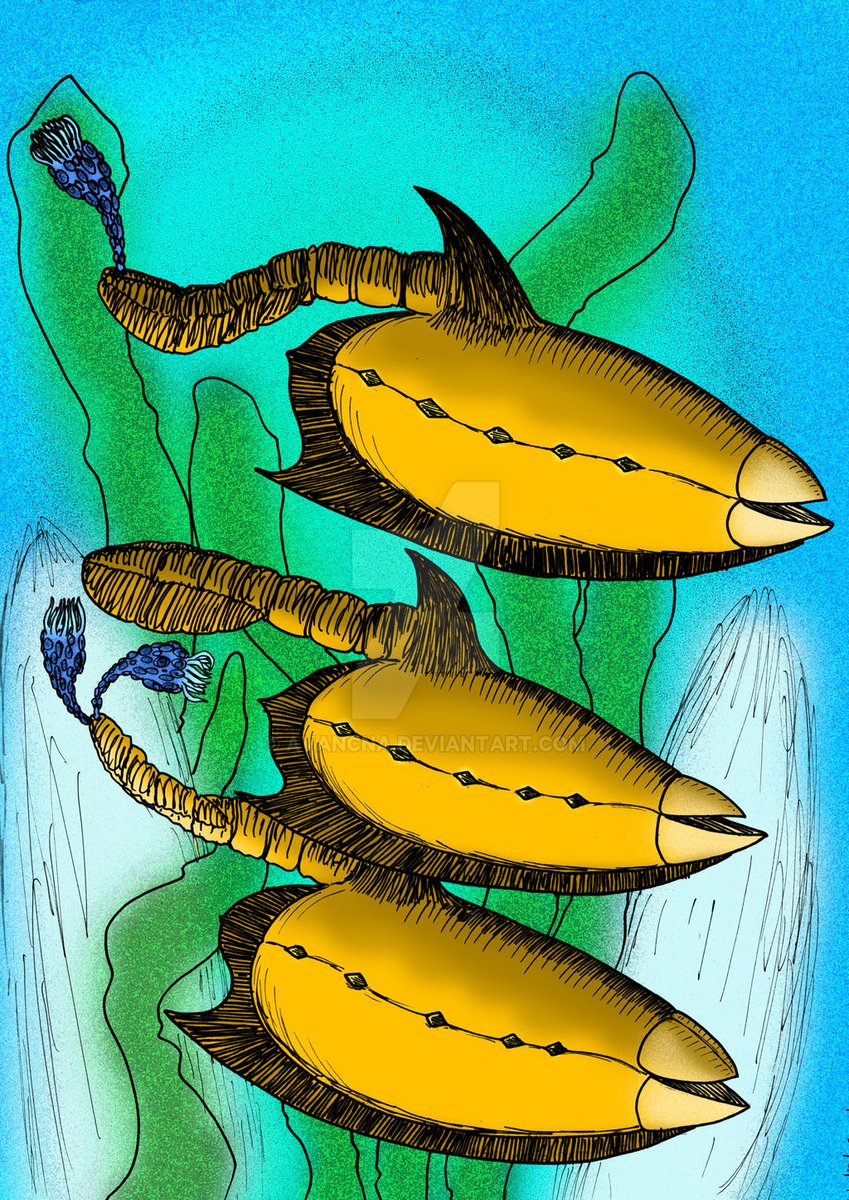
Receptaculites oweni
Image: Image sourced via web search (Fair use / Educational)
About Receptaculites
Receptaculites is an enigmatic genus of extinct organism that flourished in the shallow marine environments of the Paleozoic Era, particularly during the Ordovician Period. Its distinctive, highly structured fossils, often resembling the seed head of a sunflower, have puzzled paleontologists for nearly two centuries, leading to a long and complex history of classification debates. Once considered a type of sponge or coral, Receptaculites is now widely accepted as a large, calcareous green alga, a testament to the diversity and complexity of early marine plant life.
Receptaculites oweni, the type species, typically presents as a fossilized, bowl-shaped, or globular structure ranging from 5 to 30 centimeters in diameter, though some specimens can be larger. Its most striking feature is the intricate, geometric arrangement of its skeletal components. The organism's body was composed of numerous individual, six-sided (hexagonal) plates, or facets, arranged in a precise spiral pattern, often following Fibonacci sequences, which gives it the characteristic sunflower-like appearance. Each of these plates sat atop a vertical shaft or pillar, which extended inward toward a central axis or cavity. The entire structure formed a hollow, perforated sphere or cup, anchored to the seafloor. The skeleton was composed of calcite, which accounts for its excellent preservation potential in the fossil record. While no soft tissues are preserved, the complex structure implies a sophisticated biological organization. The overall morphology suggests a sessile, benthic organism, with the perforated, high-surface-area body optimized for interaction with the surrounding water column. The size of Receptaculites would have made it a prominent feature on the Ordovician seafloor, comparable in scale to modern large sea fans or barrel sponges.
The paleobiology of Receptaculites has been inferred primarily from its morphology and its modern relatives, the Dasycladalean algae. The organism was almost certainly photosynthetic. Its large surface area, created by the arrangement of plates and the overall body shape, would have been ideal for maximizing sunlight exposure in the shallow, clear waters it inhabited. It is hypothesized that the living tissue, containing chloroplasts, formed a thin layer over the external surface of the calcareous skeleton. The internal shafts and central cavity likely played a role in structural support and possibly nutrient transport. Like modern Dasycladales, Receptaculites likely had a complex life cycle, culminating in the formation of reproductive cysts (gametangia) within the protected structure of its skeleton. It was a sessile, non-motile organism, permanently attached to the substrate. Growth occurred through the addition of new plates and shafts, expanding the overall structure radially. Its metabolism would have been relatively slow, typical of a photosynthetic organism in a stable marine environment. There is no evidence of predation or active feeding; its existence was passive, relying entirely on sunlight for energy.
During the Ordovician Period, between 470 and 443 million years ago, Earth's geography was vastly different. The continents were primarily clustered in the Southern Hemisphere, dominated by the supercontinent Gondwana. Receptaculites thrived in the warm, shallow epicontinental seas that covered much of Laurentia (the core of modern North America). The climate was generally warm and greenhouse-like, with high sea levels creating extensive carbonate platforms ideal for reef-building organisms and calcareous algae. Receptaculites was a key component of these early Paleozoic reef-like ecosystems, often found in association with stromatoporoids (extinct sponges), bryozoans, brachiopods, and early corals like rugose and tabulate corals. It occupied the role of a primary producer, forming the base of the local food web by converting sunlight into energy. While it likely had few direct predators due to its hard, mineralized skeleton, it provided structural complexity to the seafloor, creating habitats and refuges for smaller invertebrates such as trilobites, gastropods, and ostracods. Its decay would have contributed significant carbonate sediment to the marine environment, helping to build up the limestone formations in which its fossils are now found.
The discovery and interpretation of Receptaculites have a long and storied history. The genus was first formally described by the French naturalist Jean-Louis Defrance in 1827. However, the most famous species, Receptaculites oweni, was named by the American geologist David Dale Owen in 1844, based on specimens he collected from the lead-mining districts of the Upper Mississippi Valley, particularly in Illinois, Wisconsin, and Iowa. These fossils were so common and distinctive in the Galena Group limestones that local miners nicknamed them "sunflower corals" or "lead corals." Owen himself initially struggled to classify the organism, tentatively placing it among the sponges. For over a century, this classification, or a similar one among the corals (Anthozoa), was widely accepted. The key specimens studied by Owen and subsequent 19th-century paleontologists like James Hall established the basis for our understanding of the genus's morphology. The Field Museum in Chicago and the Smithsonian National Museum of Natural History hold significant collections of R. oweni from these classic North American localities, which remain crucial for ongoing research into its structure and affinities.
The evolutionary significance of Receptaculites lies in its status as a highly complex, early member of the green algae (Chlorophyta), specifically the order Dasycladales. Its fossil record demonstrates that algae had achieved remarkable size and structural sophistication long before the rise of complex land plants. The Dasycladales are an ancient lineage, and Receptaculites represents a major Paleozoic radiation of this group. While not a direct ancestor to any living species, it is a representative of the family Receptaculitaceae, a now-extinct branch of the Dasycladalean tree. Its intricate, mineralized skeleton provides a crucial window into the evolution of biomineralization in algae. The geometric precision of its plate arrangement is a stunning example of convergent evolution, as similar spiral patterns (phyllotaxis) are seen in many unrelated plant groups today. Studying Receptaculites helps paleontologists understand the ecological roles of primary producers in ancient marine ecosystems and trace the deep evolutionary roots of the plant kingdom, showing that large, architecturally complex forms were present hundreds of millions of years before the first forests appeared on land.
The classification of Receptaculites has been one of the longest-running debates in invertebrate paleontology. Initially described as a problematic fossil, it was variously assigned to sponges (Porifera), corals (Cnidaria), foraminifera (protists), and even its own extinct phylum. The sponge hypothesis, championed by figures like Elkanah Billings in the 19th century, was based on the porous appearance of the skeleton. The definitive shift in understanding came in the mid-20th century, primarily through the work of paleontologists like Matthew Nitecki. Nitecki's detailed morphological studies, published in the 1960s and 1970s, compared the structure of Receptaculites with both living and fossil Dasycladalean algae. He demonstrated that the fundamental body plan—a central axis with radiating lateral branches (the shafts and plates)—was homologous to that of modern Dasycladales like Acetabularia (the mermaid's wineglass). This algal affinity is now the consensus view, though the exact phylogenetic placement within the group remains a subject of refinement as new analytical techniques are applied. The debate serves as a classic case study in paleontological interpretation, showing how understanding of an organism can evolve dramatically as new evidence and comparative methods become available.
The fossil record of Receptaculites is robust and geographically widespread, a testament to its ecological success and durable skeleton. Fossils are particularly abundant in Ordovician and Silurian marine sedimentary rocks, especially limestones and dolomites, across North America, Europe, Asia, and Australia. In the United States, the Galena Group of the Upper Mississippi Valley (Illinois, Wisconsin, Iowa, Minnesota) is famous for its prolific and well-preserved specimens of Receptaculites oweni, which is the official state fossil of Illinois. Other species are found in formations of similar age worldwide, such as the Bighorn Dolomite in Wyoming and Ordovician strata in the Baltic region. Preservation is typically as calcite body fossils, often as internal or external molds. Complete, three-dimensional specimens are relatively common, allowing for detailed study of their unique skeletal architecture. Their abundance makes them an important index fossil for correlating Ordovician-aged rock layers across different regions.
Despite its ancient and obscure nature, Receptaculites has a modest cultural impact, primarily within geological and fossil-collecting communities. Its common name, "Sunflower Coral," and striking geometric beauty make it a popular and recognizable fossil for amateur collectors. Its designation as the state fossil of Illinois in 1965 has given it a degree of regional fame and educational importance, often featured in state-level earth science curricula and museum exhibits. Major natural history museums, such as the Field Museum in Chicago and the Milwaukee Public Museum, feature excellent displays of Receptaculites specimens from the classic Midwestern localities. While it has not entered mainstream popular culture in the way dinosaurs have, it serves as a powerful educational tool for illustrating concepts like deep time, ancient marine ecosystems, and the long and complex history of scientific classification.
Classification
Time Period
Discovery
Location
North America (specifically Illinois, USA)
Formation
Galena Group (specifically the Kimmswick Limestone)
Frequently Asked Questions
What is Receptaculites?
Receptaculites is an enigmatic genus of extinct organism that flourished in the shallow marine environments of the Paleozoic Era, particularly during the Ordovician Period. Its distinctive, highly structured fossils, often resembling the seed head of a sunflower, have puzzled paleontologists for nea...
When did Receptaculites live?
Receptaculites lived during the ordovician period of the paleozoic era approximately 470-443 million years ago.
Where was Receptaculites discovered?
Fossils of Receptaculites were discovered in North America (specifically Illinois, USA) in the Galena Group (specifically the Kimmswick Limestone).
What did Receptaculites eat?
Receptaculites was a photosynthetic (symbiotic algae). It lived in marine, reef, shallow-sea habitats.
What type of fossil is Receptaculites?
Receptaculites is preserved as a body fossil. The preservation quality is good.
Related Specimens
From the paleozoic era · body fossils