Cystoid
Pleurocystites squamosus
Image: Image sourced via web search (Fair use / Educational)
About Cystoid
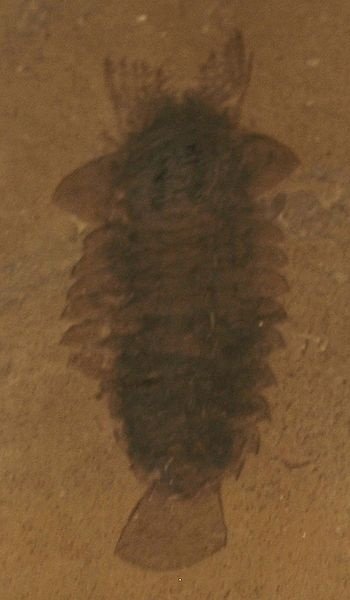
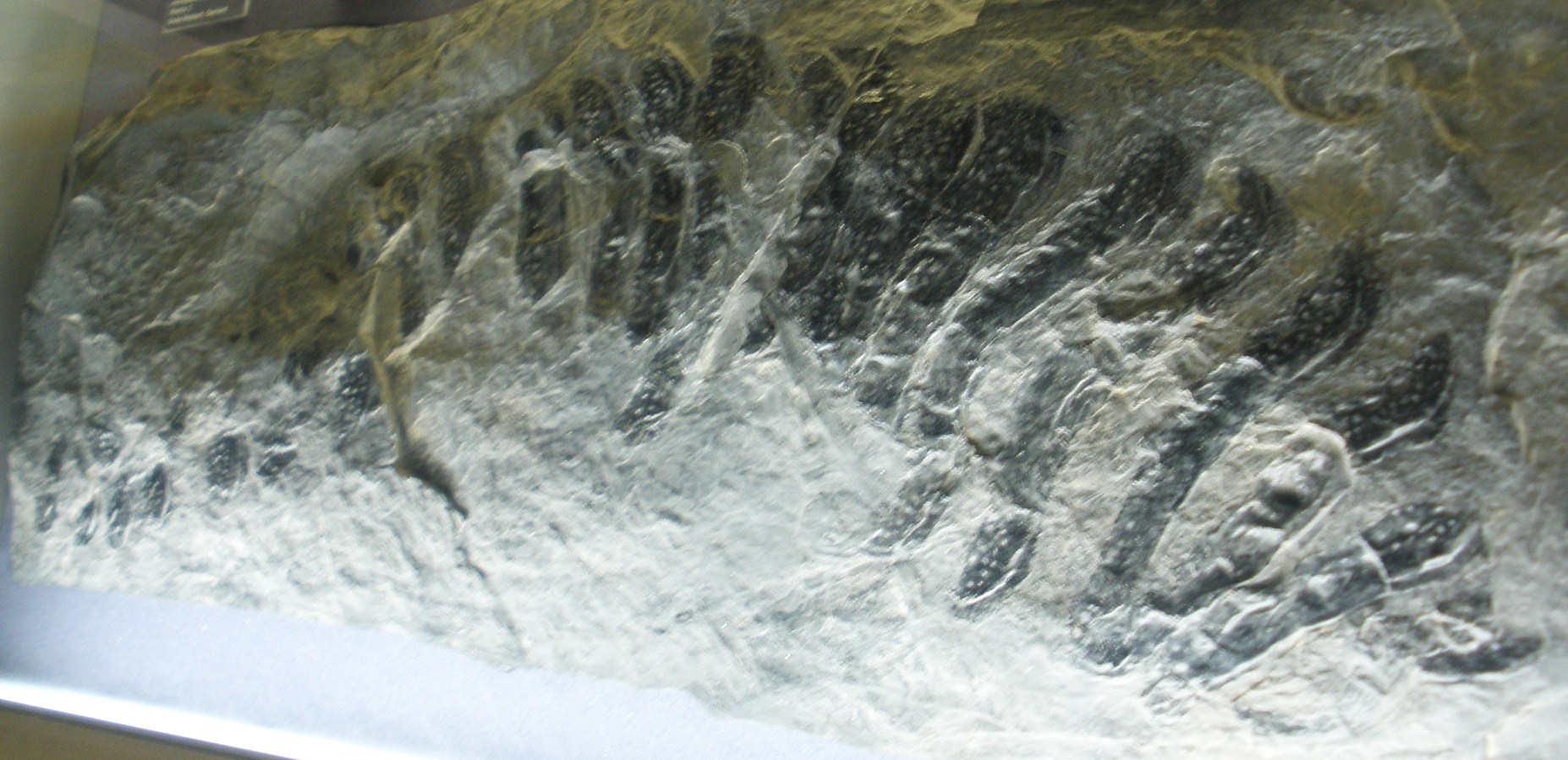
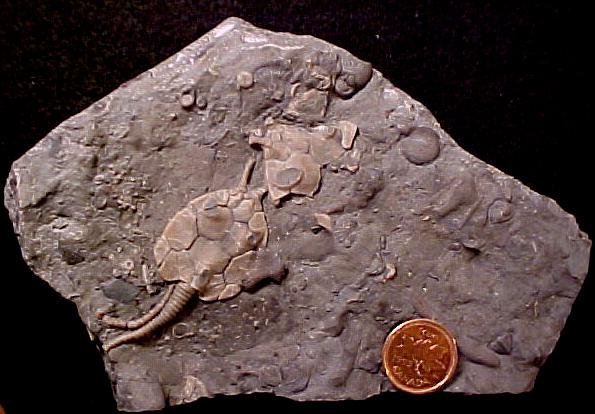
Pleurocystites squamosus is an extinct species of marine invertebrate belonging to the echinoderm class Rhombifera, commonly referred to as cystoids. Thriving during the Middle to Late Ordovician period, approximately 470 to 443 million years ago, this fascinating organism inhabited the shallow, warm epicontinental seas that covered much of what is now the North American continent, specifically the paleocontinent of Laurentia. As a member of the early echinoderm radiation, Pleurocystites squamosus holds immense significance in the field of paleontology because it represents a highly specialized, aberrant offshoot of the typical stalked echinoderm body plan. Unlike its sessile relatives that remained permanently anchored to the sea floor, this organism evolved a unique, vagile lifestyle, meaning it was capable of active movement across the benthic substrate. Its discovery and subsequent study have provided paleontologists with crucial insights into the morphological plasticity of early echinoderms, the evolutionary experimentation that characterized the Great Ordovician Biodiversification Event, and the complex ecological dynamics of Paleozoic marine benthic communities. The physical anatomy of Pleurocystites squamosus is a remarkable testament to evolutionary adaptation, departing significantly from the pentaradial (five-fold) symmetry that characterizes most modern echinoderms like starfish and sea urchins. The organism possessed a flattened, somewhat asymmetrical body called a theca, which measured approximately 3 to 5 centimeters in length, with the entire animal, including its tail-like stem, reaching up to 10 centimeters. The theca was highly modified for a recumbent lifestyle, lying flat on the sea floor rather than standing upright. The upper (dorsal) surface of the theca was covered by a relatively small number of large, robust, polygonal calcareous plates, providing armor against predators. In stark contrast, the lower (ventral) surface, which rested against the substrate, was composed of a flexible integument made of hundreds of tiny, scale-like plates, a feature that gives the species its specific name, 'squamosus'. One of the most distinctive skeletal characteristics of Pleurocystites is the presence of specialized respiratory structures known as pectinirhombs. These were concentrated areas of thin-walled, parallel slits crossing the sutures between specific thecal plates, designed to facilitate gas exchange in the oxygen-rich but potentially stagnant boundary layer of the sea floor. Extending from the anterior end of the theca were two long, slender, arm-like appendages called brachioles, which were used for feeding. At the posterior end, the organism possessed a highly modified, muscular, and flexible stem (or column) that tapered to a point. Unlike the stems of crinoids, which were used for attachment, the stem of Pleurocystites functioned more like a tail, aiding in locomotion. When compared to modern animals, Pleurocystites might superficially resemble a bizarre, armored tadpole or a flattened, stalked barnacle, though it is fundamentally different in its internal echinoderm architecture. The paleobiology of Pleurocystites squamosus reveals a highly specialized organism adapted to a specific ecological niche. It was a suspension feeder, but unlike upright crinoids that captured food from higher water currents, Pleurocystites was a low-level filter feeder. It used its two extended brachioles to capture microscopic plankton, detritus, and organic particles suspended just above the sediment-water interface. The brachioles were likely covered in tiny tube feet and ciliated grooves that conveyed food particles down to the mouth, which was situated at the anterior edge of the theca. The most fascinating aspect of its paleobiology, however, is its locomotion. Biomechanical studies and functional morphology analyses strongly suggest that Pleurocystites was a vagile benthic crawler. It used its muscular, tail-like stem to push or drag itself across the muddy or sandy sea floor, moving in a somewhat jerky, caterpillar-like fashion. This mobility allowed it to seek out better feeding grounds, avoid localized sediment burial, and potentially escape slow-moving predators. Its metabolic rate was likely low, consistent with other early Paleozoic echinoderms, relying on the passive flow of water over its pectinirhombs for respiration. Growth patterns inferred from thecal plate rings indicate that it grew by adding calcite to the margins of its existing plates, a process that allowed the rigid armor to expand as the animal aged. Socially, while not cooperative, they likely formed dense aggregations in favorable environments, as evidenced by fossil beds containing numerous individuals preserved together. The ecological context of the Middle to Late Ordovician period was one of profound biological transformation, known as the Great Ordovician Biodiversification Event (GOBE). During this time, marine life experienced a massive surge in diversity at the family, genus, and species levels. Pleurocystites squamosus lived in the shallow, sunlit, and warm epicontinental seas of Laurentia, an environment characterized by extensive carbonate platforms and muddy bottoms. The climate was generally warm, though cooling towards the end of the Ordovician. In this vibrant marine ecosystem, Pleurocystites co-existed with a vast array of other organisms. The sea floor was a dense forest of benthic life, including brachiopods, bryozoans, early corals, trilobites, and a myriad of other echinoderms such as crinoids, edrioasteroids, and other cystoids. In the food web, Pleurocystites occupied the role of a primary consumer, feeding on the abundant phytoplankton and suspended organic matter. However, it was also prey. The Ordovician seas were patrolled by formidable predators, most notably the giant, straight-shelled orthoconic nautiloids, which were the apex predators of their day. Other threats included predatory arthropods and early jawless fishes. The heavy dorsal plating of Pleurocystites was a direct evolutionary response to this intense predation pressure, an arms race that defined much of Paleozoic marine evolution. Its ability to move, albeit slowly, may have also been an adaptation to escape the slow-moving, shell-crushing predators that scoured the benthos. The discovery history of Pleurocystites squamosus is deeply intertwined with the early days of North American paleontology. The species was first formally described and named in 1854 by Elkanah Billings, a pioneering Canadian paleontologist who served as the first paleontologist for the Geological Survey of Canada. Billings discovered the type specimens in the Trenton Limestone formations near Ottawa, Ontario. The circumstances of the discovery were part of a broader effort to map the geology and paleontology of the newly unified Province of Canada. Billings was a meticulous observer, and his detailed descriptions of the complex thecal plating and the unique respiratory structures of Pleurocystites set a high standard for echinoderm paleontology. The genus name 'Pleurocystites' translates roughly to 'ribbed pouch,' referring to the shape and the prominent ridges on some of the plates, while 'squamosus' refers to the scaly ventral surface. Over the decades, numerous other specimens have been discovered across Ontario, Quebec, and parts of the northeastern United States, such as New York and Pennsylvania. While there is no single universally famous specimen like a 'Sue' the T. rex, the exquisitely preserved slabs housed in the Royal Ontario Museum and the Geological Survey of Canada collections are considered benchmark specimens. These slabs often preserve multiple individuals in life positions, sometimes even retaining the delicate brachioles and the distal portions of the stem, providing invaluable snapshots of Ordovician marine life. The evolutionary significance of Pleurocystites squamosus is profound, as it occupies a crucial, albeit terminal, branch in the complex tree of echinoderm evolution. Echinoderms are deuterostomes, making them relatively close cousins to chordates (and thus vertebrates) in the grand scheme of invertebrate evolution. The early Paleozoic was a time of wild evolutionary experimentation for echinoderms, resulting in numerous bizarre body plans that do not fit neatly into modern classes. Pleurocystites belongs to the Rhombifera, a group characterized by their unique pore structures (pectinirhombs). What makes Pleurocystites particularly significant is its extreme departure from the standard echinoderm symmetry. While echinoderms evolved from bilaterally symmetrical ancestors, most adopted a pentaradial symmetry. Pleurocystites, however, secondarily evolved a strong bilateral symmetry superimposed on an asymmetrical plate arrangement, an adaptation to its recumbent, crawling lifestyle. This demonstrates the incredible morphological plasticity of the echinoderm body plan. Furthermore, Pleurocystites represents a fascinating example of convergent evolution; its flattened, armored body and tail-like appendage functionally mimic the body plans of certain early armored fishes (ostracoderms) and some arthropods, highlighting how different lineages arrive at similar solutions for living on the sea floor. Ultimately, the pleurocystitids were an evolutionary dead end, leaving no modern descendants, but they remain a vital case study in adaptive radiation and functional morphology. Scientific debates surrounding Pleurocystites squamosus have primarily centered on its functional morphology and exact mode of life. For many years, early paleontologists debated whether the organism was truly vagile or if it lived attached to the substrate like other cystoids, perhaps using its stem as a flexible tether. However, modern biomechanical studies, utilizing 3D modeling and hydrodynamic flume tank experiments, have overwhelmingly supported the vagile hypothesis, demonstrating that the stem was highly muscular and capable of generating forward thrust. Another area of ongoing controversy involves the exact function and efficiency of the pectinirhombs. While generally accepted as respiratory structures, some researchers have proposed that they may have also played a role in excretion or even chemoreception. Additionally, the taxonomic placement of the Rhombifera within the broader echinoderm subphylum Pelmatozoa has been subject to revision. Cladistic analyses frequently reorganize the relationships between cystoids, crinoids, and blastoids, with some modern paleontologists arguing that 'cystoid' is a paraphyletic grade rather than a true natural clade. These debates highlight the dynamic nature of paleontological science, where new analytical techniques continually refine our understanding of ancient life. The fossil record of Pleurocystites squamosus is relatively robust for an organism of its age, primarily due to its robust calcite skeleton. Fossils are predominantly found in the Middle to Upper Ordovician strata of eastern North America, particularly within the Trenton Group and the Cobourg Formation. Hundreds of specimens are known, ranging from isolated thecal plates to complete, fully articulated individuals. The quality of preservation is often excellent, especially in fine-grained limestone and shale deposits where rapid burial protected the organisms from scavenging and decay. Typically, the heavy dorsal plates of the theca are the most commonly preserved parts. The delicate brachioles and the distal, tapering ends of the stem are more fragile and are usually only found in exceptionally preserved, articulated specimens. Famous fossil sites yielding Pleurocystites include the Kirkfield Quarry in Ontario and various outcrops along the Trent River, which have produced some of the most spectacular echinoderm assemblages in the world, offering a detailed window into the benthic communities of the Ordovician. The cultural impact of Pleurocystites squamosus, while perhaps not as pronounced as that of dinosaurs or trilobites, is nonetheless significant within the realm of paleontology and natural history education. It frequently appears in academic textbooks and museum dioramas as a prime example of Paleozoic marine life and evolutionary adaptation. Notable displays featuring exquisite slabs of Pleurocystites can be found at the Royal Ontario Museum in Toronto, the Canadian Museum of Nature in Ottawa, and the Smithsonian National Museum of Natural History in Washington, D.C. For the public, these bizarre, alien-looking creatures evoke a sense of wonder about the deep history of life on Earth, illustrating a time when the oceans were dominated by strange, armored invertebrates long before the rise of fish or land animals.
Classification
Time Period
Discovery
Location
Canada
Formation
Trenton Group
Frequently Asked Questions
What is Cystoid?
Pleurocystites squamosus is an extinct species of marine invertebrate belonging to the echinoderm class Rhombifera, commonly referred to as cystoids. Thriving during the Middle to Late Ordovician period, approximately 470 to 443 million years ago, this fascinating organism inhabited the shallow, war...
When did Cystoid live?
Cystoid lived during the ordovician period of the paleozoic era approximately 470-443 million years ago.
Where was Cystoid discovered?
Fossils of Cystoid were discovered in Canada in the Trenton Group.
What did Cystoid eat?
Cystoid was a filter-feeder. It lived in marine habitats.
What type of fossil is Cystoid?
Cystoid is preserved as a body fossil. The preservation quality is excellent.
Related Specimens
From the paleozoic era · body fossils