Australopithecus
Australopithecus afarensis
Image: Category:Australopithecus afarensis fossils - Wikimedia Commons (CC BY-SA)
About Australopithecus
Australopithecus afarensis stands as one of the most pivotal and extensively studied species in the chronicle of human evolution. This early hominin inhabited the landscapes of Eastern Africa during the Pliocene Epoch, with a fossil record spanning from approximately 3.9 to 2.9 million years ago. Its discovery fundamentally reshaped our understanding of the human lineage, most notably by providing definitive evidence that bipedal locomotion, the ability to walk upright on two legs, evolved long before the significant expansion of the brain that characterizes the genus Homo. Represented by hundreds of fossil specimens, including the iconic partial skeleton known as 'Lucy,' A. afarensis offers an unparalleled window into the anatomy, behavior, and environment of our distant ancestors.
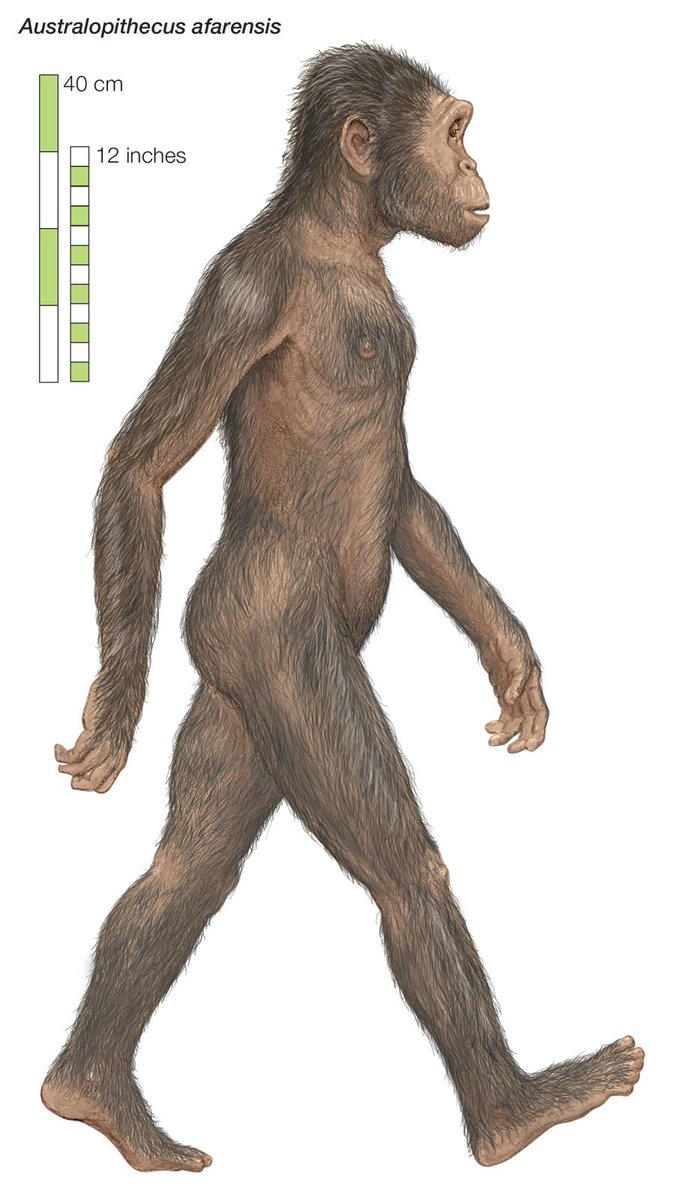
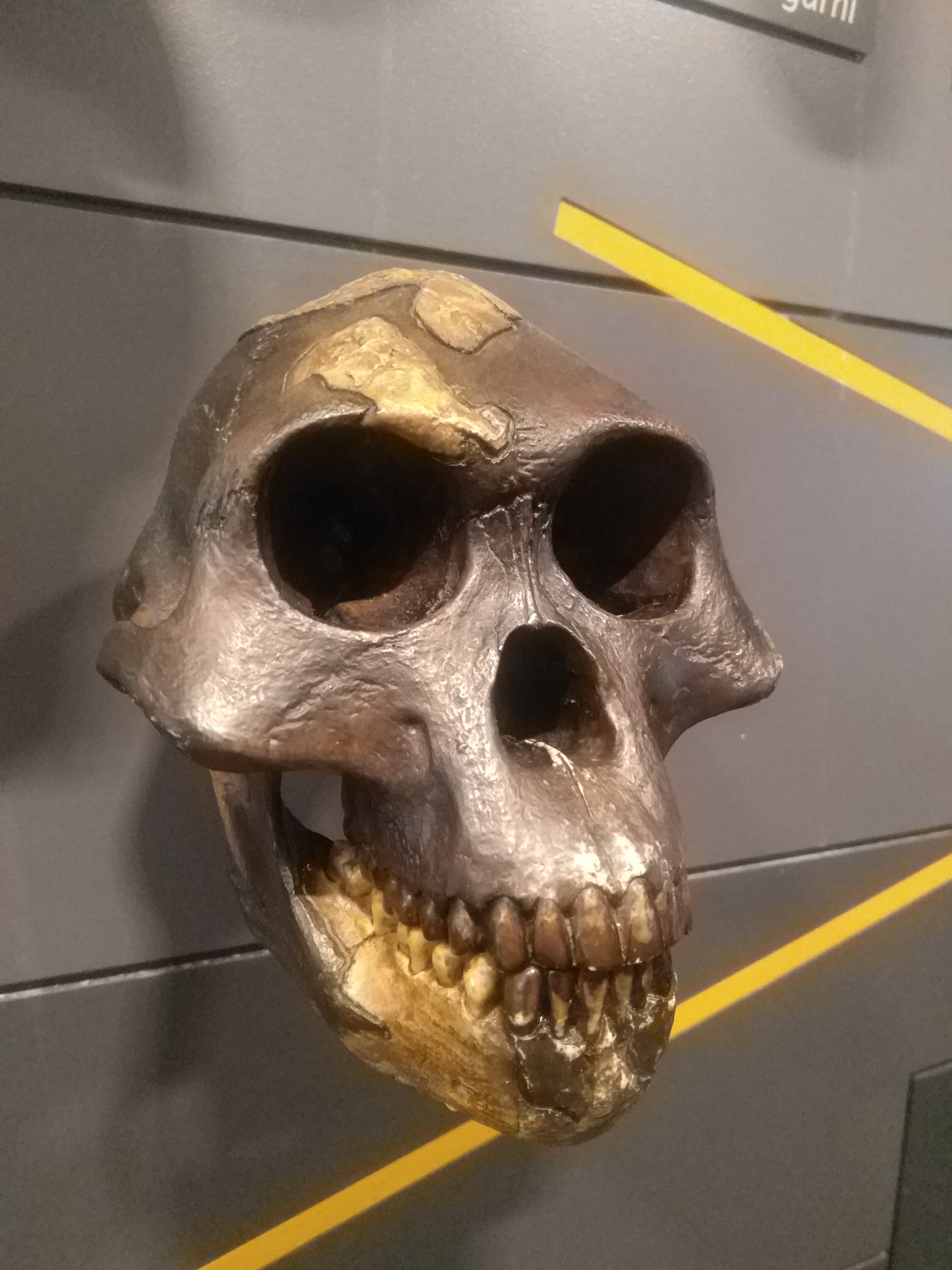
The physical anatomy of Australopithecus afarensis presents a fascinating mosaic of primitive, ape-like traits and more derived, human-like characteristics. The species exhibited pronounced sexual dimorphism, a trait common in many primates where males are significantly larger than females. Males stood approximately 150 centimeters (4 feet 11 inches) tall and weighed around 42 kilograms (93 pounds), while females were considerably smaller, averaging about 105 centimeters (3 feet 5 inches) in height and 29 kilograms (64 pounds) in weight. Their cranial morphology was distinctly ape-like, featuring a low, sloping forehead, prominent brow ridges above the eyes, and a prognathic, or forward-projecting, jaw. The braincase was small, with an endocranial volume ranging from 380 to 550 cubic centimeters, comparable to that of a modern chimpanzee and roughly one-third the size of an average modern human brain. The dental arcade was intermediate between that of apes and humans, with large molars and canines that were reduced compared to apes but still more prominent than those of later hominins.
The postcranial skeleton of A. afarensis, however, tells a different evolutionary story. The anatomy below the neck provides unequivocal evidence for habitual, or obligate, bipedalism. The pelvis was short and broad, similar in form to a modern human's, providing stability for upright walking by supporting the abdominal organs and anchoring powerful leg muscles. The femur angled inward from the hip to the knee, a valgus angle that positioned the feet directly beneath the body's center of gravity, a critical adaptation for efficient two-legged striding. The knee joint itself was capable of fully extending, and the ankle joint was robustly built for bearing the full weight of the body. This anatomical evidence is powerfully corroborated by the famous Laetoli footprints, a 27-meter-long trackway of fossilized hominin prints discovered in Tanzania and dated to 3.6 million years ago, which display a clear heel-strike, an arch, and a forward-pushing big toe consistent with a modern human gait. Despite this commitment to terrestrial locomotion, A. afarensis retained certain features suggesting a continued reliance on arboreal activity. Its long arms relative to its legs, curved finger and toe bones (phalanges), and upward-oriented shoulder joint would have facilitated efficient climbing, likely used for foraging, nesting in trees at night, or escaping predators.
The paleobiology of Australopithecus afarensis reveals a versatile and adaptable species. Its diet was primarily herbivorous, a conclusion supported by the dental morphology of large, flat molars with thick enamel, ideal for grinding tough, fibrous plant matter. Microwear analysis of fossil teeth indicates a diet rich in fruits, leaves, seeds, roots, and nuts. However, its omnivorous nature is suggested by evidence of occasional meat consumption, likely through scavenging rather than active hunting. This dietary flexibility would have been a significant advantage in the mosaic environments it inhabited. Locomotion was a blend of terrestrial bipedalism and arboreal climbing, allowing the species to exploit resources both on the ground and in the trees. Social structure is inferred to be similar to that of modern great apes, likely living in multi-male, multi-female groups. The high degree of sexual dimorphism suggests a polygynous mating system with significant competition among males. Growth patterns, studied through the analysis of juvenile fossils like the 'Selam' specimen, indicate a developmental trajectory more akin to that of chimpanzees than modern humans, with a shorter childhood and a faster maturation rate. This implies a prolonged period of dependency on parents but one that was significantly shorter than that seen in the genus Homo.
Australopithecus afarensis thrived within the dynamic ecosystems of Pliocene Africa. The climate during this period was gradually becoming cooler and drier, leading to the expansion of savannas and open woodlands at the expense of dense forests. The species is primarily associated with the Hadar Formation in Ethiopia and sites in Kenya and Tanzania, which paleoenvironmental reconstructions depict as a mosaic of habitats, including riverine forests, woodlands, grasslands, and lake margins. This environmental diversity provided a wide range of food sources and challenges. A. afarensis shared its world with a rich megafauna, including early elephants, rhinos, giraffes, and numerous antelope species. It also faced a formidable array of predators, such as saber-toothed cats (e.g., Dinofelis), giant hyenas, and crocodiles, which likely made arboreal refuges a critical component of their survival strategy. Within this complex food web, A. afarensis occupied the niche of a primary consumer and opportunistic omnivore, foraging for plant materials while also potentially scavenging carcasses left by larger carnivores. Its ability to navigate and exploit multiple ecological zones was a key factor in its long-term success and geographic proliferation across East Africa.
The history of the discovery of Australopithecus afarensis is a landmark chapter in paleoanthropology. The story begins in the early 1970s with the work of the International Afar Research Expedition, a joint team led by American paleoanthropologist Donald Johanson, French geologist Maurice Taieb, and British archaeologist Mary Leakey. In 1973, the team discovered a fossil knee joint at Hadar, Ethiopia, which showed clear adaptations for bipedalism. The following year, on November 24, 1974, Johanson and his student Tom Gray made their most famous find: the partial skeleton of a small female hominin, cataloged as AL 288-1. That evening in camp, as the team celebrated to the Beatles' song "Lucy in the Sky with Diamonds," the fossil was affectionately nicknamed 'Lucy.' Two years later, in 1976, Mary Leakey's team discovered the astounding Laetoli footprints in Tanzania. Initially, the classification of these fossils was contentious, but in 1978, Johanson, Tim White, and Yves Coppens formally proposed the new species name, Australopithecus afarensis, designating the 'LUCY' specimen as the holotype. Another crucial discovery was made in 2000 at Dikika, Ethiopia, by a team led by Zeresenay Alemseged: the nearly complete skeleton of a three-year-old female, nicknamed 'Selam' or 'Lucy's baby,' which provided unprecedented insights into the growth and development of the species.
The evolutionary significance of Australopithecus afarensis cannot be overstated. It occupies a crucial position in the human family tree, widely considered to be a direct ancestor of later australopithecines and, most importantly, the genus Homo. Its unique combination of a primitive, ape-like cranium and a derived, human-like postcranial skeleton provides a classic example of mosaic evolution, where different anatomical systems evolve at different rates. The species definitively proved that bipedalism was one of the earliest and most fundamental adaptations in the hominin lineage, predating the evolution of large brains, tool use, and language by more than a million years. This discovery overturned the long-held hypothesis that brain expansion was the initial catalyst for human evolution. A. afarensis serves as a vital transitional form, bridging the gap between more primitive, ape-like ancestors and the later hominins that would eventually give rise to our own species, Homo sapiens. Its existence demonstrates that the path to humanity was not a linear march of progress but a complex evolutionary journey of adaptation and diversification.
Despite its well-established importance, Australopithecus afarensis remains the subject of vigorous scientific debate. One of the most persistent controversies revolves around its locomotor habits. While its bipedal adaptations are undisputed, the functional significance of its arboreal traits is highly contested. Some researchers argue that these features are merely evolutionary baggage, retained from a tree-dwelling ancestor without serving a significant function. Others maintain that A. afarensis practiced a mixed locomotor strategy, spending considerable time in the trees for feeding and safety, and that its bipedalism was biomechanically different from that of modern humans. Another area of debate concerns its taxonomic status. Some paleoanthropologists have argued that the degree of variation within the A. afarensis fossil collection is too great for a single species, suggesting that it may represent two or more distinct species. Furthermore, its precise relationship to other hominins, such as the earlier Ardipithecus and the contemporary Kenyanthropus platyops, is still being actively investigated and refined as new fossil evidence comes to light.
The fossil record for Australopithecus afarensis is one of the richest for any early hominin species, comprising over 400 individual specimens recovered from multiple sites across Eastern Africa. The primary fossil localities are Hadar in the Afar Region of Ethiopia, which has yielded the vast majority of specimens, including 'Lucy' and the 'First Family' (a collection of at least 13 individuals who may have perished together). Other significant sites include Dikika in Ethiopia, where the 'Selam' skeleton was found, and Laetoli in Tanzania, renowned for its fossil footprints and skeletal remains. Fossils attributed to the species have also been found at Koobi Fora and Allia Bay in Kenya. The preservation quality varies, but the collection includes everything from isolated teeth to nearly complete skeletons, providing a comprehensive view of the species' anatomy, age range, and individual variation. This wealth of material has made A. afarensis a cornerstone for research into early hominin biology and evolution.
Beyond the laboratory and academic journals, Australopithecus afarensis, and particularly the fossil 'Lucy,' has had a profound cultural impact. 'Lucy' has become a global icon of human origins, a tangible link to our deep ancestral past that has captured the public imagination. Casts of her skeleton are prominently displayed in natural history museums around the world, from the National Museum of Ethiopia in Addis Ababa to the Smithsonian Institution in Washington, D.C. She is a staple of educational curricula, textbooks, and documentaries on human evolution, serving as an accessible and compelling entry point for understanding where we come from. Her discovery story and her evocative name have made her a celebrity of paleoanthropology, ensuring that the science of our ancient past remains relevant and fascinating to a broad audience.
Classification
Time Period
Discovery
Location
Hadar, Afar Region, Ethiopia
Formation
Hadar Formation
Frequently Asked Questions
What is Australopithecus?
Australopithecus afarensis stands as one of the most pivotal and extensively studied species in the chronicle of human evolution. This early hominin inhabited the landscapes of Eastern Africa during the Pliocene Epoch, with a fossil record spanning from approximately 3.9 to 2.9 million years ago. It...
When did Australopithecus live?
Australopithecus lived during the neogene period of the cenozoic era approximately 3.9-2.9 million years ago.
Where was Australopithecus discovered?
Fossils of Australopithecus were discovered in Hadar, Afar Region, Ethiopia in the Hadar Formation.
What did Australopithecus eat?
Australopithecus was a omnivore. It lived in terrestrial habitats.
What type of fossil is Australopithecus?
Australopithecus is preserved as a body fossil. The preservation quality is excellent.
Related Specimens
From the cenozoic era · body fossils
-slab/453736fb9032.jpg)