Passaloteuthis
Passaloteuthis hastata
Image: Image sourced via web search (Fair use / Educational)
About Passaloteuthis
Passaloteuthis is an extinct genus of belemnite, a group of squid-like cephalopods, that thrived in the marine ecosystems of the Early Jurassic period, approximately 183 to 175 million years ago. Its remarkably well-preserved fossils, particularly from the Posidonia Shale of Germany, have made it a cornerstone for understanding the anatomy, behavior, and evolution of Mesozoic cephalopods. As a swift and active predator, Passaloteuthis played a crucial role in the oceanic food webs of its time, representing a highly successful lineage of molluscan carnivores before the rise of modern squids and cuttlefish.
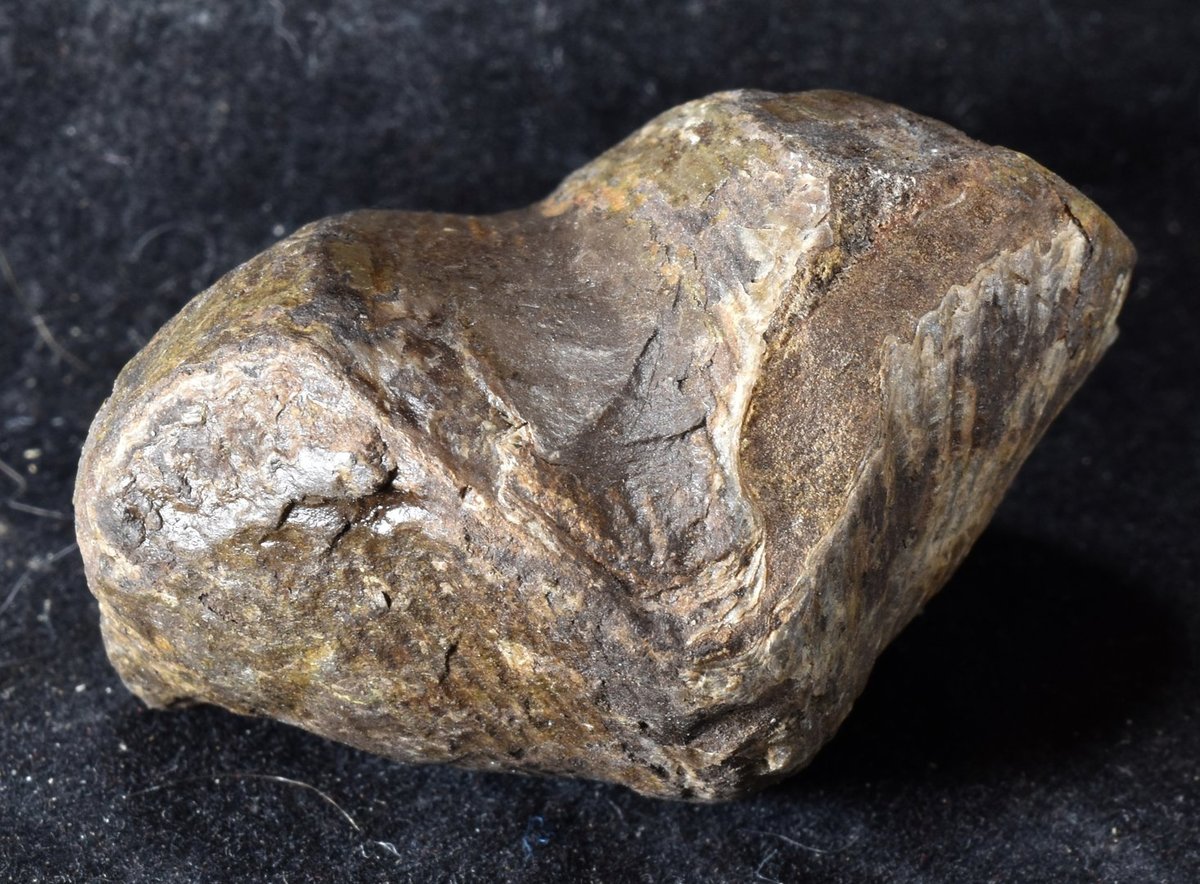
Passaloteuthis possessed a streamlined, torpedo-shaped body well-suited for a predatory, pelagic lifestyle. The total body length, including the arms, is estimated to have ranged from 15 to 30 centimeters, comparable in size to many modern squid species. The most distinctive and commonly fossilized part of its anatomy is the internal shell, or rostrum. This solid, bullet-shaped structure, composed of calcite, acted as a counterweight to the phragmocone, a chambered, gas-filled section of the shell used for buoyancy control. The rostrum of Passaloteuthis hastata is characteristically spear-shaped ('hastata' meaning spear-like in Latin), tapering to a fine point. Exceptional fossils from sites like Holzmaden in Germany have preserved not just the hard rostrum, but also impressions of the soft tissues. These reveal a creature with a well-developed head, large eyes, and ten arms of roughly equal length, arranged in a circle around the mouth. Each arm was equipped with two rows of small, chitinous hooks, rather than the suckers seen in modern squid, which were used to grasp and secure struggling prey. Evidence of an ink sac, similar to that of its modern relatives, has also been found, indicating it could deploy a dark cloud to evade predators.
As an active carnivore, Passaloteuthis was a formidable predator in the Jurassic seas. Its diet likely consisted of small fish, crustaceans, and other marine invertebrates. The arrangement of its ten hooked arms suggests a specific hunting strategy: it would have rapidly pursued prey, then extended its arms to ensnare the target, using the sharp hooks to prevent escape while maneuvering the meal towards its powerful, beak-like mouth. Locomotion was achieved through jet propulsion, a method common to most cephalopods. By forcefully expelling water from a muscular funnel (or siphon) located within its mantle cavity, Passaloteuthis could achieve rapid bursts of speed to chase prey or flee from larger predators like ichthyosaurs and marine crocodiles. Its large eyes, inferred from the size of the optic capsules in some fossils, indicate a reliance on vision for hunting in the well-lit upper layers of the ocean. While direct evidence of social behavior is scarce, the sheer abundance of its fossils in certain layers suggests that Passaloteuthis may have formed large schools or shoals, a behavior that offers protection from predators and facilitates coordinated hunting and mating.
Passaloteuthis lived during the Toarcian age of the Early Jurassic, a time when the supercontinent Pangea was actively breaking apart, creating shallow epicontinental seas across what is now Europe. The climate was generally warm and humid, with high sea levels flooding vast continental areas. Passaloteuthis inhabited these warm, shallow seas, particularly the European Epicontinental Sea, which was home to a rich and diverse marine ecosystem. It shared its environment with a host of other creatures, occupying a mid-level position in the food web. It preyed upon smaller organisms like the fish Leptolepis and various crustaceans. In turn, it was a primary food source for larger marine reptiles. Fossil evidence, including Passaloteuthis rostra found in the stomach contents of ichthyosaurs like Stenopterygius, confirms this predator-prey relationship. Other contemporaries included ammonites, plesiosaurs, the marine crocodile Steneosaurus, and the giant filter-feeding fish Leedsichthys. The seafloor of these environments was often anoxic (lacking in oxygen), which, while inhospitable to bottom-dwelling life, contributed to the exceptional preservation of organisms that sank there after death, including countless specimens of Passaloteuthis.
The discovery and study of Passaloteuthis are closely tied to the famous fossil deposits of Germany. The genus was formally described by the French paleontologist Alcide d'Orbigny in 1842. However, its fossils, particularly the distinctive rostra, had been known for centuries, often referred to as 'thunderbolts' or 'St. Peter's fingers' in European folklore. The most significant discoveries came from the Posidonia Shale lagerstätte near Holzmaden in Baden-Württemberg, Germany. Quarrying operations in this region during the 19th and early 20th centuries unearthed thousands of specimens with unparalleled soft-tissue preservation. These fossils, prepared by skilled local artisans, provided the first clear picture of what a complete belemnite looked like. Key specimens, such as those housed in the Urweltmuseum Hauff in Holzmaden and the State Museum of Natural History Stuttgart, showcase not only the internal shell but also the carbonized remains of the mantle, arms, hooks, and even ink sacs. These remarkable fossils allowed paleontologists like Hermann von Meyer and, later, Adolf Seilacher to reconstruct the animal's biology and lifestyle with a high degree of confidence, transforming belemnites from enigmatic 'bullets' into well-understood ancient cephalopods.
Passaloteuthis holds a significant position in the evolutionary history of cephalopods. It belongs to the order Belemnitida, an extinct group that represents a crucial branch of the coleoid cephalopods—the group that includes modern squids, cuttlefish, and octopuses. Belemnites are characterized by their robust internal shell, a feature that evolved from the external, chambered shells of their nautiloid and ammonoid ancestors. Passaloteuthis showcases the highly successful body plan that allowed coleoids to transition from shelled, buoyant drifters to active, swimming predators. The internalization of the shell provided a more streamlined body for efficient locomotion, while the rostrum served as a stabilizing counterweight. The development of arms with hooks instead of suckers represents an intermediate evolutionary stage; suckers with their complex musculature would evolve later in the lineages leading to modern squid and octopuses. By studying Passaloteuthis, scientists can trace the origins of key coleoid adaptations, such as jet propulsion, advanced visual systems, and predatory appendages, providing a vital link between ancient shelled cephalopods and their diverse, soft-bodied descendants that dominate today's oceans.
While the general anatomy and lifestyle of Passaloteuthis are well-established, some scientific debates persist. One area of discussion revolves around the precise function and hydrodynamics of the rostrum. While its primary role as a counterweight is widely accepted, researchers have also proposed it may have served as a guard against predators attacking from the rear, or even as a tool for grubbing in sediment, though the latter is less supported for a pelagic animal like Passaloteuthis. Another topic of ongoing research is the fine detail of its reproductive strategy. Fossil evidence of belemnite mating and egg-laying is extremely rare. Some paleontologists, drawing parallels with modern squid, suggest that Passaloteuthis may have engaged in mass spawning events, after which the adults would die, a life cycle known as semelparity. This hypothesis is supported by the existence of mass mortality layers in the fossil record, where thousands of rostra are found concentrated together, potentially representing post-spawning die-offs. However, without more direct evidence, this remains an area of active and speculative investigation.
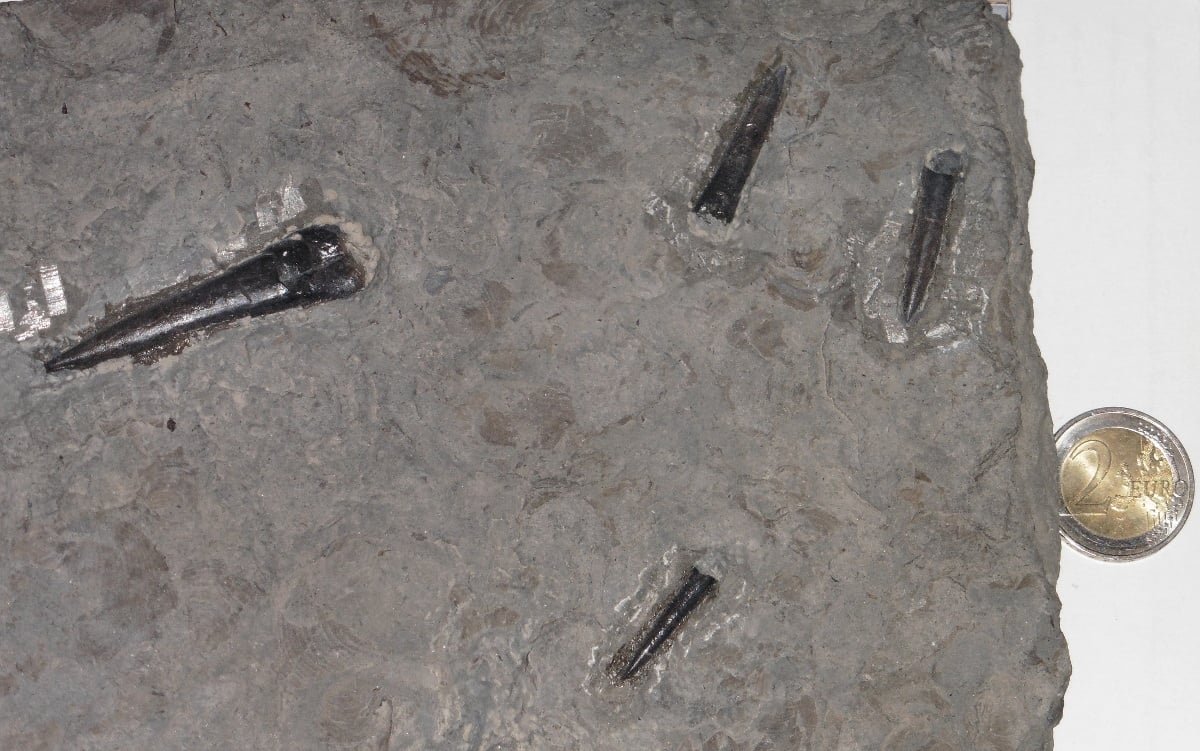
The fossil record of Passaloteuthis is exceptionally rich, making it one of the most common and well-studied belemnites of the Jurassic period. Its fossils are found primarily in marine deposits across Europe, with major sites located in Germany, the United Kingdom (particularly the Jurassic Coast of Dorset), France, and Switzerland. The most famous locality is the Posidonia Shale of Germany, a Konservat-Lagerstätte renowned for its anoxic bottom conditions that led to the stunning preservation of soft tissues. In these deposits, complete body outlines, ink sacs, and arm hooks are found, offering a rare window into the biology of an extinct soft-bodied animal. The most commonly found part of the organism is the dense calcite rostrum, which is highly resistant to decay and geological pressures. These bullet-shaped fossils are so abundant in some rock layers that they are used as index fossils to date the Toarcian stage of the Jurassic period. Tens of thousands of specimens are known, ranging from isolated rostra to complete, articulated individuals.
Due to its abundance and excellent preservation, Passaloteuthis is a staple in museum collections worldwide and a key educational tool for teaching about Mesozoic marine life and cephalopod evolution. The Urweltmuseum Hauff in Holzmaden, Germany, features spectacular displays of Passaloteuthis fossils from the adjacent Posidonia Shale quarries, showcasing their incredible soft-tissue preservation. While it has not achieved the celebrity status of dinosaurs or mammoths in popular culture, its distinctive rostrum is instantly recognizable to fossil collectors and geology students. These 'thunderbolts' are often among the first fossils that amateur paleontologists find and collect, serving as an accessible entry point into the wonders of the ancient world. Its importance lies in its scientific value, providing a tangible and complete example of a creature that dominated the oceans long before the age of whales and giant squid.
Classification
Time Period
Discovery
Location
Germany
Formation
Posidonia Shale
Frequently Asked Questions
What is Passaloteuthis?
Passaloteuthis is an extinct genus of belemnite, a group of squid-like cephalopods, that thrived in the marine ecosystems of the Early Jurassic period, approximately 183 to 175 million years ago. Its remarkably well-preserved fossils, particularly from the Posidonia Shale of Germany, have made it a ...
When did Passaloteuthis live?
Passaloteuthis lived during the jurassic period of the mesozoic era approximately 183-175 million years ago.
Where was Passaloteuthis discovered?
Fossils of Passaloteuthis were discovered in Germany in the Posidonia Shale.
What did Passaloteuthis eat?
Passaloteuthis was a carnivore. It lived in marine, pelagic habitats.
What type of fossil is Passaloteuthis?
Passaloteuthis is preserved as a body fossil. The preservation quality is exceptional.
Related Specimens
From the mesozoic era · body fossils