Tarbosaurus
Tarbosaurus bataar
Image: Image sourced via web search (Fair use / Educational)
About Tarbosaurus
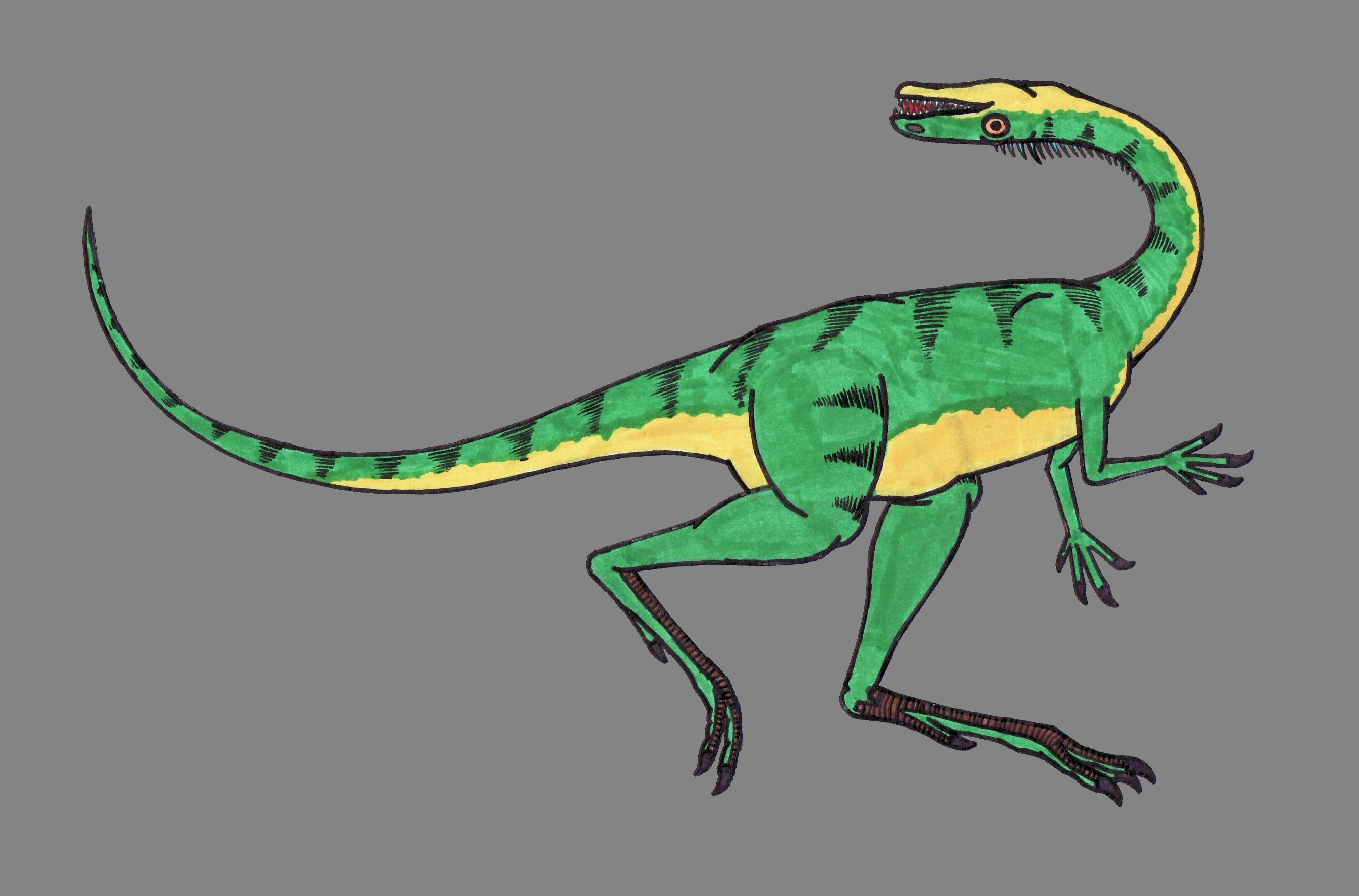
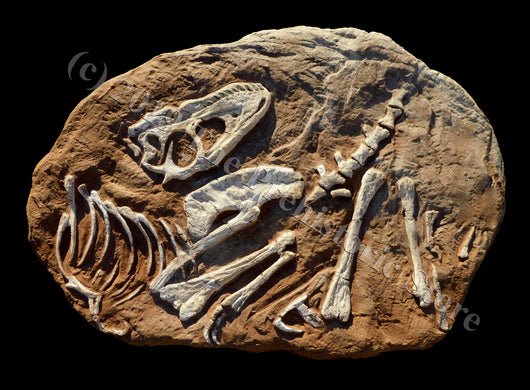
Tarbosaurus bataar was a massive, bipedal apex predator belonging to the tyrannosaurid family that dominated the terrestrial ecosystems of Asia during the Late Cretaceous period, approximately 70 to 66 million years ago. Roaming the floodplains and river valleys of what is now the Gobi Desert in Mongolia and parts of China, this formidable theropod represents the Asian counterpart to the famous North American Tyrannosaurus rex. As one of the largest terrestrial carnivores to have ever lived, Tarbosaurus holds immense significance in the field of paleontology, offering crucial insights into the evolutionary radiation, biogeography, and anatomical specialization of late-stage tyrannosaurids just prior to the end-Cretaceous mass extinction event. Its extensive fossil record, which includes individuals ranging from juveniles to fully mature adults, has provided scientists with an unparalleled window into the growth, development, and ecological dominance of these spectacular prehistoric reptiles. The physical description of Tarbosaurus bataar reveals an animal of staggering proportions and highly specialized anatomy, optimized for taking down large, formidable prey. Adult specimens are estimated to have reached lengths of 10 to 12 meters (approximately 33 to 39 feet), standing roughly 3 to 3.5 meters tall at the hips. Weight estimates for fully grown individuals generally fall between 4 and 5 metric tons, making them comparable in mass to a modern adult Asian elephant, though distributed across a fundamentally different, bipedal body plan. The skull of Tarbosaurus was a marvel of biomechanical engineering, measuring over 1.3 meters in length in the largest individuals. Unlike the broad, U-shaped snout of Tyrannosaurus rex, the skull of Tarbosaurus was relatively narrow and V-shaped, with a highly specialized locking mechanism in the lower jaw that provided immense structural rigidity during a bite. This rigid jaw structure was equipped with up to sixty large, serrated, banana-shaped teeth designed to crush bone and tear through thick flesh. Perhaps the most striking anatomical feature of Tarbosaurus was its incredibly disproportionate forelimbs. While all advanced tyrannosaurids had small arms, the forelimbs of Tarbosaurus were the smallest of any known member of the family relative to its body size, featuring only two functional digits. These tiny arms were virtually useless for hunting or grasping prey, underscoring the evolutionary shift toward relying entirely on the massive, heavily muscled head and neck for capturing and dispatching food. The animal's powerful hind legs were built for weight-bearing and bursts of speed, supported by a long, heavy tail that acted as a counterbalance to the enormous skull and torso. Soft tissue inferences, drawn from related species and biomechanical modeling, suggest Tarbosaurus possessed thick, scaly skin, though it is entirely possible that juveniles, or even adults, retained sparse, bristle-like proto-feathers, a trait known to exist in earlier tyrannosauroids. The paleobiology of Tarbosaurus bataar paints a picture of a highly active, specialized predator with a bone-crushing bite and complex behavioral traits. As an obligate carnivore and the undisputed apex predator of its environment, Tarbosaurus primarily preyed upon the large herbivorous dinosaurs that shared its habitat, such as the massive sauropod Nemegtosaurus and the abundant hadrosaurid Saurolophus. Its hunting strategy likely relied on ambush tactics, utilizing the dense vegetation of the river valleys to conceal its massive bulk before launching a devastating, high-impact attack. The narrow skull of Tarbosaurus suggests it may not have had the same degree of binocular vision as Tyrannosaurus rex, meaning its depth perception might have been slightly less refined, potentially indicating a different style of prey tracking or a reliance on its highly developed sense of smell, as evidenced by the large olfactory bulbs in its braincase. Locomotion studies indicate that while adult Tarbosaurus were not built for sustained long-distance running, they were capable of impressive short bursts of speed, likely reaching up to 25 to 30 kilometers per hour. The social behavior of Tarbosaurus remains a subject of scientific inquiry; while some trackways and fossil bonebeds of other tyrannosaurids hint at gregarious or pack-hunting behavior, definitive evidence for Tarbosaurus is lacking, leading many paleontologists to view them as primarily solitary hunters that may have only congregated around large carcasses or during the mating season. Growth patterns, derived from osteohistological analysis of bone cross-sections, reveal that Tarbosaurus underwent a massive growth spurt during its teenage years, packing on hundreds of kilograms annually before reaching skeletal maturity in its early twenties, a metabolic strategy that required immense amounts of food and suggests a warm-blooded, or at least highly elevated, metabolism. The ecological context in which Tarbosaurus lived was vastly different from the arid, harsh environment of the modern Gobi Desert. During the Maastrichtian stage of the Late Cretaceous, the Nemegt Formation represented a lush, humid, and highly dynamic ecosystem characterized by extensive river channels, sprawling floodplains, shallow lakes, and dense forests of conifers, ferns, and early angiosperms. The climate was subject to seasonal variations, with distinct wet and dry seasons that periodically transformed the landscape and forced animal populations to migrate or adapt to changing water availability. In this rich environment, Tarbosaurus sat at the very top of a complex food web. It coexisted with a diverse array of dinosaurian fauna, including the giant, scythe-clawed therizinosaurid Therizinosaurus, the heavily armored ankylosaurid Tarchia, and the fleet-footed ornithomimids like Gallimimus. The presence of such heavily armored and massive prey items explains the evolutionary necessity for Tarbosaurus's bone-crushing bite and robust skull architecture. Furthermore, the ecosystem supported various smaller predators, such as dromaeosaurids and troodontids, which occupied lower trophic levels and likely scavenged from the kills made by Tarbosaurus, creating a dynamic predator-prey dynamic that shaped the evolutionary trajectories of the entire regional fauna. The discovery history of Tarbosaurus bataar is deeply intertwined with the geopolitical landscape of the mid-20th century and the pioneering efforts of Soviet and Mongolian paleontologists. The first fossil remains of this giant theropod were unearthed in 1946 during a joint Soviet-Mongolian paleontological expedition to the Nemegt Basin in the Gobi Desert. The initial discovery consisted of a partial skull and some postcranial vertebrae. In 1955, the prominent Russian paleontologist Evgeny Maleev formally described the species. Interestingly, Maleev initially recognized the profound similarities between this new Asian predator and the North American Tyrannosaurus rex, leading him to name the type specimen Tyrannosaurus bataar. The specific epithet bataar is a misspelling of the Mongolian word baatar, meaning hero. In the same publication, Maleev also named three other tyrannosaurid species based on smaller, differently proportioned specimens found in the same region, including Tarbosaurus efremovi. It was not until 1965 that another Russian paleontologist, Anatoly Konstantinovich Rozhdestvensky, recognized that all of Maleev's specimens actually represented different growth stages of a single species. Rozhdestvensky argued that this species was distinct enough from the North American Tyrannosaurus to warrant its own genus, thus establishing the name Tarbosaurus bataar. Since these early expeditions, numerous subsequent digs, including those by Polish-Mongolian and Japanese-Mongolian teams, have uncovered dozens of exceptionally preserved specimens, making Tarbosaurus one of the best-understood tyrannosaurids in the world. The evolutionary significance of Tarbosaurus bataar is immense, as it provides a crucial data point for understanding the biogeography and evolutionary radiation of the Tyrannosauridae family during the Late Cretaceous. Tarbosaurus is universally recognized as belonging to the subfamily Tyrannosaurinae, and phylogenetic analyses consistently place it as the sister taxon, or closest known relative, to Tyrannosaurus rex. This close evolutionary relationship strongly implies that there was a faunal interchange between the Asian and North American continents during the Late Cretaceous, likely facilitated by a land bridge across what is now the Bering Strait. The prevailing scientific consensus suggests that the ancestors of both Tarbosaurus and Tyrannosaurus originated in Asia or North America and subsequently migrated across this land bridge. By studying the anatomical differences between Tarbosaurus and Tyrannosaurus, such as the variations in skull width, jaw mechanics, and forelimb proportions, paleontologists can trace the specific evolutionary adaptations that occurred as these apex predators adapted to their respective continental environments and prey bases. Furthermore, the discovery of earlier, more basal tyrannosauroids in Asia, such as Raptorex and Alioramus, helps flesh out the evolutionary lineage that eventually culminated in the massive, bone-crushing apex predators like Tarbosaurus, illustrating a clear evolutionary trend toward increased body size, reduced forelimbs, and enhanced bite force. Scientific debates surrounding Tarbosaurus bataar have primarily centered on its taxonomic classification and the biomechanics of its feeding strategies. The most enduring controversy is whether Tarbosaurus should be maintained as a distinct genus or reclassified as a species of Tyrannosaurus, reverting to Maleev's original designation of Tyrannosaurus bataar. Proponents of the single-genus theory argue that the anatomical differences between the two are no greater than the differences seen between species within modern mammalian genera, such as Panthera or Ursus. However, the majority of modern paleontologists support keeping Tarbosaurus as a separate genus, pointing to the significant differences in skull architecture, particularly the rigid lower jaw and the pathways of cranial nerves, which suggest distinct evolutionary trajectories and feeding mechanics. Another area of ongoing debate involves the specific hunting behaviors of Tarbosaurus. While its bone-crushing capabilities are undisputed, some researchers argue that its narrower snout and potentially less overlapping fields of vision made it less capable of the highly precise, stereoscopic tracking attributed to Tyrannosaurus rex, perhaps indicating a greater reliance on scavenging or ambushing slower, larger prey like sauropods, rather than actively pursuing more agile targets. The fossil record of Tarbosaurus bataar is exceptionally rich and geographically concentrated in the Gobi Desert, specifically within the Nemegt Formation of southern Mongolia, with some fragmentary remains also reported from the Subashi Formation in neighboring China. To date, paleontologists have recovered the remains of dozens of individuals, representing a comprehensive ontogenetic series that ranges from very young juveniles to fully mature, senescent adults. The quality of preservation in the Nemegt Formation is often extraordinary, with many specimens consisting of nearly complete, articulated skeletons and pristine, uncrushed skulls. This high fidelity of preservation is largely attributed to the depositional environment of the Nemegt, where seasonal flooding events rapidly buried animal carcasses in fine-grained sands and muds, protecting them from scavengers and the elements. The abundance of Tarbosaurus fossils, particularly when compared to the relative scarcity of other large theropods in the region, strongly supports its status as the dominant apex predator of its ecosystem. Famous fossil sites, such as the Nemegt locality and Bugin Tsav, continue to yield important new specimens, providing an ever-expanding dataset that allows researchers to conduct detailed statistical analyses of population dynamics, individual variation, and paleopathology within the species. The cultural impact of Tarbosaurus bataar has been significant, though often overshadowed by its more famous North American cousin. It frequently appears in paleontology documentaries, most notably in the BBC series Chased by Dinosaurs, where it was depicted hunting Therizinosaurus. Tarbosaurus gained widespread public attention due to a high-profile fossil smuggling case in 2012, when a nearly complete skeleton was illegally auctioned in the United States. The skull had been purchased by actor Nicolas Cage, who voluntarily returned it after learning it was stolen. The subsequent legal battle and successful repatriation of the fossil to Mongolia highlighted the ongoing issue of black-market fossil poaching and led to the establishment of the Central Museum of Mongolian Dinosaurs in Ulaanbaatar, where the repatriated Tarbosaurus, now a symbol of national heritage and scientific integrity, is proudly displayed.
Classification
Time Period
Discovery
Location
Mongolia
Formation
Nemegt Formation
Frequently Asked Questions
What is Tarbosaurus?
Tarbosaurus bataar was a massive, bipedal apex predator belonging to the tyrannosaurid family that dominated the terrestrial ecosystems of Asia during the Late Cretaceous period, approximately 70 to 66 million years ago. Roaming the floodplains and river valleys of what is now the Gobi Desert in Mon...
When did Tarbosaurus live?
Tarbosaurus lived during the cretaceous period of the mesozoic era approximately 70-66 million years ago.
Where was Tarbosaurus discovered?
Fossils of Tarbosaurus were discovered in Mongolia in the Nemegt Formation.
What did Tarbosaurus eat?
Tarbosaurus was a carnivore. It lived in terrestrial habitats.
What type of fossil is Tarbosaurus?
Tarbosaurus is preserved as a body fossil. The preservation quality is excellent.
Related Specimens
From the mesozoic era · body fossils