Carnotaurus
Carnotaurus sastrei
Image: File:Carnotaurus sastrei 1.jpg - Wikimedia Commons (CC BY-SA)
About Carnotaurus
Carnotaurus sastrei was a large, bipedal carnivorous dinosaur that inhabited the southern supercontinent of Gondwana during the Late Cretaceous period, approximately 72 to 69.9 million years ago. Its name, derived from the Latin "caro" (meat) and "taurus" (bull), aptly describes its predatory nature and the two prominent, bull-like horns that adorned its skull, a feature unique among all known large theropods. The discovery of a single, exceptionally well-preserved skeleton in Argentina has provided paleontologists with an unparalleled look into the anatomy and paleobiology of the Abelisauridae, a family of apex predators that dominated the southern hemisphere while their tyrannosaurid counterparts reigned in the north.
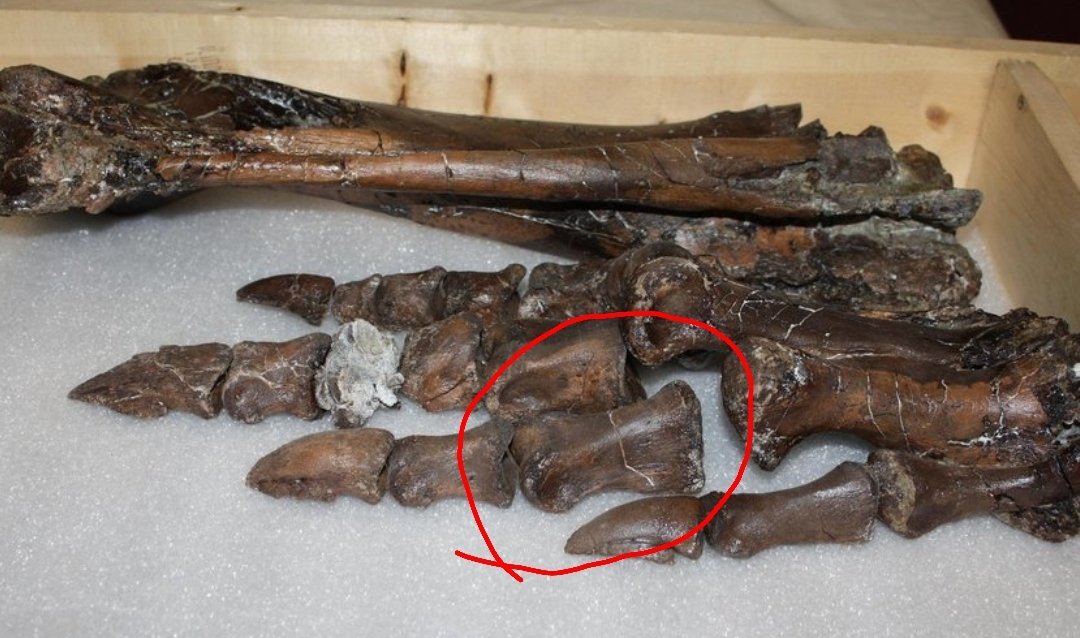
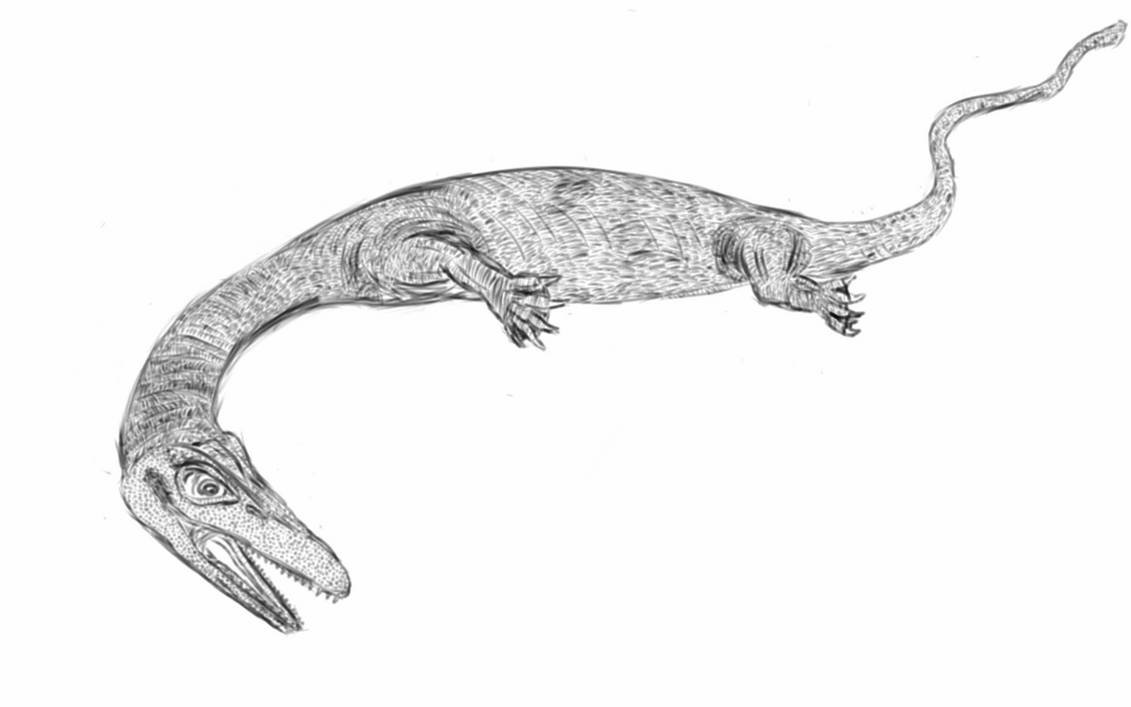
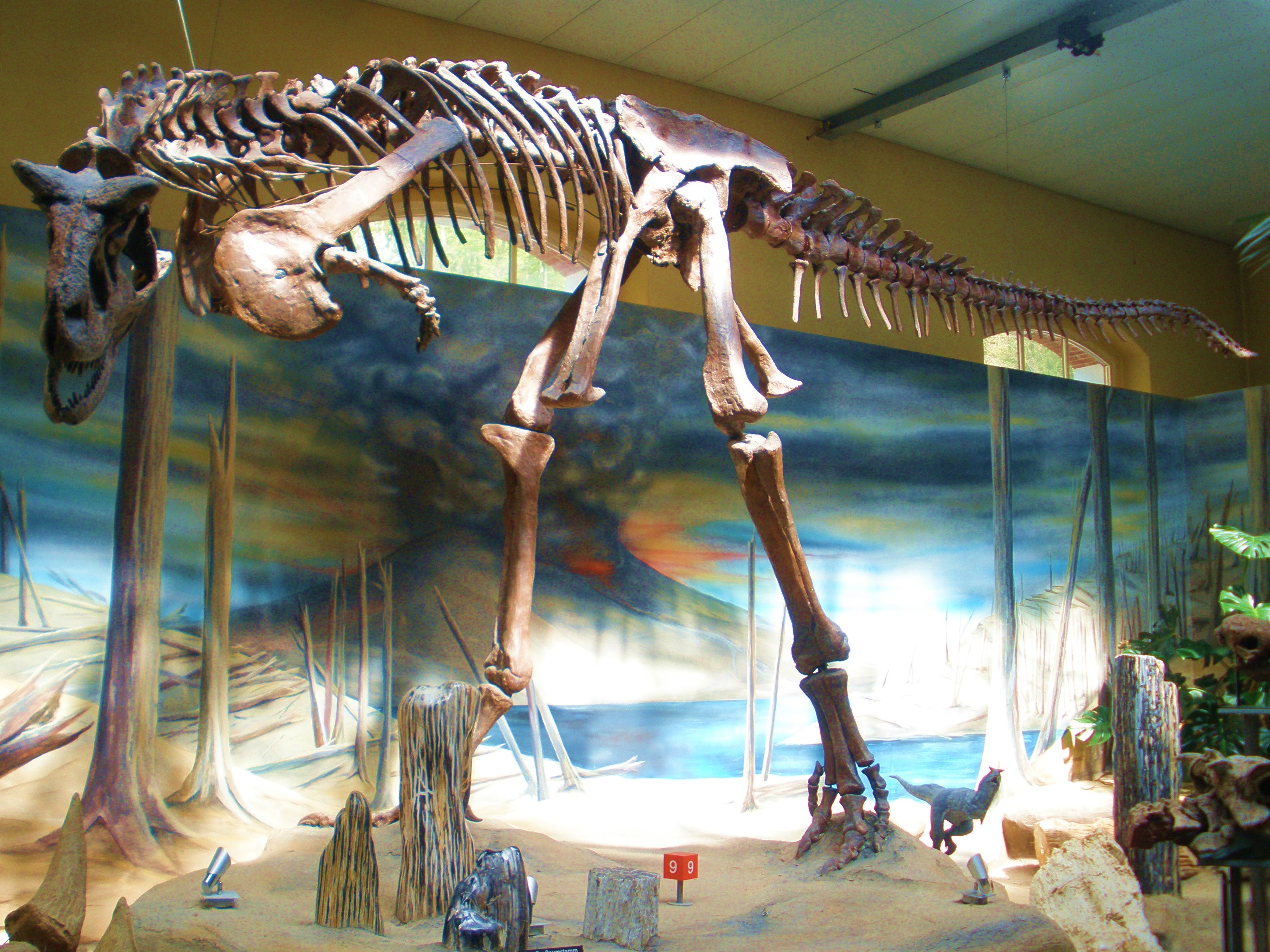
Carnotaurus was a formidable predator of substantial size, with the only known specimen, MACN-CH 894, measuring approximately 8.5 meters (28 feet) in length from snout to tail tip. Estimates of its body mass vary, but most studies place it between 1.35 and 2.1 metric tons, making it a powerfully built yet surprisingly gracile animal for its size. Its most striking feature was its skull, which was deep but remarkably short and foreshortened, giving it a distinct, almost pug-nosed appearance. Perched atop this skull, just above the small, forward-facing eyes, were two thick, conical horns composed of solid bone. These horns, likely covered in a keratinous sheath in life, were robust and would have made for an intimidating display, possibly used for intraspecific combat, such as flank-butting or shoving matches with rivals, rather than for predation. The skull also featured extensive fenestration (openings) and a kinetic, flexible joint in the lower jaw, suggesting a feeding style adapted for rapid, powerful bites rather than sustained crushing force. In stark contrast to its massive head, Carnotaurus possessed forelimbs that were even more reduced than those of Tyrannosaurus rex, representing an extreme case of vestigiality. The arms were tiny, with a fused, immobile elbow and no wrist bones, culminating in four small, non-functional digits. These limbs were so diminutive they could not have reached the animal's mouth and served no discernible purpose in hunting or grappling. The rest of its body was built for power and speed, with a deep, muscular tail that likely acted as a counterbalance and a powerhouse for locomotion, and long, slender hind limbs with a fused tibia and astragalus, an adaptation seen in fast-running animals.
The unique anatomy of Carnotaurus provides significant clues into its life as a predator. Its long and powerfully muscled legs, combined with a rigid torso and a massive caudofemoralis muscle anchored to the tail, strongly indicate that it was one of the fastest large theropods. Biomechanical studies by researchers like Mazzetta, Fariña, and Vizcaíno have estimated its potential top speed at around 48–56 kilometers per hour (30–35 miles per hour), making it a formidable pursuit predator in the open environments it inhabited. This speed was likely used to run down swift-moving ornithopods or the young of larger sauropods. The structure of its skull and jaw suggests a specific feeding strategy. Unlike the bone-crushing bite of a Tyrannosaurus, the skull of Carnotaurus was better suited for absorbing the stress of rapid, slashing bites. It likely employed a "snap-and-tear" method, using its relatively weak but quickly closing jaws to inflict deep wounds on large prey, then waiting for the animal to weaken from blood loss and shock. The binocular vision afforded by its forward-facing eyes would have been crucial for judging distance while charging its target. Its diet would have consisted of the diverse herbivorous dinosaurs of its ecosystem, and as the apex predator, it faced little to no competition. The skin impressions found with the fossil reveal a non-overlapping, tuberculate hide, composed of small, bumpy scales interspersed with larger, conical scutes, giving it a tough, armored appearance unlike the feathered integument found on many northern theropods.
Carnotaurus lived in a coastal plain environment, as evidenced by the sediments of the La Colonia Formation in Chubut Province, Argentina. During the Maastrichtian age of the Late Cretaceous, this region was a dynamic landscape of estuaries, tidal flats, and coastal forests, characterized by a warm, seasonal climate. This habitat supported a diverse array of life. The herbivorous fauna that Carnotaurus would have preyed upon included titanosaurs, the massive, long-necked sauropods that were common in the southern hemisphere, as well as smaller ornithopods. The ecosystem also included other reptiles such as turtles (like the genus Eolania), plesiosaurs in the nearby marine environments, and various snakes, including the large madtsoiid snake Alamitophis. As the largest known carnivore in its specific formation, Carnotaurus sastrei occupied the niche of the apex predator, exerting significant top-down pressure on the herbivore populations and shaping the structure of its local food web. Its specialized, cursorial build suggests it was particularly well-adapted to hunting in the more open areas of this coastal landscape, where its speed would have been a decisive advantage. The presence of a single large predator like Carnotaurus, rather than a guild of several, may reflect the specific ecological conditions of Gondwana during this period.
The story of Carnotaurus begins in 1984 with a paleontological expedition led by the renowned Argentine paleontologist José F. Bonaparte. While exploring the "Pocho Sastre" farm near Bajada Moreno in Chubut Province, Bonaparte's team unearthed a spectacular fossil. It was a nearly complete and articulated skeleton of a large theropod, found lying on its right side. The preservation was extraordinary, not only for its completeness but also for the extensive skin impressions found along the right side of the animal's body, from the skull down to the tail. This provided the first detailed evidence of skin texture in a non-avian theropod from Gondwana. In 1985, Bonaparte formally described the specimen, giving it the name Carnotaurus sastrei. The generic name, "meat-eating bull," was chosen in reference to its carnivorous diet and the prominent horns, while the specific name, "sastrei," honors Angel Sastre, the owner of the ranch where the fossil was discovered. The holotype specimen, designated MACN-CH 894, remains the only skeleton of Carnotaurus ever found. Its completeness has made it a cornerstone for understanding abelisaurid anatomy, allowing for detailed reconstructions and biomechanical studies that would be impossible with more fragmentary remains.
Carnotaurus holds a pivotal position in the evolutionary history of dinosaurs, serving as the quintessential example of the family Abelisauridae. This family represents a distinct and highly successful lineage of theropods that thrived on the southern continents of Gondwana (South America, Africa, India, and Madagascar) after their separation from the northern landmass of Laurasia. While tyrannosaurids evolved into the dominant large predators in the north, abelisaurids like Carnotaurus, Majungasaurus, and Abelisaurus itself filled that ecological role in the south. The discovery of Carnotaurus provided crucial anatomical data that helped define this group, characterized by their short, deep skulls, often adorned with rugosities or horns, and their extremely reduced, vestigial forelimbs. These features demonstrate a case of convergent evolution with the tyrannosaurids in terms of occupying the apex predator niche, but they achieved this through a completely different set of anatomical specializations. Carnotaurus does not have any direct modern relatives, as the entire non-avian dinosaur lineage, including the abelisaurids, perished in the Cretaceous-Paleogene extinction event 66 million years ago. However, as with all theropods, its closest living relatives are modern birds, though the evolutionary path leading to birds diverged from the ceratosaurian line (which includes abelisaurids) much earlier in the Jurassic period.
Despite the completeness of the single specimen, Carnotaurus is not without its scientific debates, many of which center on the function of its most bizarre features. The purpose of the horns has been a primary topic of discussion. While too short and robust for effective stabbing of prey, researchers like Gerardo Mazzetta have proposed they were used in intraspecific combat, with individuals engaging in head-shoving or flank-butting contests for territory or mating rights, similar to the behavior of modern bovids. Another major area of controversy is the function, or lack thereof, of its minuscule arms. Some early hypotheses suggested they might have been used as claspers during mating, but their fused joints and lack of mobility make any functional role highly unlikely. The prevailing consensus is that they were truly vestigial, an evolutionary remnant with no practical use, representing the endpoint of a long-term trend of forelimb reduction within the abelisaurid lineage. The exact mechanics of its bite and hunting style also continue to be modeled and debated, with ongoing research refining our understanding of how its unique skull was employed to tackle prey.
The fossil record of Carnotaurus sastrei is both exceptional and frustratingly limited. To date, the species is known exclusively from the single holotype skeleton, MACN-CH 894, recovered from the La Colonia Formation of Argentina. No other bones or definitive traces of this species have been found anywhere else in the world. However, the quality of this lone specimen is almost unparalleled for a large theropod. The skeleton is nearly complete, missing only the hind feet and the distal half of the tail, and was found in articulation, meaning the bones were still arranged in their life positions. Most significantly, the fossil preserved extensive skin impressions, particularly along the right side of the skull, shoulder, torso, and tail. These impressions, studied in detail by Stephen Czerkas, revealed a mosaic of small, non-overlapping tubercle scales, punctuated by rows of larger, conical osteoderm-like bumps, providing invaluable information about dinosaur integument. While the geographic distribution of Carnotaurus itself is restricted to one site, its close relatives in the Abelisauridae family have been found across South America, Africa, Madagascar, and India, painting a picture of a widespread and successful clade of Gondwanan predators.
Since its discovery, Carnotaurus has captured the public imagination and has become one of the most recognizable dinosaurs from the southern hemisphere. Its fierce, bull-horned appearance has made it a popular subject in museums, documentaries, and fictional media. It was featured prominently as the primary antagonist in Disney's 2000 animated film "Dinosaur" and has appeared in the "Jurassic World" film franchise, solidifying its place in popular culture. Skeletons and life-sized models of Carnotaurus are displayed in museums worldwide, including the Argentine Museum of Natural Sciences in Buenos Aires, where the original fossil is housed. Its unique and somewhat bizarre combination of features—a horned skull, powerful running legs, and comically tiny arms—makes it an excellent educational tool for discussing concepts like evolutionary adaptation, convergent evolution, and the diversity of life in the Mesozoic Era.
Classification
Time Period
Discovery
Location
Chubut Province, Argentina
Formation
La Colonia Formation
Frequently Asked Questions
What is Carnotaurus?
Carnotaurus sastrei was a large, bipedal carnivorous dinosaur that inhabited the southern supercontinent of Gondwana during the Late Cretaceous period, approximately 72 to 69.9 million years ago. Its name, derived from the Latin "caro" (meat) and "taurus" (bull), aptly describes its predatory nature...
When did Carnotaurus live?
Carnotaurus lived during the cretaceous period of the mesozoic era approximately 72-69.9 million years ago.
Where was Carnotaurus discovered?
Fossils of Carnotaurus were discovered in Chubut Province, Argentina in the La Colonia Formation.
What did Carnotaurus eat?
Carnotaurus was a carnivore. It lived in terrestrial habitats.
What type of fossil is Carnotaurus?
Carnotaurus is preserved as a body fossil. The preservation quality is excellent.
Related Specimens
From the mesozoic era · body fossils