Brontotherium
Brontotherium gigas
Image: Image sourced via web search (Fair use / Educational)
About Brontotherium
Brontotherium gigas was a colossal herbivorous mammal that roamed the savannas and woodlands of North America during the Late Eocene epoch, approximately 38 to 33 million years ago. As a prominent member of the extinct family Brontotheriidae, these 'thunder beasts' represent a spectacular example of megafaunal evolution in the early Cenozoic, offering crucial insights into the diversification of mammals following the extinction of the non-avian dinosaurs. Their impressive fossils, particularly their distinctive horned skulls, have made them one of the most recognizable prehistoric mammals from the Age of Mammals.
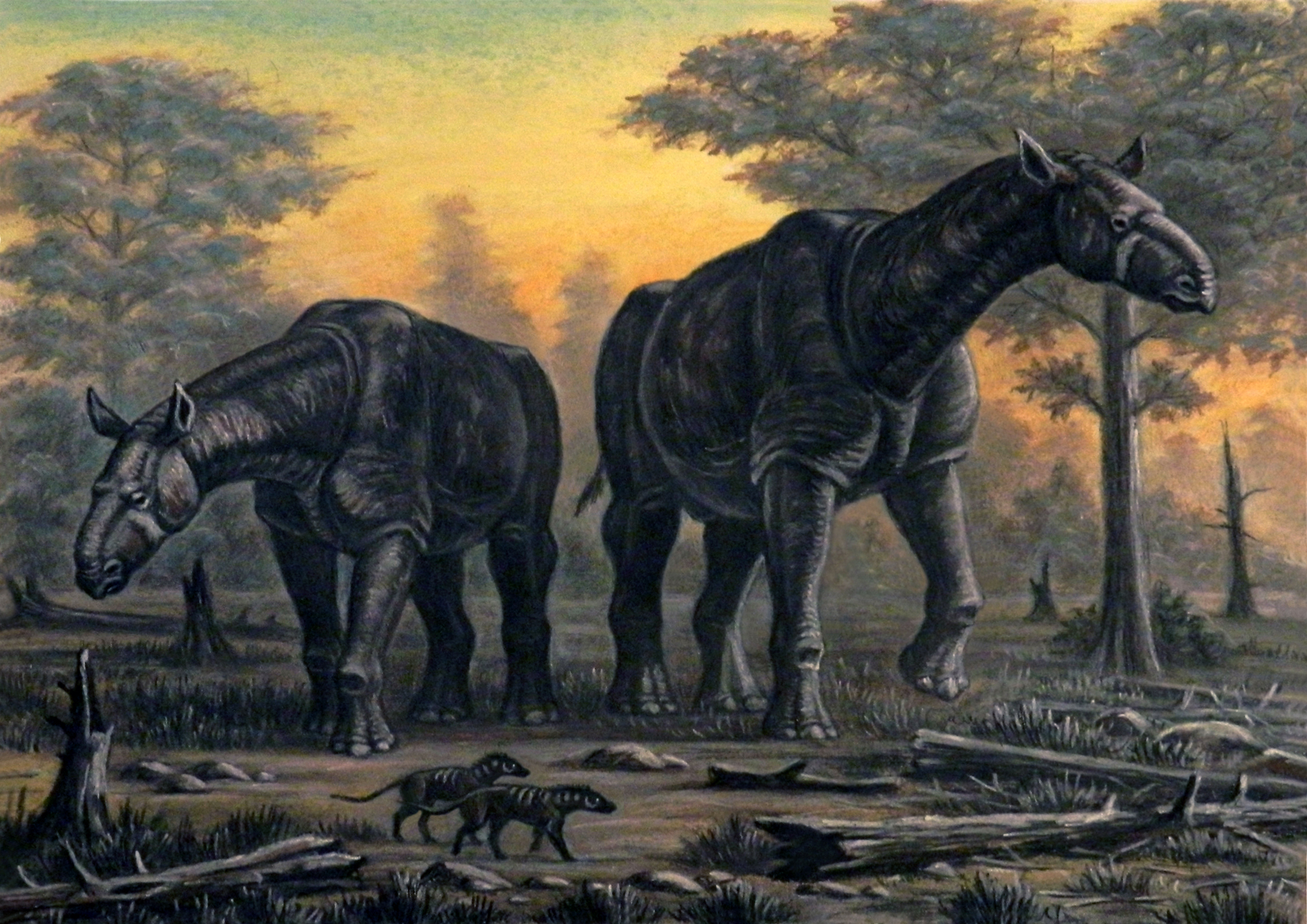
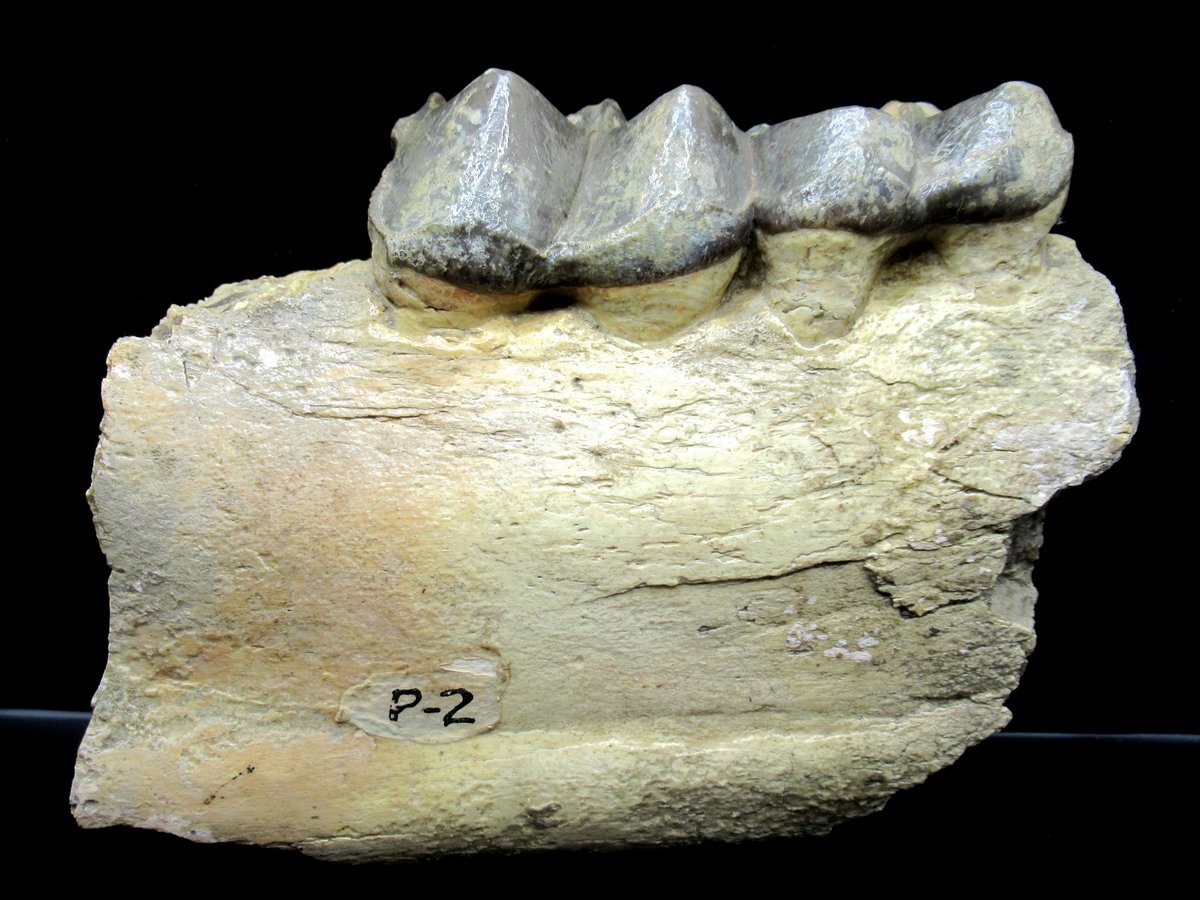
Brontotherium was an imposing animal, comparable in size to a modern African elephant, though its body plan was more akin to a giant rhinoceros. An adult Brontotherium gigas stood approximately 2.5 meters (about 8.2 feet) tall at the shoulder and reached a body length of around 4.5 to 5 meters (15 feet). Weight estimates for this massive perissodactyl (odd-toed ungulate) range from 3 to 4 metric tons (6,600 to 8,800 pounds). Its most striking feature was a large, Y-shaped, horn-like protuberance on its snout, which was not a true horn made of keratin over a bone core like that of a bovid, but rather a solid bone structure covered in skin, similar to the ossicones of a giraffe. This nasal horn was sexually dimorphic, being significantly larger and more robust in males than in females, suggesting its primary function was for intraspecific combat and display. The skull itself was massive and saddle-shaped, with a pronounced dip between the eyes and the back of the head. Its skeleton was robustly built to support its immense weight, with thick, pillar-like legs and short, stout feet. Its dentition consisted of low-crowned (brachydont) molars and premolars, indicating a diet of soft vegetation rather than abrasive grasses.
As a large herbivore, Brontotherium's life revolved around foraging. The structure of its teeth, specifically the simple, low-crowned molars, suggests it was a browser, feeding on soft leaves, shrubs, and possibly fruits, rather than the tough, silica-rich grasses that had not yet become widespread. Its massive size would have required it to consume vast quantities of vegetation daily. The powerful neck and shoulder muscles, evidenced by large attachment points on the vertebrae and skull, would have aided in stripping leaves from branches. Locomotion was likely slow and deliberate, a graviportal (weight-bearing) stance similar to that of elephants and rhinos. It was not built for speed and would have relied on its sheer size and formidable horn for defense. The pronounced sexual dimorphism of the nasal horn strongly implies a complex social structure. Males likely engaged in ritualized combat, using their horns to shove and wrestle with rivals for mating rights or territory, a behavior mirrored in modern animals like giraffes or horned ungulates. It is plausible that Brontotherium lived in herds, as fossil assemblages sometimes contain multiple individuals, which would have offered protection for juveniles against the predators of its time.
The world of the Late Eocene was a very different place than today. The climate was warmer and more temperate, though a global cooling trend was beginning, leading to the expansion of more open habitats. Brontotherium inhabited the vast floodplains and woodlands of central North America, a landscape characterized by meandering rivers and seasonal rainfall. This environment, preserved in the rock layers of the White River Formation, supported a diverse ecosystem. Brontotherium shared its habitat with a host of other mammals, including the small, three-toed ancestral horse Mesohippus, the oreodont Merycoidodon (a common, sheep-like herbivore), and early camels like Poebrotherium. At the top of the food chain were formidable predators such as the large creodont Hyaenodon and the 'saber-toothed cat' Hoplophoneus. While a healthy adult Brontotherium would have been a difficult target for any predator due to its size, the young, old, or sick would have been vulnerable, placing this mega-herbivore as a crucial primary consumer in its food web, shaping the vegetation and providing a food source for the apex carnivores of the Eocene.
The discovery of Brontotherium is deeply intertwined with the history of American paleontology and the exploration of the West. Fossils were first noted by Native American tribes, particularly the Sioux, who inhabited the White River Badlands of South Dakota and Nebraska. They believed the massive bones belonged to mythical 'Thunder Horses' that galloped across the sky during storms, causing thunder with their hooves. The first scientifically documented fossils were collected in the 1840s and sent to paleontologist Joseph Leidy in Philadelphia. However, the official description and naming of the genus are credited to the renowned paleontologist Othniel Charles Marsh of Yale University. In 1873, Marsh named the genus Brontotherium, meaning 'thunder beast,' a direct nod to the Sioux legends. Over the years, a confusing proliferation of names was assigned to various brontothere fossils by both Marsh and his rival, Edward Drinker Cope, during the infamous 'Bone Wars.' Genera such as Titanotherium, Megacerops, and Brontops were all named based on specimens that varied in age, sex, and individual development. It wasn't until the 20th century that paleontologist Henry Fairfield Osborn conducted a comprehensive review, synonymizing many of these names under the genus Megacerops. However, due to taxonomic rules of priority, the name Brontotherium, established by Marsh, has since been reinstated for certain species, including the type species Brontotherium gigas.
Brontotherium belongs to the order Perissodactyla, the group of odd-toed ungulates that today includes horses, rhinoceroses, and tapirs. Within this order, it is placed in the extinct family Brontotheriidae. This family represents an early, highly successful, and ultimately failed evolutionary experiment in large-bodied herbivory among perissodactyls. The brontotheres originated in North America in the Early Eocene as small, hornless animals like Eotitanops, no larger than a dog. Over the next 20 million years, they underwent a dramatic evolutionary radiation, rapidly increasing in body size and developing their characteristic nasal horns—a classic example of an evolutionary trend known as Cope's Rule, which posits that lineages tend to increase in body size over time. Brontotherium and its close relatives represent the pinnacle of this lineage, achieving immense size before their abrupt extinction at the end of the Eocene. They are not direct ancestors of any modern animal but are a side branch on the perissodactyl family tree, most closely related to horses and rhinos. Their story is a powerful illustration of adaptive radiation, specialization, and the eventual vulnerability of highly specialized megafauna to environmental change.
While the general outline of Brontotherium's biology is well-established, several scientific debates persist. The precise function of the nasal horn is a primary topic of discussion. While its use in male-on-male combat is the most widely accepted hypothesis, supported by evidence of healed fractures on some skulls, other potential functions have been proposed. These include defense against predators, a tool for pushing aside vegetation, or even a visual display structure for species recognition. Another area of ongoing research involves the exact cause of the brontotheres' extinction. Their demise coincides with the Eocene-Oligocene extinction event, a period of significant global cooling and drying. The prevailing theory suggests that this climate change altered the vegetation, replacing the soft, leafy plants Brontotherium was adapted to eat with tougher, more abrasive grasses. Their low-crowned teeth were ill-suited for this new food source, leading to their extinction. This contrasts with other herbivores like horses and oreodonts, which either adapted or already possessed more versatile dentition. The complex taxonomy of the Brontotheriidae family also remains a subject of revision as new fossils are found and existing ones are re-analyzed with modern cladistic methods.
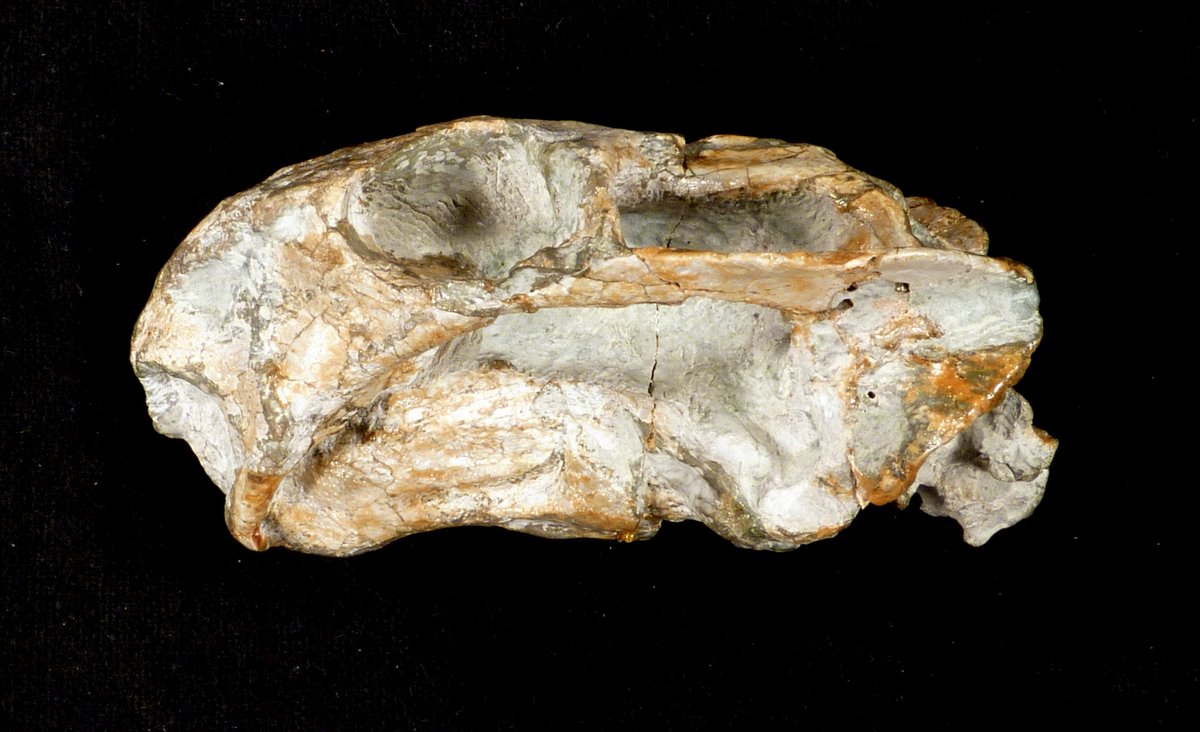
The fossil record of Brontotherium is exceptionally rich, making it one of the best-represented large prehistoric mammals. The primary source of its fossils is the White River Formation, particularly the Chadronian-age deposits in South Dakota, Nebraska, and Wyoming. This geological formation is renowned for its vast and beautifully preserved vertebrate fossils, often found as complete or nearly complete skeletons. The fine-grained volcanic ash and floodplain sediments that make up the formation were ideal for rapid burial and fossilization. As a result, hundreds of Brontotherium skulls and skeletons have been collected, providing a detailed look at its anatomy, growth series from juvenile to adult, and sexual dimorphism. Famous fossil sites like Toadstool Geologic Park in Nebraska and the Badlands National Park in South Dakota have yielded countless specimens. This abundance of material has allowed for detailed biomechanical and paleoecological studies that are not possible for many rarer prehistoric animals. The quality of preservation is often excellent, with bones showing minimal distortion.
Brontotherium has captured the public imagination as a quintessential example of prehistoric megafauna from the Age of Mammals. Its immense size and unique horned appearance make it a dramatic and popular display in natural history museums around the world. The American Museum of Natural History in New York and the Field Museum in Chicago feature impressive mounted skeletons and life-sized reconstructions that showcase the animal's imposing presence. It has appeared in numerous documentaries, books, and even films depicting prehistoric life, often cast as a powerful but ultimately doomed giant of a bygone era. For many, Brontotherium serves as a powerful educational tool, illustrating key evolutionary concepts like adaptive radiation, sexual selection, and the impact of climate change on life, bridging the gap between the age of dinosaurs and the rise of modern mammals.
Classification
Time Period
Discovery
Location
North America (specifically, the White River Badlands of South Dakota and Nebraska, USA)
Formation
White River Formation (specifically the Chadron and Brule Formations)
Frequently Asked Questions
What is Brontotherium?
Brontotherium gigas was a colossal herbivorous mammal that roamed the savannas and woodlands of North America during the Late Eocene epoch, approximately 38 to 33 million years ago. As a prominent member of the extinct family Brontotheriidae, these 'thunder beasts' represent a spectacular example of...
When did Brontotherium live?
Brontotherium lived during the paleogene period of the cenozoic era approximately 38-33 million years ago.
Where was Brontotherium discovered?
Fossils of Brontotherium were discovered in North America (specifically, the White River Badlands of South Dakota and Nebraska, USA) in the White River Formation (specifically the Chadron and Brule Formations).
What did Brontotherium eat?
Brontotherium was a herbivore. It lived in terrestrial (savannas, open woodlands) habitats.
What type of fossil is Brontotherium?
Brontotherium is preserved as a body fossil. The preservation quality is excellent.
Related Specimens
From the cenozoic era · body fossils