Bumastus
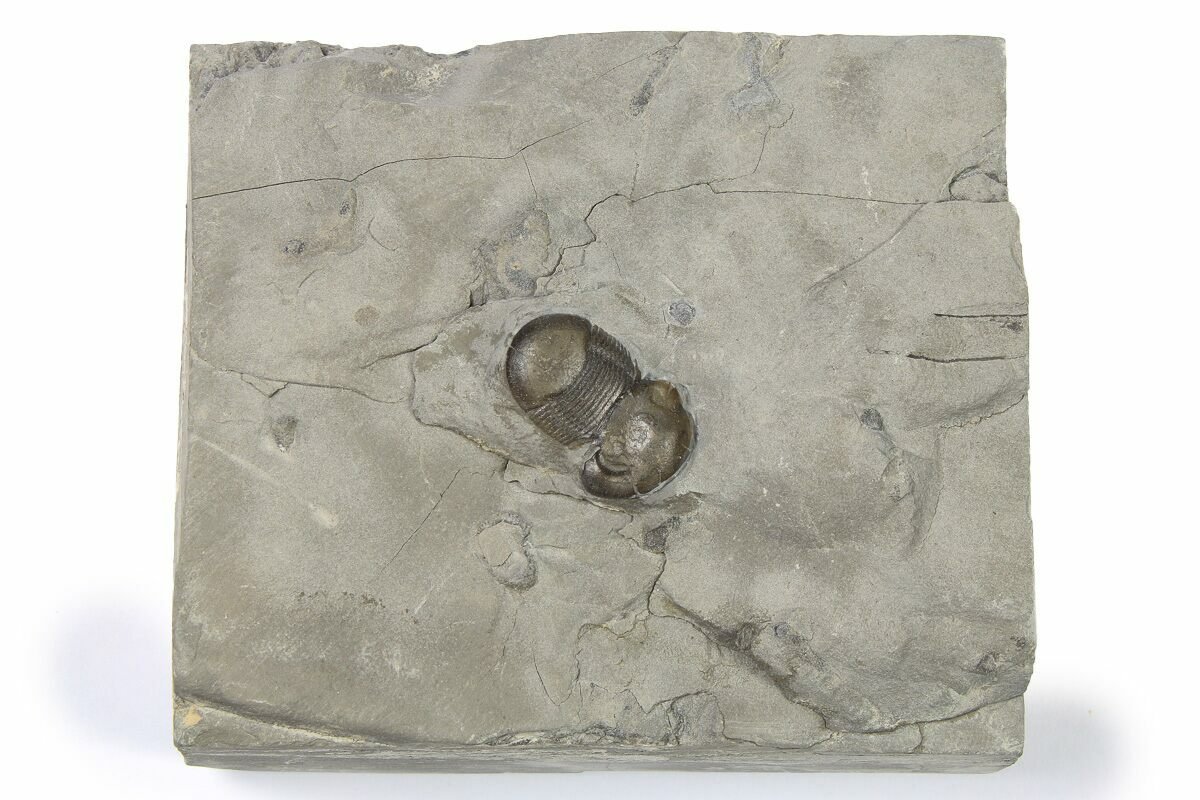
Bumastus ioxus
Image: Image sourced via web search (Fair use / Educational)
About Bumastus
Bumastus is a genus of extinct marine arthropods known as trilobites, which thrived in the shallow seas of the Silurian Period, approximately 444 to 419 million years ago. As a member of the order Corynexochida, Bumastus is renowned for its highly effaced, almost featureless exoskeleton, giving it a smooth, dome-like appearance that has captivated paleontologists and fossil collectors for centuries. Its fossils are particularly common in North America and Europe, providing a critical window into the benthic ecosystems that flourished following the Ordovician-Silurian extinction event.
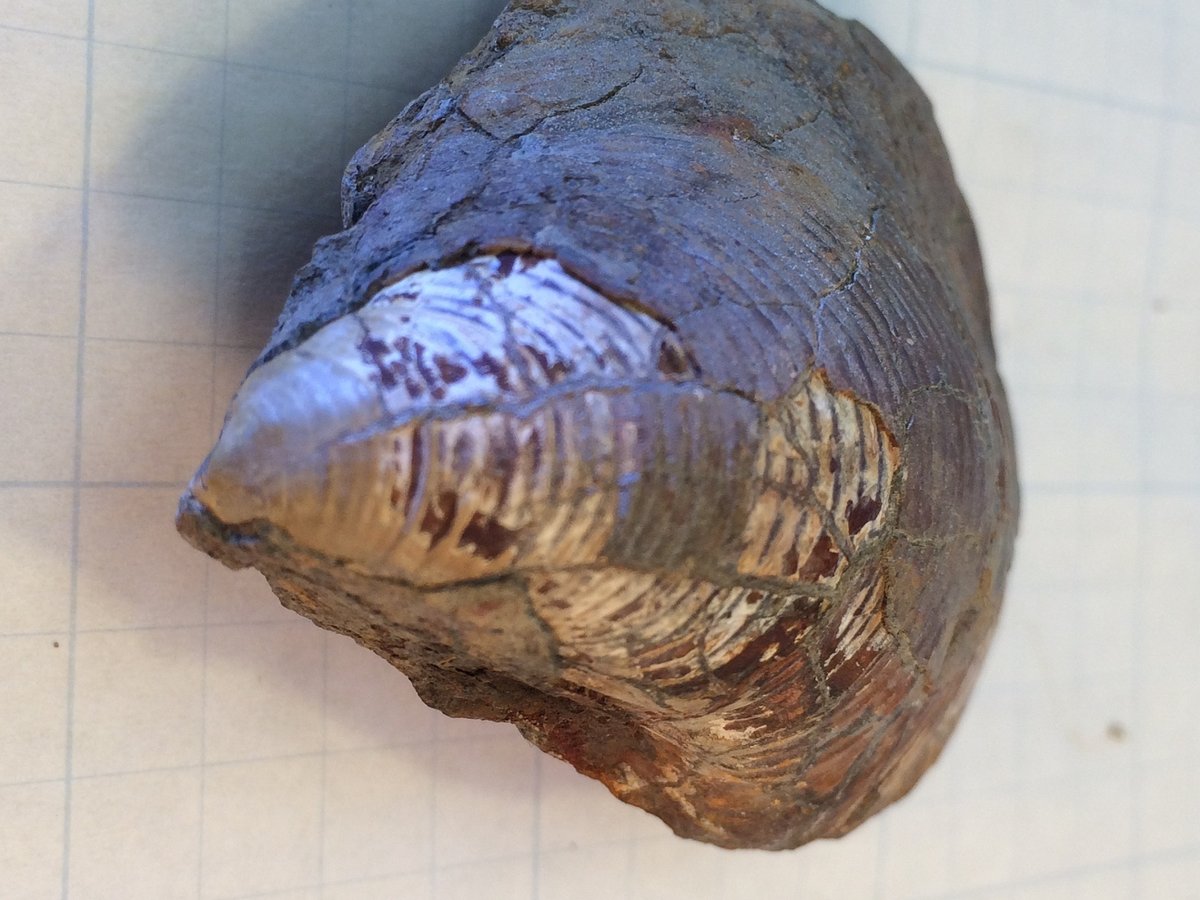
Bumastus ioxus, a prominent species within the genus, was a relatively small to medium-sized trilobite, typically reaching lengths of 5 to 10 centimeters, roughly the size of a modern-day large shrimp or a computer mouse. Its most striking characteristic was its profound effacement, a paleontological term describing the fusion and smoothing of the exoskeleton's segments. The axial furrows, which typically delineate the central axial lobe from the pleural lobes on either side in most trilobites, were extremely faint or entirely absent in Bumastus. This resulted in a broad, convex, and almost perfectly smooth dorsal shield. The cephalon (head shield) and pygidium (tail shield) were nearly identical in size and shape (a condition known as isopygous), creating a symmetrical, ovate body plan. Its compound eyes were relatively small and positioned on the lateral margins of the cephalon. The thorax was composed of ten articulating segments, allowing for a significant degree of enrollment, or conglobation, where the animal could roll into a tight, protective ball, leaving only its hard exoskeleton exposed to potential predators. This defensive posture, similar to that of modern pill bugs (isopods), would have been an effective deterrent against predators like early jawed fish and large cephalopods. The underside, which housed the delicate legs and gills, is rarely preserved, but inferences from related trilobites suggest it possessed numerous pairs of jointed appendages used for locomotion and feeding.
The unique morphology of Bumastus provides significant clues about its paleobiology and lifestyle. Its highly streamlined and vaulted shape is interpreted as an adaptation for a benthic, or bottom-dwelling, existence. Paleontologists widely believe that Bumastus was a shallow burrower, using its smooth, plow-like cephalon to push through soft sediment on the seafloor. This infaunal behavior would have helped it avoid predators and search for food. Its diet likely consisted of organic detritus and microorganisms within the substrate, making it a detritivore. The lack of large, predatory mouthparts and the position of its mouth on the ventral side support this feeding strategy. Locomotion was achieved by the rhythmic movement of its numerous pairs of legs on the underside, allowing it to crawl along and within the sediment. While direct evidence of social behavior is scarce for any trilobite, the high concentration of Bumastus fossils in certain sedimentary layers suggests they may have congregated in large numbers in favorable habitats, possibly for feeding or reproduction. Growth occurred through a process of molting (ecdysis), where the trilobite would shed its old exoskeleton to grow a new, larger one. These discarded molts, often found as disarticulated pieces, contribute significantly to the fossil record.
During the Silurian Period, Earth's climate was generally warm and stable, with high sea levels creating vast, shallow epicontinental seas that covered much of the continents, including Laurentia (ancient North America). Bumastus inhabited these warm, clear marine environments, particularly in carbonate-rich reef systems and the surrounding lagoons. These ecosystems were teeming with life. Bumastus shared its habitat with a diverse array of organisms, including brachiopods, crinoids (sea lilies), corals (such as Favosites and Halysites), bryozoans, gastropods, and other trilobite species. As a detritivore, Bumastus occupied a crucial position near the base of the food web, recycling nutrients by consuming decaying organic matter in the sediment. It, in turn, was a food source for larger predators. The primary threats likely came from large, predatory nautiloid cephalopods with powerful beaks capable of crushing arthropod exoskeletons, and the newly evolving eurypterids (sea scorpions), which were apex predators in many Silurian marine communities. The evolution of jawed fish (placoderms and acanthodians) during this period also introduced new predatory pressures, reinforcing the adaptive value of Bumastus's ability to enroll into a defensive ball.
The discovery and study of Bumastus date back to the early days of paleontology. The genus was first described by the Scottish geologist Sir Roderick Murchison in 1839, based on specimens found in the Silurian rock formations of England. The name 'Bumastus' is derived from Greek, roughly translating to 'large grape,' a reference to its rounded, bulbous pygidium. The North American species, *Bumastus ioxus*, was later formally described by the influential American paleontologist James Hall in 1867. Hall's work on the Paleozoic fossils of New York was foundational, and his descriptions of specimens from the Rochester Shale and Lockport Dolomite established *B. ioxus* as a key index fossil for the Silurian of the region. Many of the best-preserved specimens, often found as complete, enrolled individuals, have been collected from classic localities like the Caleb's Quarry in Middleport, New York, and the Waldron Shale in Indiana. These sites have yielded thousands of fossils, making Bumastus one of the most well-known and studied trilobites from this period. No single specimen has achieved a popular nickname, but complete examples are prized by museums and collectors alike for their aesthetic and scientific value.
Bumastus holds significant evolutionary importance as a highly specialized member of the trilobite class. It belongs to the family Styginidae, a group within the order Corynexochida characterized by their tendency towards effacement and isopygous bodies. The extreme smoothing of its exoskeleton represents a pinnacle of this evolutionary trend. This morphology is an excellent example of convergent evolution, as similar smooth, burrowing forms appeared independently in other trilobite orders, such as the Asaphida (e.g., Illaenus). The success of this body plan highlights the adaptive pressures of a benthic, infaunal lifestyle in Paleozoic marine ecosystems. While trilobites as a whole have no direct modern descendants, having gone extinct during the Permian-Triassic mass extinction, they are distant relatives of all living arthropods, including crustaceans, insects, and chelicerates (spiders and scorpions). Studying the specialized anatomy of Bumastus helps paleontologists understand the incredible diversity and range of ecological niches that trilobites occupied during their 270-million-year reign in Earth's oceans.
Despite being a well-known genus, Bumastus is not without its scientific debates. The primary area of discussion revolves around its taxonomy and the precise relationships between its numerous described species. The high degree of effacement, which makes the genus so distinctive, also erases many of the key anatomical landmarks (like glabellar furrows) that paleontologists use to differentiate species. This has led to historical confusion and ongoing revisions as new analytical techniques are applied. Some researchers argue that many named species may simply represent variations within a single, more variable species (intraspecific variation) or different growth stages. Furthermore, the exact function of its smooth, vaulted carapace is still debated, with some suggesting it may have also played a role in hydrodynamics, reducing drag as it moved through sediment or water. Recent studies using advanced imaging techniques on well-preserved specimens continue to refine our understanding of its internal anatomy and functional morphology, occasionally leading to re-evaluations of its life habits and ecological role.
The fossil record of Bumastus is robust and geographically widespread. Its remains are particularly abundant in Silurian-aged marine sedimentary rocks across North America (especially in the Great Lakes region, including New York, Ohio, Indiana, Illinois, Wisconsin, and Ontario) and Europe (notably the United Kingdom, Sweden, and the Czech Republic). Fossils are most commonly found in shales, limestones, and dolostones that formed in shallow-water reef and shelf environments. Due to their durable, calcified exoskeletons, Bumastus fossils are often preserved in excellent condition. Complete, articulated specimens are relatively common, especially individuals preserved in their enrolled, defensive posture. Disarticulated parts, such as isolated cephala, pygidia, and thoracic segments, are even more numerous and are considered index fossils, helping geologists date rock layers to the Silurian Period. Famous fossil sites yielding abundant Bumastus material include the Wenlock Limestone in Dudley, England, and the Rochester Shale in New York State.
Bumastus has a notable, if modest, cultural impact, primarily within the realms of fossil collecting and museum exhibition. Its pleasingly smooth, symmetrical, and often perfectly preserved form makes it a highly sought-after fossil for amateur collectors and a visually appealing display piece for museums. Major natural history museums, such as the Field Museum in Chicago, the American Museum of Natural History in New York, and the Natural History Museum in London, often feature well-preserved Bumastus specimens in their Paleozoic life displays. It serves as an excellent educational tool, perfectly illustrating key evolutionary concepts like adaptation (burrowing morphology), defense mechanisms (enrollment), and the ancient marine ecosystems of the Silurian Period. While it has not achieved the mainstream fame of dinosaurs, it is a celebrity among trilobite enthusiasts and a quintessential example of life in Paleozoic seas.
Classification
Time Period
Discovery
Location
North America (specifically, areas that are now New York, Ohio, and Ontario)
Formation
Rochester Shale, Joliet Formation, Lockport Group
Frequently Asked Questions
What is Bumastus?
Bumastus is a genus of extinct marine arthropods known as trilobites, which thrived in the shallow seas of the Silurian Period, approximately 444 to 419 million years ago. As a member of the order Corynexochida, Bumastus is renowned for its highly effaced, almost featureless exoskeleton, giving it a...
When did Bumastus live?
Bumastus lived during the silurian period of the paleozoic era approximately 444-419 million years ago.
Where was Bumastus discovered?
Fossils of Bumastus were discovered in North America (specifically, areas that are now New York, Ohio, and Ontario) in the Rochester Shale, Joliet Formation, Lockport Group.
What did Bumastus eat?
Bumastus was a detritivore. It lived in marine, shallow sea floor, reef habitats.
What type of fossil is Bumastus?
Bumastus is preserved as a body fossil. The preservation quality is good.
Related Specimens
From the paleozoic era · body fossils