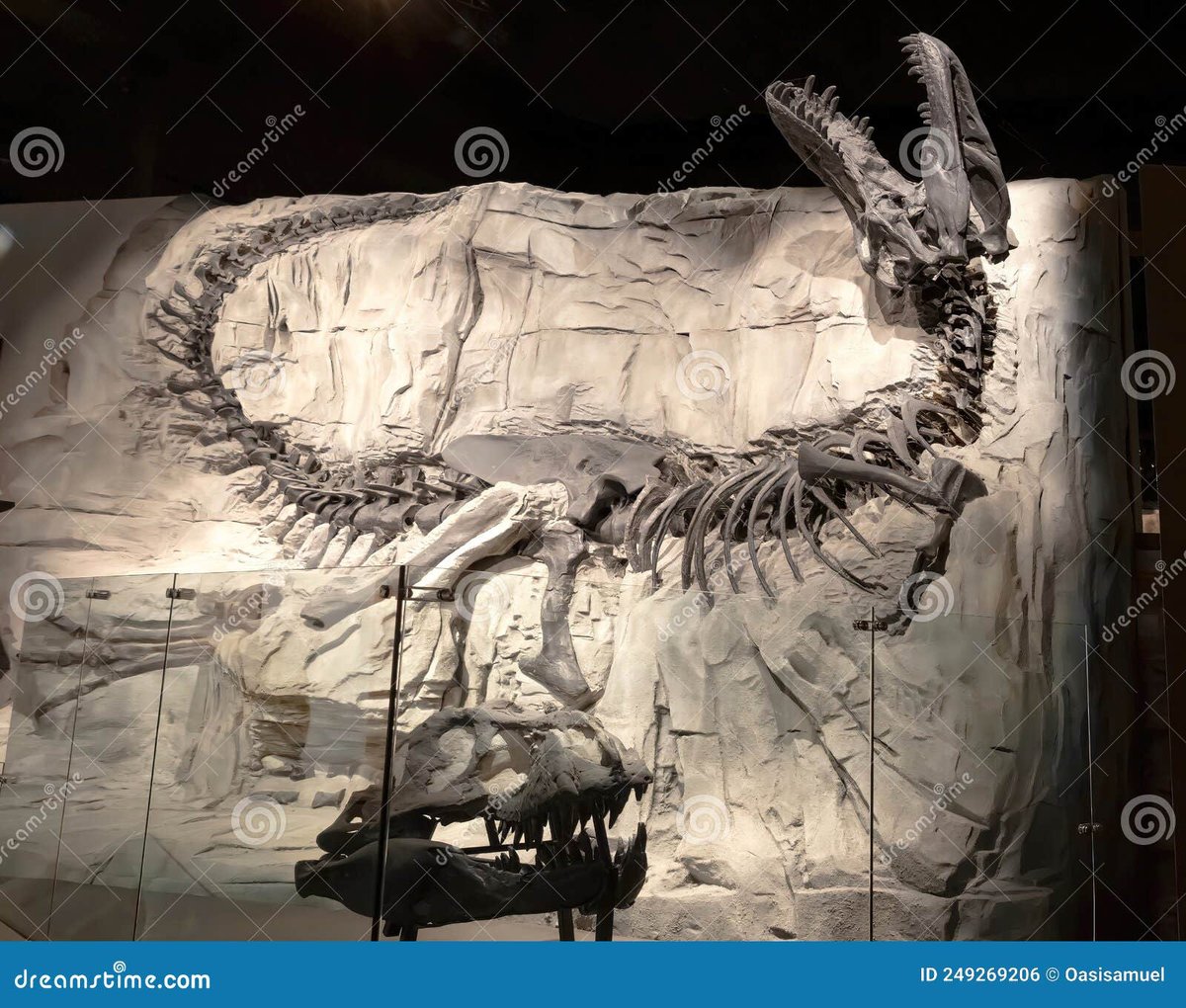
Stan the T. rex (BHI 3033)
Tyrannosaurus rex
Image: Image sourced via web search (Fair use / Educational)
About Stan the T. rex (BHI 3033)
Stan the T. rex, officially cataloged as BHI 3033, is one of the most complete and widely recognized Tyrannosaurus rex specimens ever discovered, representing a pinnacle of paleontological preservation from the Late Cretaceous period. Living approximately 67 to 66 million years ago in what is now the western United States, this apex predator roamed the dynamic, subtropical environments of the Hell Creek Formation just prior to the Cretaceous-Paleogene extinction event. Stan is not merely a fossil; he is a scientific touchstone that has provided researchers with unparalleled insights into the biomechanics, pathology, and daily life of the most famous dinosaur species in history. Because casts of his skeleton have been distributed to dozens of museums worldwide, Stan is arguably the most viewed and studied individual dinosaur specimen on the planet, serving as the quintessential ambassador for paleontology and the Mesozoic era. The physical description of Stan reveals a massive, heavily built theropod dinosaur that dominated its ecosystem through sheer size and power. Measuring approximately 11.7 meters in length and standing nearly 4 meters tall at the hips, Stan was a formidable creature whose living weight is estimated to have been between 7 and 8 metric tons. This places him among the largest known terrestrial carnivores, roughly equivalent in weight to a modern African bull elephant, though significantly longer and bipedal. Stan's skeleton is characterized by a massive skull, which measures nearly 1.3 meters long and is armed with over 50 serrated, banana-shaped teeth designed not just for slicing meat, but for crushing solid bone. His neck was short, muscular, and S-shaped to support the immense weight of the head, while his forelimbs were famously disproportionately small, bearing only two functional digits. Despite their size, these arms were heavily muscled and likely served a purpose, perhaps in holding prey or assisting the animal in rising from a resting position. Stan's hind limbs were incredibly powerful, featuring robust femurs and elongated metatarsals that suggest he was an efficient walker, if not a rapid runner. One of the most distinctive features of Stan's specific skeleton is the extensive evidence of pathology; his bones bear the scars of a violent life, including healed puncture wounds on his skull, ribs, and pelvis, likely inflicted by other Tyrannosaurus rex individuals. He also suffered a broken neck that fused as it healed, indicating incredible resilience and the ability to survive severe trauma. The paleobiology of Tyrannosaurus rex, heavily informed by specimens like Stan, paints a picture of an active, highly specialized predator and opportunistic scavenger. Stan's diet consisted primarily of large herbivorous dinosaurs such as Triceratops and Edmontosaurus, which shared his habitat. The immense bite force of T. rex, estimated at over 35,000 newtons, allowed it to shatter the bones of its prey, accessing nutrient-rich marrow that other predators could not reach. This bone-crushing capability is evidenced by coprolites containing pulverized bone fragments and deep bite marks on the bones of contemporary herbivores. Hunting strategies likely involved ambush tactics, utilizing the dense vegetation of the Hell Creek environment to get close to prey before delivering a devastating, crippling bite. Locomotion studies based on Stan's biomechanics suggest that while adult T. rex could not run at high speeds due to the risk of catastrophic injury from a fall, they were highly efficient walkers capable of covering vast territories. The social behavior of T. rex remains a subject of intense study, but the bite marks on Stan's skull strongly suggest intraspecific combat, either for territory, mating rights, or dominance. Growth patterns derived from bone histology indicate that T. rex underwent a massive growth spurt during its teenage years, packing on hundreds of kilograms annually before reaching skeletal maturity in its early twenties. Stan's metabolism is thought to have been intermediate between modern reptiles and birds, allowing for rapid growth and sustained activity levels without the extreme energy demands of fully endothermic mammals. The ecological context in which Stan lived was a vibrant, diverse world vastly different from the modern Dakotas. During the Late Cretaceous, the Hell Creek Formation was a lush, subtropical coastal plain bordering the Western Interior Seaway, characterized by meandering rivers, dense forests of conifers, ferns, and early angiosperms, and expansive floodplains. The climate was warm and humid, supporting a rich ecosystem teeming with life. Stan shared this environment with a menagerie of iconic dinosaurs, including the heavily armored Ankylosaurus, the dome-headed Pachycephalosaurus, and massive herds of ceratopsians and hadrosaurs that formed the bulk of his prey base. Small theropods like Dakotaraptor and Acheroraptor occupied lower predatory niches, while the skies were patrolled by large pterosaurs and early birds. Mammals, though present, were mostly small, shrew-like creatures that scurried in the underbrush, waiting for the cover of darkness. In this complex food web, adult Tyrannosaurus rex occupied the undisputed role of apex predator. The relationship between T. rex and its primary prey, particularly Triceratops, represents one of the most famous predator-prey dynamics in the fossil record, an evolutionary arms race between unstoppable force and immovable defense. The discovery history of Stan is a dramatic narrative that highlights both the thrill of paleontological field work and the complex commercial realities of modern fossil collecting. The specimen was first discovered in the spring of 1987 by amateur paleontologist Stan Sacrison, who spotted a massive pelvis weathering out of a sandy cliff face in Harding County, South Dakota. Initially misidentified as a Triceratops, the bones were left unexcavated until 1992, when researchers from the Black Hills Institute of Geological Research (BHI), led by Peter Larson, recognized the true identity of the fossil. The BHI team undertook a grueling excavation process, carefully removing the overburden and extracting the remarkably complete skeleton, which was subsequently named 'Stan' in honor of its discoverer. The preparation of Stan took over 30,000 hours of meticulous laboratory work, revealing a skeleton that was approximately 65 percent complete by bone count, making it one of the most complete T. rex specimens ever found, second only to the famous 'Sue' (FMNH PR 2081). Stan's skull is particularly renowned for being discovered in disarticulated pieces, which allowed scientists to study the individual cranial bones and their complex joints in unprecedented detail. In 2020, Stan made headlines worldwide when the original fossil was sold at a Christie's auction for a record-breaking 31.8 million dollars, a controversial event that removed the physical specimen from immediate public access, though its scientific legacy continues through the extensive data and casts previously distributed. The evolutionary significance of Tyrannosaurus rex, and by extension Stan, lies in its position at the very end of the dinosaurian lineage, representing the ultimate culmination of theropod evolution before the catastrophic asteroid impact that ended the Mesozoic era. T. rex belongs to the family Tyrannosauridae, a group of coelurosaurian theropods that originated as small, feathered predators in the Jurassic period. Over tens of millions of years, tyrannosauroids evolved massive body sizes, specialized dentition, and reduced forelimbs, eventually dominating the apex predator niches of North America and Asia. Stan provides crucial data on the anatomical extremes reached by this lineage, showcasing highly derived features such as binocular vision, an advanced olfactory system, and a reinforced skull architecture designed to withstand immense biomechanical stress. These adaptations highlight a highly specialized evolutionary trajectory that was abruptly cut short. Furthermore, the study of T. rex anatomy, particularly the structure of its respiratory system and the presence of medullary bone in some specimens, reinforces the deep evolutionary connection between non-avian dinosaurs and modern birds, providing a critical link in our understanding of vertebrate evolution. Scientific debates surrounding Tyrannosaurus rex have been numerous and vigorous, with Stan frequently serving as a key piece of evidence. One of the longest-running controversies was the debate over whether T. rex was primarily an active predator or an obligate scavenger. While early arguments suggested its massive size and small arms relegated it to scavenging, evidence from Stan's binocular vision, healed bite marks on prey animals, and robust biomechanics have largely settled the debate in favor of T. rex being an active predator that also scavenged opportunistically. Another ongoing debate involves the taxonomy of smaller tyrannosaur specimens found in the Hell Creek Formation, with some scientists arguing they represent a separate genus, Nanotyrannus, while others, utilizing growth series data, contend they are simply juvenile T. rex. The auction of Stan in 2020 also ignited fierce ethical debates within the scientific community regarding the commercialization of scientifically significant fossils and the potential loss of crucial data when specimens are sold to private collectors rather than public institutions. The fossil record of Tyrannosaurus rex is largely confined to the uppermost Cretaceous deposits of western North America, spanning from Alberta, Canada, down to Texas, with the Hell Creek Formation of Montana, North Dakota, and South Dakota being the most prolific source. To date, several dozen partial skeletons of T. rex have been discovered, but specimens as complete and well-preserved as Stan are exceedingly rare. The preservation quality of Stan is exceptional; the bones were buried rapidly in a sandy fluvial environment, which protected them from extensive scavenging and weathering. This rapid burial allowed for the preservation of delicate structures, including the fragile bones of the palate and the braincase. Typically, theropod fossils are found highly fragmented or missing crucial elements like the skull or tail, making Stan's completeness a vital baseline for reconstructing less complete specimens and understanding the proportional anatomy of the species. The cultural impact of Stan is arguably unmatched by any other individual dinosaur specimen, save perhaps for Sue. Because the Black Hills Institute produced and sold high-quality casts of Stan's skeleton, he is currently on display in over 60 museums and institutions across the globe, from Tokyo to London to the Smithsonian in Washington, D.C. For millions of people, Stan is the physical embodiment of Tyrannosaurus rex, shaping public perception of what a dinosaur looks like. His imposing silhouette has inspired countless illustrations, documentaries, and cinematic representations. The staggering auction price of the original fossil further cemented Stan's status as a cultural icon, highlighting the deep, enduring human fascination with these magnificent creatures that once ruled the Earth. Stan serves as a powerful educational tool, bridging the gap between complex paleontological science and public wonder, ensuring that the legacy of the dinosaurs continues to inspire future generations of scientists and enthusiasts alike.
Classification
Time Period
Discovery
Location
South Dakota, United States
Formation
Hell Creek Formation
Frequently Asked Questions
What is Stan the T. rex (BHI 3033)?
Stan the T. rex, officially cataloged as BHI 3033, is one of the most complete and widely recognized Tyrannosaurus rex specimens ever discovered, representing a pinnacle of paleontological preservation from the Late Cretaceous period. Living approximately 67 to 66 million years ago in what is now th...
When did Stan the T. rex (BHI 3033) live?
Stan the T. rex (BHI 3033) lived during the cretaceous period of the mesozoic era approximately 67-66 million years ago.
Where was Stan the T. rex (BHI 3033) discovered?
Fossils of Stan the T. rex (BHI 3033) were discovered in South Dakota, United States in the Hell Creek Formation.
What did Stan the T. rex (BHI 3033) eat?
Stan the T. rex (BHI 3033) was a carnivore. It lived in terrestrial habitats.
What type of fossil is Stan the T. rex (BHI 3033)?
Stan the T. rex (BHI 3033) is preserved as a body fossil. The preservation quality is exceptional.
Related Specimens
From the mesozoic era · body fossils