Camarasaurus
Camarasaurus supremus
Image: Image sourced via web search (Fair use / Educational)
About Camarasaurus
Camarasaurus, whose name means 'chambered lizard' in reference to the hollow chambers in its vertebrae, was a large, quadrupedal herbivorous dinosaur that roamed North America during the Late Jurassic period. As one of the most common sauropods found in the Morrison Formation, its abundant and well-preserved fossils have provided paleontologists with a remarkably complete picture of its anatomy and life, making it a cornerstone for understanding sauropod biology and the Jurassic ecosystem. Its robust build and relatively short neck and tail distinguish it from its more famous contemporaries like Diplodocus and Brachiosaurus, offering a case study in the diverse evolutionary strategies of giant herbivores.
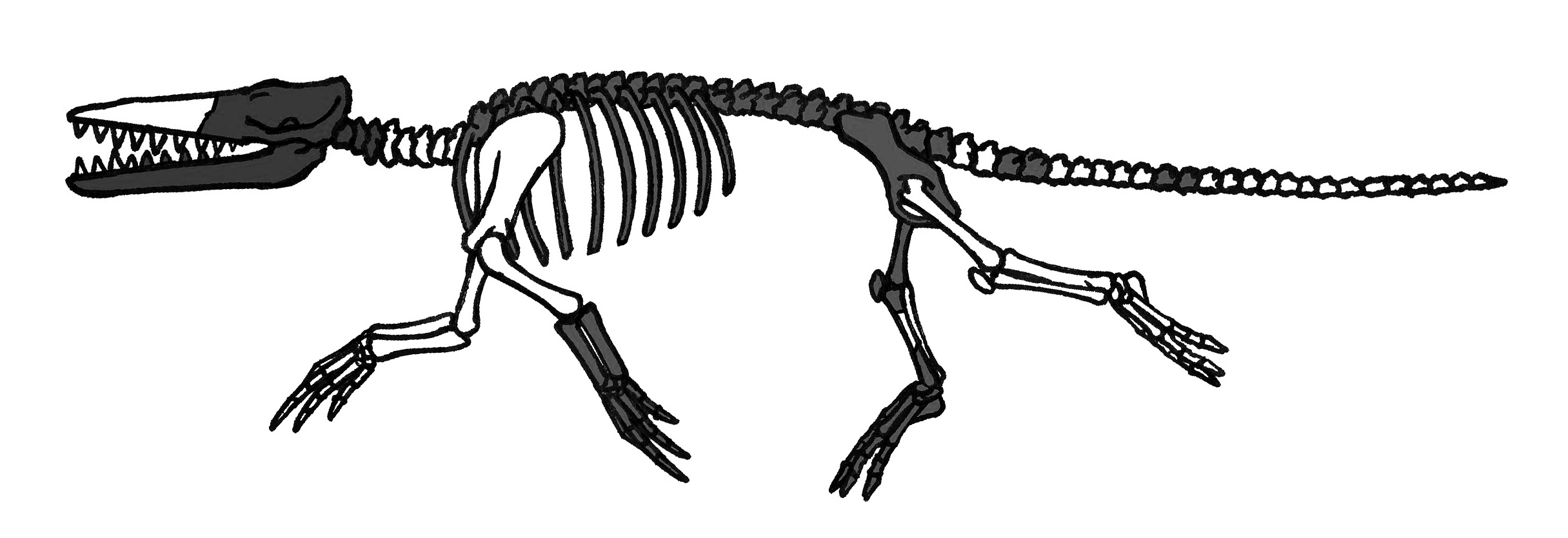
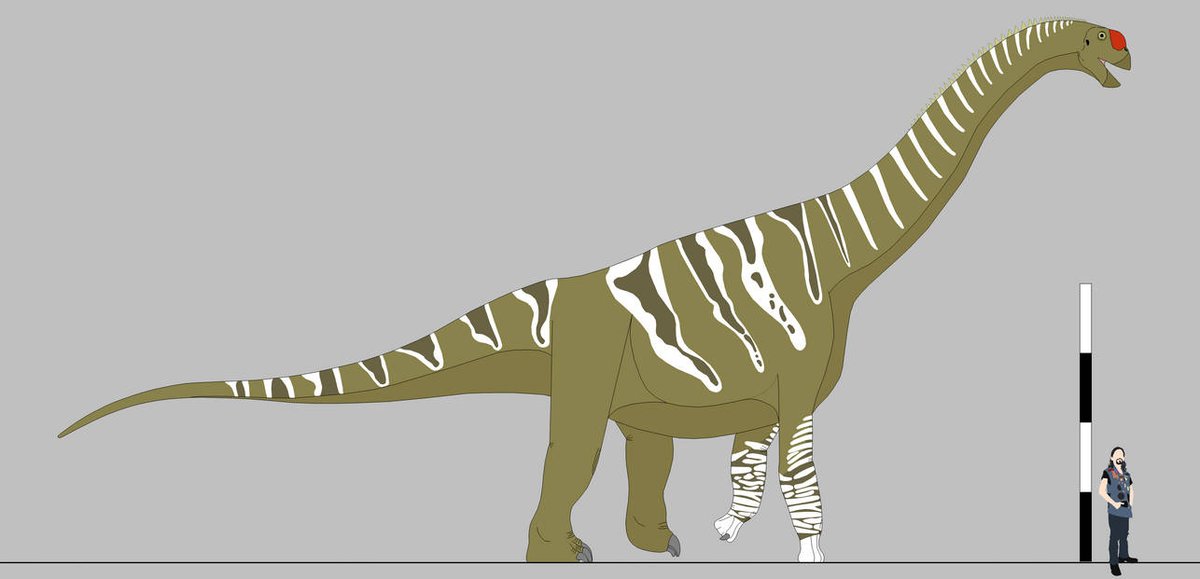
Camarasaurus was a heavily built sauropod, though modest in size compared to some of the super-giants of its time. An average adult of the species C. supremus would have reached lengths of approximately 18 meters (about 60 feet) and stood around 4.5 meters (15 feet) tall at the hips, with weight estimates ranging from 18 to 22 metric tons. To put this in perspective, it was roughly the length of a modern semi-trailer truck and weighed as much as four large African elephants. Its skull is one of its most distinctive features: short, deep, and boxy, almost bulldog-like in appearance, which contrasts sharply with the long, slender skulls of diplodocids. This robust skull housed large, spoon-shaped (spatulate) teeth, each up to 19 centimeters long including the root, which were well-suited for cropping tough vegetation. The neck of Camarasaurus was relatively short and thick for a sauropod, composed of only 12 massive vertebrae. These vertebrae, like those of its back, were characterized by large, hollow chambers (pleurocoels) that significantly reduced the weight of the skeleton without compromising its strength. Its forelimbs were nearly as long as its hind limbs, giving its back a relatively level profile, unlike the steeply sloped back of Brachiosaurus. This limb structure, combined with its solid, pillar-like legs, supported its immense weight effectively, indicating a creature built for stability and power over speed.
Based on its anatomy, the paleobiology of Camarasaurus can be inferred with a high degree of confidence. Its robust, spoon-shaped teeth were not designed for grinding but for slicing and cropping coarse plant material, such as cycads, conifers, and ferns. Wear patterns on the teeth suggest it would strip branches of their foliage, swallowing the material whole to be broken down in its massive gut, likely with the aid of gastroliths (stomach stones), which have been found in association with some skeletons. Unlike diplodocids, which could browse over a wide, low arc, the shorter, less flexible neck of Camarasaurus suggests it was a mid-level browser, feeding on vegetation from ground level up to a height of perhaps 5-7 meters. This feeding height specialization would have reduced competition with other sauropods in its environment. Locomotion was strictly quadrupedal and ponderous, with large, fleshy pads on its feet cushioning its steps. Evidence from bonebeds containing multiple individuals of various ages suggests that Camarasaurus may have lived in herds or family groups. This social structure could have offered protection against large predators and facilitated migration in search of food and water. Histological studies of its bones reveal a rapid growth rate, with individuals likely reaching near-adult size in about 20 years, a common strategy for giant herbivores to quickly outgrow their most vulnerable juvenile stage.
The world of Camarasaurus during the Late Jurassic was a vast, semi-arid floodplain, represented today by the Morrison Formation of the western United States. The climate was monsoonal, with distinct wet and dry seasons that dictated the availability of resources. The landscape was dominated by extensive river systems, fern savannas, and gallery forests of conifers, ginkgoes, and tree ferns along the waterways. In this rich ecosystem, Camarasaurus was a dominant mega-herbivore, occupying a key position in the food web as a primary consumer of mid-level vegetation. It shared this environment with a spectacular diversity of other dinosaurs. Fellow sauropods included the long-necked Diplodocus and Apatosaurus, which likely fed on lower vegetation, and the towering Brachiosaurus, which browsed on the highest treetops. This niche partitioning allowed multiple giant herbivore species to coexist. Other herbivores included the armored Stegosaurus and the bipedal ornithopod Camptosaurus. However, this world was also home to formidable predators. The apex predator was the massive theropod Allosaurus, whose shed teeth are frequently found among Camarasaurus remains, and bite marks on Camarasaurus bones directly attest to predation or scavenging. The slightly larger but rarer Torvosaurus and the agile Ceratosaurus also posed significant threats, particularly to young, old, or sick individuals.
The discovery history of Camarasaurus is deeply intertwined with the 'Bone Wars' of the late 19th century, the fierce rivalry between paleontologists Othniel Charles Marsh and Edward Drinker Cope. The first fossils attributed to the genus were discovered in 1877 by Oramel W. Lucas in Garden Park, Colorado. Lucas sent these vertebrae to Cope, who quickly named the animal Camarasaurus supremus, referencing the hollow chambers in the bones. That same year, Marsh's collectors found similar material at Como Bluff, Wyoming, which Marsh initially named Morosaurus. For decades, the taxonomy was confused, with multiple names being assigned to what was likely the same animal. The situation was clarified in the early 20th century by paleontologists Charles W. Gilmore and Henry Fairfield Osborn. A pivotal discovery was made in 1925 at Dinosaur National Monument in Utah, where a complete and articulated juvenile skeleton (specimen CM 11338) was unearthed by Earl Douglass. This remarkably preserved specimen became the centerpiece of the Camarasaurus display at the Carnegie Museum of Natural History and provided the definitive anatomical reference for the genus, solidifying its appearance in both scientific literature and the public imagination. It remains one of the most complete sauropod skeletons ever found.
In the grand tapestry of dinosaur evolution, Camarasaurus holds a significant position as a basal member of the Macronaria, a major sauropod clade characterized by large nasal openings and more robust builds. The name Macronaria means 'large nostrils,' and the large nasal opening situated high on the skull of Camarasaurus is a classic feature. This group would later give rise to the towering brachiosaurids and the colossal titanosaurs, the largest land animals of all time. Camarasaurus itself represents a successful and widespread lineage, the Camarasauridae, that flourished for millions of years. Its anatomy provides a crucial baseline for understanding the evolutionary trends within Macronaria, such as the development of different feeding strategies (e.g., its robust skull versus the slender skulls of diplodocids) and body plans. It does not have any direct modern descendants, as all non-avian dinosaurs perished in the Cretaceous-Paleogene extinction event. However, as a member of the Saurischia ('lizard-hipped') order, it shares a distant common ancestor with modern birds. Studying its physiology, such as its bird-like respiratory system inferred from the hollow vertebrae, helps scientists trace the origins of traits that are now exclusively found in birds, providing a window into the deep evolutionary history of the dinosaur-bird lineage.
Despite the abundance of its fossils, Camarasaurus is still the subject of scientific debate. One long-standing discussion revolves around the function of its large nasal openings. Early reconstructions placed its nostrils high on its head, leading to speculation that it might have had a trunk-like proboscis, an idea now largely dismissed due to the lack of corresponding facial musculature scars on the skull. The current consensus places the fleshy nostrils much lower down on the snout, similar to most terrestrial vertebrates. Another area of active research is the number of valid species within the genus. While C. supremus, C. grandis, and C. lentus are generally accepted, the validity of others and their relationship to one another is debated, with some researchers suggesting they may represent different growth stages or individual variation rather than distinct species. The exact nature of its social behavior, while inferred to be gregarious from bonebeds, remains a topic of discussion, as these fossil accumulations could also result from environmental factors like droughts or floods concentrating animals in one place. These ongoing investigations ensure that Camarasaurus remains a dynamic subject in paleontological research.
The fossil record of Camarasaurus is one of the most extensive for any sauropod dinosaur, making it a paleontological benchmark. Its remains are found almost exclusively in the Morrison Formation, a vast expanse of sedimentary rock covering much of the western United States, including Colorado, Wyoming, Utah, and New Mexico. Dozens of partial to complete skeletons have been unearthed, representing individuals of all age groups, from juveniles to large adults. This wealth of material provides an unparalleled look at its ontogeny (growth from juvenile to adult). The preservation quality is often excellent, with many skeletons found articulated or semi-articulated, rather than as scattered, disassociated bones. Famous fossil sites that have yielded significant Camarasaurus specimens include Dinosaur National Monument in Utah, where its bones are visible in the quarry wall, and the Bone Cabin Quarry and Como Bluff in Wyoming. The sheer abundance of Camarasaurus fossils suggests it was one of the most common, if not the most common, large herbivores in the Morrison ecosystem during its time.
Due to its well-known and complete skeleton, Camarasaurus is a popular and important dinosaur in museum displays and public outreach. It often serves as the archetypal sauropod in exhibits, representing the classic Jurassic giant. Major museums, including the Carnegie Museum of Natural History in Pittsburgh, the American Museum of Natural History in New York, and the Smithsonian National Museum of Natural History in Washington, D.C., feature impressive mounted skeletons of Camarasaurus. Its frequent appearance in dinosaur books, documentaries, and educational materials has made it a familiar name to dinosaur enthusiasts. While it may be overshadowed in popular culture by the larger Brachiosaurus or the longer Diplodocus, its scientific importance and prevalence in the fossil record make it a vital component of our understanding of the Age of Dinosaurs.
Classification
Time Period
Discovery
Location
United States (Colorado)
Formation
Morrison Formation
Frequently Asked Questions
What is Camarasaurus?
Camarasaurus, whose name means 'chambered lizard' in reference to the hollow chambers in its vertebrae, was a large, quadrupedal herbivorous dinosaur that roamed North America during the Late Jurassic period. As one of the most common sauropods found in the Morrison Formation, its abundant and well-...
When did Camarasaurus live?
Camarasaurus lived during the jurassic period of the mesozoic era approximately 155-145 million years ago.
Where was Camarasaurus discovered?
Fossils of Camarasaurus were discovered in United States (Colorado) in the Morrison Formation.
What did Camarasaurus eat?
Camarasaurus was a herbivore. It lived in terrestrial habitats.
What type of fossil is Camarasaurus?
Camarasaurus is preserved as a body fossil. The preservation quality is excellent.
Related Specimens
From the mesozoic era · body fossils