Platybelodon
Platybelodon grangeri
Image: Image sourced via web search (Fair use / Educational)
About Platybelodon
Platybelodon grangeri represents one of the most bizarre and specialized members of the order Proboscidea, the group that includes modern elephants. This large herbivorous mammal lived during the middle to late Miocene Epoch, approximately 15 to 10 million years ago, with its fossils found across Asia, Africa, and North America, highlighting its widespread success. Its name, meaning 'flat tusk,' alludes to its most defining and peculiar feature: a pair of enormous, flattened lower incisors that formed a shovel-like structure at the end of its jaw, making it an icon of prehistoric megafauna and a subject of intense scientific study regarding its unique feeding adaptations.
Platybelodon was a large, robust animal, comparable in size to a modern Asian elephant. It stood approximately 2.5 to 3 meters (8 to 10 feet) tall at the shoulder and reached a body length of up to 6 meters (20 feet), including its trunk and tail. Weight estimates place it in the range of 4 to 5 metric tons (4.4 to 5.5 short tons). Its overall body plan was similar to that of other proboscideans, with a massive torso, thick, pillar-like legs to support its great weight, and a relatively short neck. However, its skull and jaw were highly specialized. The cranium was elongated and flattened on top. The most striking feature was its elongated mandible, or lower jaw, which extended far forward and terminated in two broad, flat, spade-like incisors fused together. These lower tusks were not pointed like those of many other proboscideans but were wide and shovel-shaped, showing significant wear patterns on their upper surfaces. In addition to the lower tusks, Platybelodon also possessed a pair of shorter, downward-curving tusks in its upper jaw, which were more conventional in shape. It had a flexible, muscular trunk, or proboscis, though its exact form and function are debated. Some reconstructions depict a flattened, broad trunk that worked in concert with the lower tusks, while others suggest a more conventional, elephant-like trunk used for grasping vegetation.
The unique morphology of Platybelodon's jaw has long been central to discussions about its paleobiology and feeding strategy. Early interpretations, based on the shovel-like tusks, proposed that the animal was semi-aquatic, living in marshes and swamps. It was thought to have used its lower jaw to dredge up soft aquatic plants from the muddy bottoms of lakes and rivers, scooping them into its mouth. This 'aquatic dredger' hypothesis was popular for many decades. However, detailed microscopic analysis of the wear patterns on the fossilized tusks has challenged this view. The scratches and gouges found on the enamel are inconsistent with scooping soft, non-abrasive water plants. Instead, the wear patterns suggest contact with tougher, more abrasive material, such as bark, branches, and soil-covered roots. This has led to the now more widely accepted theory that Platybelodon was a terrestrial browser. According to this model, it would use its powerful lower tusks as a combination of a scythe and a spade. It may have scraped bark from trees, cut through tough branches, or dug into the ground to unearth roots and tubers. The flexible trunk would have then been used to gather the dislodged plant matter and guide it into the mouth, where large molars would grind it down. This feeding style suggests a highly specialized herbivore adapted to a specific niche, likely involving coarse vegetation that other herbivores could not easily process. Social behavior is inferred from fossil assemblages, suggesting they may have lived in herds, similar to modern elephants, for protection and foraging efficiency.
Platybelodon lived during the Miocene, a time of significant global climate change and ecological transition. The world was generally warmer than today, but a gradual cooling and drying trend was underway, leading to the expansion of grasslands and savannas at the expense of dense forests. Platybelodon's habitat likely consisted of a mosaic of woodlands, floodplains, and riverine environments where it could find sufficient vegetation and water. It shared its ecosystem with a diverse array of other large mammals. In Asia, its contemporaries included early giraffids like Palaeotragus, chalicotheres (large, clawed herbivores), various species of rhinoceros, and ancestral deer and antelope. Predators in this environment would have included formidable hunters such as the large 'bear-dog' Amphicyon and saber-toothed cats like Machairodus. As a large herbivore, Platybelodon would have been a primary consumer, playing a significant role in shaping the vegetation structure through its intensive browsing or digging activities. Its size would have made adult individuals largely immune to predation, though calves and juveniles would have been vulnerable. Its specialized feeding apparatus allowed it to exploit food resources that were inaccessible to many other herbivores, reducing direct competition and securing its position within the complex Miocene food web.
The discovery of Platybelodon is closely tied to the famous Central Asiatic Expeditions of the 1920s and 1930s, led by the American paleontologist Roy Chapman Andrews for the American Museum of Natural History (AMNH). While these expeditions are most famous for finding the first dinosaur eggs, they also uncovered a wealth of Cenozoic mammal fossils. The first significant fossils of Platybelodon were discovered in the Tunggur Formation of Inner Mongolia, China, in the late 1920s. The paleontologist Walter W. Granger, a key member of the expeditions, was instrumental in their collection. The genus and the type species, Platybelodon grangeri, were formally described and named by the renowned paleontologist Henry Fairfield Osborn in 1929, who named the species in honor of Granger. The initial specimens, particularly the remarkably complete skulls and lower jaws, immediately captured scientific and public attention due to their bizarre 'shovel-tusk' morphology. The AMNH created a now-famous diorama depicting Platybelodon in a marshy habitat, which cemented the early 'aquatic dredger' hypothesis in the public imagination for decades. Subsequent discoveries of Platybelodon and related genera like Amebelodon in North America and Africa expanded the known range of these unique proboscideans.
Platybelodon belongs to the extinct family Amebelodontidae, a diverse and successful group of proboscideans that flourished during the Miocene. This family is part of the broader radiation of 'gomphotheres,' a paraphyletic group of elephant relatives characterized by having four tusks (two in the upper jaw, two in the lower). The evolutionary trajectory of the amebelodontids shows a remarkable trend towards the specialization of the lower jaw and incisors. Early forms had more conical lower tusks, but lineages like Platybelodon and its close relative Amebelodon evolved these into flattened, spade-like structures. This represents a fascinating case of convergent evolution, as different genera within the family independently developed similar shovel-like jaws to exploit specific food sources. Platybelodon itself is not a direct ancestor of modern elephants (which belong to the family Elephantidae) but represents a highly successful side branch of the proboscidean evolutionary tree. The eventual extinction of the amebelodontids, including Platybelodon, toward the end of the Miocene is thought to be linked to ongoing climate change. As environments became cooler and drier, the specific types of vegetation and habitats they depended on may have dwindled, leading to their decline and replacement by more adaptable grazers and browsers, including the ancestors of modern elephants.
While the general understanding of Platybelodon has solidified, some scientific debates persist. The primary controversy has been its feeding ecology. The shift from the 'aquatic dredger' to the 'terrestrial browser' model is a prime example of how new analytical techniques, such as microwear analysis on teeth and tusks, can overturn long-held hypotheses. Even within the terrestrial model, the exact function of the tusks is debated: were they primarily for stripping bark, cutting branches, or digging for roots? The answer is likely a combination, varying with local environment. Another area of discussion involves the anatomy of the trunk. The absence of soft tissue preservation means its shape is entirely inferential. Some researchers argue for a broad, flattened proboscis that assisted the shovel-tusks, while others contend it was a more standard, prehensile trunk. The precise taxonomic relationships within the Amebelodontidae family are also continuously refined as new fossils are discovered and analyzed, clarifying the evolutionary paths that led to such extreme specializations.
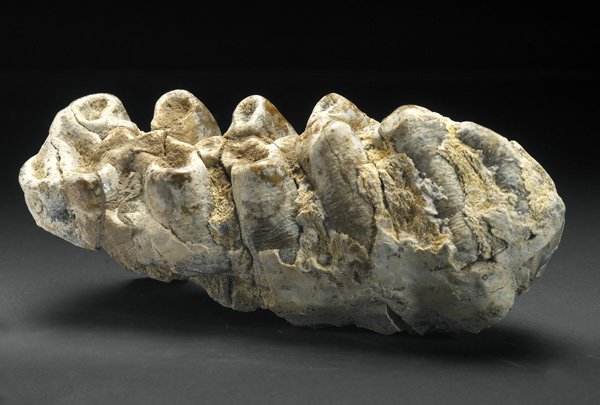
The fossil record of Platybelodon is quite robust, providing a good understanding of its anatomy and geographic distribution. The most significant and complete fossils, including the type specimens of Platybelodon grangeri, come from the Tunggur Formation in Inner Mongolia, China. This site has yielded numerous skulls, jaws, and postcranial elements. Fossils attributed to the genus Platybelodon have also been found in other parts of Asia, including Pakistan and the Caucasus region. Related species and genera, part of the broader shovel-tusker group, have been unearthed in Africa and North America, indicating that this was a globally distributed and successful lineage during the Miocene. The quality of preservation is often good, with the dense bone of the skull and the durable enamel of the tusks being the most commonly preserved parts. These fossils are crucial for studying the evolution of proboscidean feeding mechanisms and are housed in major museum collections worldwide, including the American Museum of Natural History in New York and the Institute of Vertebrate Paleontology and Paleoanthropology in Beijing.
With its utterly unique appearance, Platybelodon has secured a firm place in popular culture and paleontological outreach. Its 'shovel-tusks' make it instantly recognizable and a favorite in books, documentaries, and museum exhibits about prehistoric life. It is often featured as an example of the strange and wonderful evolutionary experiments that have occurred throughout Earth's history. Major museums, such as the American Museum of Natural History and the Natural History Museum in London, feature impressive skeletal mounts or life-sized reconstructions of Platybelodon, often highlighting the historical shift in understanding its lifestyle from an aquatic dredger to a terrestrial browser. This narrative serves as an excellent educational tool for demonstrating how the scientific process works, with new evidence leading to revised interpretations of the past.
Classification
Time Period
Discovery
Location
Mongolia
Formation
Tunggur Formation
Frequently Asked Questions
What is Platybelodon?
Platybelodon grangeri represents one of the most bizarre and specialized members of the order Proboscidea, the group that includes modern elephants. This large herbivorous mammal lived during the middle to late Miocene Epoch, approximately 15 to 10 million years ago, with its fossils found across As...
When did Platybelodon live?
Platybelodon lived during the neogene period of the cenozoic era approximately 15-10 million years ago.
Where was Platybelodon discovered?
Fossils of Platybelodon were discovered in Mongolia in the Tunggur Formation.
What did Platybelodon eat?
Platybelodon was a herbivore. It lived in terrestrial, semi-aquatic habitats.
What type of fossil is Platybelodon?
Platybelodon is preserved as a body fossil. The preservation quality is good.
Related Specimens
From the cenozoic era · body fossils