Cooksonia
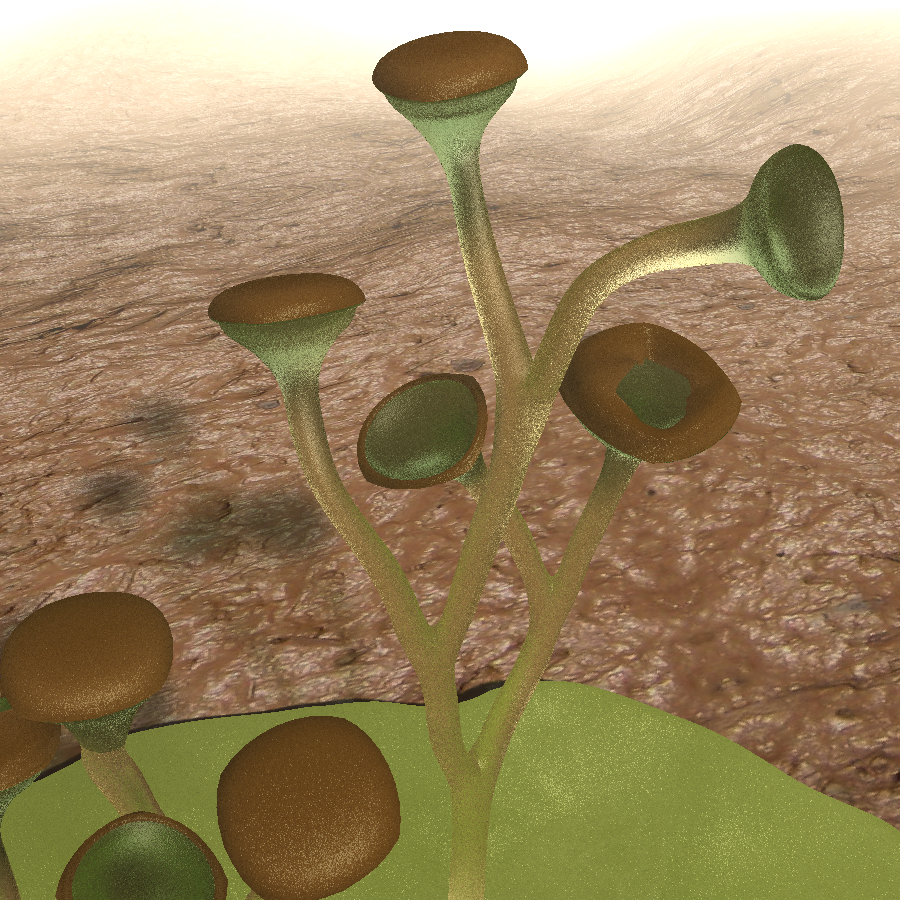
Cooksonia pertoni
Image: File:Cooksonia pertoni.png - Wikimedia Commons (CC BY-SA)
About Cooksonia
Cooksonia is a genus of extinct, primitive land plants that lived during the Silurian period, approximately 433 to 428 million years ago, and represents one of the most significant milestones in the history of life on Earth. As one of the earliest known plants to possess vascular tissue, it holds a pivotal place in paleontological history, documenting the critical transition of plant life from aquatic environments to terrestrial landscapes. Fossils of this pioneering organism, first discovered in England, provide invaluable insights into the initial greening of the continents and the evolutionary innovations that made it possible for plants to conquer the land.
The physical structure of Cooksonia was remarkably simple, reflecting its early evolutionary status. These diminutive plants were typically small, ranging from just one to six centimeters in height, with a slender, leafless stem, technically referred to as an axis. This axis was characterized by a pattern of growth known as dichotomous branching, where the stem would repeatedly fork into two equal branches, creating a Y-shaped architecture. This simple, branching form allowed the plant to maximize its exposure to sunlight for photosynthesis without the need for complex leaves. At the apex of these branches, Cooksonia bore its reproductive structures: sporangia. These were typically spherical, kidney-shaped (reniform), or trumpet-shaped capsules that contained and eventually released spores into the environment. The plant lacked true roots, a feature common to most modern terrestrial flora. Instead, it is believed to have anchored itself in the substrate with a system of simple, hair-like rhizoids, which may have also played a role in absorbing water and nutrients from the moist soil. The most crucial internal feature, though not always preserved, was a central strand of rudimentary vascular tissue, specifically xylem composed of tracheids. This internal plumbing, however primitive, was a revolutionary adaptation for transporting water up the stem, a fundamental requirement for survival on land.
The paleobiology of Cooksonia was defined by its pioneering existence in a newly emerging terrestrial ecosystem. As a photosynthetic organism, it was an autotroph, deriving its energy directly from sunlight to convert carbon dioxide and water into organic compounds. Its entire life strategy revolved around the challenges of a land-based existence. The development of a waxy outer layer, or cuticle, was a critical adaptation to prevent desiccation in the open air, a constant threat compared to its aquatic algal ancestors. Its growth pattern was likely determinant, meaning it grew to a certain size, produced its sporangia, and then released its spores to complete its life cycle. Reproduction was not through seeds or flowers, which would evolve much later, but through the dispersal of spores from the terminal sporangia. These spores, once released, would have been carried by wind or water to new locations, where they would germinate into the next generation, likely a gametophyte stage similar to that seen in modern ferns and mosses. The plant's simple rhizoid system suggests it was entirely dependent on perpetually damp environments, as it lacked the deep, water-seeking roots of later plants. Its small stature and simple branching were sufficient for its needs, allowing it to function as a primary producer in a world where competition for light was minimal.
Cooksonia emerged during the Silurian period, a time of significant global change. The Earth's climate was generally warm and stable, with high sea levels creating extensive shallow, epicontinental seas. The geography consisted of the supercontinent Gondwana in the south and several smaller continents, including Laurentia, Baltica, and Avalonia, clustered around the equator. It was on the coastal margins and in the damp, marshy floodplains of these landmasses that Cooksonia first took hold. It inhabited a world that was largely barren, a stark landscape of rock, sediment, and microbial crusts. The terrestrial ecosystems of the early Silurian were in their infancy, and Cooksonia was a foundational species. It would have co-existed with a very limited range of other organisms, primarily microbial mats of bacteria and cyanobacteria, as well as early fungi and lichens. The first terrestrial animals were also beginning to appear, including early arthropods like myriapods (related to millipedes and centipedes) and trigonotarbids (extinct arachnid-like creatures). These animals would not have fed on Cooksonia directly in a complex herbivorous food web, but they likely inhabited the same damp soils and fed on decaying organic matter, placing Cooksonia at the absolute base of the first terrestrial food chains as a primary producer.
The discovery and scientific recognition of Cooksonia are credited to the Scottish botanist and paleobotanist William Henry Lang. In 1937, Lang published his seminal paper describing these minute plant fossils, which had been unearthed from Silurian-aged rock deposits at Perton Lane in Herefordshire, England. He named the genus Cooksonia in honor of his colleague, Isabel Cookson, an Australian paleobotanist with whom he had collaborated on studies of other early fossil plants from Australia. The type species was named Cooksonia pertoni, with the specific epithet "pertoni" directly referencing the Perton Lane locality of its discovery. Lang’s meticulous work involved carefully studying the carbonized compressions of these plants, recognizing their simple dichotomously branching axes and terminal sporangia. His description established Cooksonia as the earliest known plant with an upright, branching stem and distinct reproductive structures, providing the first clear fossil evidence of the morphology of the earliest land-colonizing flora. The specimens he studied, now housed in institutions like the Natural History Museum in London, remain fundamentally important to our understanding of plant evolution and are considered benchmark fossils for the study of early terrestrial life.
The evolutionary significance of Cooksonia cannot be overstated; it stands as a crucial transitional form documenting the leap from aquatic algae to terrestrial vascular plants. It belongs to a group of early land plants known as the rhyniophytes, which are considered to be among the ancestors of all subsequent vascular plants (tracheophytes). Cooksonia exhibits a mosaic of primitive and advanced features. Its lack of true roots and leaves is a primitive trait shared with its algal predecessors. However, the presence of an upright, branching sporophyte, a protective cuticle, stomata for gas exchange, and, most importantly, a central strand of water-conducting xylem tissue are all key adaptations for life on land. These features represent the foundational toolkit that would be elaborated upon by all later plant lineages, from ferns and gymnosperms to flowering plants. While its exact position in the plant tree of life is subject to ongoing research, Cooksonia and its relatives are widely accepted as being very close to the base of the vascular plant radiation. It provides tangible evidence for the theoretical steps that botanists had long hypothesized were necessary for plants to leave the water, making it a textbook example of a major evolutionary transition.
Despite its foundational status, Cooksonia has been the subject of considerable scientific debate, primarily concerning its taxonomy and precise evolutionary relationships. The genus itself has sometimes been treated as a "wastebasket taxon," a category into which various poorly preserved early land plant fossils with simple branching stems and terminal sporangia have been placed. Several species were originally assigned to Cooksonia, such as C. hemisphaerica and C. caledonica, but subsequent, more detailed analyses have led to taxonomic revisions. For example, a 2018 study by Dianne Edwards re-examined the original type material of Cooksonia pertoni and provided a much more constrained and rigorous definition for the genus, leading to the reclassification of some other species into different genera. There is also ongoing debate about the exact nature of its vascular tissue. While evidence for tracheids (the water-conducting cells of xylem) has been found in some species attributed to the genus, it is not universally present or well-preserved in all specimens, leading some researchers to question whether all Cooksonia species were true vascular plants or if they represented a grade of organization just on the cusp of that evolutionary leap.
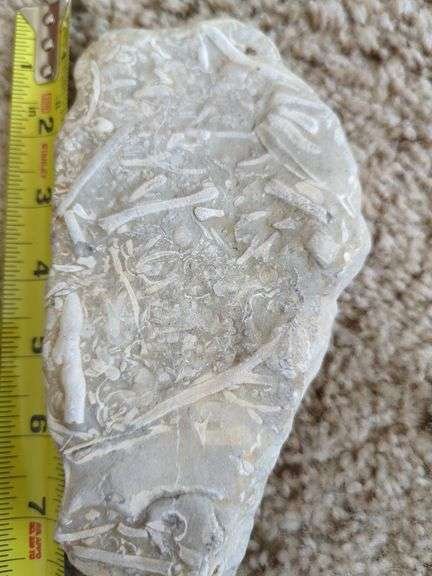
The fossil record of Cooksonia, while crucial, is composed of small and often fragmentary remains. Fossils are typically found as carbonized compressions, where the plant's organic material has been flattened and preserved as a thin film of carbon in fine-grained sedimentary rocks like shale and mudstone. This mode of preservation allows for the observation of the plant's overall morphology but often obscures fine cellular details. The most famous and historically significant locality is the Pridoli-Lochkovian-aged deposits of the Welsh Borderland, including Perton Lane in England and sites in Wales. However, fossils assigned to the genus Cooksonia have a wide geographic distribution, having been found in Silurian and Early Devonian rocks in modern-day North America (including New York State and Canada), South America, Siberia, and the Czech Republic. This broad distribution indicates that these pioneering plants were successful in colonizing coastal wetland habitats across the globe during the Silurian. While individual fossils are tiny, their abundance in certain layers provides a powerful signal of the establishment of the first widespread terrestrial vegetation.
Although not a visually spectacular organism like a dinosaur, Cooksonia holds a significant place in science education and museum displays focused on the history of life. It is frequently featured in textbooks and documentaries as the archetypal first land plant, a visual shorthand for the moment life first took root on barren ground. Major natural history museums, including the Smithsonian National Museum of Natural History in Washington, D.C., and the Natural History Museum in London, feature dioramas and fossil displays that reconstruct the stark, alien landscapes of the Silurian period, with small clusters of Cooksonia representing the dawn of terrestrial ecosystems. Its simple, elegant form makes it an effective educational tool for explaining the fundamental adaptations, such as vascular tissue and spores, that were necessary for the greening of the planet. In this context, Cooksonia serves as a powerful symbol of biological innovation and the profound impact that the evolution of plants had on Earth's geology, atmosphere, and the subsequent course of all life on land.
Classification
Time Period
Discovery
Location
Perton Lane, Herefordshire, England
Formation
Pridoli-Lochkovian-aged deposits
Frequently Asked Questions
What is Cooksonia?
Cooksonia is a genus of extinct, primitive land plants that lived during the Silurian period, approximately 433 to 428 million years ago, and represents one of the most significant milestones in the history of life on Earth. As one of the earliest known plants to possess vascular tissue, it holds a ...
When did Cooksonia live?
Cooksonia lived during the silurian period of the paleozoic era approximately 433-428 million years ago.
Where was Cooksonia discovered?
Fossils of Cooksonia were discovered in Perton Lane, Herefordshire, England in the Pridoli-Lochkovian-aged deposits.
What did Cooksonia eat?
Cooksonia was a photosynthetic. It lived in terrestrial habitats.
What type of fossil is Cooksonia?
Cooksonia is preserved as a carbonized fossil. The preservation quality is fair.
Related Specimens
From the paleozoic era · carbonized fossils
/e01cc4f7f656.jpg)