Dakota the Edmontosaurus Mummy
Edmontosaurus annectens
Image: Image sourced via web search (Fair use / Educational)
About Dakota the Edmontosaurus Mummy
Dakota the Edmontosaurus Mummy represents one of the most spectacular and scientifically significant paleontological discoveries of the twenty-first century. Belonging to the species Edmontosaurus annectens, this extraordinary specimen lived during the very end of the Cretaceous Period, approximately 67 to 66 million years ago, in what is now the midwestern United States. Unlike typical dinosaur fossils that consist merely of mineralized bones, Dakota is a dinosaur mummy, meaning it preserves extensive three-dimensional soft tissue impressions, including skin, muscle volume, and potentially internal organ structures. This exceptional level of preservation has provided paleontologists with an unprecedented window into the actual living appearance, biomechanics, and physiology of large ornithischian dinosaurs, fundamentally altering our understanding of hadrosaurid anatomy and the taphonomic processes that can occur under highly specific environmental conditions.
Edmontosaurus annectens was a massive, facultatively bipedal herbivore, and the Dakota specimen provides some of the most accurate data regarding its true physical dimensions and soft tissue anatomy. While skeletal remains previously suggested a length of around 12 meters and a weight of roughly 4 to 5 metric tons, the preserved muscle mass on Dakota indicates that these animals were significantly more robust than previously estimated. The preservation of the posterior region reveals a tail that was roughly 25 percent more muscular than earlier skeletal models implied, suggesting a heavier overall body mass closer to 6 or 7 metric tons. This added bulk would make an adult Edmontosaurus comparable in weight to a modern African elephant, though distributed over a much longer, horizontally oriented frame. One of the most striking features revealed by Dakota is its skin. The integument is preserved in exquisite detail, showcasing a complex mosaic of non-overlapping scales. These scales vary in size and shape across different regions of the body, with larger, pavement-like basement scales interspersed with smaller, pebble-like scales that likely provided flexibility. Furthermore, Dakota's forelimbs reveal a hoof-like structure encasing the fingers, confirming that these animals spent a significant amount of time walking on all fours and that their hands were adapted for bearing substantial weight. The robust neck musculature paints a picture of a highly specialized, powerful animal equipped with a deep, muscular neck and a rigid, heavy tail used for balance and propulsion.
The paleobiology of Edmontosaurus annectens is richly illuminated by the anatomical insights gained from the Dakota mummy. As a hadrosaurid, or duck-billed dinosaur, Edmontosaurus was a highly efficient herbivore equipped with a sophisticated masticatory apparatus. Its broad, keratinous beak was perfectly adapted for cropping a wide variety of vegetation, ranging from low-lying ferns and horsetails to the branches of gymnosperms and early angiosperms. Behind the beak, the jaws housed hundreds of tightly packed teeth arranged in dental batteries. These batteries functioned like self-sharpening rasps, allowing the animal to grind tough, fibrous plant material with a complex chewing motion that involved the slight outward flexing of the upper jaw bones. Dakota's enhanced muscle mass, particularly in the hind limbs and tail, has profound implications for its locomotion. The increased muscle volume suggests that Edmontosaurus was capable of running at higher speeds than previously thought, potentially reaching speeds of up to 45 kilometers per hour in short bursts. This burst speed would have been a critical survival mechanism when evading apex predators. Socially, Edmontosaurus is widely believed to have been a herd-dwelling animal. The discovery of massive bonebeds containing thousands of individuals strongly supports the hypothesis that they moved in large, socially complex groups, perhaps engaging in seasonal migrations. Their growth patterns indicate a rapid growth rate, allowing them to reach a size refuge from most predators relatively quickly. The combination of rapid growth, efficient feeding, and herd behavior underscores a highly active metabolism.
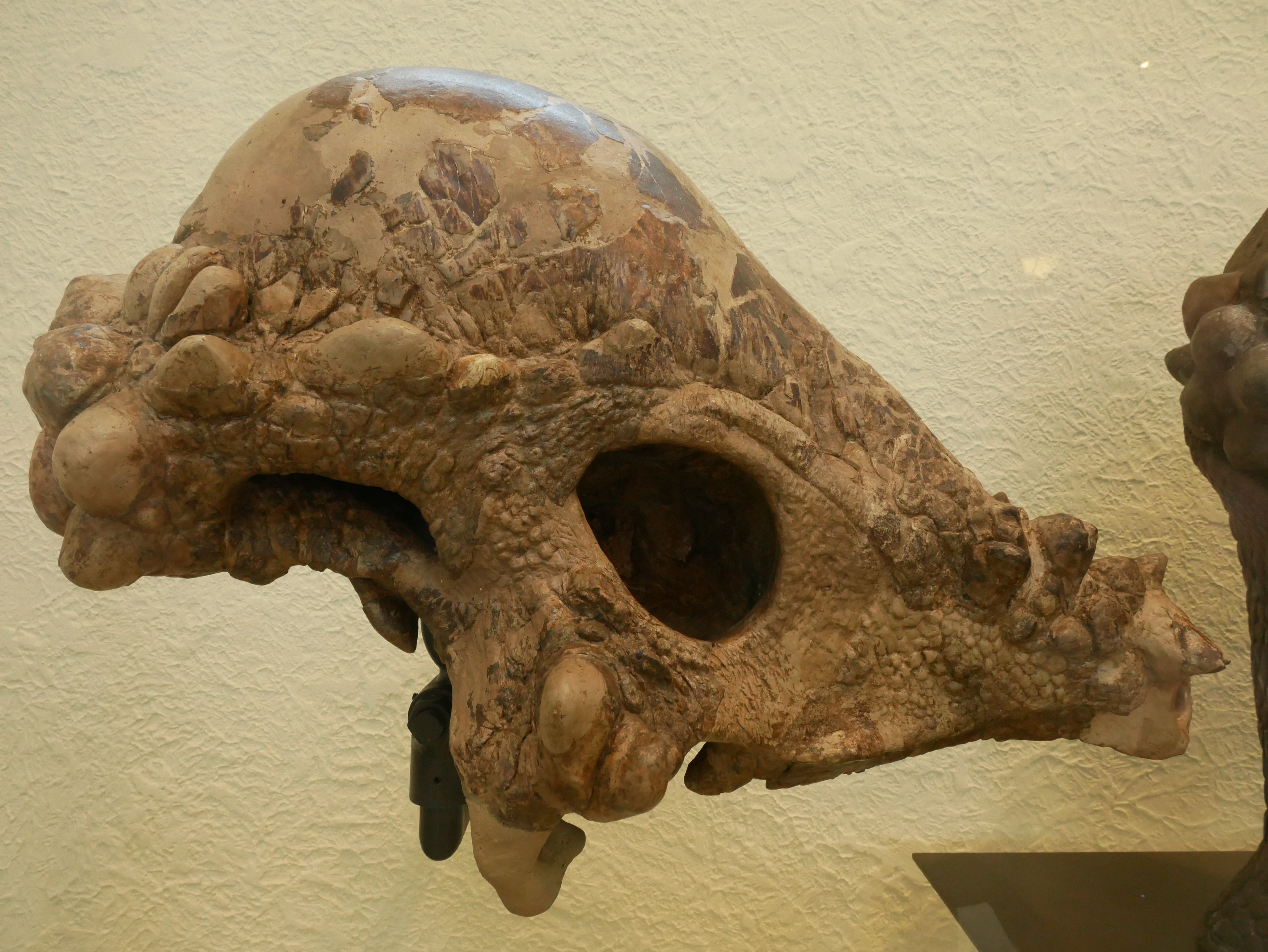
During the late Maastrichtian stage of the Cretaceous Period, the environment inhabited by Dakota was vastly different from the modern badlands of the Dakotas. The Hell Creek Formation, where Dakota was entombed, represents a lush, dynamic coastal plain situated along the eastern margin of Laramidia, the western landmass created by the division of North America by the Western Interior Seaway. The climate was warm, humid, and subtropical to temperate, supporting dense forests of conifers, ferns, cycads, and a rapidly diversifying array of flowering plants. The landscape was characterized by meandering rivers, expansive floodplains, and swampy deltaic regions, providing a rich and continuous supply of vegetation to support massive populations of megaherbivores. In this vibrant ecosystem, Edmontosaurus annectens was one of the most abundant large herbivores, occupying a fundamental niche in the food web. It shared its habitat with other iconic dinosaurs, including the heavily armored Ankylosaurus, the dome-headed Pachycephalosaurus, and the three-horned Triceratops, which likely partitioned the plant resources by feeding at different heights. The apex predator of this ecosystem was the formidable Tyrannosaurus rex. The relationship between T. rex and Edmontosaurus was a classic predator-prey dynamic, with evidence preserved in various fossils showing healed bite marks. The dense vegetation and complex waterways would have provided both cover for ambush predators and varied terrain for herds to navigate.
The discovery of Dakota the Edmontosaurus Mummy is a landmark event in the history of paleontology, highlighting both the serendipity of fossil hunting and the advancements in modern analytical techniques. The specimen was discovered in 1999 by Tyler Lyson, who was then a high school student with a deep passion for paleontology. Lyson was exploring the Hell Creek Formation on his uncle's ranch in Bowman County, North Dakota, when he noticed articulated dinosaur bones weathering out of the hillside. Recognizing the potential significance of the find, Lyson initially kept the exact location a closely guarded secret. It was not until 2004 that a full-scale excavation was mounted. As the excavation proceeded, the team quickly realized that this was no ordinary skeleton. The surrounding sandstone matrix had perfectly molded to the animal's body, preserving extensive, three-dimensional skin impressions and soft tissue structures. The sheer size and weight of the fossilized block presented immense logistical challenges, eventually requiring it to be jacketed in plaster and airlifted by a massive helicopter. The specimen was affectionately nicknamed Dakota in honor of the state where it was found. Following its excavation, Dakota was transported for meticulous preparation, a delicate process of removing hard sandstone without damaging the fragile skin impressions beneath. Dakota's exceptional three-dimensional preservation of muscle volume sets it apart from earlier mummy discoveries, making it one of the most intensively studied dinosaur specimens of the modern era.
The evolutionary significance of Edmontosaurus annectens, and the Dakota specimen in particular, lies in its position at the zenith of ornithischian evolution just prior to the end-Cretaceous mass extinction. As a member of the family Hadrosauridae, Edmontosaurus represents the culmination of millions of years of adaptation in herbivorous dinosaurs. The hadrosaurs are often referred to as the cows of the Cretaceous due to their ecological dominance and highly specialized feeding mechanisms. Edmontosaurus belongs to the subfamily Saurolophinae, characterized by their lack of hollow cranial crests. The detailed soft tissue anatomy preserved in Dakota provides crucial data for understanding the evolutionary trajectory of dinosaur integument and biomechanics. The preservation of a hoof-like structure on the forelimbs demonstrates a highly derived adaptation for quadrupedal locomotion, showing how these animals evolved from smaller, obligate bipedal ancestors into massive, facultative bipeds capable of supporting immense weight on their hands. Furthermore, the skin patterns observed on Dakota offer insights into the evolutionary development of reptilian scales and how they adapted to cover massive body surface areas. Because Edmontosaurus annectens lived right up to the K-Pg boundary, it provides a critical baseline for understanding the health and diversity of dinosaur populations immediately before the catastrophic asteroid impact, demonstrating a vibrant, highly adapted lineage that was suddenly cut short.
The study of Dakota has ignited several scientific debates and prompted the re-evaluation of long-held paleontological assumptions. One of the primary controversies centers on the taphonomic processes that allowed for such extraordinary preservation. Traditional theories suggested that dinosaur mummies formed through a process of desiccation, where the carcass dried out in an arid environment before being buried. However, the sedimentary context of Dakota, found in fluvial sandstone, suggests rapid burial in a wet environment. Researchers now debate whether the soft tissues were preserved through rapid mineralization mediated by bacteria, or if the skin acted as a barrier that maintained the three-dimensional shape while the internal organs decayed and were replaced by sediment. Another significant debate involves the estimation of dinosaur muscle mass and locomotion. Dakota's preserved tail musculature is substantially larger than what biomechanical models previously predicted based solely on skeletal attachment points. This has led to a broader debate within the biomechanics community about how to accurately reconstruct the soft tissues of extinct animals, with some arguing that many dinosaurs may have been much heavier and more muscular than currently depicted.
The fossil record of Edmontosaurus annectens is one of the most robust and comprehensive of any dinosaur species, and the addition of the Dakota mummy elevates this record to an unprecedented level of detail. Fossils of Edmontosaurus are primarily found across the western interior of North America, with significant concentrations in the Hell Creek Formation of North Dakota, South Dakota, and Montana, as well as the Lance Formation in Wyoming. The sheer number of specimens discovered indicates that they were incredibly abundant. Typically, the fossil record preserves only the hard parts of the animal, such as the robust limb bones and complex dental batteries. However, the Hell Creek Formation is renowned for its exceptional taphonomic windows, occasionally yielding specimens with soft tissue preservation. While skin impressions are not entirely uncommon among hadrosaurs, the three-dimensional preservation of muscle mass and integument seen in Dakota is exceedingly rare. This level of preservation requires a highly specific sequence of events, including rapid burial in fine-to-medium-grained sediment and a lack of scavenging by large predators. The existence of Dakota proves that under the right conditions, the fossil record can capture a near-complete snapshot of a living form.
The cultural impact of Dakota the Edmontosaurus Mummy has been profound, capturing the imagination of the public and significantly boosting interest in paleontology. Following its discovery and initial preparation, Dakota became the subject of a major television documentary, which broadcast the intricate process of uncovering its secrets to a global audience. This media exposure helped demystify the science of paleontology, showcasing the cutting-edge technology used to study the fossil. Dakota has been exhibited at the North Dakota Heritage Center and State Museum, where it serves as a centerpiece for education, drawing thousands of visitors. The specimen has fundamentally changed how dinosaurs are illustrated in popular culture; paleoartists now frequently depict hadrosaurs with the robust, muscular proportions and specific scale patterns derived directly from Dakota, bridging the gap between dry bones and living animals.
Classification
Time Period
Discovery
Location
North Dakota, USA
Formation
Hell Creek Formation
Frequently Asked Questions
What is Dakota the Edmontosaurus Mummy?
Dakota the Edmontosaurus Mummy represents one of the most spectacular and scientifically significant paleontological discoveries of the twenty-first century. Belonging to the species Edmontosaurus annectens, this extraordinary specimen lived during the very end of the Cretaceous Period, approximatel...
When did Dakota the Edmontosaurus Mummy live?
Dakota the Edmontosaurus Mummy lived during the cretaceous period of the mesozoic era approximately 67-66 million years ago.
Where was Dakota the Edmontosaurus Mummy discovered?
Fossils of Dakota the Edmontosaurus Mummy were discovered in North Dakota, USA in the Hell Creek Formation.
What did Dakota the Edmontosaurus Mummy eat?
Dakota the Edmontosaurus Mummy was a herbivore. It lived in terrestrial habitats.
What type of fossil is Dakota the Edmontosaurus Mummy?
Dakota the Edmontosaurus Mummy is preserved as a body fossil. The preservation quality is exceptional.
Related Specimens
From the mesozoic era · body fossils