Oligokyphus
Oligokyphus major
Image: Image sourced via web search (Fair use / Educational)
About Oligokyphus
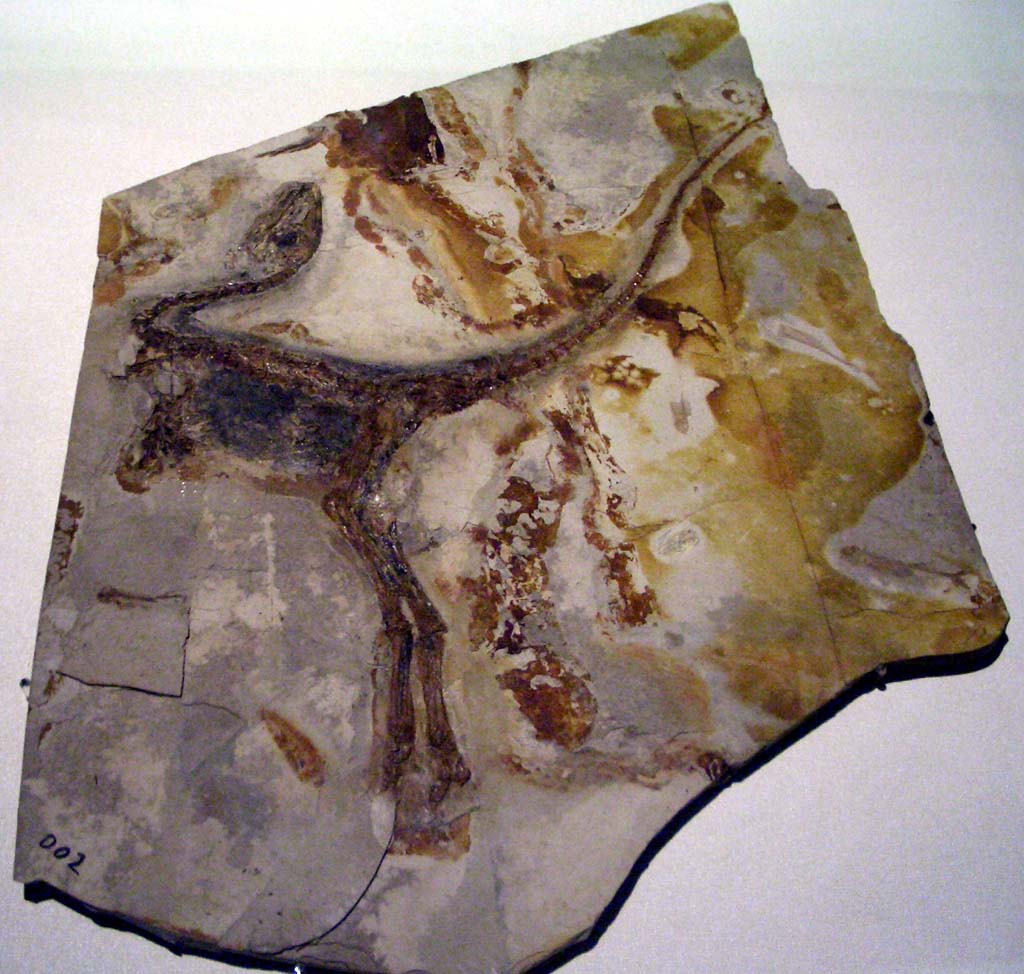
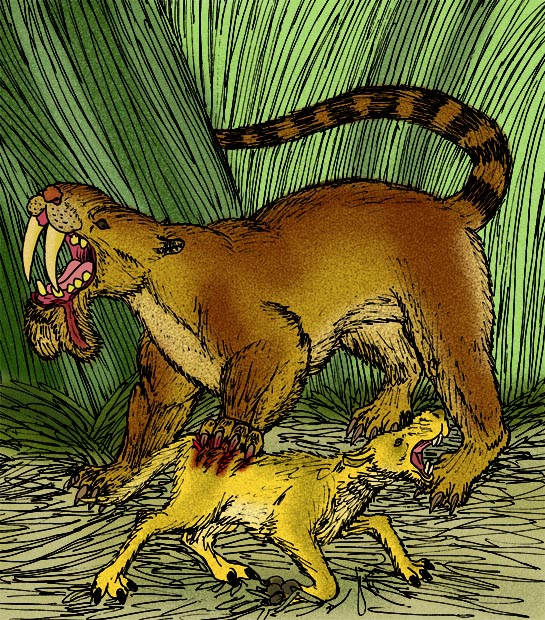
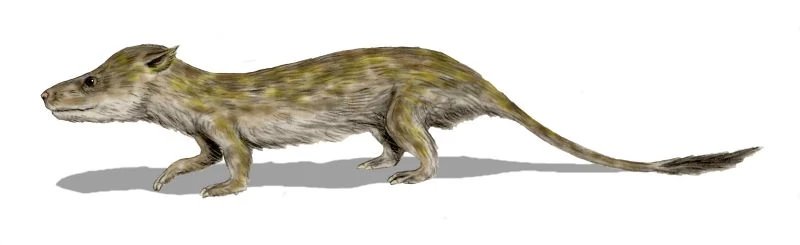
Oligokyphus major represents a fascinating and critical genus of advanced cynodont synapsids that lived during the Early Jurassic period, approximately 200 to 190 million years ago. As a member of the family Tritylodontidae, this small, highly specialized herbivore occupied a unique position in the terrestrial ecosystems of the Mesozoic era, existing at a time when the world was undergoing significant faunal turnovers. The organism is of immense significance in the field of paleontology because it sits evolutionarily very close to the origin of true mammals, offering a profound glimpse into the anatomical and physiological transitions that characterized the shift from reptilian-grade synapsids to mammalian forms. Found primarily in Europe, with significant deposits in the United Kingdom, Oligokyphus serves as a crucial anatomical Rosetta Stone, helping scientists decipher the complex evolutionary pathways that eventually led to the immense diversity of the mammalian lineage we see today. Its existence underscores the fact that while dinosaurs were beginning to dominate the larger terrestrial niches, the undergrowth was teeming with highly advanced, mammal-like creatures that were experimenting with complex chewing mechanisms and elevated metabolic rates. In terms of physical description, Oligokyphus major was a relatively small animal, measuring approximately fifty centimeters in total body length, making it roughly comparable in size and overall proportions to a modern-day weasel or a large ferret. Weight estimates suggest it weighed between one and three kilograms, a lightweight build suited for agile movement through dense underbrush. Its skeletal anatomy was a remarkable mosaic of advanced mammalian traits and retained primitive synapsid characteristics. The skull was particularly distinctive, featuring a highly specialized dentition adapted strictly for herbivory. Unlike its carnivorous ancestors, Oligokyphus lacked canine teeth entirely, possessing instead a pronounced diastema—a gap between the front teeth and the cheek teeth—much like modern rodents. The incisors were enlarged and robust, ideal for cropping tough vegetation, while the postcanine teeth were complex, multi-cusped structures designed for grinding. These molars featured multiple rows of crescent-shaped cusps that interlocked precisely, allowing for a highly efficient breakdown of plant matter. Postcranially, the skeleton showed adaptations for an active, terrestrial lifestyle. The limbs were positioned more directly under the body than in earlier synapsids, indicating an upright, parasagittal stance that would have allowed for sustained, efficient locomotion. The presence of a well-developed secondary palate in the skull indicates that Oligokyphus could breathe and chew simultaneously, a hallmark of endothermic (warm-blooded) animals. Consequently, paleontologists strongly infer that Oligokyphus was covered in a coat of insulating fur, necessary to maintain the high body temperature associated with an active metabolism, though direct soft-tissue preservation of hair has not been found for this specific genus. The paleobiology of Oligokyphus major paints a picture of a highly active, specialized herbivore that had mastered a specific ecological niche. Its diet consisted entirely of plant material, likely focusing on the tough, fibrous leaves, stems, and seeds of the gymnosperms, ferns, and cycads that dominated the Early Jurassic flora. To process this demanding diet, Oligokyphus utilized a highly specialized chewing mechanism known as propalinal jaw movement. Unlike the simple up-and-down snapping motion of earlier reptiles, the lower jaw of Oligokyphus moved backward and forward against the upper jaw. This grinding action, facilitated by the precise occlusion of its multi-cusped teeth, allowed it to break down tough cellulose efficiently, extracting maximum nutrition from its food. This efficient processing of food is intimately linked to its metabolism; the ability to rapidly digest food supports the hypothesis that Oligokyphus possessed a high, mammal-like metabolic rate. Locomotion was likely agile and quick, allowing it to forage efficiently and evade the growing number of dinosaurian predators. While direct evidence of social behavior is difficult to ascertain from the fossil record, the frequent discovery of multiple individuals in close proximity within certain fossil deposits suggests that they may have lived in loose aggregations or family groups, perhaps sharing burrows for protection and thermoregulation. Growth patterns, inferred from bone histology of related tritylodontids, suggest a relatively rapid initial growth phase followed by a slowing down, a pattern more akin to early mammals than to the continuous growth seen in many reptiles. The ecological context of the Early Jurassic world in which Oligokyphus lived was one of recovery and diversification following the devastating end-Triassic mass extinction. The climate was generally warm, humid, and equable, lacking the extreme polar ice caps of the modern world. The supercontinent of Pangaea was beginning to fracture, but vast terrestrial connections still allowed for widespread faunal distribution. The flora was dominated by non-flowering plants; lush forests of conifers, ginkgoes, and cycads formed the canopy, while ferns and horsetails carpeted the forest floor. In this environment, Oligokyphus occupied the niche of a small, ground-dwelling herbivore, scurrying through the dense undergrowth. It shared its habitat with a rapidly diversifying array of dinosaurs, including early theropods like Coelophysis and early sauropodomorphs, which were beginning to dominate the medium to large herbivore niches. Oligokyphus would have been a primary consumer in the food web, converting tough plant matter into animal biomass, and in turn, it would have been preyed upon by small to medium-sized theropod dinosaurs, early crocodylomorphs, and perhaps even larger, carnivorous synapsids. Its survival strategy likely relied on its small size, agility, and potentially its ability to retreat into burrows or dense vegetation where larger predators could not follow. The discovery history of Oligokyphus is a compelling narrative of meticulous paleontological fieldwork and the overcoming of historical adversities. The genus was first named by the German paleontologist Edwin Hennig in 1922, based on fragmentary remains. However, our comprehensive understanding of Oligokyphus major is primarily due to the extraordinary efforts of Walter Kühne, a German paleontologist who fled to the United Kingdom during the 1930s to escape the Nazi regime. In the late 1930s and throughout the 1940s, Kühne prospected the carboniferous limestone quarries of the Mendip Hills in Somerset, England. He discovered that ancient, Early Jurassic fissure fills—deep cracks in the older limestone that had been filled with younger sediments and bones—contained an absolute treasure trove of microvertebrate fossils. At sites like Windsor Hill, Kühne painstakingly extracted thousands of disarticulated but exquisitely preserved bones of Oligokyphus. Because the bones were encased in a hard matrix, Kühne utilized innovative chemical preparation techniques, using weak acids to dissolve the surrounding rock and free the delicate fossils. This massive collection of isolated bones allowed later paleontologists, most notably D.M.S. Watson and later Arthur Crompton, to reconstruct the entire skeleton and skull of Oligokyphus with unprecedented accuracy, making it one of the best-known of all advanced synapsids. The evolutionary significance of Oligokyphus cannot be overstated, as it provides a vital window into the final stages of the synapsid-to-mammal transition. Within the tree of life, Oligokyphus belongs to the Tritylodontidae, a highly derived family of cynodonts that represents one of the closest sister groups to true mammals (Mammaliaformes). While Oligokyphus itself is not a direct ancestor to modern mammals—it represents a specialized, herbivorous side-branch that eventually went extinct—it shares a common ancestor with mammals and exhibits many of the transitional features that define the mammalian condition. The most critical of these transitional features is found in the jaw joint. In reptiles and early synapsids, the jaw joint is formed by the articular bone of the lower jaw and the quadrate bone of the skull. In modern mammals, these bones have migrated into the middle ear to become the malleus and incus (hearing bones), and a new jaw joint is formed between the dentary and the squamosal bones. Oligokyphus captures a snapshot of this transition; it still retained the primitive articular-quadrate jaw joint, but the bones were significantly reduced in size, and the dentary bone of the lower jaw was massively enlarged, coming very close to contacting the squamosal bone of the skull. This demonstrates how the structural demands of a powerful chewing apparatus drove the evolutionary remodeling of the skull, inadvertently pre-adapting the old jaw bones for a new function in hearing. Scientific debates surrounding Oligokyphus and its kin have been vigorous and ongoing, reflecting the dynamic nature of paleontological classification. For many decades, there was intense debate regarding the exact phylogenetic placement of the Tritylodontidae. Some researchers argued that tritylodontids were the absolute closest relatives to true mammals, while others championed a different family of carnivorous cynodonts, the Tritheledontidae, for that position. Modern cladistic analyses, utilizing vast datasets of morphological characters, have fluctuated between these two hypotheses, though many current consensus trees place tritheledontids slightly closer to the mammalian crown group, leaving Oligokyphus and the tritylodontids as a highly successful, parallel radiation of advanced synapsids. Another area of historical debate involved the classification of tritylodontids themselves; early in the 20th century, due to their specialized, rodent-like teeth, they were actually misclassified as early multituberculate mammals. It was only through the detailed anatomical work on the jaw joint of specimens like Oligokyphus that their true identity as non-mammalian cynodonts was firmly established. Recent discoveries of late-surviving tritylodontids in the Cretaceous period of Asia have also changed our understanding of their evolutionary trajectory, showing that this lineage survived alongside true mammals for tens of millions of years longer than previously thought, though Oligokyphus itself remains firmly rooted in the Early Jurassic. The fossil record of Oligokyphus is exceptional, particularly when compared to the often fragmentary remains of other early Mesozoic microvertebrates. While fossils of the genus have been reported from various locations, including potential fragments from North America and China, the most definitive and abundant material comes from the fissure fill deposits of the United Kingdom, specifically in Somerset and South Wales. These fissure fills acted as natural traps or accumulation points for the bones of small animals that were washed in during heavy rains. Because the bones were protected within these deep crevices, they escaped the destructive forces of surface weathering and scavenging. As a result, the preservation quality is generally very good to excellent. Although the skeletons are almost entirely disarticulated—meaning the bones are found jumbled together rather than in a connected skeleton—the sheer volume of material is staggering. Thousands of individual bones, representing every part of the skull, dentition, and postcranial skeleton, have been recovered. This abundance has allowed researchers to study intraspecific variation, growth stages, and detailed functional morphology. The three-dimensional preservation of these bones has also made them ideal candidates for modern analytical techniques, such as micro-CT scanning, which allows scientists to peer inside the fossilized skulls to reconstruct the brain cavity and inner ear structures. The cultural impact of Oligokyphus, while perhaps not as pronounced as that of the giant dinosaurs it shared its world with, is nonetheless significant within the realms of science education and museum exhibition. It stands as a premier ambassador for the concept of transitional fossils and the complex reality of evolutionary change. In major institutions like the Natural History Museum in London, reconstructions and fossil displays of Oligokyphus are utilized to teach the public about the deep, pre-dinosaurian origins of the mammalian lineage. It helps to dispel the common misconception that mammals only evolved after the dinosaurs went extinct, illustrating instead that our distant synapsid relatives were thriving, adapting, and experimenting with complex biologies right alongside the earliest dinosaurs. For students of paleontology and evolutionary biology, Oligokyphus remains a textbook example of how anatomical structures can change function over deep time, cementing its legacy as one of the most important small fossils ever pulled from the earth.
Classification
Time Period
Discovery
Location
United Kingdom
Formation
Windsor Hill Fissure Fills
Frequently Asked Questions
What is Oligokyphus?
Oligokyphus major represents a fascinating and critical genus of advanced cynodont synapsids that lived during the Early Jurassic period, approximately 200 to 190 million years ago. As a member of the family Tritylodontidae, this small, highly specialized herbivore occupied a unique position in the ...
When did Oligokyphus live?
Oligokyphus lived during the jurassic period of the mesozoic era approximately 200-190 million years ago.
Where was Oligokyphus discovered?
Fossils of Oligokyphus were discovered in United Kingdom in the Windsor Hill Fissure Fills.
What did Oligokyphus eat?
Oligokyphus was a herbivore. It lived in terrestrial habitats.
What type of fossil is Oligokyphus?
Oligokyphus is preserved as a body fossil. The preservation quality is good.
Related Specimens
From the mesozoic era · body fossils