Deinonychus
Deinonychus antirrhopus
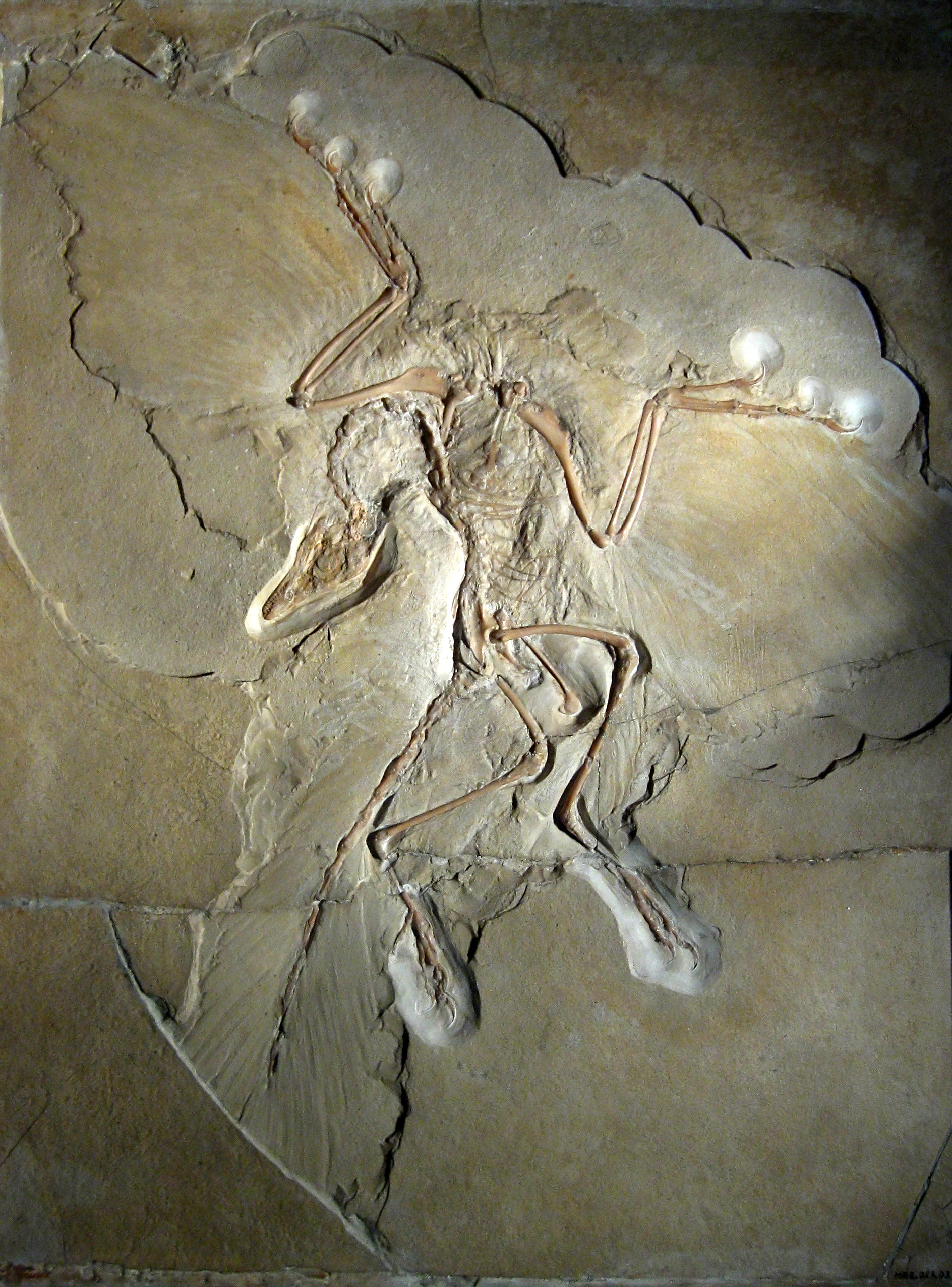
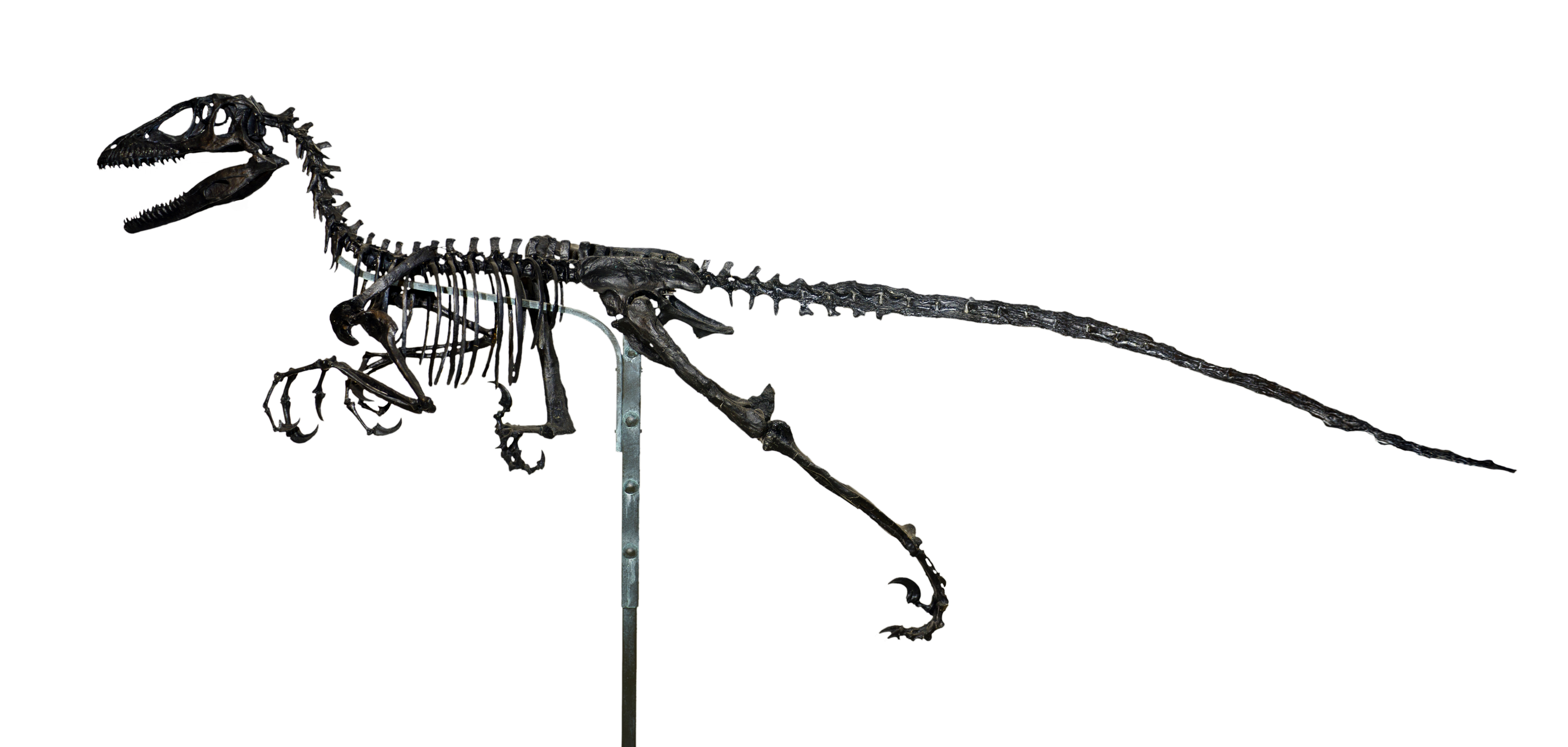
Image: File:Deinonychus antirrhopus complet.JPG - Wikimedia Commons (CC BY-SA)
About Deinonychus
Deinonychus antirrhopus was a highly influential species of dromaeosaurid theropod dinosaur that inhabited western North America during the Early Cretaceous period, approximately 115 to 108 million years ago. Its discovery and subsequent study revolutionized scientific understanding of dinosaur biology, sparking a paradigm shift that portrayed these animals not as sluggish reptiles but as active, dynamic, and intelligent creatures with a close evolutionary link to modern birds. The name Deinonychus, derived from Greek, means 'terrible claw,' a direct reference to the formidable, sickle-shaped talon on each of its hind feet, which was a key feature of its predatory arsenal.
Deinonychus was a medium-sized, bipedal carnivore, measuring approximately 3.4 meters (11 feet) in length from its snout to the tip of its tail, and standing about 1.2 meters (4 feet) tall at the hip. Estimates of its body mass vary, but most paleontologists place it in the range of 70 to 100 kilograms (154 to 220 pounds), comparable in size to a modern leopard or wolf. Its skeleton was a masterpiece of lightweight construction and predatory efficiency. The skull was relatively large for its body, about 41 centimeters (16 inches) long, and housed a sizable brain, suggesting advanced cognitive abilities. Its jaws were lined with approximately sixty to seventy sharp, recurved, and serrated teeth, perfectly adapted for slicing through flesh. Large, forward-facing eyes provided excellent binocular vision, crucial for judging distance when attacking prey. Its forelimbs were long and robust, each ending in three powerful, clawed fingers that were adept at grasping and manipulating objects. The most iconic feature, however, was the hypertrophied second toe on each foot, which bore a massive, sickle-like claw that could reach up to 13 centimeters (5 inches) in length along its outer curve. This claw was held in a retracted position off the ground while walking, protecting its sharp point, and was likely deployed as a primary weapon during predation. The dinosaur's long tail was stiffened by a series of ossified tendons, known as caudal rods, which turned much of the tail into a rigid, pole-like structure. This adaptation served as a dynamic counterbalance, providing stability and agility during high-speed running and rapid changes in direction, much like a cheetah's tail today.
The paleobiology of Deinonychus reveals a highly active and formidable predator. Its diet consisted of other dinosaurs, and its anatomy suggests a sophisticated hunting strategy. The 'terrible claw' was long thought to be a slashing weapon used to disembowel prey, but more recent biomechanical studies, led by researchers like Phillip Manning, propose a different function. Analysis of the claw's structure and stress resistance suggests it was more likely used as a grappling hook or crampon, employed to latch onto struggling victims while the dinosaur used its body weight to pin them down. Once the prey was immobilized, Deinonychus could use its powerful jaws and grasping forelimbs to dispatch it. This 'Raptor Prey Restraint' (RPR) model is supported by comparisons to modern birds of prey, which use their talons in a similar manner. Locomotion was swift and agile, with its stiff tail providing crucial balance. While its exact running speed is unknown, its long legs and lightweight build indicate it was a capable pursuit predator. The discovery of multiple Deinonychus skeletons in close association with the remains of a single, much larger herbivore, Tenontosaurus, has been interpreted as strong evidence for cooperative pack-hunting behavior. This social predation would have allowed a group of Deinonychus to overwhelm prey many times their individual size, a strategy that would have made them apex predators within their ecosystem.
Deinonychus lived in a floodplain or swamp-like environment, as indicated by the sedimentary rocks of the Cloverly Formation in Montana and Wyoming and the Antlers Formation in Oklahoma. During the Aptian-Albian ages of the Early Cretaceous, this region was a vast, low-lying coastal plain with a subtropical climate, characterized by seasonal rainfall, extensive river systems, and lush vegetation including ferns, cycads, and early flowering plants. This ecosystem supported a diverse array of fauna. Deinonychus shared its habitat with a variety of other dinosaurs, placing it in a complex food web. Its primary prey likely included the ornithopod Tenontosaurus, a common herbivore that could reach up to 8 meters in length. Other potential prey or competitors included the small ornithopod Zephyrosaurus and the armored nodosaur Sauropelta. Larger predators were also present, such as the massive carcharodontosaurid Acrocanthosaurus, which would have been an apex predator capable of preying on Deinonychus itself. This ecological context paints a picture of Deinonychus as a mesopredator, a highly successful hunter that was nonetheless part of a larger, more dangerous world, navigating a landscape filled with both opportunity and threat.
The history of Deinonychus begins in August 1964, when a paleontological expedition led by John H. Ostrom from Yale University's Peabody Museum of Natural History uncovered remarkable fossils near the town of Bridger, Montana. While searching the Cloverly Formation, Ostrom's team discovered the partial skeleton of a medium-sized theropod, including a perfectly preserved foot brandishing the enormous sickle claw. Although fragments of the species had been found as early as 1931 by Barnum Brown, they were misidentified and stored away. Ostrom's discovery was the first to reveal the animal's true nature. He officially named the species Deinonychus antirrhopus in 1969. The genus name, 'terrible claw,' was chosen for its most striking feature, while the species name, antirrhopus, means 'counterbalancing,' in reference to the stiffened tail he correctly inferred was used for stability. Ostrom's meticulous description and analysis of the holotype specimen (YPM 5205) and other associated fossils formed the basis of his revolutionary hypothesis. He argued that the animal's bird-like anatomy, including its horizontal posture, long arms, and specialized claw, pointed to an active, agile, and warm-blooded predator, a stark contrast to the prevailing image of dinosaurs as slow, cold-blooded brutes. This work became a cornerstone of the 'Dinosaur Renaissance.'
The evolutionary significance of Deinonychus cannot be overstated. It belongs to the family Dromaeosauridae, a group of theropod dinosaurs that are extremely closely related to the origin of birds. In fact, dromaeosaurs are part of the clade Paraves, which includes both dromaeosaurs and avialans (birds and their immediate ancestors). The skeleton of Deinonychus exhibits a suite of bird-like, or avian, features that highlight this close relationship. These include hollow, lightweight bones, a furcula (wishbone), long, grasping forelimbs with a flexible wrist structure capable of a motion similar to the avian flight stroke, and a backward-pointing pubis bone. When Ostrom first described these features in the late 1960s, he revived the century-old hypothesis, first proposed by Thomas Henry Huxley, that birds evolved from dinosaurs. Ostrom's compelling evidence, grounded in the detailed anatomy of Deinonychus, provided the critical link that had been missing. The discovery of feathered dromaeosaurs like Sinornithosaurus and Microraptor in China in subsequent decades has since confirmed that the ancestors of Deinonychus, and likely Deinonychus itself, were covered in feathers, further cementing the dinosaur-bird connection and placing this 'terrible clawed' predator firmly as a non-avian cousin to modern birds.
Despite its well-studied status, Deinonychus remains the subject of scientific debate. One long-standing controversy surrounds its taxonomy. Some paleontologists have argued that the larger dromaeosaurid teeth found in the Cloverly Formation, originally assigned to Deinonychus, may belong to a different, larger dromaeosaur species, suggesting the ecosystem hosted more than one 'raptor.' The most prominent debate, however, concerns its hunting behavior. While the idea of pack hunting, popularized by Ostrom's interpretation of the Tenontosaurus bonebeds, is widely accepted, some researchers have challenged it. Alternative hypotheses suggest that these fossil assemblages may represent feeding frenzies, where multiple solitary predators converged on a carcass, or that they are the result of sequential predation events over time rather than a single coordinated attack. The exact function of the sickle claw also continues to be refined, with ongoing research using biomechanical models and comparative anatomy to test the 'slashing' versus 'grappling' hypotheses. These ongoing discussions highlight the dynamic nature of paleontological science, where new evidence and analytical techniques continually reshape our understanding of prehistoric life.
The fossil record of Deinonychus antirrhopus is primarily concentrated in the Cloverly Formation of Montana and Wyoming, with additional, more fragmentary remains attributed to the species found in the Antlers Formation of Oklahoma. To date, dozens of individual specimens have been recovered, though a complete, fully articulated skeleton remains elusive. The known material includes several partial skeletons, numerous isolated bones, and teeth. The quality of preservation is generally good, allowing for detailed anatomical study. The most significant fossil sites are those that preserve multiple individuals together, such as the Yale quarry in Montana where Ostrom made his initial discoveries. This site yielded the remains of at least four Deinonychus individuals associated with a single Tenontosaurus, providing the key evidence for the pack-hunting hypothesis. The abundance of teeth is particularly notable; isolated Deinonychus teeth are among the most common carnivore fossils found in the Cloverly Formation, attesting to the animal's prevalence in its environment.
The discovery of Deinonychus had a profound cultural impact, extending far beyond the scientific community. John Ostrom's work directly inspired the popular depiction of intelligent, fast, and pack-hunting 'raptors' in Michael Crichton's 1990 novel "Jurassic Park" and its subsequent blockbuster film adaptation by Steven Spielberg. Although the film's 'Velociraptors' were named after a smaller Asian relative, their size, appearance, and behavior were based almost entirely on Deinonychus. This portrayal catapulted dromaeosaurs into the public consciousness, making them some of the most recognizable and popular dinosaurs. Skeletons and life-sized models of Deinonychus are now prominent exhibits in major natural history museums worldwide, including the American Museum of Natural History and the Yale Peabody Museum, where they serve as powerful educational tools to illustrate the 'Dinosaur Renaissance' and the evolutionary link between dinosaurs and birds.
Classification
Time Period
Discovery
Location
Montana, USA
Formation
Cloverly Formation
Frequently Asked Questions
What is Deinonychus?
Deinonychus antirrhopus was a highly influential species of dromaeosaurid theropod dinosaur that inhabited western North America during the Early Cretaceous period, approximately 115 to 108 million years ago. Its discovery and subsequent study revolutionized scientific understanding of dinosaur biol...
When did Deinonychus live?
Deinonychus lived during the cretaceous period of the mesozoic era approximately 115-108 million years ago.
Where was Deinonychus discovered?
Fossils of Deinonychus were discovered in Montana, USA in the Cloverly Formation.
What did Deinonychus eat?
Deinonychus was a carnivore. It lived in terrestrial habitats.
What type of fossil is Deinonychus?
Deinonychus is preserved as a body fossil. The preservation quality is good.
Related Specimens
From the mesozoic era · body fossils