Therizinosaurus
Therizinosaurus cheloniformis
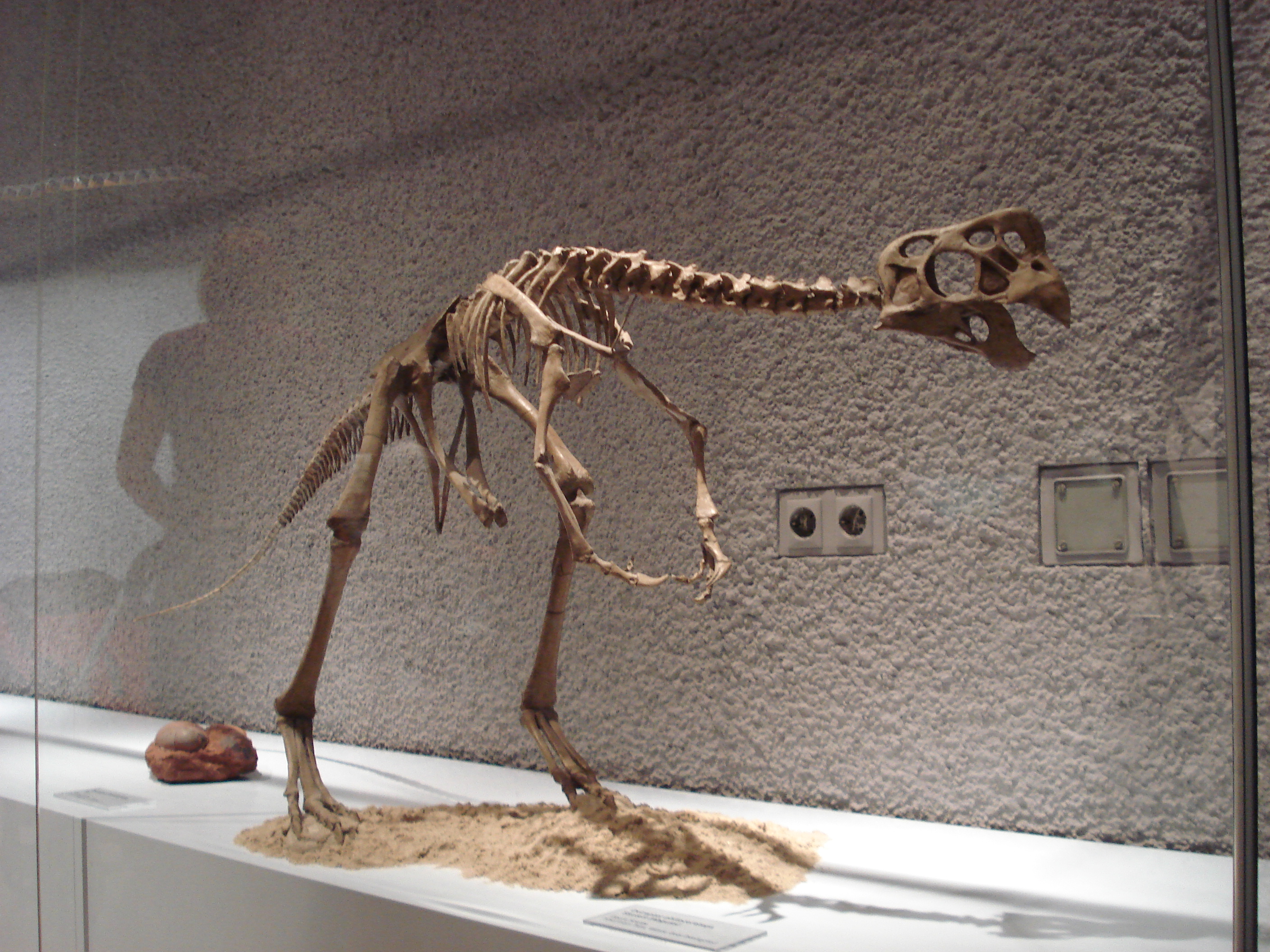
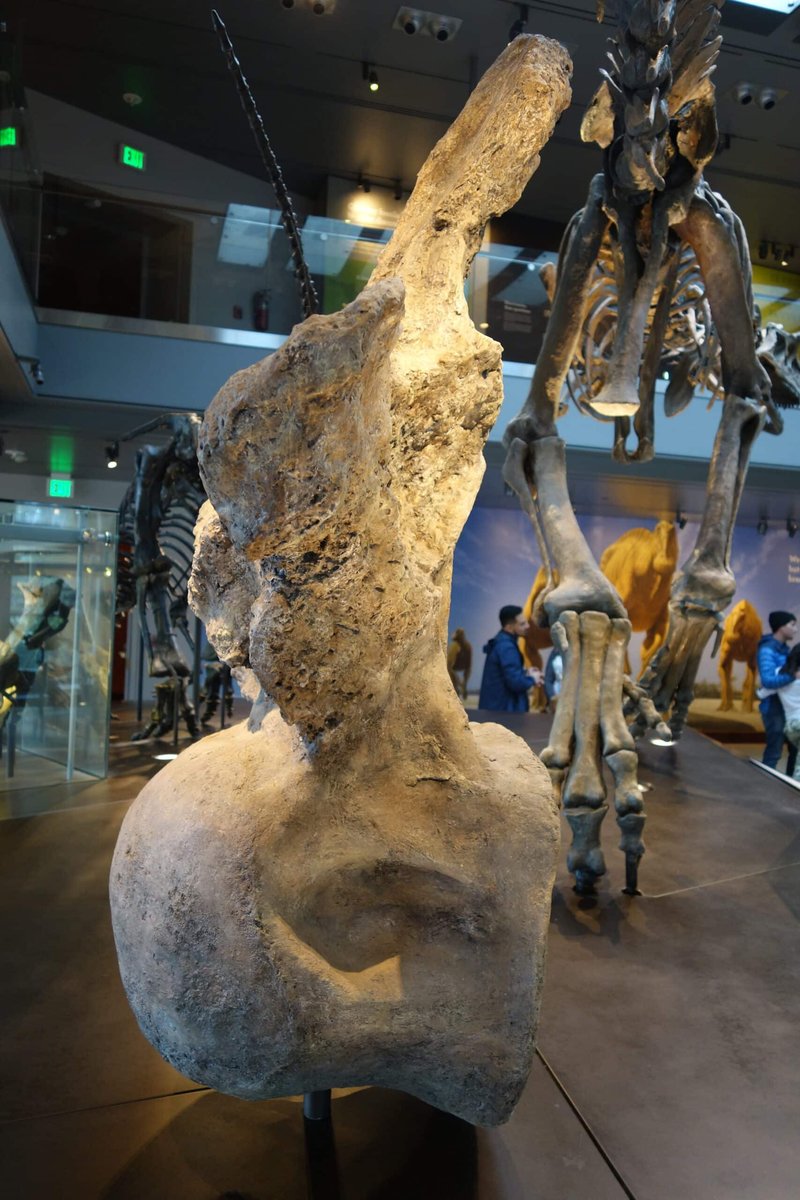
Image: File:Therizinosaurus cheloniformis.JPG - Wikimedia Commons (CC BY-SA)
About Therizinosaurus
Therizinosaurus cheloniformis, whose name translates to 'scythe lizard', stands as one of the most peculiar and enigmatic dinosaurs to have ever walked the Earth. This remarkable creature inhabited the lush, riverine environments of what is now Mongolia during the Late Cretaceous period, approximately 70 million years ago, representing a bizarre evolutionary offshoot of the theropod lineage. Its immense size, herbivorous diet, and, most notably, its colossal, scythe-like claws make it a subject of intense paleontological fascination, challenging long-held assumptions about the diversity and ecological roles of theropod dinosaurs.
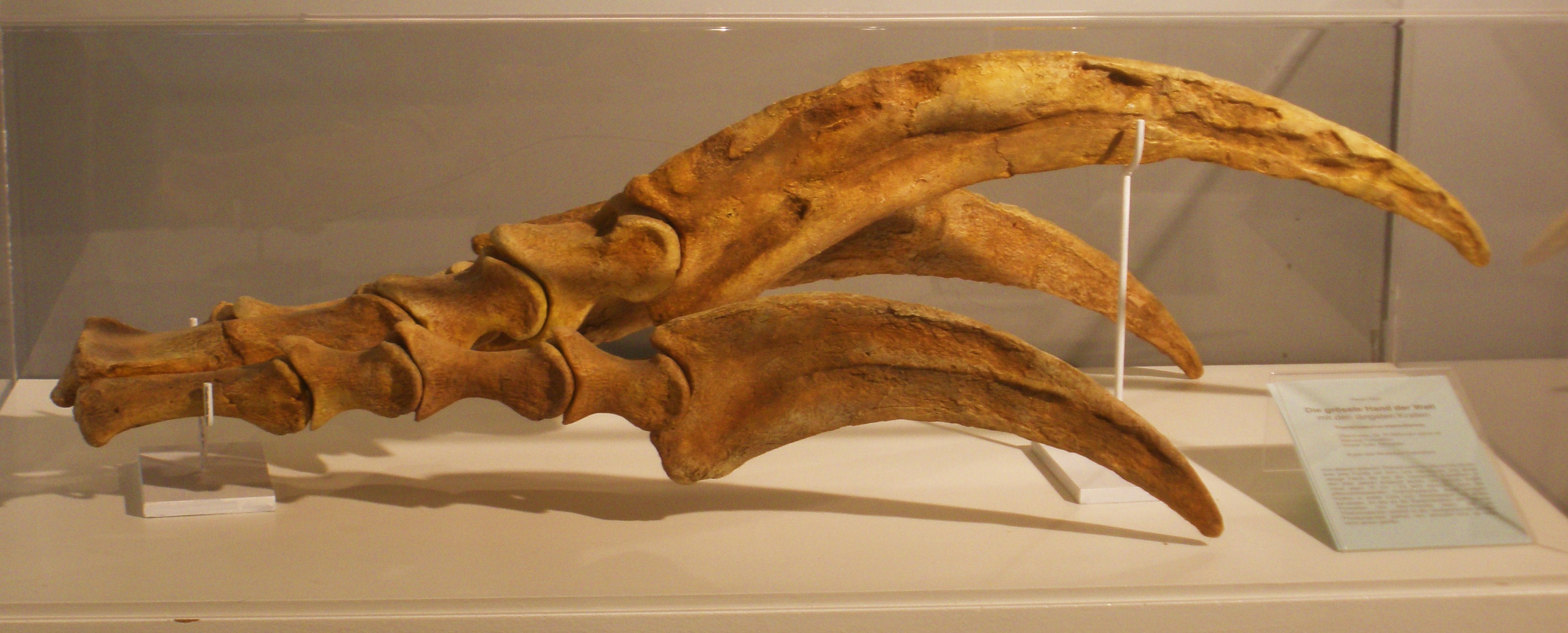
Therizinosaurus was a truly massive animal, with estimates placing its total body length at up to 10 meters (around 33 feet) and its weight in the vicinity of 5 tons, comparable to a large African elephant. Its most striking and famous features were the three enormous claws on each of its forelimbs. These claws, particularly the one on the first digit, reached astonishing lengths of up to 70 centimeters (over two feet) along their outer curve, representing the longest known claws of any animal in Earth's history. Contrary to the sleek, athletic build of its carnivorous theropod relatives, Therizinosaurus possessed a bulky, pot-bellied torso, necessary to house an extensive digestive system for fermenting tough plant matter. It supported this great weight on two powerful, stout hindlimbs, each ending in four functional, weight-bearing toes—a primitive trait unusual for advanced theropods. Its body was likely covered in a coat of primitive, shaggy feathers, an inference drawn from more completely preserved relatives like Beipiaosaurus. Atop a long, slender neck sat a disproportionately small skull, which housed a keratinous beak and small, leaf-shaped teeth, perfectly adapted for cropping vegetation rather than tearing flesh. This unique combination of features—a theropod with the build of a giant ground sloth and the claws of a nightmarish predator—makes it a truly unique specimen in the dinosaurian pantheon.
The paleobiology of Therizinosaurus reveals a lifestyle starkly different from its predatory ancestors. Its small, beaked skull and peg-like teeth are clear indicators of a herbivorous diet. Paleontologists theorize that it was a selective browser, using its long neck to reach foliage high in the forest canopy. The enormous claws, while appearing menacing, were likely multi-functional tools primarily used for feeding. One leading hypothesis suggests that Therizinosaurus would hook its claws around large branches and pull them down towards its beak, a feeding strategy analogous to that of giant ground sloths like Megatherium. This would have allowed it to access food sources unavailable to other contemporary herbivores. Its locomotion was likely slow and deliberate, a consequence of its immense bulk and specialized hindlimb structure. The wide pelvis and splayed posture suggest a stable, low-slung gait, not one built for speed or agility. While its primary function was likely foraging, the claws would have also served as a formidable defense against predators. When threatened, a sweep from these three-foot-long scythes would have been a powerful deterrent, capable of inflicting grievous wounds on any attacker foolish enough to get too close. They may also have played a role in intraspecific interactions, such as territorial disputes or courtship displays, much like the antlers of modern deer.
Therizinosaurus lived within the Nemegt Formation of Mongolia, an environment that, during the Late Maastrichtian age, was a temperate and humid floodplain crisscrossed by large, meandering rivers. This well-watered landscape supported a lush ecosystem with abundant vegetation, including diverse forests of conifers and flowering plants, providing ample food for large herbivores. The climate was seasonal, with distinct wet and dry periods, influencing the distribution of flora and fauna. Therizinosaurus shared this habitat with a remarkable diversity of other dinosaurs, placing it within a complex and dynamic food web. It would have browsed alongside other large herbivores such as the giant hadrosaurid Saurolophus and the heavily armored ankylosaurid Tarchia. Occupying the apex predator niche was the formidable tyrannosaurid Tarbosaurus bataar, a close relative of Tyrannosaurus rex and the most likely predator of an adult or juvenile Therizinosaurus. The presence of such a powerful carnivore underscores the probable defensive utility of Therizinosaurus's claws. The ecosystem also included smaller predators like the dromaeosaurid Adasaurus and various oviraptorosaurs, as well as numerous species of birds, crocodiles, turtles, and fish that thrived in the region's extensive river systems.
The discovery and scientific understanding of Therizinosaurus have a long and convoluted history, beginning in 1948 during a joint Soviet-Mongolian paleontological expedition to the Nemegt Formation. The initial fossils unearthed were several of the gigantic manual unguals, or hand claws. These perplexing bones were so large and flattened that the lead paleontologist, Evgeny Maleev, initially misinterpreted them as the ribs of a massive, turtle-like aquatic reptile. In 1954, he formally named the new species Therizinosaurus cheloniformis, with 'cheloniformis' meaning 'turtle-formed' in reference to this initial hypothesis. For decades, the true nature of this animal remained a profound mystery, with only the enigmatic claws and a few other fragmentary limb bones known. The puzzle began to unravel with the discovery of related, but more complete, therizinosauroids in the 1970s and 1990s, such as Alxasaurus and Beipiaosaurus. These specimens possessed similar forelimb and claw structures but were preserved with skulls, vertebrae, and pelvic girdles that clearly identified them as theropod dinosaurs. It was only then that paleontologists, including Rinchen Barsbold and Perle Altangerel, were able to correctly reclassify Therizinosaurus as a member of a highly specialized, herbivorous offshoot of the theropod family tree, finally solving the riddle of the giant claws.
Therizinosaurus holds immense evolutionary significance as it represents one of the most extreme examples of dietary and morphological adaptation within the Dinosauria. It belongs to the clade Therizinosauria, a group of maniraptoran theropods that gradually transitioned from a carnivorous ancestry to a fully herbivorous lifestyle. This evolutionary journey is beautifully documented in the fossil record, with earlier forms like Falcarius showing more primitive, less specialized features, while later members like Therizinosaurus itself exhibit the full suite of bizarre adaptations for high-fiber browsing. Its existence powerfully demonstrates the concept of convergent evolution, whereby unrelated organisms independently evolve similar traits to adapt to similar ecological niches. The bulky body, long neck, and claw-based foraging strategy of Therizinosaurus bear a striking resemblance to those of the much later giant ground sloths of the Cenozoic Era. This parallel evolution highlights how similar environmental pressures can shape vastly different animal lineages into comparable forms. Furthermore, Therizinosaurus radically expanded our understanding of theropod diversity, proving that this group, long stereotyped as comprising only hypercarnivores, was capable of evolving into a wide array of ecological roles, including slow-moving, high-volume herbivores.
Despite the consensus on its herbivorous nature, Therizinosaurus remains the subject of several scientific debates. The precise function of its enormous claws continues to be a topic of discussion. While the branch-pulling hypothesis is widely accepted, other proposed functions include digging for roots or tubers, stripping bark from trees, or even tearing open large termite mounds, though the latter is considered less likely given its overall anatomy. The exact posture and gait of the animal are also debated, with some reconstructions favoring a more upright stance and others a more forward-leaning posture. The lack of a complete skull for Therizinosaurus cheloniformis itself means that many details of its head and feeding mechanics are inferred from close relatives like Erlikosaurus and Segnosaurus, leaving room for future revision should a complete specimen ever be found. The classification within Therizinosauria itself is also an active area of research, with paleontologists continually refining the relationships between different members of the group as new fossils are discovered across Asia and North America, helping to piece together the evolutionary history of these strange dinosaurs.
The fossil record for Therizinosaurus cheloniformis is frustratingly incomplete, which contributes to its enigmatic reputation. All known fossils of the species have been recovered exclusively from the Nemegt Formation in the Gobi Desert of Mongolia. The holotype specimen, PIN 551-483, consists of the iconic giant hand claws. Subsequent discoveries have yielded additional, though disarticulated, remains, including bones from the forelimbs and hindlimbs. To date, no skull, vertebral column, or pelvic material has been definitively assigned to Therizinosaurus cheloniformis. This scarcity of material means that our understanding of its full anatomy is a composite, heavily informed by more complete skeletons of its close relatives within the family Therizinosauridae, such as Nothronychus from North America. The quality of preservation of the known limb bones is generally good, allowing for detailed anatomical study, but the lack of a complete skeleton remains a significant gap in our knowledge. The Nemegt Formation continues to be an area of active paleontological exploration, and scientists hold out hope that a more complete specimen of this incredible animal will one day be unearthed.
Despite its fragmentary fossil record, Therizinosaurus has made a significant cultural impact, capturing the public imagination with its bizarre and intimidating appearance. Its unique combination of herbivorous traits and terrifying claws makes it a memorable and frequently featured dinosaur in popular media, including documentaries like the BBC's "Walking with Dinosaurs" and its sequel "Chased by Dinosaurs," as well as in video games and toy lines. Museum exhibits often feature life-sized reconstructions or casts of its colossal claws, which never fail to astonish visitors and serve as a powerful educational tool for illustrating the sheer diversity and unpredictability of prehistoric life. Therizinosaurus has become a poster child for challenging paleontological stereotypes, demonstrating that not all theropods were ravenous carnivores and that evolution can produce truly extraordinary and unexpected forms.
Classification
Time Period
Discovery
Location
Nemegt Basin, Mongolia
Formation
Nemegt Formation
Frequently Asked Questions
What is Therizinosaurus?
Therizinosaurus cheloniformis, whose name translates to 'scythe lizard', stands as one of the most peculiar and enigmatic dinosaurs to have ever walked the Earth. This remarkable creature inhabited the lush, riverine environments of what is now Mongolia during the Late Cretaceous period, approximate...
When did Therizinosaurus live?
Therizinosaurus lived during the cretaceous period of the mesozoic era approximately 70 million years ago.
Where was Therizinosaurus discovered?
Fossils of Therizinosaurus were discovered in Nemegt Basin, Mongolia in the Nemegt Formation.
What did Therizinosaurus eat?
Therizinosaurus was a herbivore. It lived in terrestrial habitats.
What type of fossil is Therizinosaurus?
Therizinosaurus is preserved as a permineralized fossil. The preservation quality is fair.
Related Specimens
From the mesozoic era · permineralized fossils