Dimetrodon
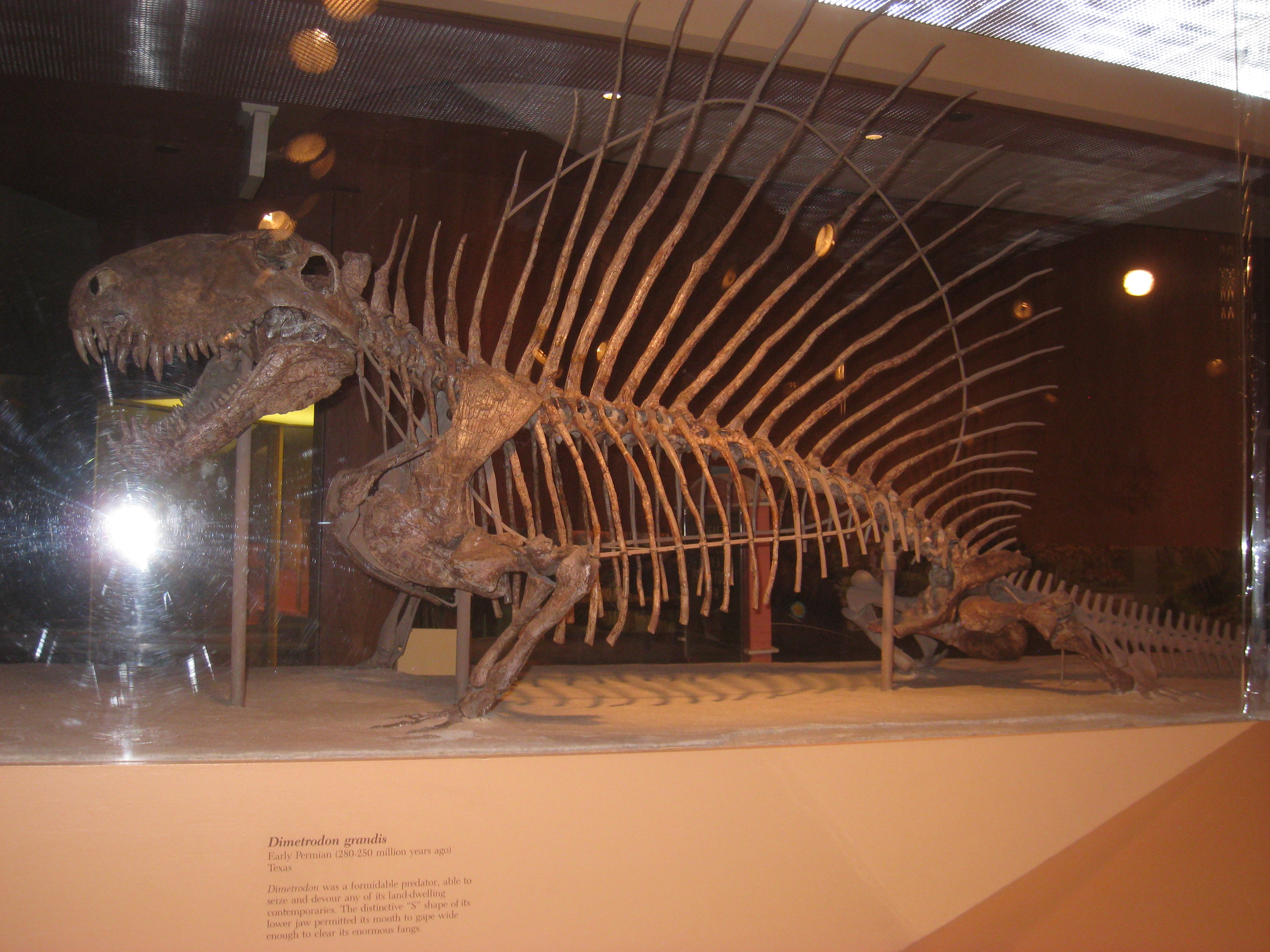
Dimetrodon grandis
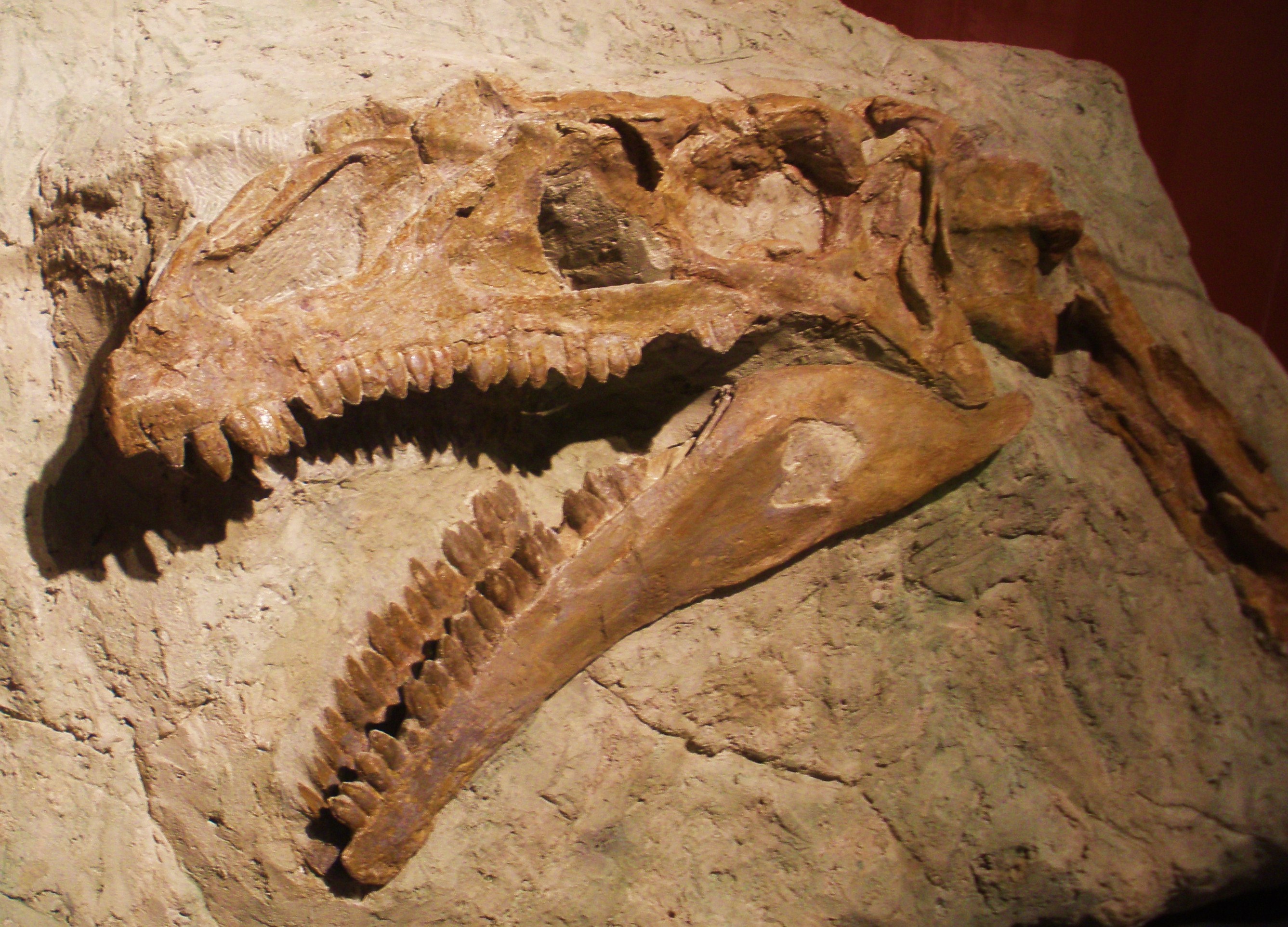
Image: File:Dimetrodon grandis - National Museum of Natural History - IMG 1982.JPG - Wikimedia Commons (CC BY-SA)
About Dimetrodon
Dimetrodon, whose name translates to "two measures of teeth," was a formidable apex predator that roamed terrestrial landscapes during the Early Permian period, approximately 295 to 272 million years ago. Despite its reptilian appearance and frequent misidentification in popular culture, it was not a dinosaur but a synapsid, a member of the lineage that would eventually give rise to all mammals. As one of the most recognizable prehistoric animals, Dimetrodon is significant for its dramatic sail, its specialized dentition, and its crucial position in understanding the early evolution of the mammalian branch of the tree of life.
The most striking feature of Dimetrodon was its large, dramatic sail, a structure formed by a series of extremely elongated neural spines extending vertically from its vertebrae, which in life would have been covered by a web of skin rich in blood vessels. In the largest species, such as *Dimetrodon grandis*, these spines could reach over 1.6 meters in height. The animal itself was a robust quadruped, with a body length of up to 3.5 meters (about 11.5 feet) and an estimated weight of around 250 kilograms (550 pounds), making it one of the largest land carnivores of its time. Its skull was deep and narrow, housing a powerful jaw filled with a diverse array of teeth—a key characteristic that gave the animal its name. Unlike the uniform, peg-like teeth of most reptiles, Dimetrodon possessed sharp, incisor-like teeth at the front of its snout, followed by a pair of large, canine-like fangs, and smaller, blade-like shearing teeth further back. This dental differentiation, known as heterodonty, is a hallmark of later mammals and points to a sophisticated feeding apparatus. Its limbs were short and stout, splayed out to the sides in a sprawling posture similar to modern lizards, resulting in a waddling, reptilian gait.
The paleobiology of Dimetrodon reveals a highly effective predator at the top of its food web. Its heterodont dentition indicates a specialized carnivorous diet, allowing it to seize, stab, and dismember prey with great efficiency. The large caniniform teeth were ideal for delivering powerful, lethal bites, while the rear teeth were suited for shearing flesh and crushing bone. Isotopic analysis of its fossilized teeth suggests it preyed upon a wide range of contemporary animals, including large amphibians like *Eryops*, aquatic reptiles, and other synapsids such as *Edaphosaurus* and *Ophiacodon*. Its sprawling gait suggests it was not a swift pursuit predator but likely an ambush hunter, using its power to overwhelm prey. The function of its prominent sail remains a subject of scientific debate. The most widely accepted hypothesis is that it served as a thermoregulatory device. By orienting the sail towards or away from the sun, Dimetrodon could rapidly absorb solar heat to become active in the cool mornings or dissipate excess heat during the day, giving it a significant metabolic advantage over its prey and competitors. An alternative, and not mutually exclusive, theory proposes the sail was primarily for display, used to attract mates, intimidate rivals, or establish territorial dominance, much like the antlers of a deer or the plumage of a peacock.
Dimetrodon lived during the Cisuralian epoch of the Early Permian, a time when the Earth's landmasses were coalescing into the supercontinent of Pangaea. The climate was generally arid to semi-arid, characterized by strong seasonal fluctuations between wet and dry periods. Its fossils are predominantly found in the "Red Beds" of Texas and Oklahoma, geological formations that represent ancient deltaic and coastal plain environments. These ecosystems were dominated by vast, swampy lowlands crisscrossed by rivers and streams, supporting a rich diversity of flora and fauna. Dimetrodon occupied the niche of the apex predator within this environment, a position unchallenged by other large carnivores. It shared its habitat with a variety of other creatures, including the large, herbivorous sail-backed synapsid *Edaphosaurus*, the semi-aquatic fish-eater *Ophiacodon*, and giant amphibians like the crocodile-like *Eryops* and the boomerang-headed *Diplocaulus*. The presence of these large herbivores and semi-aquatic tetrapods provided a substantial prey base, allowing Dimetrodon to thrive and exert significant ecological control. Its role was analogous to that of modern-day large predators like lions or wolves, shaping the structure and dynamics of its community through predation.
The discovery and scientific description of Dimetrodon are deeply intertwined with the "Bone Wars," the intense late-19th-century rivalry between American paleontologists Edward Drinker Cope and Othniel Charles Marsh. Cope was the first to formally describe the genus in 1877, based on fossils he had collected from the Red Beds of Texas. He initially named several species, including *Dimetrodon incisivus* and *Dimetrodon rectiformis*. Over the following years, both Cope and his collectors unearthed numerous additional specimens, leading to the naming of a plethora of species, many of which were later found to be synonymous or represent different growth stages of the same animal. The most iconic and largest species, *Dimetrodon grandis*, was named by Cope in 1878. The primary fossil localities in Texas, particularly the Clear Fork Group and Wichita Group formations, have yielded an abundance of well-preserved skeletons, making Dimetrodon one of the best-represented Paleozoic tetrapods in the fossil record. These early discoveries were crucial in establishing the rich paleontological heritage of the American Southwest and provided the first detailed look into the complex ecosystems that existed long before the age of dinosaurs.
The evolutionary significance of Dimetrodon cannot be overstated, as it represents a crucial early stage in the lineage leading to mammals. As a synapsid, it belongs to a group of amniotes characterized by a single temporal fenestra, an opening in the skull behind each eye socket, which allowed for the attachment of larger, more powerful jaw muscles. This feature distinguishes synapsids from anapsids (like early reptiles and turtles) and diapsids (which include dinosaurs, birds, and most modern reptiles). Dimetrodon is classified as a pelycosaur, an informal grouping of early, non-therapsid synapsids. While it was not a direct ancestor of mammals, it was a "stem-mammal" or "mammal-like reptile," showcasing the initial diversification of the synapsid line. Its heterodont dentition is a key transitional feature, foreshadowing the specialized incisors, canines, and molars found in all modern mammals. The evolution of the sail, while an evolutionary dead-end in itself, may point to early experiments with endothermy, or warm-bloodedness, a defining characteristic of mammals. Dimetrodon and its relatives dominated terrestrial ecosystems for over 40 million years, establishing the synapsids as the first group of amniotes to achieve global ecological prominence before being supplanted by the archosaurs in the Triassic.
Despite being a well-known genus, Dimetrodon remains the subject of ongoing scientific debate and revision. The exact function of its sail continues to be a primary point of contention. While the thermoregulation hypothesis, proposed by Alfred Romer and Everett C. Olson, is widely supported by the structure's high vascularization, some researchers argue that its size and shape would have been inefficient for heat exchange and that a display function is more plausible. Recent studies using computational fluid dynamics have offered mixed results, keeping the debate active. Furthermore, the taxonomy of the genus has been a source of controversy. Over the years, more than a dozen species have been named, but many are now considered invalid, representing juvenile individuals or slight variations of other established species. Paleontologists like Robert R. Reisz have worked to streamline the genus, recognizing fewer, more robustly defined species based on detailed anatomical comparisons. The question of its metabolism—whether it was fully cold-blooded like a reptile or possessed some form of intermediate metabolism—is also an area of active research, with evidence from bone histology suggesting faster growth rates than typical reptiles.
The fossil record of Dimetrodon is remarkably rich and geographically concentrated, providing paleontologists with a wealth of information. The vast majority of specimens have been unearthed from the aforementioned Red Beds of Texas and Oklahoma, with particularly productive sites in Archer and Wichita counties in Texas. These deposits have yielded hundreds of individuals, ranging from small juveniles to large adults, including many complete or nearly complete skeletons. The quality of preservation is often excellent, allowing for detailed studies of its anatomy, growth, and pathology. While North America is the primary source of Dimetrodon fossils, fragmentary remains attributed to the genus have also been reported from Germany, suggesting a wider distribution across the northern parts of Pangaea than previously thought. The abundance of fossils has enabled detailed population studies and has made Dimetrodon a model organism for understanding the anatomy and evolution of early synapsids. Famous museum mounts, such as those at the American Museum of Natural History and the Field Museum, are composites of these well-preserved remains.
Due to its impressive and fearsome appearance, Dimetrodon has secured a lasting place in popular culture and public imagination. It is a staple in museum exhibits on Paleozoic life, often depicted as the quintessential pre-dinosaur predator. Its image frequently appears in children's books, toys, and documentaries about prehistoric life, where it is almost universally, though incorrectly, labeled as a dinosaur. This common misconception ironically serves an educational purpose, providing a perfect opportunity for science communicators to explain the complex branching of the tree of life and to highlight the deep and ancient origins of the mammalian lineage. Its iconic sail makes it instantly recognizable, ensuring its continued status as a celebrated ambassador for the fascinating and alien world of the Permian period.
Classification
Time Period
Discovery
Location
Texas, USA
Formation
Red Beds of Texas and Oklahoma
Frequently Asked Questions
What is Dimetrodon?
Dimetrodon, whose name translates to "two measures of teeth," was a formidable apex predator that roamed terrestrial landscapes during the Early Permian period, approximately 295 to 272 million years ago. Despite its reptilian appearance and frequent misidentification in popular culture, it was not ...
When did Dimetrodon live?
Dimetrodon lived during the permian period of the paleozoic era approximately 295-272 million years ago.
Where was Dimetrodon discovered?
Fossils of Dimetrodon were discovered in Texas, USA in the Red Beds of Texas and Oklahoma.
What did Dimetrodon eat?
Dimetrodon was a carnivore. It lived in terrestrial habitats.
What type of fossil is Dimetrodon?
Dimetrodon is preserved as a body fossil. The preservation quality is good.
Related Specimens
From the paleozoic era · body fossils