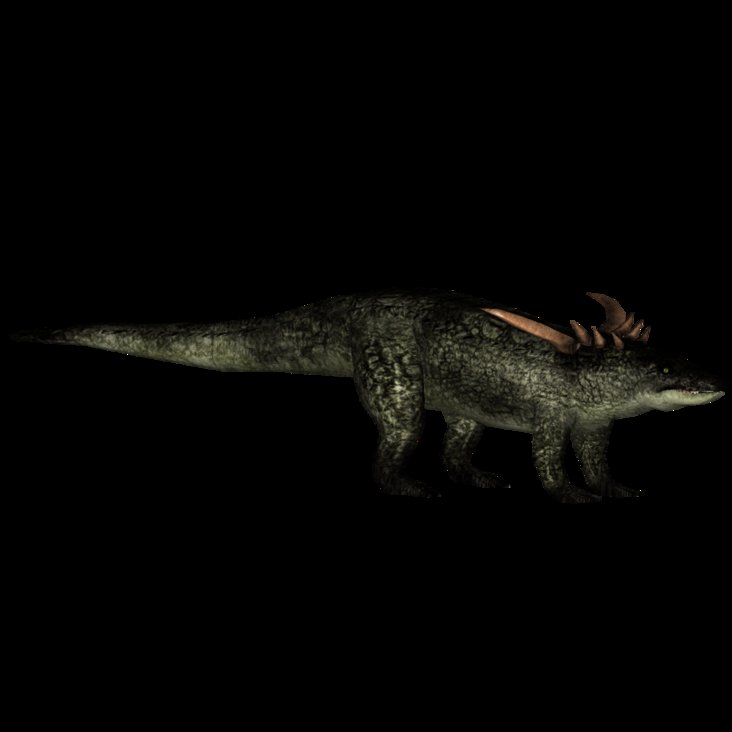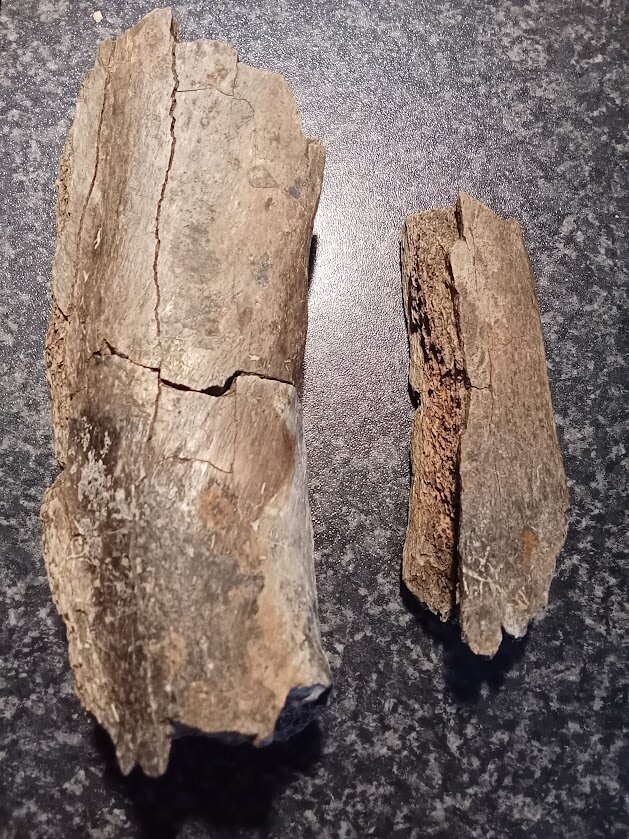
Diprotodon
Diprotodon optatum
Image: Image sourced via web search (Fair use / Educational)
About Diprotodon
Diprotodon optatum is an extinct species of giant marsupial that roamed the Australian continent during the Pleistocene epoch, from approximately 1.6 million to roughly 44,000 years ago. As the largest known marsupial to have ever lived, this massive herbivore holds a paramount place in the study of paleontology and the understanding of Australia's lost megafauna. Its widespread fossil remains across the continent provide critical insights into the ecological dynamics of prehistoric Australia and the dramatic extinction events that occurred toward the end of the Pleistocene. The sheer abundance of its fossils has allowed scientists to reconstruct not only the anatomy of this magnificent beast but also the shifting climatic conditions of the world it inhabited. Diprotodon stands as a testament to the unique evolutionary pathways that unfolded in the isolation of the Australian landmass, representing a time when marsupials evolved to fill the colossal ecological niches occupied by placental megaherbivores on other continents.
Diprotodon optatum was a truly colossal animal, often compared in size and general build to a modern rhinoceros or hippopotamus, though it was a marsupial closely related to living wombats and koalas. Adult individuals could reach lengths of up to three meters (approximately ten feet) from nose to tail, stand roughly two meters (over six feet) tall at the shoulder, and weigh an estimated 2,700 to 3,200 kilograms (about three tons). Its skeletal structure was incredibly robust, featuring a massive, heavy skull, pillar-like limbs designed to support its immense bulk, and plantigrade feet that distributed its weight across soft ground. The skull was particularly distinctive, housing enormous, ever-growing incisors that gave the genus its name, which translates to 'two forward teeth.' These front teeth were paired with powerful, ridged molars perfectly adapted for grinding tough, fibrous vegetation. Soft tissue inferences suggest that, like its modern wombat relatives, Diprotodon likely possessed a backward-facing pouch, an essential adaptation for a low-slung animal moving through dense brush or muddy environments, as it would prevent dirt from entering the pouch and harming the developing joey. Furthermore, some paleontologists hypothesize that it may have had a short, prehensile upper lip or a small trunk, similar to a tapir, to assist in gathering foliage, though this remains a topic of ongoing anatomical study. The bone density of Diprotodon was remarkably high, a necessary structural adaptation to carry its massive weight over the uneven Australian terrain.
As a dedicated herbivore, Diprotodon optatum primarily consumed a diet of shrubs, bushes, and tough grasses that were abundant across the Pleistocene Australian landscape. Its massive, specialized dentition allowed it to process large quantities of low-quality, fibrous plant material, which was necessary to sustain its enormous metabolic needs. It is highly probable that Diprotodon utilized hindgut fermentation, similar to modern wombats and horses, to extract nutrients from this tough vegetation. Isotopic analysis of Diprotodon teeth, particularly tracking strontium isotopes, has revealed fascinating insights into its feeding strategies and seasonal movements. Evidence suggests that these giant marsupials were migratory, undertaking long, seasonal treks across the continent to follow rainfall and the resulting flushes of fresh vegetation. This migratory behavior is unique among known marsupials and indicates a highly adaptable foraging strategy in response to Australia's increasingly arid and unpredictable climate. Locomotion was likely slow and deliberate, given its massive bulk and pillar-like legs; it was not built for speed but rather for sustained, energy-efficient walking over long distances. Socially, fossil assemblages, particularly those found in mass death sites, strongly imply that Diprotodon lived in herds or at least gathered in large numbers around shrinking water sources during times of drought. These herds may have been structured similarly to modern large herbivores, potentially exhibiting sexual dimorphism, with males being significantly larger than females and perhaps competing for mating rights. Growth patterns inferred from bone histology indicate a relatively slow growth rate, typical of large mammals, meaning individuals took many years to reach their massive adult size, making them vulnerable to environmental disruptions.
During the time of Diprotodon optatum, the Australian continent was undergoing significant environmental shifts, transitioning from a relatively lush, forested landscape to the more arid, scrub-dominated environment seen today. The Pleistocene climate was characterized by dramatic glacial and interglacial cycles, which in Australia manifested as alternating periods of high rainfall and severe drought. Diprotodon inhabited a variety of environments, ranging from open woodlands and savannas to semi-arid scrublands, thriving wherever sufficient vegetation and water could be found. In this prehistoric ecosystem, Diprotodon occupied the ecological niche of a megaherbivore, similar to elephants or rhinos in other parts of the world. It played a crucial role in shaping the landscape, likely clearing underbrush, dispersing seeds over vast distances during its migrations, and maintaining open pathways through dense vegetation. Despite its massive size, adult Diprotodon were not entirely free from predation. They shared their environment with formidable predators, most notably Megalania (Varanus priscus), a colossal monitor lizard, and Thylacoleo carnifex, the marsupial lion. While a fully grown, healthy Diprotodon would have been a difficult target, juveniles, sick, or elderly individuals trapped in mud or weakened by drought would have been prime prey for these apex predators. Bite marks matching the distinct dentition of Thylacoleo have been found on Diprotodon bones, confirming this predator-prey interaction. The complex predator-prey dynamics of this megafaunal community highlight a vibrant and fiercely competitive ecosystem that thrived until the late Pleistocene extinction event.
The discovery of Diprotodon optatum dates back to the early 19th century, marking one of the first major paleontological breakthroughs in Australia. The first fossilized remains were encountered by European settlers and explorers in the 1830s. In 1838, Major Thomas Mitchell, the Surveyor-General of New South Wales, discovered a collection of massive bones in the Wellington Caves. He sent these specimens to the eminent British anatomist Sir Richard Owen. In 1838, Owen formally described and named the genus Diprotodon, recognizing its marsupial affinities and its distinct 'two forward teeth.' The species name, optatum, was added later. For decades, the animal was known only from fragmented remains, leading to various speculative reconstructions. However, the true scale and anatomy of Diprotodon were finally revealed in 1892 with the spectacular discovery at Lake Callabonna in South Australia. A massive drought had exposed the remains of hundreds of Diprotodon individuals that had become trapped in the muddy bed of the shrinking lake thousands of years earlier. This site was meticulously excavated by E.C. Stirling, yielding the first complete, articulated skeletons and providing paleontologists with an unprecedented look at the animal's osteology. The Lake Callabonna specimens remain some of the most important and famous fossils in Australian paleontology, serving as the foundation for modern reconstructions and ongoing research into the species' biology and eventual demise.
Diprotodon optatum represents the evolutionary pinnacle of the family Diprotodontidae, a diverse group of herbivorous marsupials that first appeared in the fossil record during the late Oligocene epoch. As the largest marsupial ever to evolve, Diprotodon is a spectacular example of megafaunal gigantism, an evolutionary trend where animals evolve to massive sizes in response to specific environmental pressures, such as the need to process large amounts of low-quality forage or to deter predators. Its position in the tree of life places it within the order Diprotodontia, making it a distant relative of modern wombats and koalas. However, Diprotodon is not a direct ancestor of any living species; rather, it represents a highly specialized, terminal branch of a now-extinct lineage. Studying Diprotodon provides crucial insights into the evolutionary potential of marsupials, demonstrating that, given the right ecological opportunities, marsupials could evolve to fill the same megaherbivore niches occupied by placental mammals on other continents. The anatomical similarities between Diprotodon and modern wombats, such as the structure of the feet and the inferred backward-facing pouch, highlight deep evolutionary conservatisms within the suborder Vombatiformes. The eventual extinction of Diprotodon and its relatives marks a significant loss of evolutionary distinctiveness, leaving modern wombats as the sole, much smaller, surviving representatives of this once-mighty lineage.
Despite the abundance of fossil material, Diprotodon optatum remains the subject of several intense scientific debates. The most prominent controversy surrounds the cause of its extinction approximately 44,000 years ago. One camp of researchers argues that climate change, specifically the increasing aridity and loss of reliable water sources during the Last Glacial Maximum, drove the species to extinction. Another camp posits that the arrival of the first Indigenous Australians, who may have hunted the slow-moving giants or altered their habitat through fire-stick farming, was the primary driver. A growing consensus suggests a synergistic effect of both climate stress and human pressures. Additionally, there are ongoing debates regarding its taxonomy; historically, up to eight different species of Diprotodon were named based on size variations, but recent morphological and morphometric analyses suggest these differences likely represent sexual dimorphism within a single widespread species, Diprotodon optatum. Furthermore, the exact nature of its soft tissue anatomy, such as the presence of a tapir-like trunk, continues to be debated among functional morphologists.
The fossil record of Diprotodon optatum is exceptionally rich and geographically extensive, with remains found in every Australian state and territory. Thousands of specimens have been recovered, ranging from isolated teeth and fragmented limb bones to complete, articulated skeletons. The preservation quality varies depending on the depositional environment, but many specimens are remarkably well-preserved. The most famous and prolific fossil sites are the Pleistocene lake beds and swamps, such as Lake Callabonna in South Australia, where hundreds of individuals became mired in the mud while searching for water during severe droughts. Other notable sites include the Wellington Caves in New South Wales, Lancefield Swamp in Victoria, and various deposits in the Darling Downs of Queensland. Typically, the massive skulls, heavy lower jaws, and robust limb bones are the most commonly preserved elements, as their density allows them to survive the fossilization process better than more delicate bones. This extensive fossil record makes Diprotodon one of the best-understood extinct marsupials.
Diprotodon optatum holds a prominent place in Australian culture and the global public imagination as the quintessential representative of Australia's lost megafauna. It is a staple of natural history museums worldwide, with spectacular mounted skeletons on display at the South Australian Museum, the Australian Museum in Sydney, and the Natural History Museum in London. These exhibits draw significant public fascination, serving as powerful educational tools to teach visitors about prehistoric ecosystems, climate change, and extinction. Furthermore, Diprotodon frequently appears in documentary series, popular science books, and paleoart, cementing its status as an iconic prehistoric beast. Some researchers and anthropologists also suggest that cultural memories of Diprotodon may have been preserved in the oral traditions and Dreamtime stories of Indigenous Australians, potentially inspiring legends of the Bunyip, adding a profound cultural and historical dimension to this magnificent extinct animal.
Classification
Time Period
Discovery
Location
Australia
Formation
Lake Callabonna deposits
Frequently Asked Questions
What is Diprotodon?
Diprotodon optatum is an extinct species of giant marsupial that roamed the Australian continent during the Pleistocene epoch, from approximately 1.6 million to roughly 44,000 years ago. As the largest known marsupial to have ever lived, this massive herbivore holds a paramount place in the study of...
When did Diprotodon live?
Diprotodon lived during the quaternary period of the cenozoic era approximately 1.6-0.044 million years ago.
Where was Diprotodon discovered?
Fossils of Diprotodon were discovered in Australia in the Lake Callabonna deposits.
What did Diprotodon eat?
Diprotodon was a herbivore. It lived in terrestrial habitats.
What type of fossil is Diprotodon?
Diprotodon is preserved as a body fossil. The preservation quality is excellent.
Related Specimens
From the cenozoic era · body fossils