Saltasaurus
Saltasaurus loricatus
Image: Image sourced via web search (Fair use / Educational)
About Saltasaurus
Saltasaurus was a genus of titanosaurian sauropod dinosaur that inhabited South America during the Late Cretaceous period, approximately 73 to 66 million years ago. Its discovery in Argentina revolutionized scientific understanding of sauropods, revealing a sophisticated defensive adaptation previously unknown in this group. As one of the last sauropods to exist before the Cretaceous-Paleogene extinction event, Saltasaurus provides critical insights into the final chapter of the age of dinosaurs.
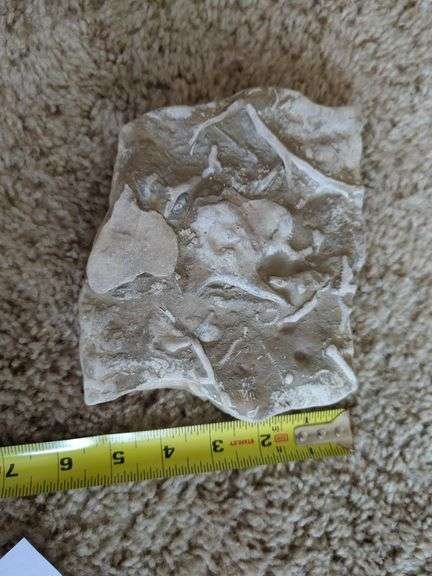
Saltasaurus was a relatively small sauropod compared to its colossal relatives like Argentinosaurus or Patagotitan. It reached an estimated length of around 12 meters (about 40 feet) and had a body mass estimated between 5 and 7 metric tons. This size is comparable to a modern African bull elephant, making it a mid-sized herbivore in its ecosystem. Its most remarkable and defining feature was its dermal armor. Unlike other sauropods known at the time of its discovery, Saltasaurus possessed a covering of bony plates, or osteoderms, embedded in its skin. These osteoderms varied in size and shape, ranging from small, pebble-like ossicles a few millimeters in diameter to larger, plate-like scutes up to 12 centimeters (nearly 5 inches) across. Some of the larger plates may have featured a prominent central keel or spine, providing additional protection. This armor was likely concentrated along its back and flanks, forming a defensive shield against predators. Its skeleton was otherwise typical for a titanosaur, featuring a long neck, a stocky, wide-bodied torso, a long tail, and four pillar-like legs. Its vertebrae were characterized by complex internal air sacs (pleurocoels), a common feature in sauropods that helped reduce the weight of their massive skeletons without compromising strength. Its limbs were robust, with broad feet adapted to support its significant weight as it moved across the landscape.
As a herbivore, Saltasaurus's diet consisted of the plant life available in its Late Cretaceous environment, likely including conifers, cycads, and early flowering plants. Its simple, peg-like teeth were not suited for extensive chewing but were effective for stripping foliage from branches. Like other sauropods, it probably relied on a large gut and gastroliths (ingested stones) to help break down tough plant material through fermentation. Its locomotion was quadrupedal, with a slow, steady gait. The wide gauge of its limbs, a characteristic of titanosaurs, suggests a stable, if not particularly fast, method of movement. Inferences about its social behavior are drawn from the nature of its fossil discoveries. The presence of multiple individuals found together, including evidence of nesting sites in the broader region attributed to titanosaurs, suggests that Saltasaurus may have lived in herds. This herding behavior would have offered protection for juveniles and facilitated group defense against large predators. Growth patterns, studied from the bone histology of related titanosaurs, indicate a rapid growth rate during their juvenile stages, allowing them to quickly reach a size that would deter most predators. Its metabolism was likely gigantothermic, meaning its large body size allowed it to maintain a relatively stable internal temperature, a state intermediate between modern cold-blooded reptiles and warm-blooded mammals.
The world of Saltasaurus during the Maastrichtian age was a dynamic and evolving landscape. It lived on the ancient supercontinent of Gondwana, specifically in what is now northwestern Argentina. The climate was generally warm and semi-arid, characterized by seasonal rainfall that supported vast floodplains and river systems. The flora was a mix of older plant lineages and newly diversifying angiosperms (flowering plants). Saltasaurus shared this environment with a diverse array of other dinosaurs. It occupied the niche of a medium-to-large primary consumer, browsing on vegetation at low to medium heights. Its primary predators were the formidable abelisaurid theropods, such as Carnotaurus, which were the apex predators in Late Cretaceous South America. These carnivores were characterized by their powerful bites, robust skulls, and short arms. The evolution of dermal armor in Saltasaurus is widely interpreted as a direct defensive response to the predatory pressure exerted by these large theropods. The ecosystem also included other herbivores, such as hadrosaurs and smaller ornithopods, as well as various crocodiles, pterosaurs, and early birds, creating a complex and competitive food web where Saltasaurus played a crucial role as a significant herbivore.
The discovery of Saltasaurus was a landmark event in paleontology. The first fossils were unearthed in the 1970s from the Lecho Formation in Salta Province, Argentina, by a team led by paleontologists José Bonaparte and Jaime Powell. The formal description and naming of the genus and species, Saltasaurus loricatus, occurred in 1980. The generic name, Saltasaurus, means "lizard from Salta," referencing the province of its discovery. The specific name, loricatus, is Latin for "armored," highlighting its most significant and surprising feature. The key specimens, cataloged under numbers like PVL 4017, included several partial skeletons from at least five individuals, crucially preserving not just bones but also the associated osteoderms. This association was definitive proof that a sauropod possessed body armor, a feature previously thought to be exclusive to groups like ankylosaurs and stegosaurs. Before this find, paleontologists had found isolated osteoderms in Cretaceous formations but had often misidentified them as belonging to armored dinosaurs. The discovery of Saltasaurus provided the 'Rosetta Stone' that correctly linked these bony plates to titanosaurs, fundamentally altering the scientific perception of sauropod anatomy and evolution.
Saltasaurus holds a pivotal position in the evolutionary history of dinosaurs. It belongs to the Titanosauria, a highly successful and diverse clade of sauropods that dominated the southern continents during the Cretaceous. Within this group, it is classified in the family Saltasauridae and the subfamily Saltasaurinae, which includes some of the most derived and specialized titanosaurs. The presence of osteoderms is now recognized as a characteristic feature of many advanced titanosaurs (lithostrotians), and Saltasaurus was the first to unequivocally demonstrate this trait. This discovery forced a major re-evaluation of sauropod biology, suggesting that as some lineages evolved smaller body sizes compared to their giant ancestors, they developed alternative defensive strategies like armor to cope with persistent predation from advanced theropods. Saltasaurus and its relatives represent a successful evolutionary experiment, demonstrating that sauropods were not simply relics of a bygone era but were actively evolving and adapting right up to the end of the Mesozoic. They show that the group was far more anatomically and ecologically diverse than previously imagined, challenging the older view of sauropods as slow, swamp-bound, and defenseless giants.
Despite its importance, Saltasaurus is still the subject of scientific discussion. One area of debate concerns the exact arrangement and function of its osteoderms. While it is clear the armor provided protection, the precise distribution on the body—whether it formed a dense mosaic, was arranged in specific rows, or included larger spines on the shoulders or tail—is not fully known due to the disarticulated nature of most specimens. The function of the osteoderms is also debated; beyond defense, some scientists have proposed they could have served as mineral reserves, particularly for calcium, which would be crucial for egg-laying females. Furthermore, the classification within Titanosauria is notoriously complex and subject to frequent revision as new discoveries are made. The precise relationships between Saltasaurus and other armored titanosaurs, such as Neuquensaurus and Rocasaurus, are continually being refined through new phylogenetic analyses. Each new titanosaur discovery from South America and other parts of the world adds another piece to the puzzle, helping to clarify the evolutionary radiation of this fascinating and highly successful sauropod lineage.
The fossil record of Saltasaurus is primarily concentrated in the Lecho Formation of Salta Province, Argentina. To date, hundreds of disarticulated bones and numerous osteoderms have been recovered, representing multiple individuals of various ages, from juveniles to adults. While no complete, articulated skeleton has been found, the abundance of material has allowed paleontologists to reconstruct its anatomy with a high degree of confidence. The preservation quality is generally good, with bones often found in bonebeds, suggesting mass-death events, possibly caused by droughts or floods. These fossil sites have provided invaluable information not only on the anatomy of Saltasaurus but also on its population structure and paleoecology. The discovery of titanosaur nesting grounds in nearby formations, such as the famous Auca Mahuevo site, while not definitively belonging to Saltasaurus, provides broader context for the reproductive biology of these animals, showing they laid eggs in large, communal nesting colonies.
Saltasaurus has made a significant mark on popular culture and public understanding of dinosaurs. Its discovery was a major paleontological news story, challenging the classic image of the unarmored sauropod. It is frequently featured in dinosaur books, television documentaries like 'Dinosaur Planet', and museum exhibits worldwide. Its manageable size and unique armored appearance make it a popular subject for illustrations and models. Major museums, including the Museo de La Plata in Argentina and the American Museum of Natural History in New York, feature skeletal reconstructions or fossil casts of Saltasaurus, educating the public about the incredible diversity of life in the Late Cretaceous. It stands as a powerful example of how new fossil discoveries can dramatically and suddenly change our understanding of the prehistoric world.
Classification
Time Period
Discovery
Location
Argentina
Formation
Lecho Formation
Frequently Asked Questions
What is Saltasaurus?
Saltasaurus was a genus of titanosaurian sauropod dinosaur that inhabited South America during the Late Cretaceous period, approximately 73 to 66 million years ago. Its discovery in Argentina revolutionized scientific understanding of sauropods, revealing a sophisticated defensive adaptation previou...
When did Saltasaurus live?
Saltasaurus lived during the cretaceous period of the mesozoic era approximately 73-66 million years ago.
Where was Saltasaurus discovered?
Fossils of Saltasaurus were discovered in Argentina in the Lecho Formation.
What did Saltasaurus eat?
Saltasaurus was a herbivore. It lived in terrestrial habitats.
What type of fossil is Saltasaurus?
Saltasaurus is preserved as a body fossil. The preservation quality is good.
Related Specimens
From the mesozoic era · body fossils