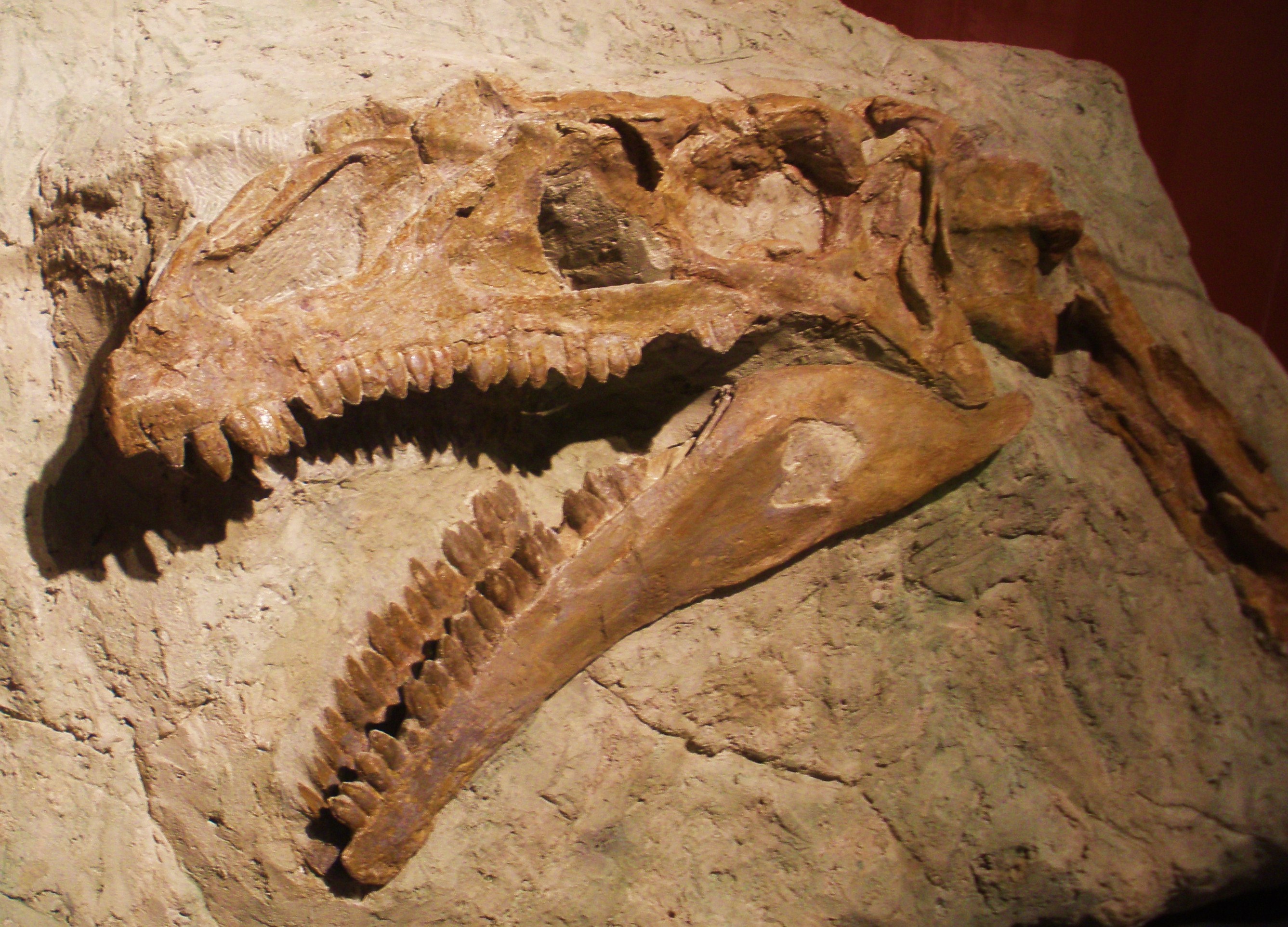
Sophie the Stegosaurus (NHMUK PV R36730)
Stegosaurus stenops
Image: Image sourced via web search (Fair use / Educational)
About Sophie the Stegosaurus (NHMUK PV R36730)
Sophie the Stegosaurus, officially cataloged as NHMUK PV R36730, represents one of the most significant paleontological discoveries of the twenty-first century regarding Late Jurassic dinosaur fauna. As a remarkably well-preserved specimen of Stegosaurus stenops, this individual lived approximately 155 to 150 million years ago during the Kimmeridgian and Tithonian stages of the Late Jurassic period. Discovered in the rich fossil beds of the United States, Sophie stands as the most complete Stegosaurus skeleton ever recovered, boasting an astonishing eighty-five percent completeness. This unprecedented level of preservation, particularly the inclusion of a nearly intact skull, has provided paleontologists with an unparalleled opportunity to study the anatomy, biomechanics, and paleobiology of the Stegosauria clade. The specimen's acquisition and subsequent display by the Natural History Museum in London have not only advanced scientific understanding through rigorous three-dimensional modeling and biomechanical analysis but have also captivated the public imagination, cementing Stegosaurus as a cornerstone of dinosaur paleontology and museum education worldwide.
The physical anatomy of Sophie offers a definitive look at the morphology of a young adult Stegosaurus stenops. Measuring approximately 5.6 meters (about 18 feet) in length and standing nearly 2.9 meters tall at the highest point of its dorsal plates, Sophie was not fully grown at the time of death, yet still represents a massive and formidable herbivore. Extensive volumetric modeling and three-dimensional scanning conducted by researchers at the Natural History Museum have provided highly accurate weight estimates, suggesting that in life, Sophie weighed approximately 1.6 metric tons, comparable to a modern rhinoceros. The skeleton is characterized by its disproportionately small, elongated skull, which houses tiny, peg-like teeth suited for cropping vegetation. The postcranial skeleton features a heavily built pelvic region, robust hind limbs, and relatively short forelimbs, resulting in a distinctive, downward-sloping posture that positioned the head close to the ground. The most striking features, however, are the seventeen large, kite-shaped osteoderms, or plates, that run in two alternating rows along the animal's back, culminating in the famous thagomizer—an arrangement of four deadly, elongated spikes at the tip of the tail. The preservation of Sophie's skeleton allows for precise articulation of these elements, confirming the alternating arrangement of the dorsal plates and providing crucial insights into the muscular attachments that powered the defensive swings of its spiked tail.
The paleobiology of Stegosaurus, greatly illuminated by the study of Sophie, reveals a highly specialized low-level browser adapted to the specific flora of the Late Jurassic. Biomechanical studies utilizing finite element analysis on Sophie's complete skull have demonstrated that despite its small size, the skull was surprisingly robust and capable of generating a bite force sufficient to shear through tough, fibrous vegetation such as cycads, ferns, and horsetails. The lack of a complex chewing mechanism indicates that Stegosaurus likely swallowed plant matter largely intact, relying on a massive gut and possibly gastroliths to ferment and break down the tough cellulose. Locomotion studies based on Sophie's limb proportions suggest that Stegosaurus was a slow-moving animal, incapable of true running due to the disparity in length between its front and hind legs; its maximum speed was likely a brisk walk. Social behavior in Stegosaurus remains somewhat ambiguous, though trackways suggest they may have moved in small, loose herds or family groups. Growth patterns analyzed through bone histology indicate that Sophie, despite her impressive size, was a subadult, meaning these animals grew rapidly during their early years before reaching a massive adult size of up to nine meters. Metabolism estimates suggest a mesothermic physiology, intermediate between the cold-blooded reptiles of today and the warm-blooded mammals, allowing them to sustain their massive bulk on low-nutrient vegetation.
During the Late Jurassic, the world Sophie inhabited was a vastly different ecological theater, characterized by a semi-arid environment with distinct wet and dry seasons. The Morrison Formation, where Sophie was discovered, represents a massive floodplain ecosystem that covered much of what is now the western United States. This landscape was dominated by extensive gallery forests of conifers, tree ferns, and ginkgoes along river channels, interspersed with broad, open savannas of low-lying ferns and cycads. Stegosaurus shared this habitat with a diverse array of iconic dinosaurs, including massive sauropods like Diplodocus, Apatosaurus, and Brachiosaurus, which browsed the high canopy, leaving the understory vegetation to ornithischians like Stegosaurus and Camptosaurus. The ecosystem was also home to formidable predators, most notably the apex predator Allosaurus, as well as Ceratosaurus and Torvosaurus. The defensive adaptations of Stegosaurus, particularly the lethal tail spikes, were clearly evolved in response to the constant threat posed by these large theropods. Fossil evidence, including an Allosaurus vertebra with a puncture wound perfectly matching a Stegosaurus tail spike, confirms that these predator-prey interactions were violent and potentially fatal for the attacker. In this complex food web, Stegosaurus occupied a crucial niche as a primary consumer of tough, low-growing plants, shaping the understory vegetation dynamics of the Late Jurassic floodplains.
The discovery of Sophie the Stegosaurus is a landmark event in the history of paleontology. The specimen was unearthed in 2003 by paleontologist Bob Simon at the Red Canyon Ranch in Wyoming, a site situated within the famously fossil-rich Morrison Formation. The excavation was a meticulous process, revealing an astonishingly articulated skeleton that had been rapidly buried by sediment, likely in a shallow pond or river channel, which protected the bones from scavengers and the elements. The discovery was immediately recognized as extraordinary due to the presence of a nearly complete skull—an extreme rarity for Stegosaurus, whose small, delicate skulls are typically crushed or washed away prior to fossilization. The specimen was initially held in a private collection before being acquired by the Natural History Museum in London in 2013, thanks to a generous donation from a wealthy benefactor. The skeleton was affectionately nicknamed Sophie after the daughter of the principal donor. Following its acquisition, the specimen underwent a rigorous year-long process of preparation, scanning, and mounting led by Dr. Paul Barrett and Dr. Susannah Maidment. In December 2014, Sophie was officially unveiled to the public, taking pride of place in the museum's Earth Hall and immediately becoming one of the most studied and celebrated dinosaur specimens in the world, joining the ranks of other famous fossils like the Tyrannosaurus rex Sue and the Australopithecus Lucy.
The evolutionary significance of Stegosaurus, and the Sophie specimen in particular, lies in its representation of the pinnacle of thyreophoran (armor-bearing) dinosaur evolution during the Jurassic period. The clade Stegosauria first appeared in the Middle Jurassic and rapidly diversified, spreading across North America, Europe, Asia, and Africa. Stegosaurus stenops represents a highly derived form within this group, showcasing the extreme development of dorsal plates and tail spikes compared to earlier, more basal relatives like Huayangosaurus, which possessed smaller, more spine-like osteoderms and a less specialized skull. The evolutionary trajectory of Stegosaurus highlights a fascinating trend in dinosaur evolution: the decoupling of defensive armor from the main body to form specialized display and weapon structures. By studying Sophie's complete skeleton, scientists can trace the anatomical shifts that allowed these animals to support such massive dermal structures without compromising their mobility. Furthermore, the eventual extinction of the stegosaurs in the Early Cretaceous, coinciding with the rise of new plant types like angiosperms and the emergence of heavily armored ankylosaurs, provides crucial data on how changing ecosystems and competitive exclusion drive macroevolutionary patterns. Stegosaurus left no modern descendants, as all non-avian dinosaurs perished in the end-Cretaceous mass extinction, but its unique anatomical solutions to the problems of defense and herbivory continue to inform our understanding of convergent evolution and biomechanical constraints in large terrestrial vertebrates.
Despite being one of the most recognizable dinosaurs, Stegosaurus remains the subject of intense scientific debate, much of which has been reinvigorated by the study of the Sophie specimen. The most enduring controversy surrounds the function of the iconic dorsal plates. Historically, these plates were thought to serve as physical armor, but their fragile, highly vascularized nature makes them ill-suited for defense against the crushing jaws of an Allosaurus. Modern hypotheses, supported by CT scans of Sophie's plates, suggest they functioned primarily as thermoregulatory devices, acting as radiators to dissipate heat, or as elaborate display structures for species recognition and sexual selection. The exact arrangement of these plates was also debated for over a century, with early reconstructions showing them lying flat or in paired rows; however, the articulation of Sophie's skeleton has provided strong evidence for the alternating, staggered arrangement now accepted by the scientific community. Additionally, debates continue regarding the animal's exact weight and center of mass, with Sophie's three-dimensional digital model serving as the baseline for competing biomechanical simulations. Taxonomic disputes also persist within the genus Stegosaurus, with researchers debating whether variations in plate shape and skeletal robustness represent different species, such as S. ungulatus and S. stenops, or merely sexual dimorphism within a single species.
The fossil record of Stegosaurus is primarily restricted to the Upper Jurassic Morrison Formation of western North America, spanning states such as Colorado, Utah, and Wyoming, with some fragmentary remains also reported from Portugal. While isolated bones and partial skeletons of Stegosaurus are relatively common, complete specimens are exceedingly rare. Prior to the discovery of Sophie, the best-known specimens were only about fifty percent complete, often lacking the skull, the tail spikes, or significant portions of the vertebral column. The preservation quality of Stegosaurus fossils varies wildly; many are found in bonebeds where the skeletons have been disarticulated and scattered by ancient river currents. The plates and spikes, being embedded in the skin rather than attached directly to the skeleton, are almost always found detached from the body, complicating efforts to understand their exact placement in life. Sophie's exceptional preservation, with eighty-five percent of the bones recovered including the delicate skull and a nearly complete set of plates and spikes, makes it the gold standard for Stegosaurus research. Famous fossil sites like Dinosaur National Monument and the Cleveland-Lloyd Dinosaur Quarry have yielded numerous Stegosaurus remains, but none match the completeness and scientific utility of the Red Canyon Ranch site where Sophie was excavated.
The cultural impact of Stegosaurus is immense, and the arrival of Sophie at the Natural History Museum in London has only amplified the public's fascination with this bizarre creature. Since its initial description by Othniel Charles Marsh in 1877, Stegosaurus has been a staple of popular culture, appearing in countless books, films, and television documentaries, most notably the Jurassic Park franchise and the classic film Fantasia. The distinct silhouette of the animal makes it instantly recognizable, serving as a gateway for children to become interested in science and paleontology. Sophie's display at the NHM, where she greets visitors in the Earth Hall, has become an iconic museum experience, temporarily drawing attention even from the museum's famous Diplodocus cast, Dippy. The extensive media coverage of Sophie's unveiling and the subsequent scientific papers published about her biomechanics have highlighted the ongoing, dynamic nature of paleontological research, proving that even the most familiar dinosaurs still have secrets to reveal. Educational programs built around Sophie teach students about anatomy, physics, and the scientific method, ensuring that this Late Jurassic marvel continues to inspire future generations of scientists and dinosaur enthusiasts.
Classification
Time Period
Discovery
Location
Wyoming, USA
Formation
Morrison Formation
Frequently Asked Questions
What is Sophie the Stegosaurus (NHMUK PV R36730)?
Sophie the Stegosaurus, officially cataloged as NHMUK PV R36730, represents one of the most significant paleontological discoveries of the twenty-first century regarding Late Jurassic dinosaur fauna. As a remarkably well-preserved specimen of Stegosaurus stenops, this individual lived approximately ...
When did Sophie the Stegosaurus (NHMUK PV R36730) live?
Sophie the Stegosaurus (NHMUK PV R36730) lived during the jurassic period of the mesozoic era approximately 155-150 million years ago.
Where was Sophie the Stegosaurus (NHMUK PV R36730) discovered?
Fossils of Sophie the Stegosaurus (NHMUK PV R36730) were discovered in Wyoming, USA in the Morrison Formation.
What did Sophie the Stegosaurus (NHMUK PV R36730) eat?
Sophie the Stegosaurus (NHMUK PV R36730) was a herbivore. It lived in terrestrial habitats.
What type of fossil is Sophie the Stegosaurus (NHMUK PV R36730)?
Sophie the Stegosaurus (NHMUK PV R36730) is preserved as a body fossil. The preservation quality is exceptional.
Related Specimens
From the mesozoic era · body fossils