Yutyrannus
Yutyrannus huali
Image: Image sourced via web search (Fair use / Educational)
About Yutyrannus
Yutyrannus huali, whose name translates to 'beautiful feathered tyrant,' is a genus of basal tyrannosauroid dinosaur that roamed the Earth during the Early Cretaceous period, approximately 125 million years ago. Discovered in the fossil-rich deposits of Liaoning Province in northeastern China, this remarkable creature has profoundly reshaped our understanding of dinosaur biology and evolution. As the largest known dinosaur to preserve direct evidence of feathers, Yutyrannus provides an unprecedented glimpse into the integumentary coverings of giant theropods, challenging the long-held assumption that massive predatory dinosaurs were entirely scaly. Its discovery bridges a crucial gap in the fossil record, offering vital clues about the early evolution of the tyrannosaur lineage that would eventually culminate in the famous Tyrannosaurus rex of the Late Cretaceous. The existence of this creature proves that the ancient ecosystems of Asia were home to a diverse array of feathered giants long before the end-Cretaceous extinction event.
In terms of physical dimensions, Yutyrannus was a formidable apex predator, measuring approximately 9 meters (about 29.5 feet) in length and weighing an estimated 1,400 kilograms (over 3,000 pounds). To put this into perspective, it was roughly the size of a modern Asian elephant in weight, though significantly longer and bipedal. The most striking and distinctive feature of Yutyrannus is undoubtedly its extensive plumage. Fossil specimens reveal dense, filamentous feathers covering various parts of its body, including the neck, arms, pelvis, and tail. These feathers were relatively simple, measuring up to 20 centimeters long, lacking the complex interlocking barbs seen in modern birds, and likely resembled the downy coat of an emu or a giant chick. Skeletally, Yutyrannus exhibited a mix of primitive and advanced traits. It possessed a large, deep skull equipped with a prominent midline crest, a feature common among early tyrannosauroids. Unlike its later, more famous relatives, Yutyrannus retained three functional fingers on each of its relatively long forelimbs, which were well-adapted for grasping and slashing prey. Its hind limbs were robust, supporting its massive bulk, while its long, stiff tail provided balance during locomotion. Soft tissue inferences suggest that beneath its feathery coat, Yutyrannus had a muscular build typical of large theropods, with powerful jaw muscles capable of delivering a devastating bite that could crush through the bones of its prey.
The paleobiology of Yutyrannus paints a picture of a highly active and adaptable predator. As an obligate carnivore, its diet consisted primarily of the large herbivorous dinosaurs that shared its habitat. The presence of three well-developed fingers on its forelimbs suggests that Yutyrannus may have used its arms more actively in hunting than later tyrannosaurs, perhaps grappling with prey before delivering a fatal bite with its powerful jaws. Locomotion would have been primarily bipedal, with the animal capable of significant bursts of speed, though its massive size likely precluded the extreme agility seen in smaller theropods. One of the most intriguing aspects of Yutyrannus paleobiology is the possibility of social behavior. The discovery of three individuals of different ages—an adult, a subadult, and a juvenile—preserved together in the same quarry has led some paleontologists to hypothesize that Yutyrannus may have hunted or lived in family groups or packs. This social structure would have allowed them to take down much larger prey, such as the massive sauropods of the Early Cretaceous. Growth patterns inferred from bone histology indicate that Yutyrannus, like other tyrannosaurs, underwent a period of rapid growth during its adolescent years before reaching skeletal maturity. Furthermore, the presence of a dense coat of feathers strongly implies a high metabolic rate. The plumage would have served as excellent insulation, helping the animal maintain a constant internal body temperature in the relatively cool climate of its environment, a significant departure from the traditional view of cold-blooded dinosaurs.
During the Early Cretaceous, the world of Yutyrannus—specifically the Yixian Formation of northeastern China—was a vibrant and diverse ecosystem, albeit one with a climate significantly cooler than the global average for the Mesozoic. The region was characterized by a temperate forest environment, interspersed with lakes and volcanically active mountains. The average annual temperature is estimated to have been around 10 degrees Celsius (50 degrees Fahrenheit), which explains the evolutionary advantage of Yutyrannus's insulating feathers. The flora was dominated by conifers, ginkgoes, cycads, and early angiosperms (flowering plants), providing a lush backdrop for a complex food web. As the apex predator of its ecosystem, Yutyrannus sat at the very top of the food chain. It coexisted with a staggering array of other dinosaurs, including the large herbivorous iguanodontian Jinzhousaurus, the long-necked sauropod Dongbeititan, and numerous smaller feathered theropods like Sinosauropteryx and Microraptor. The skies were filled with early birds like Confuciusornis and various pterosaurs, while the undergrowth teemed with early mammals, amphibians, and reptiles. Yutyrannus would have primarily preyed upon the large to medium-sized herbivores, utilizing its size and potential pack-hunting strategies to dominate the landscape. The volcanic nature of the environment also meant that these animals lived under the constant threat of eruptions, which provided the ash falls responsible for their exceptional preservation.
The discovery history of Yutyrannus is a fascinating tale of modern paleontology intersecting with the complex world of commercial fossil trading. The first specimens were not unearthed by scientists, but rather by local farmers and fossil dealers in Liaoning Province, a region world-renowned for its exquisitely preserved feathered dinosaurs. In the early 2010s, a fossil dealer acquired three remarkably complete skeletons from a quarry near Batuyingzi in Jianchang County. Recognizing their potential scientific value, the dealer brought them to the attention of Dr. Xu Xing, a prominent paleontologist at the Institute of Vertebrate Paleontology and Paleoanthropology (IVPP) in Beijing. Xu Xing and his team immediately realized the significance of the find. In 2012, they formally described and named the new genus and species, Yutyrannus huali. The generic name is derived from the Mandarin word 'yu', meaning feather, and the Latinized Greek 'tyrannus', meaning tyrant. The specific name, 'huali', is Mandarin for beautiful, a fitting tribute to the animal's striking plumage. The holotype specimen, designated ZCDM V5000, is a nearly complete adult skeleton, while the two paratypes, ZCDM V5001 and ELDM V1001, represent a subadult and a juvenile, respectively. The fact that these three specimens were found together and acquired from a dealer initially raised questions about their exact provenance, but subsequent geological analysis confirmed they originated from the Yixian Formation, solidifying their place in the Early Cretaceous fossil record.
The evolutionary significance of Yutyrannus cannot be overstated, as it occupies a pivotal position in the theropod family tree. Classified as a basal tyrannosauroid, it belongs to the early branches of the lineage that would eventually give rise to the colossal, bone-crushing apex predators of the Late Cretaceous, such as Tyrannosaurus rex and Tarbosaurus. Before the discovery of Yutyrannus, evidence of feathers in tyrannosauroids was limited to much smaller, earlier forms like Dilong paradoxus. The existence of a 9-meter-long, heavily feathered tyrannosaur shattered the prevailing hypothesis that gigantism in theropods necessitated the loss of plumage to prevent overheating. Instead, Yutyrannus demonstrates that large body size and extensive feathering were not mutually exclusive, especially in cooler climates. This revelation has profound implications for our understanding of dinosaur integument, suggesting that feathers may have been a widespread ancestral trait among theropods, or perhaps even all dinosaurs, rather than a specialized adaptation unique to birds and their closest relatives. Furthermore, Yutyrannus exhibits a mosaic of transitional features. Its large skull and robust build foreshadow the morphological trends of later tyrannosaurids, while its three-fingered hands and lack of specialized bone-crushing teeth tie it to its more primitive ancestors. By bridging these anatomical gaps, Yutyrannus provides a crucial snapshot of tyrannosaur evolution in motion.
Despite the wealth of information provided by the Yutyrannus specimens, several scientific debates and controversies continue to surround this remarkable dinosaur. One of the primary areas of contention involves the exact nature and extent of its feathery covering. While the preserved filaments are undeniable, some researchers debate whether the entire body was covered in plumage or if the feathers were restricted to specific regions for display or thermoregulation. The density of the feathers and their structural complexity remain subjects of ongoing microscopic analysis. Another significant debate centers on the behavioral interpretations drawn from the fossil assemblage. The discovery of three individuals together has been widely cited as evidence of gregarious or pack-hunting behavior. However, some paleontologists urge caution, arguing that the aggregation could be the result of a localized environmental trap, such as a volcanic mudflow or drought, which brought the animals together shortly before death rather than reflecting true social structure. Additionally, the precise taxonomic placement of Yutyrannus within Tyrannosauroidea is occasionally debated, with some cladistic analyses suggesting it might be more closely related to the Proceratosauridae, a family of crested tyrannosauroids, rather than the direct ancestral line of Tyrannosauridae. These ongoing discussions highlight the dynamic nature of paleontological research and the continuous refinement of our understanding as new analytical techniques are developed.
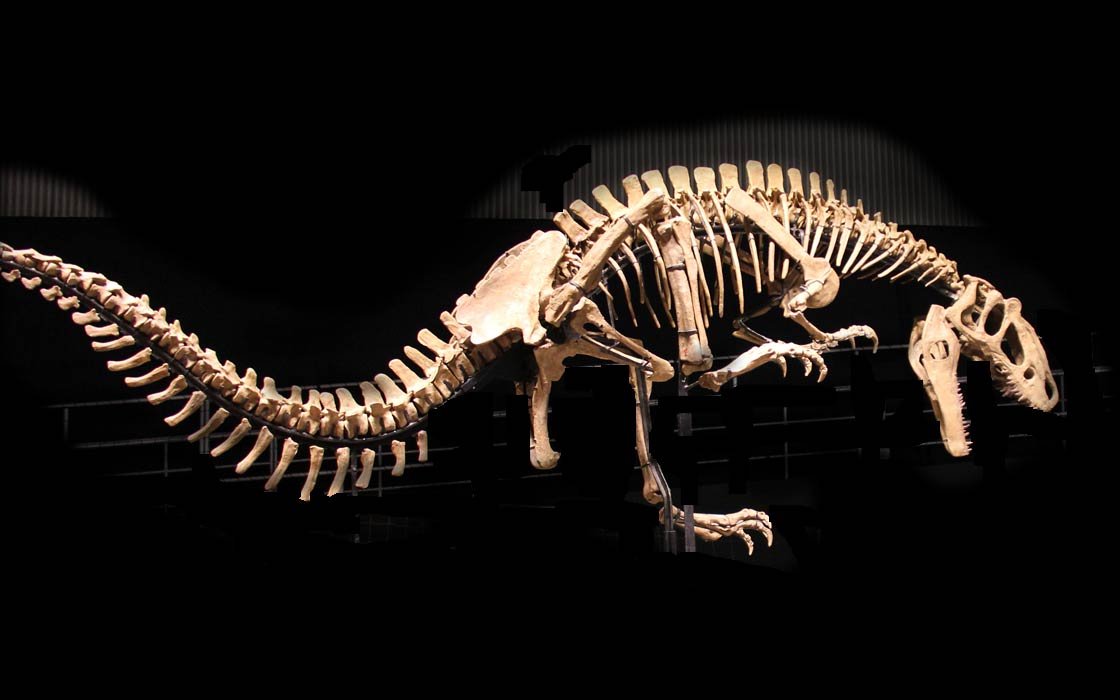
The fossil record of Yutyrannus is currently restricted to the Yixian Formation in Liaoning Province, China, a geological unit famous for its Jehol Biota. To date, only the three original specimens—the adult holotype and the two younger paratypes—are definitively known to science. However, the quality of preservation in these specimens is nothing short of exceptional. The fine-grained volcanic ash that buried these animals created an anoxic environment that halted decomposition, allowing for the fossilization of delicate soft tissues that are typically lost to time. In the case of Yutyrannus, this means that not only are the skeletons nearly complete and articulated, but the filamentous feathers are preserved as carbonized traces in the surrounding rock matrix. The fossils preserve almost the entire skeletal anatomy, from the intricate bones of the skull and the delicate sclerotic rings of the eyes to the long bones of the limbs and the vertebrae of the tail. The Yixian Formation has yielded some of the most important paleontological discoveries of the 21st century, and the Yutyrannus quarry near Batuyingzi stands out as a site of immense scientific value, offering a rare, high-fidelity window into the Early Cretaceous ecosystem.
The cultural impact of Yutyrannus has been substantial, fundamentally altering the public's perception of predatory dinosaurs. Upon its announcement in 2012, the 'feathered tyrant' captured global media attention, providing the most compelling visual evidence to date that even giant theropods could be fluffy rather than scaly. This discovery has heavily influenced modern paleoart, leading to widespread depictions of feathered tyrannosaurs in documentaries, books, and video games. Notable casts and reconstructions of Yutyrannus are prominently displayed in major institutions, including the Paleozoological Museum of China and various traveling exhibitions worldwide. By challenging deeply ingrained pop-culture tropes, Yutyrannus serves as a powerful educational tool, illustrating the scientific method and the ever-evolving nature of our understanding of the prehistoric world.
Classification
Time Period
Discovery
Location
Liaoning Province, China
Formation
Yixian Formation
Frequently Asked Questions
What is Yutyrannus?
Yutyrannus huali, whose name translates to 'beautiful feathered tyrant,' is a genus of basal tyrannosauroid dinosaur that roamed the Earth during the Early Cretaceous period, approximately 125 million years ago. Discovered in the fossil-rich deposits of Liaoning Province in northeastern China, this ...
When did Yutyrannus live?
Yutyrannus lived during the cretaceous period of the mesozoic era approximately 125-120 million years ago.
Where was Yutyrannus discovered?
Fossils of Yutyrannus were discovered in Liaoning Province, China in the Yixian Formation.
What did Yutyrannus eat?
Yutyrannus was a carnivore. It lived in terrestrial habitats.
What type of fossil is Yutyrannus?
Yutyrannus is preserved as a body fossil. The preservation quality is exceptional.
Related Specimens
From the mesozoic era · body fossils