Miragaia
Miragaia longicollum
Image: Image sourced via web search (Fair use / Educational)
About Miragaia
Miragaia longicollum was a remarkable herbivorous dinosaur from the Late Jurassic period, approximately 155 to 150 million years ago, whose remains were unearthed in modern-day Portugal. As a member of the Stegosauridae family, it shared the iconic plates and tail spikes of its famous relative, Stegosaurus, but possessed a uniquely and disproportionately long neck that challenges our traditional understanding of this dinosaur group. Its discovery has provided crucial insights into the diversity, geographical distribution, and evolutionary adaptations of stegosaurs during the peak of their reign.
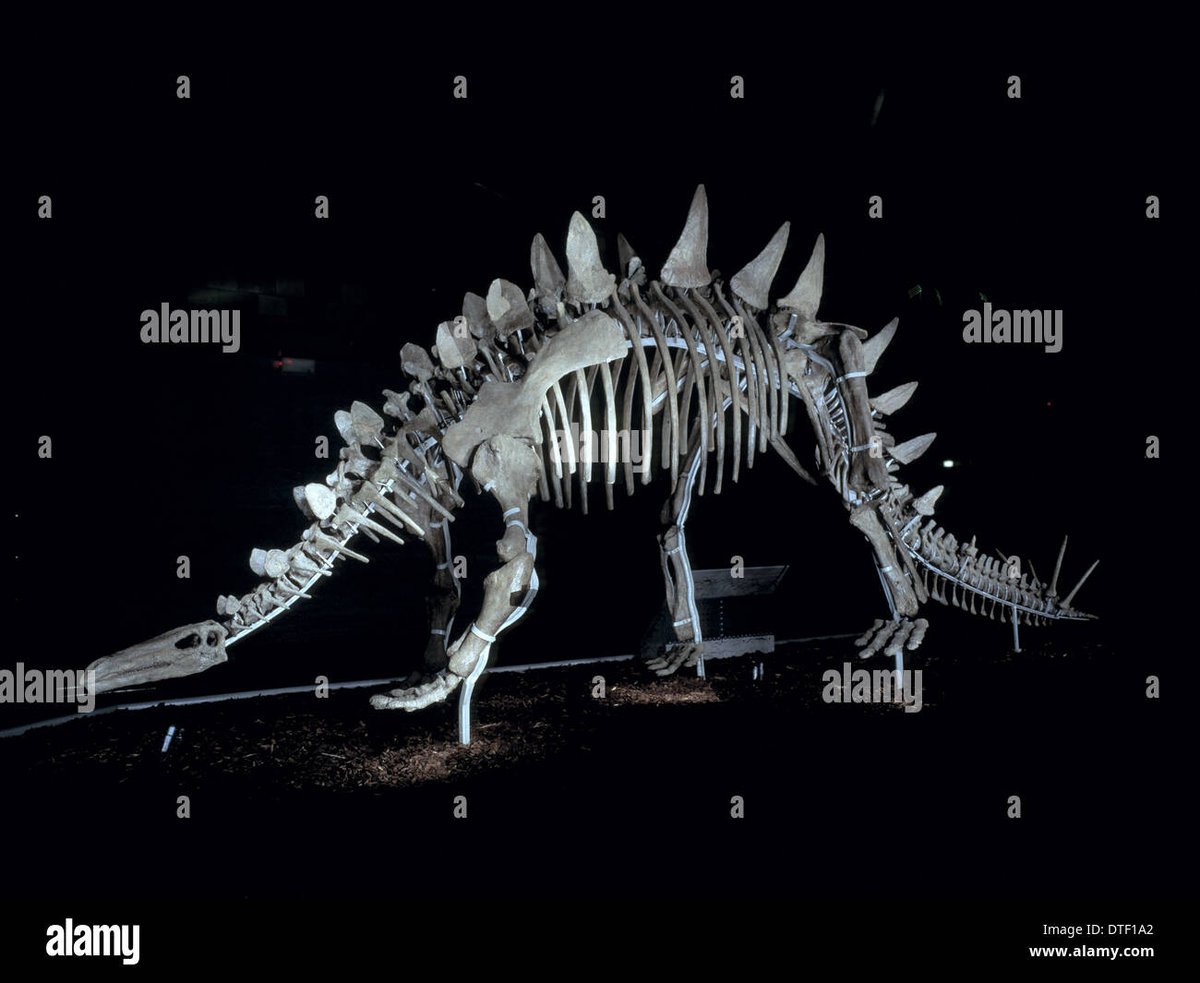
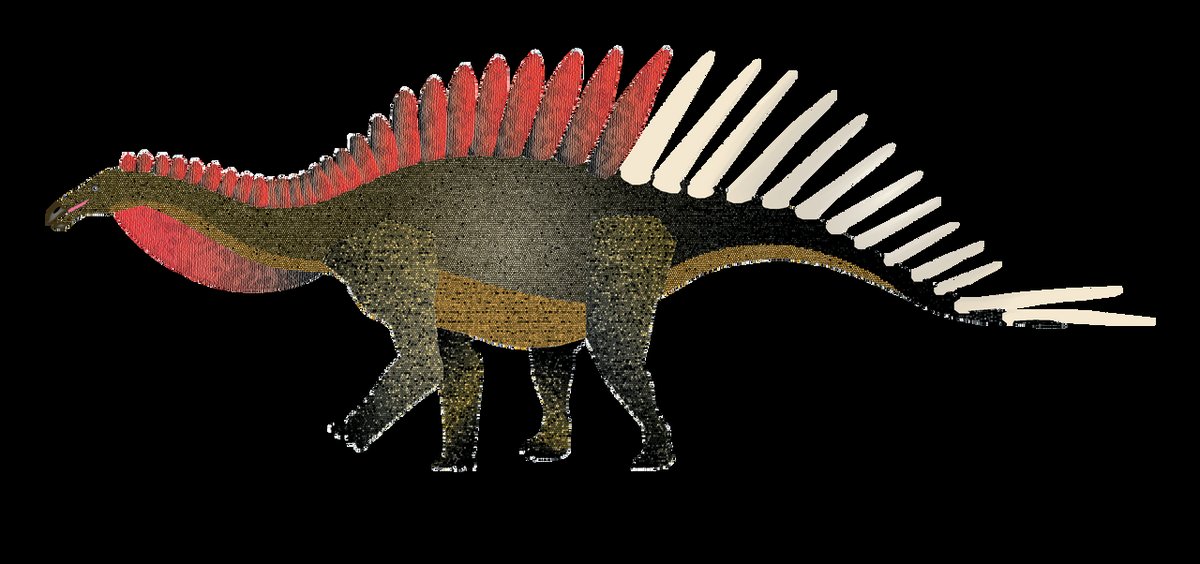
Miragaia was a medium-sized stegosaur, with an estimated body length of 5.5 to 6 meters (about 18 to 20 feet) and a weight of around 2 metric tons. For comparison, it was roughly the size of a modern white rhinoceros, though with a very different body plan. Its most striking and scientifically significant feature was its exceptionally long neck, which comprised at least 17 cervical vertebrae—more than any other known stegosaur and rivaling the count seen in some long-necked sauropods. This neck measured approximately 1.5 meters, accounting for nearly 30% of its total body length. This anatomical feature was completely unexpected in a stegosaur, a group typically characterized by short, stout necks. The rest of its skeleton conformed more closely to the classic stegosaurian build: a bulky torso, short but powerful forelimbs, and longer, pillar-like hindlimbs, resulting in a distinctively arched back that sloped down from the hips to the shoulders. Along its back, it sported a double row of tall, thin, bony plates, or osteoderms, which were likely used for display or thermoregulation. Its tail terminated in a formidable 'thagomizer,' a cluster of at least four sharp spikes used for active defense against predators.
As a herbivore, Miragaia's paleobiology was centered on consuming low-growing vegetation. Its long neck, a key adaptation, likely allowed it to browse on a wider range of plants than its short-necked relatives. While not able to reach high into the tree canopy like a sauropod, it could have efficiently foraged over a broad, low-level area without moving its entire body, conserving energy. It could have consumed ferns, cycads, and horsetails that were abundant in the Jurassic landscape. The narrow, toothless beak, or rhamphotheca, at the front of its snout was adept at cropping vegetation, which was then processed by small, leaf-shaped cheek teeth. Locomotion was quadrupedal and likely slow, as is typical for stegosaurs, with its powerful hindlimbs providing the main propulsive force. The thagomizer was a potent defensive weapon, capable of being swung with considerable force to inflict deep puncture wounds on attacking theropods like Allosaurus or Torvosaurus. Inferences about social behavior are speculative, but fossil trackways of other stegosaurs suggest they may have moved in small groups or herds, which would have offered collective protection against the formidable predators of their time.
Miragaia inhabited the coastal plains of the western Laurasian landmass, in what is now the Iberian Peninsula. During the Late Jurassic, this region was a lush, subtropical environment characterized by river systems, floodplains, and dense forests of conifers, cycads, and ferns. The climate was warm and seasonally wet, supporting a rich and diverse ecosystem. Miragaia shared this habitat with a spectacular array of other dinosaurs. Herbivores included the giant sauropods Lusotitan and Turiasaurus, the ornithopod Draconyx, and its close stegosaurian relative, Dacentrurus. The apex predators of this environment were large theropods such as Allosaurus europaeus and the massive megalosaurid Torvosaurus gurneyi, both of which would have posed a significant threat to a medium-sized animal like Miragaia. Miragaia occupied a niche as a low-to-mid-level browser, positioning it within the middle of the food web. Its primary defense against predation was its formidable armor, particularly the tail spikes, which made it a dangerous and challenging prey item for even the largest carnivores of its time.
The discovery of Miragaia is a relatively recent and significant event in paleontology. The holotype specimen, designated ML 433, was unearthed in 1999 by amateur paleontologist José Joaquim dos Santos near the village of Miragaia in the municipality of Lourinhã, Portugal. The fossils were recovered from the Sobral Member of the Lourinhã Formation, a geological unit renowned for its rich Late Jurassic dinosaur fauna. The initial find consisted of a partial skeleton, which remarkably included the anterior half of the animal: a nearly complete skull (a rarity for stegosaurs), the lower jaws, and the first 15 neck vertebrae, along with parts of the shoulder girdle and forelimbs. The exceptional preservation of the neck was immediately recognized as highly unusual. The fossils were prepared and studied by paleontologists Octávio Mateus, Susannah Maidment, and Nicolai Christiansen, who formally named and described the new genus and species Miragaia longicollum in 2009. The genus name honors the location of its discovery, while the species name, 'longicollum,' is Latin for 'long neck,' directly referencing its most distinctive anatomical feature. The discovery of this specimen provided the first clear evidence of extreme neck elongation within the stegosaur lineage.
Miragaia's placement within the evolutionary tree of life has greatly expanded our understanding of stegosaur diversity and adaptation. It is classified within the family Stegosauridae and is considered a member of the subfamily Dacentrurinae, a group primarily known from European fossils that also includes the genus Dacentrurus. The discovery of a long-necked stegosaur was revolutionary, as it demonstrated that this group experimented with body plans previously thought to be exclusive to sauropods. This case of convergent evolution—where unrelated groups independently evolve similar traits—highlights the strong selective pressures for efficient browsing strategies among large herbivores. Miragaia's anatomy suggests that the genetic and developmental pathways for neck elongation were present across different dinosaur lineages. Its close relationship with Dacentrurus, a more traditionally proportioned stegosaur, indicates that this extreme neck elongation evolved relatively rapidly within this specific European clade. This finding challenges the previously held notion of stegosaurs as a morphologically conservative group, revealing them to be more adaptable and varied than once believed.
Since its initial description, Miragaia has been the subject of some scientific debate, primarily concerning its taxonomy and the interpretation of its neck. One key discussion revolves around its relationship with Dacentrurus. Some researchers have proposed that Miragaia might not be a distinct genus but rather a species of Dacentrurus, or perhaps even that the holotype represents an unusually old individual of Dacentrurus. However, most paleontologists maintain its status as a separate genus, citing numerous distinct features in the skull and vertebrae. Another point of debate is whether all 17 cervical vertebrae truly belong to the neck. It has been suggested that some of the posterior 'cervicals' might actually be anterior dorsal (back) vertebrae that have become 'cervicalized,' adopting a neck-like form. This would still result in a functionally long neck but would alter interpretations of its evolutionary development. The discovery of a second specimen in Wyoming, initially assigned to a new species 'Miragaia' 'major' (now Alcovasaurus), further complicated the picture, though this specimen is now considered a distinct genus, reinforcing the idea that long-necked stegosaurs may have been more widespread than previously thought.
The fossil record for Miragaia is currently limited but significant. The primary and most important specimen is the holotype, ML 433, discovered in the Lourinhã Formation of Portugal. This specimen is notable for being the most complete stegosaur from Europe and for preserving the anterior half of the skeleton, including the skull and the entire neck, which are parts rarely found articulated in other stegosaurs. The preservation quality is considered good, allowing for detailed anatomical study. In 2019, a second specimen from the same region was described, consisting of postcranial remains including vertebrae, ribs, and osteoderms from a juvenile individual. This find confirmed the presence of Miragaia as a distinct and established taxon in the ecosystem. Fossils are housed at the Museu da Lourinhã in Portugal, a key institution for the study of dinosaurs from this formation. The concentration of finds in this area suggests it was a core part of Miragaia's habitat, though the overall rarity of its fossils indicates it was likely not as abundant as some of its sauropod or ornithopod contemporaries.
Despite being a relatively recent discovery, Miragaia has captured the public's imagination due to its bizarre and unexpected appearance. Its combination of a classic Stegosaurus-like body with a sauropod-like neck makes it a visually striking and memorable dinosaur. It has begun to appear in dinosaur books, documentaries, and online media, often highlighted as an example of evolutionary convergence and the surprising diversity of well-known dinosaur groups. The holotype skeleton is a centerpiece exhibit at the Museu da Lourinhã in Portugal, where a life-sized reconstruction helps visitors visualize this unique animal. Its educational importance lies in its power to challenge preconceived notions, demonstrating to students and the public that the fossil record is full of surprises and that our understanding of prehistoric life is constantly evolving with each new discovery.
Classification
Time Period
Discovery
Location
Portugal
Formation
Lourinhã Formation
Frequently Asked Questions
What is Miragaia?
Miragaia longicollum was a remarkable herbivorous dinosaur from the Late Jurassic period, approximately 155 to 150 million years ago, whose remains were unearthed in modern-day Portugal. As a member of the Stegosauridae family, it shared the iconic plates and tail spikes of its famous relative, Steg...
When did Miragaia live?
Miragaia lived during the jurassic period of the mesozoic era approximately 155-150 million years ago.
Where was Miragaia discovered?
Fossils of Miragaia were discovered in Portugal in the Lourinhã Formation.
What did Miragaia eat?
Miragaia was a herbivore. It lived in terrestrial habitats.
What type of fossil is Miragaia?
Miragaia is preserved as a body fossil. The preservation quality is good.
Related Specimens
From the mesozoic era · body fossils