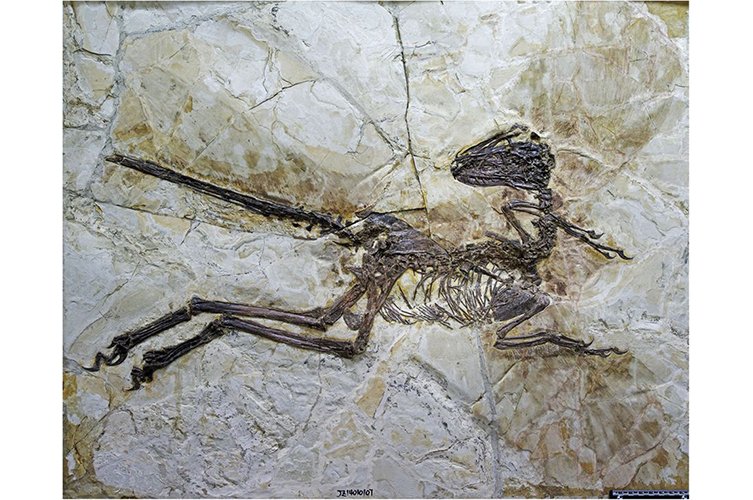
Fighting Dinosaurs Specimen
Velociraptor mongoliensis / Protoceratops andrewsi
Image: Image sourced via web search (Fair use / Educational)
About Fighting Dinosaurs Specimen
The 'Fighting Dinosaurs' specimen is arguably one of the most spectacular, significant, and dramatic fossil discoveries in the entire history of paleontology. Unearthed in the unforgiving landscape of the Gobi Desert in Mongolia, this extraordinary fossil captures a lethal, frozen-in-time encounter between a carnivorous Velociraptor mongoliensis and an herbivorous Protoceratops andrewsi. Dating back to the Campanian stage of the Late Cretaceous period, approximately 71 to 75 million years ago, this specimen provides an unprecedented, direct glimpse into the predator-prey dynamics of the Mesozoic era. Unlike the vast majority of fossilized remains, which typically consist of isolated bones or disarticulated skeletons scattered by scavengers and the elements, the Fighting Dinosaurs specimen preserves two distinct species locked in mortal combat. This remarkable preservation offers irrefutable evidence of active predatory behavior and defensive struggle, elevating it from a mere paleontological curiosity to a foundational piece of evidence in our understanding of dinosaur ethology. The specimen serves as a crucial anchor point for researchers studying the biomechanics, ecology, and behavioral patterns of Late Cretaceous terrestrial ecosystems, demonstrating that the ancient world was just as dynamic, violent, and complex as the natural world we observe today.
In terms of physical description, the Fighting Dinosaurs specimen presents a breathtakingly detailed anatomical tableau of two highly specialized animals. The Velociraptor mongoliensis, a lightly built dromaeosaurid theropod, measured approximately 2 meters (6.5 feet) in length from snout to tail and is estimated to have weighed around 15 kilograms (33 pounds). It possessed a long, stiffened tail that provided balance and agility, a narrow snout filled with serrated teeth adapted for tearing flesh, and, most famously, a large, sickle-shaped claw on the second toe of each hind foot. Although soft tissues are not preserved in this specific specimen, subsequent discoveries of quill knobs on other Velociraptor fossils strongly infer that this predator was covered in a coat of pennaceous feathers, giving it an appearance more akin to a large, ground-dwelling bird of prey than a scaly reptile. Its opponent, the Protoceratops andrewsi, was a heavily built, quadrupedal ceratopsian dinosaur. Measuring about 1.8 meters (6 feet) in length and weighing an estimated 100 kilograms (220 pounds), it was significantly bulkier than the Velociraptor. Protoceratops was characterized by a large skull featuring a prominent bony neck frill and a sharp, parrot-like beak designed for cropping tough vegetation. In the fossil, the physical interaction between the two is preserved with astonishing clarity: the Velociraptor has embedded its deadly sickle claw deep into the neck region of the Protoceratops, precisely where the vital carotid artery and jugular vein would have been located. In a desperate counterattack, the Protoceratops has clamped its powerful, shearing beak onto the right arm of the Velociraptor, fracturing the predator's limb. The physical dimensions and skeletal characteristics of both animals are perfectly articulated, showcasing the lethal adaptations of the theropod and the robust, defensive morphology of the ceratopsian.
The paleobiology of these two animals is vividly illustrated by their final, fatal interaction. For decades, paleontologists debated whether dromaeosaurids like Velociraptor were active hunters of large prey or opportunistic scavengers. The Fighting Dinosaurs specimen provided the definitive answer, proving that Velociraptor was an aggressive, active predator capable of taking on prey significantly heavier than itself. The positioning of the Velociraptor's sickle claw in the neck of the Protoceratops supports the hypothesis that this specialized weapon was used not necessarily for disemboweling prey—as was once popularized in media—but rather for precise, lethal piercing strikes to vital areas such as the trachea or major blood vessels, much like modern birds of prey use their talons. The specimen also sheds light on the defensive capabilities of herbivorous dinosaurs. The Protoceratops, lacking the impressive horns of its later relatives like Triceratops, relied on its massive skull, powerful jaw musculature, and sharp beak for defense. The fact that it managed to break the Velociraptor's arm demonstrates a formidable bite force and a fierce will to survive. Furthermore, the specimen offers insights into the locomotion and agility of Velociraptor, which evidently used its forelimbs to grapple with prey while delivering fatal kicks with its hind legs. The high metabolic rates inferred for both animals—endothermy in the feathered Velociraptor and potentially high metabolic activity in the actively defending Protoceratops—are consistent with the explosive energy required for such a violent, sustained physical struggle.
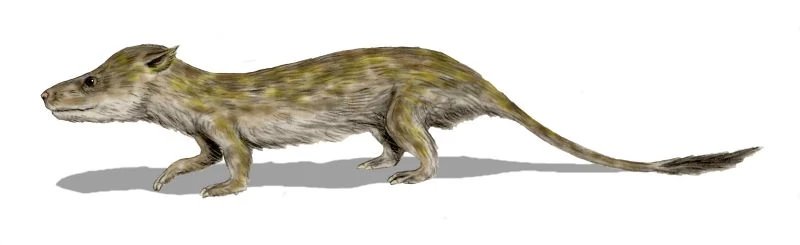
The ecological context of the Fighting Dinosaurs places them in the Djadochta Formation of the Late Cretaceous Gobi Desert, an environment that was markedly different from the lush, tropical forests often associated with the Mesozoic era. During the Campanian stage, this region was a semi-arid to arid desert landscape, characterized by vast fields of shifting sand dunes (eolian deposits) interspersed with occasional, life-sustaining oases. The climate was harsh, with extreme temperature fluctuations and seasonal, unpredictable rainfall. Despite these challenging conditions, the ecosystem was surprisingly diverse and supported a complex food web. Protoceratops was one of the most abundant herbivores in this environment, often referred to as the 'sheep of the Cretaceous' due to its sheer numbers. It likely traveled in herds, feeding on tough, low-growing desert vegetation using its powerful beak. Velociraptor, on the other hand, was an apex or meso-predator in this specific habitat, perfectly adapted to the open, sandy terrain where its speed, agility, and keen senses allowed it to ambush or run down prey. The ecosystem was also home to other fascinating creatures, including the heavily armored ankylosaur Pinacosaurus, the enigmatic oviraptorosaurs, and a variety of early mammals such as Zalambdalestes, which likely scurried through the underbrush avoiding the attention of small theropods. The predator-prey relationship between Velociraptor and Protoceratops was a central dynamic of this ancient desert ecology, representing a classic evolutionary arms race between a highly specialized carnivore and a robust, heavily defended herbivore.
The discovery history of the Fighting Dinosaurs is a tale of international scientific collaboration and incredible luck. The specimen was discovered in 1971 by a joint Polish-Mongolian paleontological expedition, a groundbreaking initiative that brought together scientists from the Eastern Bloc during the height of the Cold War. The team, led by the legendary Polish paleontologist Zofia Kielan-Jaworowska and the renowned Mongolian paleontologist Rinchen Barsbold, was exploring the fossil-rich cliffs of Tugriken Shireh in the Gobi Desert. It was here that a team member noticed bones eroding out of the sandstone cliff face. As the paleontologists carefully brushed away the reddish sand, they realized they had found something entirely unprecedented. First, they uncovered the skull of the Protoceratops, and shortly after, the articulated skeleton of the Velociraptor entangled with it. The excavation was a delicate and painstaking process, requiring the team to remove the surrounding sandstone matrix without disturbing the fragile, interlocked bones. The specimen was eventually transported to Ulaanbaatar and later studied extensively by scientists around the world. The discovery caused a sensation in the paleontological community, as it was the first time direct evidence of dinosaur combat had ever been found. The specimen remains one of the crown jewels of the Mongolian Paleontological Center and is widely considered one of the most important fossil discoveries of the 20th century, fundamentally altering our understanding of dinosaur behavior.
The evolutionary significance of the Fighting Dinosaurs extends far beyond the dramatic nature of their death. For dromaeosaurids like Velociraptor, the specimen provides critical anatomical data that helps paleontologists trace the evolutionary lineage of theropod dinosaurs and their relationship to modern birds. The highly specialized morphology of Velociraptor, including its stiffened tail, grasping hands, and swiveling wrist bones (which allowed it to fold its arms in a manner similar to a bird folding its wings), highlights the deep evolutionary connections between non-avian dinosaurs and Aves. The specimen also demonstrates the evolutionary refinement of the sickle claw, a defining trait of the Dromaeosauridae family, showcasing its functional application in a real-world predatory scenario. For ceratopsians, the Protoceratops in this specimen represents a crucial transitional form. While it lacks the large facial horns of later, more derived ceratopsids from North America, its well-developed neck frill and powerful beak illustrate the early evolutionary strategies that this lineage employed for both display and defense. The co-evolution of these two species in the isolated environment of the Late Cretaceous Gobi Desert provides a fascinating case study in how predator and prey exert selective pressures on one another over millions of years, driving the development of increasingly sophisticated offensive weapons and defensive countermeasures.
Despite the incredible preservation of the specimen, it has been the subject of ongoing scientific debates and varying interpretations. The most prominent debate centers on exactly how the two animals died and were preserved in such a dynamic pose. The prevailing scientific consensus is that the animals were locked in mortal combat when they were suddenly buried alive by a collapsing sand dune or a massive sandstorm. The weight of the sand would have instantly suffocated them and locked their bodies in their final fighting positions. However, alternative hypotheses have been proposed. Some researchers have suggested that the Velociraptor may have been scavenging on an already dead Protoceratops when it became trapped under the heavy carcass or was subsequently buried. Yet, the precise, lethal positioning of the Velociraptor's claw in the herbivore's neck, combined with the Protoceratops's defensive bite on the predator's arm, makes the scavenging hypothesis highly unlikely to most experts. Another area of debate involves the biomechanics of the dromaeosaurid sickle claw. While early interpretations suggested it was used as a disemboweling slashing weapon, modern biomechanical studies, heavily influenced by the positioning seen in the Fighting Dinosaurs, argue that the claw was primarily a piercing and pinning tool, used to puncture thick hide and severe vital vessels, much like the talons of modern eagles and hawks.
The fossil record of the Djadochta Formation, where the Fighting Dinosaurs were found, is renowned for its exceptional preservation quality. The unique taphonomic conditions of this ancient desert environment—specifically the rapid burial of organisms by shifting eolian sands—prevented the typical processes of decay, scavenging, and scattering that degrade most fossils. As a result, the Gobi Desert has yielded an unusually high number of fully articulated dinosaur skeletons. However, even in such a rich fossil bed, the Fighting Dinosaurs specimen is an extreme rarity. Finding a single articulated skeleton is a cause for celebration in paleontology; finding two different species preserved together in the midst of a behavioral interaction is almost statistically impossible. The specimen preserves nearly the entirety of both skeletons in three dimensions, with the bones remaining in their original anatomical positions. This level of preservation allows paleontologists to study the joint articulations, muscle attachment sites, and overall biomechanics of both animals with an unprecedented degree of accuracy. The Tugriken Shireh locality, along with other famous Gobi sites like the Flaming Cliffs (Bayan Zag) and Ukhaa Tolgod, continues to be a vital source of exceptionally preserved fossils, though none have yet matched the dramatic behavioral snapshot captured by the Fighting Dinosaurs.
The cultural impact of the Fighting Dinosaurs specimen has been profound, capturing the imagination of the public and significantly influencing the portrayal of dinosaurs in popular media. Before this discovery, dinosaurs were often depicted in popular culture as sluggish, tail-dragging, cold-blooded reptiles. The dynamic, violent, and highly active nature of the Fighting Dinosaurs helped to catalyze the 'Dinosaur Renaissance,' shifting public and scientific perception toward viewing dinosaurs as fast, agile, and potentially warm-blooded animals. The specimen has been the subject of countless documentaries, books, and articles, and it has inspired generations of paleoartists who have sought to bring this ancient battle to life on canvas and in digital media. High-quality replicas of the fossil are displayed in major natural history museums around the world, serving as powerful educational tools that vividly illustrate the realities of prehistoric life and the brutal nature of survival in the Mesozoic era. The Fighting Dinosaurs remain a testament to the power of the fossil record to tell compelling, true stories of the deep past.
Classification
Time Period
Discovery
Location
Mongolia
Formation
Djadochta Formation
Frequently Asked Questions
What is Fighting Dinosaurs Specimen?
The 'Fighting Dinosaurs' specimen is arguably one of the most spectacular, significant, and dramatic fossil discoveries in the entire history of paleontology. Unearthed in the unforgiving landscape of the Gobi Desert in Mongolia, this extraordinary fossil captures a lethal, frozen-in-time encounter ...
When did Fighting Dinosaurs Specimen live?
Fighting Dinosaurs Specimen lived during the cretaceous period of the mesozoic era approximately 75-71 million years ago.
Where was Fighting Dinosaurs Specimen discovered?
Fossils of Fighting Dinosaurs Specimen were discovered in Mongolia in the Djadochta Formation.
What did Fighting Dinosaurs Specimen eat?
Fighting Dinosaurs Specimen was a carnivore / herbivore. It lived in terrestrial habitats.
What type of fossil is Fighting Dinosaurs Specimen?
Fighting Dinosaurs Specimen is preserved as a body fossil. The preservation quality is exceptional.
Related Specimens
From the mesozoic era · body fossils
-tooth/7fb56d2cf543.png)