Stegodon
Stegodon zdanskyi
Image: Image sourced via web search (Fair use / Educational)
About Stegodon
Stegodon zdanskyi, widely recognized by its popular moniker the Yellow River Elephant, stands as one of the most magnificent and imposing proboscideans to have ever traversed the landscapes of prehistoric Asia. Flourishing during the Pleistocene epoch, this colossal mammal inhabited the Earth from approximately 2.5 million years ago until the twilight of the last Ice Age, roughly 12,000 years ago. Geographically, its domain was centered in eastern Asia, with the most spectacular and scientifically significant fossil discoveries occurring within the borders of modern-day China. As a premier representative of the extinct family Stegodontidae, Stegodon zdanskyi holds immense significance in the field of paleontology. It not only serves as a crucial biostratigraphic marker for Quaternary deposits in Asia but also provides profound insights into the evolutionary trajectory of elephant relatives, their adaptations to shifting climatic regimes, and their eventual demise during the end-Pleistocene megafaunal extinction event. The sheer abundance and quality of its fossil record have allowed researchers to reconstruct the ancient ecosystems of the Cenozoic era with remarkable fidelity, cementing its status as a cornerstone species in the study of prehistoric mammalian megafauna.
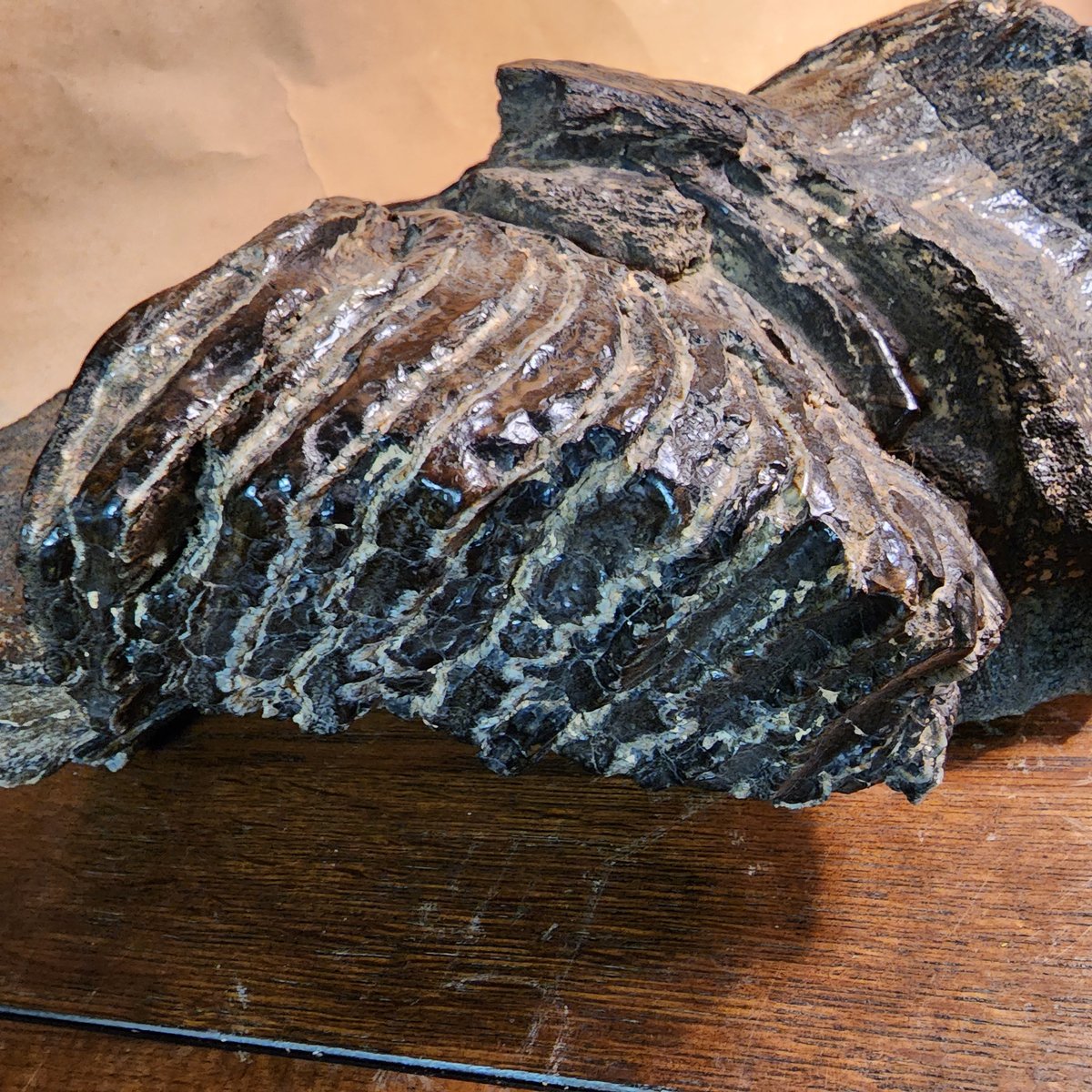
The physical anatomy of Stegodon zdanskyi was nothing short of awe-inspiring, representing a pinnacle of proboscidean gigantism. Adult males of this species were true leviathans, reaching staggering shoulder heights of up to 3.8 to 4 meters and possessing an estimated body length approaching 800 centimeters, inclusive of their formidable tusks. Weight estimates suggest that mature individuals could tip the scales at an astonishing 12 metric tonnes, making them significantly larger and more robust than the largest extant African bush elephants. The most distinctive and visually striking feature of Stegodon zdanskyi was undoubtedly its tusks. Unlike the gently curving ivory of modern elephants, the tusks of this prehistoric giant were exceptionally long, incredibly robust, and grew remarkably close together. In some older males, the tusks could reach lengths of over three meters and were so closely spaced that there was scarcely room for the animal's trunk to rest between them, leading paleontologists to hypothesize that the trunk may have been draped over the side of the tusks. The skull was highly domed and heavily constructed to support the immense weight of the tusks and the massive musculature required to wield them. The dentition of Stegodon zdanskyi is the defining characteristic of its genus; the name "Stegodon" translates to "roof tooth," referring to the distinctive, roof-shaped ridges or lophs on their molar teeth. These brachyodont (low-crowned) molars were composed of a series of parallel, tent-like ridges covered in thick enamel, which differed markedly from the flat, washboard-like grinding surfaces seen in the teeth of true elephants and mammoths. Soft tissue inferences, drawn from the skeletal morphology and the environmental context of Pleistocene Asia, suggest that Stegodon zdanskyi possessed a thick, leathery hide, likely with sparse hair covering, similar to modern elephants, though populations living in cooler, more northern latitudes during glacial maxima might have exhibited slightly denser pelage.
The paleobiology of Stegodon zdanskyi reveals a highly successful and adaptable megaherbivore capable of exploiting a variety of ecological niches. The unique morphology of their "roof-toothed" molars indicates a diet that was primarily focused on browsing, utilizing their muscular trunks to strip leaves, twigs, and bark from trees and shrubs. However, as the Pleistocene climate fluctuated and vast tracts of forest gave way to open woodlands and grassy steppes, the robust nature of their teeth suggests they were also capable of grazing on tougher, more abrasive vegetation when necessary. This dietary flexibility was likely a key factor in their long-term survival across millions of years. In terms of locomotion, Stegodon zdanskyi was strictly graviportal, possessing pillar-like limbs designed to support its massive bulk. While incapable of true running or leaping, they were likely capable of a brisk, ground-covering walk, migrating over vast distances in search of food and water resources. Socially, it is highly probable that Stegodon zdanskyi exhibited complex, matriarchal herd structures analogous to those of modern elephants. Fossil trackways and mass death assemblages of related proboscideans suggest that females and their young traveled in tightly knit family units led by an older, experienced matriarch, while adult males were largely solitary or formed loose bachelor groups. Growth patterns inferred from the microscopic analysis of their tusks and long bones indicate a prolonged period of juvenile dependency, slow maturation rates, and a long lifespan potentially exceeding 60 to 70 years. Their massive size would have necessitated an extraordinarily high daily caloric intake, requiring them to spend the vast majority of their waking hours foraging and consuming hundreds of kilograms of plant matter, thereby acting as major ecosystem engineers that shaped the vegetation structure of their environment.
The ecological context in which Stegodon zdanskyi thrived was one of profound dynamism and climatic upheaval. The Pleistocene epoch was characterized by dramatic glacial and interglacial cycles, which continuously reshaped the geography and flora of eastern Asia. During warmer interglacial periods, Stegodon zdanskyi inhabited lush, subtropical to temperate forests and dense river valleys, while during cooler glacial advances, they adapted to more open, mosaic landscapes of woodland and steppe. They were a central component of the famous "Ailuropoda-Stegodon" faunal complex, a distinct assemblage of Pleistocene mammals characteristic of southern and central China. In this vibrant ecosystem, Stegodon zdanskyi shared its habitat with a spectacular array of prehistoric creatures, including the giant ape Gigantopithecus blacki, ancient pandas (Ailuropoda), saber-toothed cats, giant tapirs, and various species of rhinoceros and deer. As a megaherbivore, Stegodon occupied the very top of the primary consumer trophic level. Fully grown adults were virtually immune to predation due to their sheer size and formidable tusks. However, calves, juveniles, and sick or elderly individuals would have been vulnerable to the apex predators of the time, such as large felids, pack-hunting canids, and increasingly, early hominins. Indeed, the temporal range of Stegodon zdanskyi overlaps significantly with the presence of Homo erectus and later archaic humans in Asia. The interaction between these early humans and Stegodon is a subject of intense study, with archaeological evidence from sites like Nihewan and Zhoukoudian suggesting that hominins occasionally scavenged or perhaps even actively hunted these massive beasts, utilizing their bones for tools and their meat for sustenance.
The discovery history of Stegodon zdanskyi is deeply intertwined with the pioneering days of vertebrate paleontology in early 20th-century China. The species was formally described and named in 1935 by the British paleontologist Arthur Tindell Hopwood. Hopwood chose the specific epithet "zdanskyi" to honor Otto Zdansky, an Austrian paleontologist whose extensive fieldwork in China during the 1920s yielded a wealth of crucial fossil material, most notably his involvement in the initial discoveries at the famous Peking Man site of Zhoukoudian. While isolated teeth and fragmentary bones of Stegodon had been known to Chinese apothecaries for centuries—often ground up and sold as "dragon bones" for traditional medicine—it was the rigorous scientific excavations of the 20th century that brought the true nature of this animal to light. The most spectacular and iconic specimen of Stegodon zdanskyi was discovered much later, in the spring of 1973, by a group of local farmers digging a sand pit near the Huanjiang River in Heshui County, Gansu Province. This remarkable find, which came to be known universally as the "Yellow River Elephant," represents one of the largest, oldest, and most complete proboscidean skeletons ever unearthed anywhere in the world. The excavation, led by scientists from the Institute of Vertebrate Paleontology and Paleoanthropology (IVPP) in Beijing, revealed a skeleton that was approximately 75 percent complete, including a magnificent skull with its massive tusks still intact and in life position. This single specimen revolutionized our understanding of Stegodon anatomy and proportions, providing a definitive reference point for all subsequent studies of the genus.
In terms of evolutionary significance, Stegodon zdanskyi occupies a fascinating and somewhat complex position within the proboscidean family tree. The family Stegodontidae is generally considered to be a sister group to the Elephantidae (which includes mammoths and modern elephants), meaning they share a common, older ancestor but followed distinct evolutionary pathways. Stegodontids first originated in Asia during the Miocene epoch and subsequently radiated across a vast geographic range, reaching as far as Africa and the islands of Southeast Asia. Stegodon zdanskyi represents one of the most highly derived and late-surviving lineages of this incredibly successful family. Studying this species provides paleontologists with a textbook example of parallel evolution. Over millions of years, Stegodon independently evolved massive body size, elongated tusks, and increasingly complex molar teeth that superficially resembled those of true elephants, driven by similar environmental pressures and dietary requirements. However, the retention of their distinct, roof-shaped dental ridges clearly distinguishes them from the Elephantidae, highlighting how different genetic lineages can arrive at similar morphological solutions to ecological challenges. Furthermore, the eventual extinction of Stegodon zdanskyi at the end of the Pleistocene offers critical data for understanding the broader megafaunal extinction event. Their disappearance from the fossil record coincides with rapid climatic shifts at the end of the last Ice Age and the concurrent expansion of technologically advanced human populations, making them a key case study in the ongoing debate regarding the relative impacts of climate change versus human hunting in the loss of Earth's prehistoric giants.
Despite the wealth of fossil material available, Stegodon zdanskyi remains the subject of several ongoing scientific debates and controversies. One of the primary areas of contention revolves around the precise taxonomic boundaries within the genus Stegodon. Because proboscidean teeth are highly variable and change significantly as they wear down over an animal's lifetime, some researchers argue that certain specimens previously classified as distinct species may actually represent different age stages or regional variants of Stegodon zdanskyi. Conversely, others advocate for splitting the taxon based on subtle morphological differences found in different stratigraphic layers. Another fascinating debate centers on the functional morphology of their incredibly close-set tusks. While the traditional view suggests the trunk was draped over the side, some biomechanical studies propose that the tusks may have been used primarily for intraspecific combat or display, rather than foraging, and that the trunk might have been more muscular and agile than previously thought, capable of manipulating food around the tusks. Additionally, the exact cause of their extinction remains a hotly debated topic. While the "overkill hypothesis" suggests that human hunting drove them to extinction, many paleontologists now favor a synergistic model, arguing that severe environmental fragmentation caused by late Pleistocene climate change critically weakened Stegodon populations, making them highly susceptible to even low levels of human predation.
The fossil record of Stegodon zdanskyi is exceptionally rich, particularly within the borders of China, making it one of the best-documented prehistoric megaherbivores of Asia. Fossils have been recovered from a wide array of geological settings, ranging from the wind-blown loess deposits of northern China to the karst cave systems and riverine terraces of the south. The preservation quality varies significantly depending on the depositional environment. Isolated molar teeth are incredibly common, owing to their dense, highly mineralized enamel which resists taphonomic degradation. These teeth are frequently found in Pleistocene river gravels and are essential tools for biostratigraphic dating. Post-cranial bones, such as femurs, humeri, and vertebrae, are less common but still relatively abundant compared to other megafauna. However, articulated skeletons are exceedingly rare. The aforementioned Yellow River Elephant from the Loess Plateau in Gansu Province remains the gold standard for preservation, offering an unprecedented look at the animal's complete osteology. Other famous fossil sites yielding significant Stegodon zdanskyi material include the Nihewan Basin in Hebei Province, which provides a crucial window into early Pleistocene ecosystems, and the numerous cave sites in Guangxi and Sichuan provinces, which preserve the classic Ailuropoda-Stegodon fauna. The sheer volume of material available continues to fuel new research, utilizing advanced techniques like isotopic analysis and 3D scanning to extract novel biological data from these ancient bones.
The cultural impact of Stegodon zdanskyi, particularly in its homeland of China, is profound and enduring. The spectacular skeleton of the Yellow River Elephant is proudly displayed in the main exhibition hall of the Beijing Museum of Natural History, where it serves as a centerpiece of the museum's paleontological collections. This towering mount has captivated the imaginations of millions of visitors, functioning as a powerful educational tool that brings the reality of the Ice Age vividly to life. Beyond the museum walls, the image of the Yellow River Elephant frequently appears in Chinese educational materials, documentaries, and popular science literature, symbolizing the rich prehistoric heritage of the region. The public fascination with this colossal beast helps to drive ongoing support for paleontological research and fossil conservation efforts across Asia, ensuring that the legacy of Stegodon zdanskyi will continue to inspire future generations of scientists and nature enthusiasts alike.
Classification
Time Period
Discovery
Location
China
Formation
Loess Plateau deposits
Frequently Asked Questions
What is Stegodon?
Stegodon zdanskyi, widely recognized by its popular moniker the Yellow River Elephant, stands as one of the most magnificent and imposing proboscideans to have ever traversed the landscapes of prehistoric Asia. Flourishing during the Pleistocene epoch, this colossal mammal inhabited the Earth from a...
When did Stegodon live?
Stegodon lived during the quaternary period of the cenozoic era approximately 2.5-0.012 million years ago.
Where was Stegodon discovered?
Fossils of Stegodon were discovered in China in the Loess Plateau deposits.
What did Stegodon eat?
Stegodon was a herbivore. It lived in terrestrial habitats.
What type of fossil is Stegodon?
Stegodon is preserved as a body fossil. The preservation quality is good.
Related Specimens
From the cenozoic era · body fossils