Massospondylus
Massospondylus carinatus
Image: Image sourced via web search (Fair use / Educational)
About Massospondylus
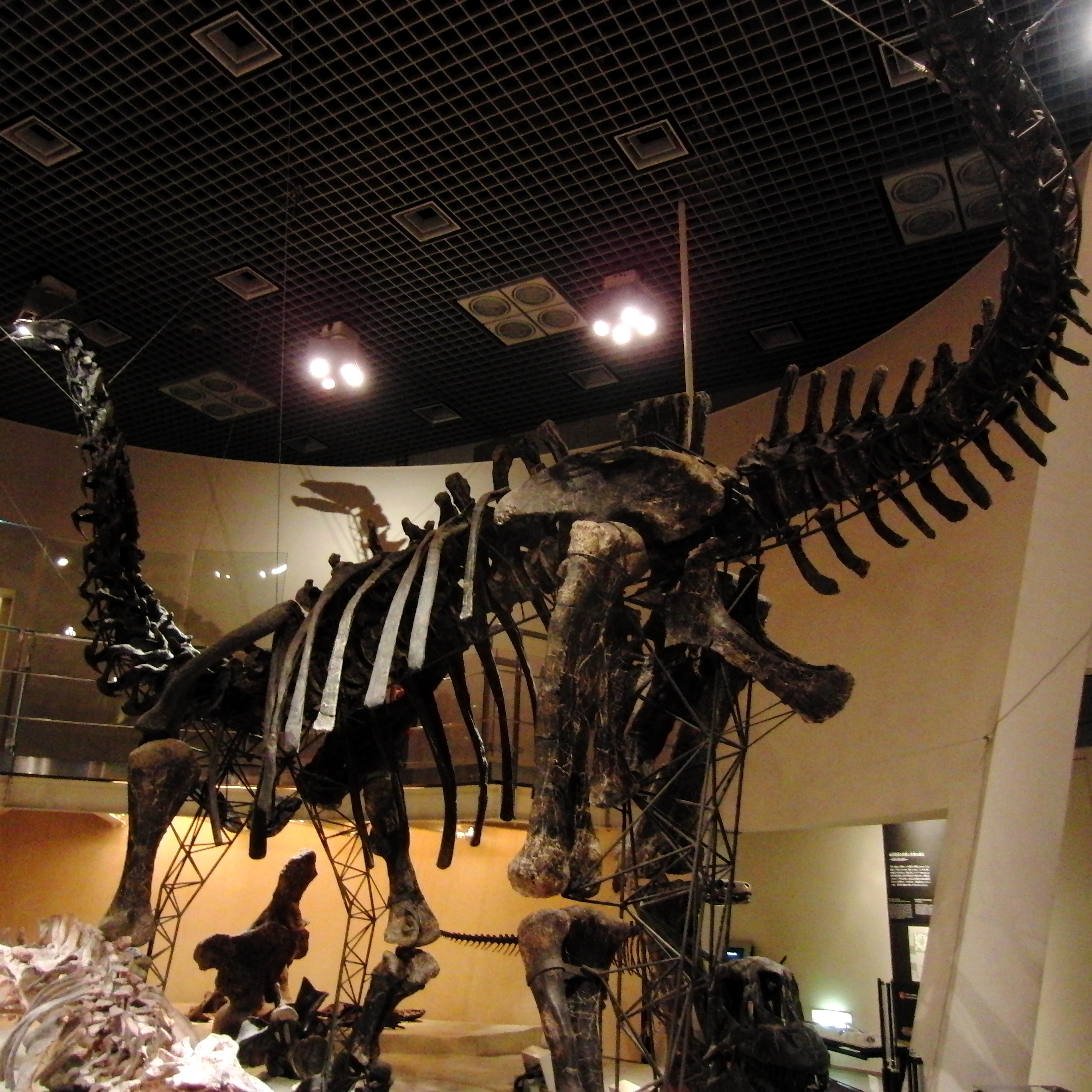
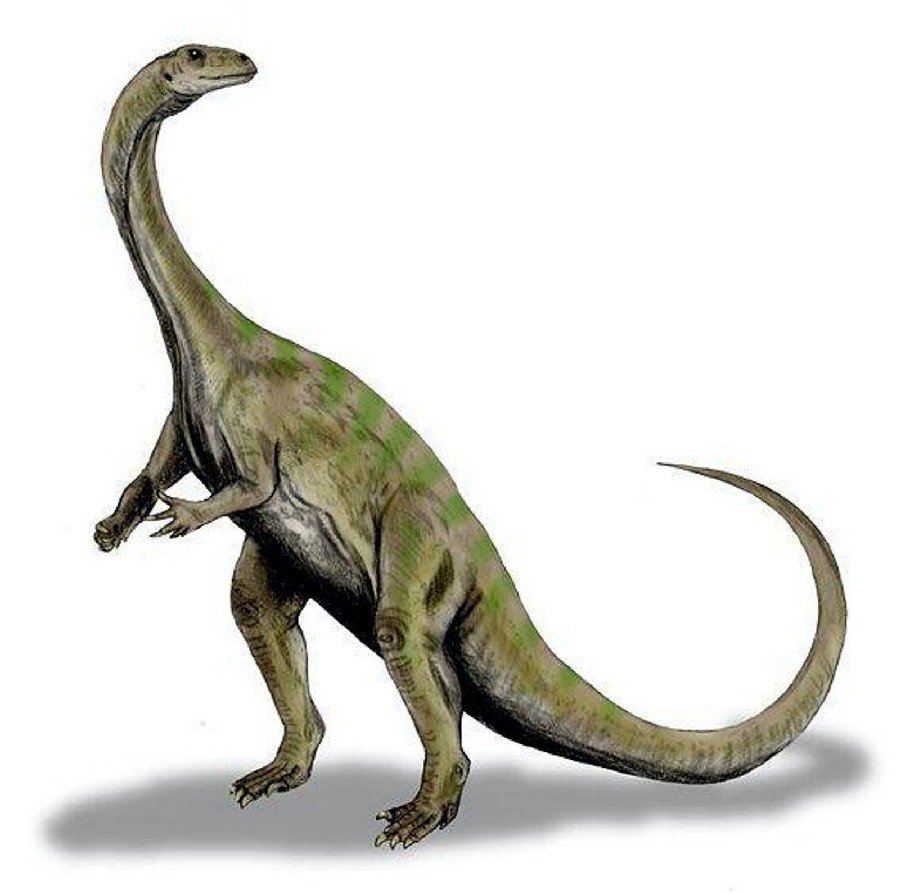
Massospondylus carinatus was a medium-sized, early sauropodomorph dinosaur that roamed the terrestrial landscapes of southern Africa during the Early Jurassic period, approximately 200 to 183 million years ago. As one of the most abundant and well-represented dinosaurs in the fossil record of the region, it holds a highly significant place in the field of paleontology. The sheer volume of fossil material, ranging from unhatched embryos preserved inside their eggs to fully mature adult specimens, has provided scientists with an unparalleled, comprehensive window into the biology, growth trajectories, and evolutionary development of early dinosaurs. Its extensive fossil record makes Massospondylus a crucial keystone species for understanding the early radiation of the sauropodomorph lineage, which would eventually give rise to the colossal, long-necked sauropods that dominated the later Mesozoic era. In terms of physical description, Massospondylus was a moderately sized dinosaur, typically measuring between 4 and 6 meters (approximately 13 to 20 feet) in total body length, and weighing an estimated 400 to 600 kilograms. When compared to modern animals, an adult Massospondylus would have been roughly the size of a large rhinoceros, though with a completely different, much more elongated body plan. The animal possessed a relatively small head perched at the end of a long, flexible neck, a robust and barrel-shaped torso, and a long, tapering tail that served as a counterbalance during locomotion. Its skeletal characteristics reveal a fascinating mosaic of features. The forelimbs were somewhat shorter than the hindlimbs, but they were robust and equipped with a large, sharply curved thumb claw on each hand. This distinctive thumb claw was likely covered in a keratinous sheath in life, making it a formidable tool. The skull was relatively small and boxy, housing peg-like teeth that were spatulate and serrated, perfectly adapted for stripping vegetation. Soft tissue inferences, based on the skeletal muscle attachment sites, suggest a heavily muscled hindquarters and tail, providing significant propulsive force. Unlike the sprawling posture of earlier reptiles, Massospondylus held its limbs relatively upright beneath its body. The paleobiology of Massospondylus has been the subject of extensive study, revealing a complex and dynamic animal. While early interpretations sometimes suggested an omnivorous diet due to the sharp thumb claws and somewhat generalized teeth, modern consensus firmly places Massospondylus as a dedicated herbivore. It likely fed on the abundant ferns, cycads, and early conifers of its environment. The discovery of rounded stones, known as gastroliths, within the abdominal cavities of several specimens indicates that Massospondylus swallowed stones to help grind up tough plant matter in a muscular gizzard, much like modern ostriches and other birds. Locomotion in Massospondylus is a particularly fascinating aspect of its paleobiology. Biomechanical studies and fossil trackways suggest a remarkable ontogenetic shift in its posture: hatchlings and juveniles were obligate quadrupeds, walking on all four legs due to their relatively large heads and front-heavy body proportions. However, as they grew, their center of mass shifted backward, and adult Massospondylus became primarily bipedal, walking on their strong hind legs while using their forelimbs for grasping vegetation or defense. Social behavior inferences are drawn from the discovery of multiple individuals buried together, as well as spectacular nesting sites. These nesting grounds indicate that Massospondylus gathered in colonies to lay their eggs, demonstrating site fidelity by returning to the same locations year after year. The highly organized nature of the nests suggests a level of complex social interaction and possibly some degree of parental care, though the precocial nature of the embryos suggests hatchlings were relatively independent shortly after birth. Growth patterns analyzed through bone histology reveal that Massospondylus grew rapidly during its early years, with growth slowing down as it reached sexual maturity, pointing to a relatively high, perhaps intermediate, metabolic rate compared to modern endotherms and ectotherms. The ecological context of the Early Jurassic in southern Africa, where Massospondylus thrived, was characterized by a semi-arid to arid climate with distinct seasonal rainfall. The landscape was dominated by vast floodplains, ephemeral rivers, and drought-resistant vegetation. In this environment, Massospondylus was a dominant mid-sized herbivore, occupying a crucial position in the food web. It shared its habitat with a variety of other fascinating creatures. Co-existing species included early theropod dinosaurs like Megapnosaurus (formerly Syntarsus), which likely preyed upon juvenile Massospondylus or scavenged adult carcasses. The ecosystem also supported early ornithischian dinosaurs like Heterodontosaurus, as well as a diverse array of non-dinosaurian synapsids, including advanced cynodonts and some of the earliest true mammals. Crocodylomorphs and large amphibians inhabited the waterways. As a primary consumer, Massospondylus played a vital role in processing the tough, fibrous vegetation of the Early Jurassic, converting plant energy into animal biomass that supported the apex predators of its time. The discovery history of Massospondylus is deeply intertwined with the early days of dinosaur paleontology. The genus was first described and named by the eminent British anatomist Sir Richard Owen in 1854, making it one of the earliest dinosaurs to be scientifically recognized. The original fossils were discovered in 1853 by J. M. Orpen, a government surveyor, on the farm Beauchamp in the Harrismith district of South Africa. The name Massospondylus translates to 'longer vertebra', referring to the elongated nature of its neck and back bones. Over the subsequent century and a half, numerous expeditions have uncovered a wealth of additional material. One of the most significant breakthroughs occurred in 1976 when paleontologist James Kitching discovered a clutch of fossilized eggs in the Golden Gate Highlands National Park in South Africa. Decades later, delicate preparation of these eggs revealed the oldest known dinosaur embryos, providing unprecedented insights into dinosaur development. The evolutionary significance of Massospondylus cannot be overstated. As a basal sauropodomorph, it occupies a critical transitional position in the dinosaur family tree. It represents a stage of evolution after the earliest, small, bipedal dinosaurs but before the emergence of the gigantic, obligate quadrupedal sauropods like Brontosaurus and Diplodocus. Studying Massospondylus allows paleontologists to trace the evolutionary steps that led to gigantism in dinosaurs. The shift from bipedalism to quadrupedalism, the elongation of the neck, and the adaptations for bulk-feeding on vegetation are all processes that can be better understood by examining the anatomy and ontogeny of Massospondylus. It is the type genus of the family Massospondylidae, a successful group of early sauropodomorphs that radiated globally during the Early Jurassic, demonstrating the evolutionary plasticity and ecological success of this body plan. Despite its extensive fossil record, Massospondylus remains the subject of ongoing scientific debates and revisions. For many years, numerous early sauropodomorph fossils from across the globe were assigned to the genus Massospondylus, creating a 'wastebasket taxon' effect. Recent taxonomic revisions have carefully re-examined these specimens, leading to the recognition of distinct genera and restricting true Massospondylus primarily to southern Africa. Another area of debate surrounds its exact locomotor capabilities. While the consensus strongly supports bipedalism in adults, some researchers argue that it may have retained the ability to drop to all fours for feeding or resting, functioning as a facultative quadruped. The interpretation of its diet has also seen historical shifts, with early suggestions of carnivory or omnivory based on the thumb claw now largely discarded in favor of obligate herbivory, supported by tooth microwear and the presence of gastroliths. The fossil record of Massospondylus is exceptionally rich, primarily concentrated in the Elliot Formation and the overlying Clarens Formation of South Africa, Lesotho, and Zimbabwe. Hundreds of specimens are known, ranging from isolated bones to nearly complete, articulated skeletons. The quality of preservation is often excellent, with many fossils found in fine-grained mudstones that capture delicate anatomical details. Skulls, which are typically fragile and rare in the dinosaur fossil record, are relatively well-represented for Massospondylus. The famous nesting sites in the Golden Gate Highlands National Park are among the most important fossil localities globally, yielding multiple clutches of eggs, embryos in various stages of development, and tiny hatchling skeletons. This abundance of high-quality material makes Massospondylus a standard reference taxon for early dinosaur anatomy and biology. The cultural impact of Massospondylus is significant, particularly in its native South Africa, where it is celebrated as a key part of the nation's rich paleontological heritage. It is prominently featured in museum displays across the country, including the Iziko South African Museum in Cape Town and the Origins Centre in Johannesburg. The discovery of the Massospondylus embryos garnered worldwide media attention, capturing the public imagination and highlighting the dynamic nature of dinosaur growth. As an educational tool, Massospondylus serves as an excellent example for teaching concepts of evolution, ontogeny, and paleoecology, cementing its status as one of the most important and well-loved dinosaurs of the Early Jurassic.
Classification
Time Period
Discovery
Location
South Africa
Formation
Elliot Formation
Frequently Asked Questions
What is Massospondylus?
Massospondylus carinatus was a medium-sized, early sauropodomorph dinosaur that roamed the terrestrial landscapes of southern Africa during the Early Jurassic period, approximately 200 to 183 million years ago. As one of the most abundant and well-represented dinosaurs in the fossil record of the re...
When did Massospondylus live?
Massospondylus lived during the jurassic period of the mesozoic era approximately 200-183 million years ago.
Where was Massospondylus discovered?
Fossils of Massospondylus were discovered in South Africa in the Elliot Formation.
What did Massospondylus eat?
Massospondylus was a herbivore. It lived in terrestrial habitats.
What type of fossil is Massospondylus?
Massospondylus is preserved as a body fossil. The preservation quality is excellent.
Related Specimens
From the mesozoic era · body fossils