Goniatite
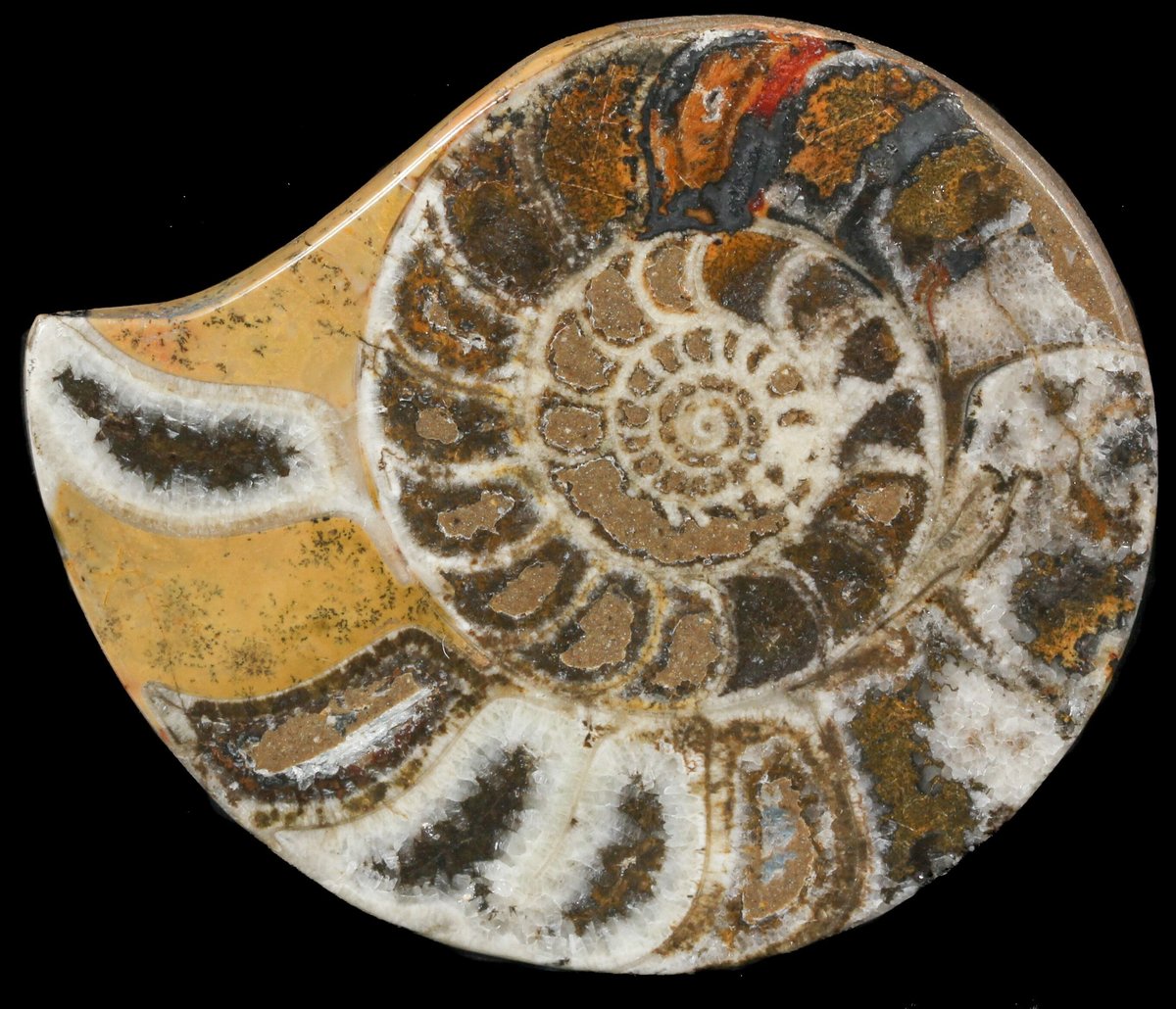
Goniatites crenistria
Image: Image sourced via web search (Fair use / Educational)
About Goniatite
Goniatites crenistria is an extinct species of ammonoid cephalopod that thrived in the shallow, warm epicontinental seas of the Carboniferous period, approximately 340 to 310 million years ago. As a prominent member of the order Goniatitida, this organism is of immense significance to the field of paleontology, serving as a crucial index fossil for dating Paleozoic marine strata. Its widespread distribution across what is now Europe, North America, and North Africa allows geologists to correlate rock layers across vast distances, providing a fundamental temporal framework for understanding the evolution of early marine ecosystems.
The physical anatomy of Goniatites crenistria is characterized primarily by its distinctive, tightly coiled, planospiral shell, which typically measured between 2 and 10 centimeters in diameter, though some exceptional specimens grew slightly larger. The shell was divided into a series of internal chambers, or camerae, separated by complex walls called septa. The intersections of these septa with the outer shell wall produced the defining feature of the goniatites: the zigzag, or angular, suture patterns. Unlike the highly intricate, fractal-like sutures of later Mesozoic ammonites, goniatite sutures were relatively simple, featuring smooth, rounded saddles and sharp, angular lobes. The exterior of the shell in G. crenistria was adorned with fine, closely spaced spiral striations and transverse growth lines, which gave the species its specific name, 'crenistria' (meaning 'crenulated striations'). In life, the soft body of the animal occupied only the final, largest chamber, known as the body chamber. While the soft tissues are not preserved in the fossil record, comparative anatomy with modern cephalopods like the nautilus and squid suggests that it possessed a well-developed head with large, complex eyes, a sharp, parrot-like chitinous beak, and a ring of prehensile tentacles used for grasping prey. A specialized tube called the siphuncle ran through the septa, allowing the animal to regulate buoyancy by pumping gas and fluid into the empty chambers, a mechanism identical to that of the modern chambered nautilus.
In terms of paleobiology, Goniatites crenistria was an active, free-swimming marine predator. Its diet likely consisted of small fish, crustaceans, and other smaller invertebrates that shared its pelagic environment. Hunting strategies would have involved visual detection of prey followed by a rapid strike using its tentacles, pulling the victim toward its powerful beak to be crushed and consumed. Locomotion was achieved through a form of jet propulsion; by drawing water into its mantle cavity and forcefully expelling it through a muscular funnel, the goniatite could dart backward through the water column to evade predators or maneuver during a hunt. The animal's growth was continuous and episodic, marked by the periodic addition of new chambers to its shell as it outgrew the previous one. Metabolic estimates suggest that, like many active cephalopods, it had a relatively high metabolic rate compared to contemporary benthic invertebrates, requiring a constant and substantial food supply. Social behavior is difficult to infer directly from fossils, but the frequent discovery of mass mortality assemblages suggests that they may have congregated in large numbers, perhaps for mating purposes or driven by ocean currents, similar to the spawning aggregations seen in modern squid species.
The ecological context of the Carboniferous period provided a rich and dynamic environment for Goniatites crenistria. During this time, the Earth's continents were converging to form the supercontinent Pangaea, resulting in extensive shallow continental shelf seas. The climate was generally warm and humid, supporting vast coastal coal swamps on land and highly productive marine ecosystems offshore. In these shallow seas, G. crenistria occupied a mid-level position in the food web. It shared its habitat with a diverse array of marine life, including crinoids, brachiopods, early bony fishes, and a wide variety of chondrichthyans (cartilaginous fishes). Predators of the goniatite were numerous and formidable, including early sharks such as Stethacanthus and large, predatory nautiloids. To survive in this predator-rich environment, the goniatite relied on its maneuverability, its protective shell, and possibly the ability to secrete a cloud of ink as a defensive smokescreen, a trait common to many coleoid cephalopods. The evolutionary arms race between shell-crushing predators and shelled prey like the goniatites was a major driver of morphological innovation during the Paleozoic era.
The discovery and subsequent study of Goniatites crenistria are deeply intertwined with the early history of paleontology and stratigraphy. The species was formally described in the early 19th century, a time when the foundational principles of geology were being established. John Phillips, a pioneering English geologist and the nephew of William Smith (the 'father of English geology'), was instrumental in documenting the Carboniferous fossils of Yorkshire, England, where many early specimens of G. crenistria were found. The species was officially named by Phillips in 1836 in his seminal work 'Illustrations of the Geology of Yorkshire'. The fossils were often discovered in the dark, carbon-rich shales and limestones of the Pennines, where they had been mined alongside coal and lead. These early discoveries were critical in demonstrating that specific fossil assemblages could be used to identify and correlate rock layers of the same age, cementing the goniatite's status as a premier index fossil. Over the centuries, thousands of specimens have been collected, with notable historical collections housed in institutions like the Natural History Museum in London and the Museum für Naturkunde in Berlin.
Evolutionarily, Goniatites crenistria occupies a pivotal position in the cephalopod family tree. The order Goniatitida represents an early and highly successful radiation of the Ammonoidea, a subclass that originated from straight-shelled bactritoid nautiloids in the Devonian period. The goniatites represent a transitional stage in ammonoid evolution, bridging the gap between the simple-sutured early forms and the incredibly complex-sutured ceratitids and true ammonites of the Mesozoic era. The development of the zigzag suture pattern in goniatites is thought to have been an evolutionary adaptation to increase the strength of the shell against hydrostatic pressure without adding excessive weight, allowing them to inhabit a wider range of depths. Although the goniatites themselves suffered a catastrophic decline and eventual extinction during the Permian-Triassic mass extinction event, their evolutionary legacy paved the way for the explosive diversification of ammonites that dominated the oceans of the age of dinosaurs. Studying G. crenistria provides vital clues about the rates of evolutionary change, the mechanisms of shell morphogenesis, and the responses of marine organisms to shifting global climates.
Despite centuries of study, Goniatites crenistria and its relatives remain the subject of ongoing scientific debates. One major area of controversy involves the precise nature of their lifestyle and habitat depth. While traditionally viewed as active, pelagic swimmers in the upper water column, some paleontologists argue, based on shell hydrodynamics and isotopic analysis, that certain goniatites may have been nektobenthic, living closer to the sea floor and feeding on bottom-dwelling organisms. Additionally, there is ongoing debate regarding sexual dimorphism within the species. In many ammonoid species, fossils are found in two distinct size classes (macroconchs and microconchs), which are widely interpreted as representing females and males, respectively. Identifying these pairings in early goniatites like G. crenistria is challenging and often complicated by the presence of closely related but distinct species in the same fossil beds. Furthermore, advancements in high-resolution imaging techniques, such as CT scanning, are continually prompting revisions of their internal anatomy and phylogenetic relationships.
The fossil record of Goniatites crenistria is exceptionally robust, making it one of the most well-documented marine invertebrates of the Carboniferous. Fossils are found globally, with particularly famous and prolific sites located in the Bowland Shale Formation of the United Kingdom, the Rhenish Massif in Germany, and various Mississippian-aged formations in the midwestern United States. The preservation quality is generally good to excellent. While the delicate soft tissues are almost never preserved, the hard aragonitic shells are often replaced by stable minerals such as calcite or pyrite. Pyritized specimens are highly prized for their metallic, golden appearance, which beautifully highlights the intricate suture patterns. In many cases, the fossils are found as internal molds, where sediment filled the empty shell after the animal died and the original shell material subsequently dissolved away, leaving a perfect cast of the internal chambers.
Culturally, Goniatites crenistria and similar goniatites have a significant impact that extends beyond the academic sphere. Due to their abundance, aesthetic appeal, and the striking geometric patterns of their sutures, polished goniatite fossils are highly popular in the commercial fossil trade, frequently incorporated into jewelry, paperweights, and decorative display pieces. They are a staple of natural history museum exhibits worldwide, often used to illustrate the concept of index fossils and the vast scale of geologic time to the general public. For educators, the goniatite serves as an accessible and tangible entry point into the study of evolution, extinction, and the ancient history of our planet, capturing the imagination of students and amateur fossil hunters alike.
Classification
Time Period
Discovery
Location
United Kingdom and Germany
Formation
Bowland Shale Formation
Frequently Asked Questions
What is Goniatite?
Goniatites crenistria is an extinct species of ammonoid cephalopod that thrived in the shallow, warm epicontinental seas of the Carboniferous period, approximately 340 to 310 million years ago. As a prominent member of the order Goniatitida, this organism is of immense significance to the field of p...
When did Goniatite live?
Goniatite lived during the carboniferous period of the paleozoic era approximately 340-310 million years ago.
Where was Goniatite discovered?
Fossils of Goniatite were discovered in United Kingdom and Germany in the Bowland Shale Formation.
What did Goniatite eat?
Goniatite was a carnivore. It lived in marine habitats.
What type of fossil is Goniatite?
Goniatite is preserved as a body fossil. The preservation quality is good.
Related Specimens
From the paleozoic era · body fossils