Effigia
Effigia okeeffeae
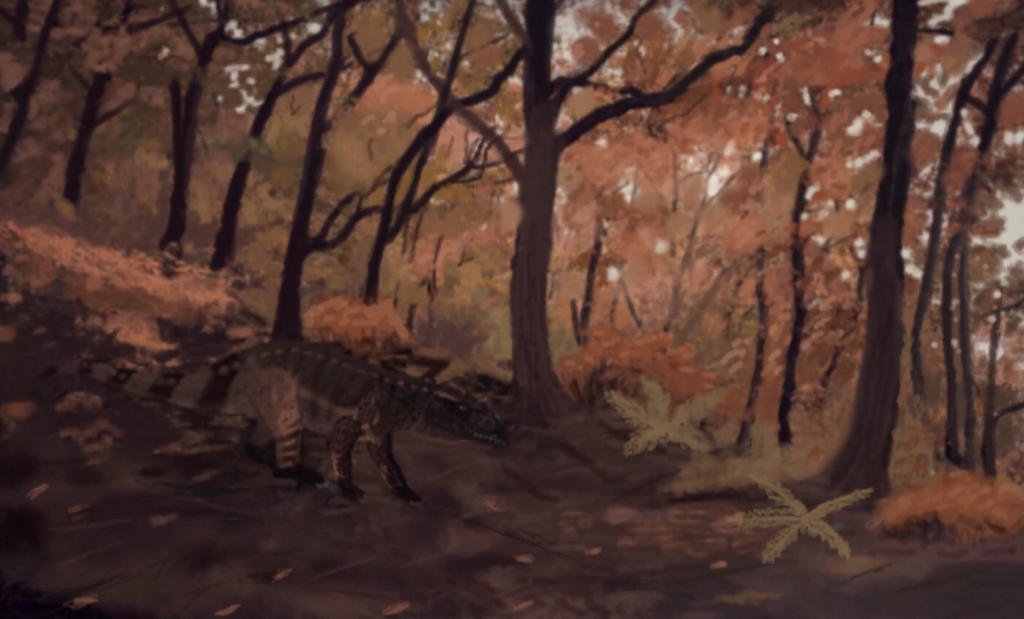
Image: Image sourced via web search (Fair use / Educational)
About Effigia
Effigia okeeffeae represents one of the most remarkable and astonishing examples of convergent evolution ever documented in the vertebrate fossil record. Living during the Late Triassic period, approximately 210 to 205 million years ago, this fascinating creature roamed the terrestrial landscapes of what is now the southwestern United States. Although it possessed an outward appearance that was virtually indistinguishable from the later, ostrich-like ornithomimid dinosaurs, Effigia was not a dinosaur at all. Instead, it was a pseudosuchian archosaur, placing it on the evolutionary lineage that eventually led to modern crocodilians. The discovery and subsequent identification of Effigia fundamentally altered paleontological perspectives on the morphological diversity of Triassic archosaurs, demonstrating that the crocodilian stem-group experimented with highly active, bipedal, and cursorial body plans tens of millions of years before dinosaurs evolved similar anatomical solutions. Its existence provides a critical data point for understanding the complex evolutionary dynamics and ecological partitioning that characterized the dawn of the Mesozoic era.
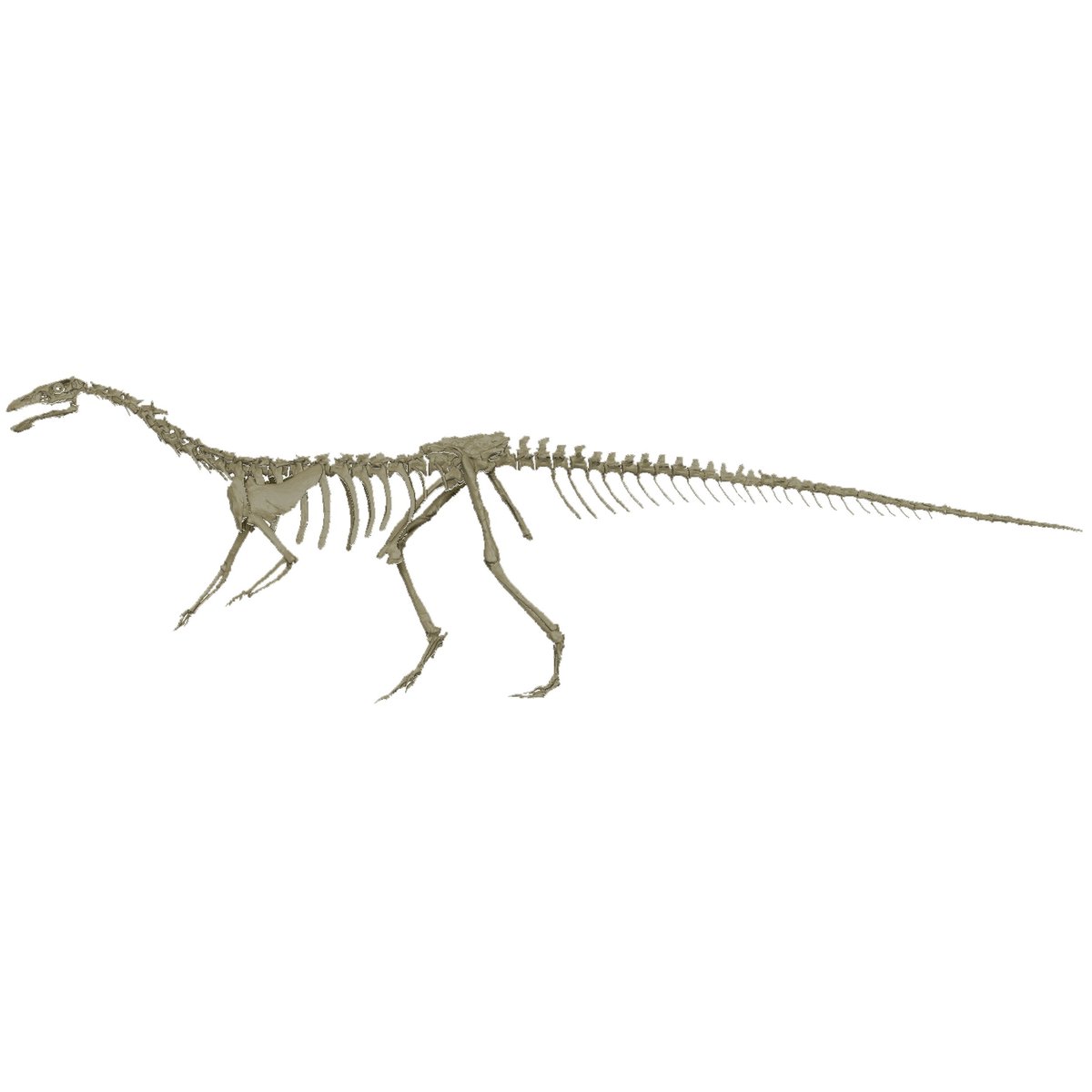
In terms of physical description, Effigia was a lightly built, highly agile animal that measured approximately two meters (about 6.5 feet) in total body length, with a significant portion of that length dedicated to a long, balancing tail. Weight estimates suggest it was a relatively lightweight creature, likely tipping the scales at around 15 to 25 kilograms, comparable to a modern medium-sized flightless bird like a rhea or a large wild turkey. The most striking feature of Effigia was its skull, which was completely toothless and culminated in a sharp, keratinous beak, a trait completely unexpected in a Triassic crocodilian relative. The skull was relatively small, featuring enormous orbits (eye sockets) that suggest the animal possessed excellent vision, a crucial adaptation for a fast-moving terrestrial animal. Its neck was elongated and flexible, supporting the head in a posture very similar to that of modern ratites. The forelimbs were significantly reduced and likely useless for terrestrial locomotion, indicating that Effigia was an obligate biped. Its hind limbs, however, were long, powerfully muscled, and highly adapted for running, featuring an elongated tibia and metatarsals. Despite its dinosaurian appearance, the skeletal anatomy of Effigia retained telltale pseudosuchian characteristics, most notably the complex "crurotarsal" ankle joint typical of crocodilian relatives, which definitively separated it from the true dinosaurs. Soft tissue inferences suggest it may have been covered in scales, though the possibility of some form of filamentous integument cannot be entirely ruled out given the rapid evolutionary experimentation of the era.
The paleobiology of Effigia paints a picture of a highly active, specialized animal. Based on its edentulous (toothless) beak and the morphology of its jaw mechanics, paleontologists strongly infer that Effigia was a herbivore, utilizing its sharp beak to crop ferns, seed ferns, cycads, and other low- to medium-height vegetation that dominated the Triassic landscape. It is also possible that it supplemented its diet as an opportunistic omnivore, occasionally snapping up small insects or small vertebrates, much like modern ostriches do today. Its primary defense mechanism against the formidable predators of its time was undoubtedly its speed. The elongated hind limbs and bipedal stance indicate that Effigia was a highly capable cursorial (running) animal, able to sprint away from danger with considerable agility. The large eyes suggest that visual acuity played a major role in its survival, allowing it to spot predators from a distance. Social behavior remains largely a matter of inference, but given that multiple specimens of related archosaurs have been found in close proximity, it is entirely plausible that Effigia may have lived or foraged in small flocks or loose aggregations to increase vigilance against predators. The growth patterns of such an active animal are of great interest; bone histology of related shuvosaurids suggests they grew relatively quickly compared to modern crocodilians, hinting at an elevated metabolic rate that blurred the lines between the traditional concepts of "cold-blooded" reptiles and "warm-blooded" birds and mammals.
The ecological context in which Effigia lived was a dynamic and challenging world. During the Late Triassic, the Earth's landmasses were joined together in the supercontinent of Pangea. The environment of the Chinle Formation in present-day New Mexico, where Effigia's remains were found, was characterized by a highly seasonal, monsoonal climate. The landscape was a vast riverine system, featuring broad floodplains, meandering rivers, and seasonal wetlands bordered by dense gallery forests of conifers and cycads. In this ecosystem, Effigia occupied the niche of a small- to medium-sized, fast-moving browser. It shared its habitat with a diverse array of extraordinary creatures. The waterways were dominated by massive, crocodile-like phytosaurs, which were the apex aquatic predators of the time, as well as large amphibians like Metoposaurus. On land, Effigia had to navigate a world populated by heavily armored, herbivorous aetosaurs, bulky dicynodonts, and early theropod dinosaurs like Coelophysis. In fact, Coelophysis was likely one of the primary predators of Effigia. The evolutionary arms race between fast-running early dinosaurs and fast-running pseudosuchians like Effigia highlights a highly competitive ecosystem where speed and sensory acuity were paramount for survival. Effigia's presence indicates that the ecological niches we typically associate with later Mesozoic dinosaurs were already being successfully exploited by other archosaur lineages long before dinosaurs achieved global dominance.
The discovery history of Effigia is one of the most famous and serendipitous tales in modern paleontology. The fossils were actually collected in 1947 and 1948 by the legendary paleontologist Edwin H. Colbert and his team from the American Museum of Natural History (AMNH). They were excavating the famous Ghost Ranch quarry in New Mexico, which yielded thousands of skeletons of the early dinosaur Coelophysis. The remains of Effigia were encased in a massive block of rock alongside several Coelophysis skeletons. Because the block was so dense and the focus was entirely on the dinosaurs, the bones of Effigia remained hidden inside the plaster jacket in the basement of the AMNH for nearly six decades. It wasn't until 2006 that Sterling Nesbitt, then a graduate student, opened the jacket and began carefully preparing the block. To his astonishment, he uncovered a skull with a toothless beak and a skeletal structure that clearly did not belong to Coelophysis. Nesbitt recognized the immense significance of the find and formally described and named the animal Effigia okeeffeae in 2006. The genus name "Effigia" translates to "ghost" in Latin, a dual reference to the Ghost Ranch quarry where it was found and the fact that the fossil had remained hidden like a ghost in the museum collections for decades. The specific epithet "okeeffeae" honors the famous American artist Georgia O'Keeffe, who lived at Ghost Ranch and whose iconic paintings captured the stark, beautiful landscapes of the region where the animal once roamed.
The evolutionary significance of Effigia cannot be overstated. It serves as a textbook example of convergent evolution, the phenomenon where unrelated organisms independently evolve similar traits as a result of having to adapt to similar environments or ecological niches. Effigia's astonishing resemblance to ornithomimid dinosaurs—which would not evolve until tens of millions of years later during the Cretaceous period—demonstrates that the "ostrich-mimic" body plan is a highly successful biological design that nature has arrived at multiple times. More importantly, Effigia fundamentally reshaped our understanding of the archosaur family tree. It belongs to a specialized group of pseudosuchians known as the Poposauroidea, specifically within the family Shuvosauridae. Before the discovery of Effigia, isolated bones of similar animals (like Shuvosaurus) had been found, but they were often misidentified as early theropod dinosaurs because of their bipedal adaptations. The complete, articulated skeleton of Effigia provided the definitive proof that these animals were actually on the crocodilian line. This revelation proved that during the Triassic, it was the pseudosuchians, not the dinosaurs, that were the most morphologically diverse and dominant terrestrial vertebrates, experimenting with a wide range of body plans including bipedal runners, heavily armored tanks, and apex predators.
Scientific debates surrounding Effigia have largely centered on its precise phylogenetic placement and the functional morphology of its unique anatomy. When first discovered, the exact relationship of poposauroids to other archosaurs was a subject of intense cladistic analysis. While it is now firmly established as a pseudosuchian, the internal relationships of the Poposauroidea continue to be refined as new fossils are discovered. Another area of ongoing debate involves the biomechanics of its bipedalism. While it is clear Effigia was an obligate biped, the exact kinematics of its gait and how its crocodilian-style ankle joint accommodated high-speed running differ significantly from the parasagittal (up-and-down) hinge-like ankle of dinosaurs. Researchers use advanced computer modeling to understand how Effigia balanced and moved, comparing its muscle attachment points to those of modern birds and crocodiles. Furthermore, the exact nature of its diet remains a topic of discussion; while a herbivorous diet is the consensus based on the beak morphology, the lack of preserved gut contents means that the extent to which it may have consumed animal protein remains speculative. The discovery of Effigia also sparked a broader debate about how many other fragmented Triassic fossils currently classified as early dinosaurs might actually be unrecognized pseudosuchians.
The fossil record of Effigia is relatively sparse but of exceptionally high quality. The genus is primarily known from the holotype specimen discovered in the Ghost Ranch quarry of the Chinle Formation in New Mexico. This specimen is remarkable for its completeness and the articulated nature of the skeleton, which is a rarity for fragile, lightly built animals from the Triassic. The preservation quality is excellent, allowing for detailed study of delicate structures, particularly the thin, fragile bones of the skull, the sclerotic ring (the bony structure inside the eye), and the intricate details of the braincase. In addition to the nearly complete holotype, a few other partial skeletons and isolated bones from the same quarry have been referred to the genus. Because the bones of Effigia are so similar to those of theropod dinosaurs, it is highly likely that isolated elements of Effigia or closely related shuvosaurids exist in other museum collections, misidentified as dinosaur remains. The Ghost Ranch site remains one of the most important Late Triassic fossil localities in the world, and the preservation of Effigia there highlights the site's unique taphonomic conditions, where rapid burial in a flood event protected the delicate bones from scavenging and weathering.
The cultural impact of Effigia, while perhaps not as globally ubiquitous as Tyrannosaurus rex or Triceratops, has been profound within the scientific community and among paleontology enthusiasts. It is frequently highlighted in popular science media, documentaries, and books as the ultimate "imposter" of the fossil record—the crocodile that disguised itself as a dinosaur. The story of its discovery—sitting unrecognized in a museum basement for sixty years—has become a legendary anecdote that underscores the importance of museum collections and the fact that major discoveries can happen in the laboratory just as often as in the field. The American Museum of Natural History has proudly displayed the findings, using Effigia as a prime educational tool to teach the public about the concepts of convergent evolution and the deep-time diversity of the crocodilian lineage. The naming of the animal after Georgia O'Keeffe has also provided a wonderful cultural bridge, linking the stark, beautiful paleontology of the American Southwest with its rich artistic heritage, ensuring that Effigia okeeffeae remains a celebrated icon of Triassic paleobiology.
Classification
Time Period
Discovery
Location
New Mexico, USA
Formation
Chinle Formation
Frequently Asked Questions
What is Effigia?
Effigia okeeffeae represents one of the most remarkable and astonishing examples of convergent evolution ever documented in the vertebrate fossil record. Living during the Late Triassic period, approximately 210 to 205 million years ago, this fascinating creature roamed the terrestrial landscapes of...
When did Effigia live?
Effigia lived during the triassic period of the mesozoic era approximately 210-205 million years ago.
Where was Effigia discovered?
Fossils of Effigia were discovered in New Mexico, USA in the Chinle Formation.
What did Effigia eat?
Effigia was a herbivore. It lived in terrestrial habitats.
What type of fossil is Effigia?
Effigia is preserved as a body fossil. The preservation quality is excellent.
Related Specimens
From the mesozoic era · body fossils