Einiosaurus
Einiosaurus procurvicornis
Image: Image sourced via web search (Fair use / Educational)
About Einiosaurus
Einiosaurus procurvicornis is a medium-sized, herbivorous ceratopsian dinosaur that lived during the Late Cretaceous period, approximately 74.5 to 74 million years ago, in what is now northwestern Montana, United States. Belonging to the centrosaurine subfamily of horned dinosaurs, this remarkable creature is best known for its highly distinctive, forward-curving nasal horn and the pair of large, backward-pointing spikes on its neck frill. The discovery of Einiosaurus has provided paleontologists with an unprecedented window into the evolutionary dynamics of Late Cretaceous dinosaur faunas, serving as a crucial transitional fossil that links earlier, long-horned centrosaurines with the later, boss-nosed pachyrhinosaurins. Its remains, found predominantly in massive, monospecific bonebeds, have also offered profound insights into the complex social behaviors and herding dynamics of Late Cretaceous megaherbivores.
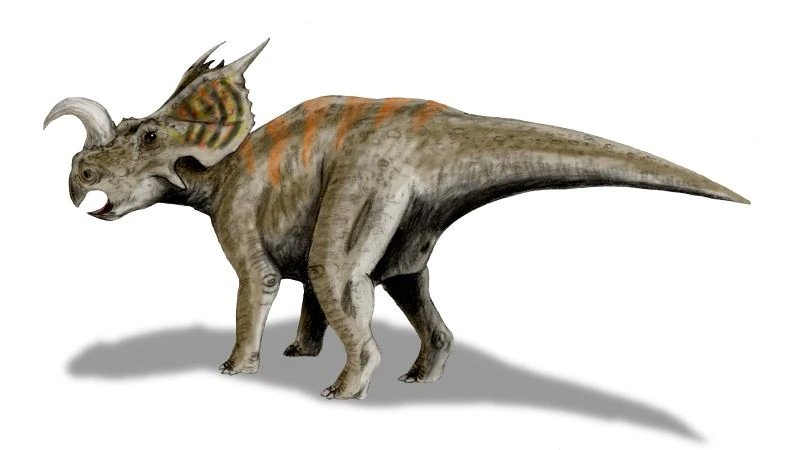
In terms of physical dimensions, Einiosaurus was a moderately sized ceratopsid, measuring approximately 4.5 meters (about 15 feet) in length and weighing an estimated 1.3 to 1.5 metric tons. When compared to modern animals, its bulk would have been roughly equivalent to that of a large adult black rhinoceros, though its overall body plan was distinctly dinosaurian, characterized by a robust, barrel-shaped torso, a relatively short tail, and powerful, pillar-like limbs designed to support its massive weight. The most striking anatomical feature of Einiosaurus is undoubtedly its cranial ornamentation. Unlike the straight or backward-curving nasal horns seen in many of its relatives, adult Einiosaurus possessed a prominent nasal horn that curved sharply forward and downward, resembling a giant can opener. Interestingly, this forward curvature is an ontogenetic feature; juvenile specimens exhibit small, straight horns that gradually curved forward as the animal reached maturity. Above the eyes, Einiosaurus lacked the large brow horns characteristic of chasmosaurines like Triceratops, possessing instead low, rounded ridges or small bumps. The parietosquamosal frill extending from the back of the skull was relatively short but highly ornamented, featuring two large, straight spikes (epiparietals) that projected backward and slightly outward from the top edge. The rest of the frill margin was adorned with smaller, scalloped ossifications known as episquamosals. The postcranial skeleton of Einiosaurus was typical of centrosaurines, featuring a heavily reinforced shoulder girdle, a fused syncervical vertebrae complex to support the massive head, and a wide pelvic region that accommodated a massive digestive tract necessary for processing tough, fibrous vegetation. Soft tissue inferences, drawn from skin impressions of closely related ceratopsids, suggest that Einiosaurus was covered in non-overlapping, polygonal scales, interspersed with larger, feature scales, giving it a heavily armored, reptilian appearance.
The paleobiology of Einiosaurus paints a picture of a highly specialized, socially complex herbivore adapted to the dynamic environments of the Late Cretaceous. As an obligate quadrupedal herbivore, Einiosaurus possessed a narrow, toothless beak at the front of its snout, which it used to crop low-growing vegetation such as ferns, cycads, and early angiosperms. Behind the beak, its jaws were lined with tightly packed dental batteries—complex arrangements of hundreds of teeth that continuously replaced themselves. These batteries acted like self-sharpening shears, allowing Einiosaurus to slice through tough, fibrous plant material with remarkable efficiency before swallowing it for fermentation in its massive gut. The presence of Einiosaurus in massive, monospecific bonebeds strongly implies that these animals were highly gregarious, living and moving in large herds that may have numbered in the hundreds or even thousands of individuals. This herding behavior likely served multiple purposes, including defense against formidable predators, efficient foraging across vast landscapes, and complex social interactions. The bizarre cranial ornamentation—the forward-curving nasal horn and the spiked frill—almost certainly played a central role in these social dynamics. Rather than being primarily defensive weapons, these structures were likely used for intraspecific display, species recognition, and potentially ritualistic combat or jousting among males competing for mates or dominance within the herd. The ontogenetic changes observed in the nasal horn, transitioning from a straight spike in juveniles to a forward-curving hook in adults, further supports the idea that these features were tied to sexual maturity and social signaling. Growth patterns inferred from bone histology suggest that Einiosaurus, like many dinosaurs, grew rapidly during its early years, reaching adult size much faster than modern reptiles, which points to a high, endothermic-like metabolism necessary to sustain such rapid development and active, herding lifestyles.
During the Campanian stage of the Late Cretaceous, the world of Einiosaurus was vastly different from the modern landscape of Montana. The region was part of Laramidia, an island continent formed when the Western Interior Seaway divided North America into two landmasses. The environment represented by the Two Medicine Formation was a semi-arid, seasonally dry coastal plain, characterized by extensive floodplains, meandering river systems, and periodic droughts. The climate was generally warm and temperate, supporting a diverse flora of conifers, ferns, and an increasing abundance of flowering plants. In this dynamic ecosystem, Einiosaurus occupied the ecological niche of a primary consumer, a low-browsing megaherbivore that played a crucial role in shaping the vegetation structure of its habitat. It shared this landscape with a rich array of co-existing dinosaur species. Other herbivores in the ecosystem included the closely related ceratopsian Achelousaurus, the hadrosaurids Maiasaura and Hypacrosaurus, the ankylosaur Edmontonia, and the pachycephalosaur Stegoceras. This high diversity of large herbivores suggests niche partitioning, where different species specialized in feeding on different types of plants or at different heights to reduce direct competition. However, this environment was also fraught with danger. The apex predator of the Two Medicine Formation was Daspletosaurus, a massive, bone-crushing tyrannosaurid capable of preying on adult Einiosaurus. Smaller predators, such as the dromaeosaurids Bambiraptor and Saurornitholestes, as well as the troodontid Troodon, would have posed a significant threat to juvenile and subadult Einiosaurus. The periodic droughts that characterized this environment were also a major selective pressure; the massive bonebeds in which Einiosaurus is found are widely interpreted as the result of catastrophic mass mortality events, likely caused by severe droughts where herds perished while gathered around shrinking waterholes, their remains later buried by sudden flash floods when the rains finally returned.
The discovery history of Einiosaurus is deeply intertwined with the pioneering fieldwork conducted in the Two Medicine Formation of Montana during the late 20th century. The first significant fossils of this remarkable dinosaur were discovered in 1985 by Jack Horner, a renowned paleontologist from the Museum of the Rockies, and his field crews. The initial discovery was made at a site known as the Canyon Bonebed, located on the Blackfeet Indian Reservation in Glacier County, Montana. Over the course of several excavation seasons, spanning from 1985 to 1989, Horner's team unearthed an astonishing concentration of ceratopsian remains, recovering thousands of bones representing at least 15 individuals of varying ages, from juveniles to fully grown adults. The sheer volume and excellent preservation of these fossils provided an unprecedented dataset for studying ceratopsian anatomy and population dynamics. The genus and species were formally described and named in 1995 by paleontologist Scott D. Sampson. The generic name, Einiosaurus, is a combination of the Blackfoot word 'eini', meaning buffalo, and the Greek word 'saurus', meaning lizard, a fitting tribute to both the indigenous heritage of the discovery region and the animal's ecological role as a herding megaherbivore. The specific epithet, procurvicornis, is derived from Latin, meaning 'forward-curving horn', directly referencing the animal's most distinctive anatomical feature. The extensive collection of Einiosaurus fossils, including several well-preserved skulls and nearly complete postcranial skeletons, remains housed primarily at the Museum of the Rockies in Bozeman, Montana, where they continue to be a vital resource for ongoing paleontological research.
Einiosaurus holds a position of profound evolutionary significance within the ceratopsian family tree, serving as a critical transitional taxon that illuminates the complex evolutionary pathways of the Centrosaurinae subfamily. Centrosaurines are generally characterized by large nasal horns, reduced brow horns, and highly ornamented frills. Within this group, Einiosaurus is placed in the tribe Pachyrhinosaurini, a lineage that underwent a remarkable evolutionary transformation in their cranial ornamentation. Einiosaurus is widely regarded by paleontologists as a direct evolutionary link between the earlier, long-horned centrosaurines, such as Styracosaurus, and the later, boss-nosed forms, such as Achelousaurus and Pachyrhinosaurus. The fossil record of the Two Medicine Formation preserves a stunning, high-resolution stratigraphic sequence that captures this evolutionary transition in action. In the lower (older) strata of the formation, we find Styracosaurus, possessing a long, straight nasal horn. Moving up the stratigraphic column to the middle layers, we encounter Einiosaurus, where the nasal horn has become heavily modified, curving sharply forward and downward. Finally, in the upper (younger) strata, we find Achelousaurus, where the nasal horn has been completely lost, replaced by a large, roughened bony boss on the snout. This sequence represents one of the most compelling examples of anagenesis—evolutionary change within a single, unbranching lineage—in the dinosaur fossil record. The forward-curving horn of Einiosaurus represents an intermediate stage in the evolutionary reduction and modification of the nasal horn, providing crucial evidence for how complex display structures can rapidly evolve and transform over relatively short geological timescales in response to changing social and environmental pressures.
Despite the wealth of fossil material available, Einiosaurus remains the subject of several ongoing scientific debates and differing interpretations among paleontologists. One of the primary areas of contention surrounds the exact function of its bizarre, forward-curving nasal horn. While it is generally agreed that the horn was used for intraspecific display and social signaling, the mechanics of how it was used in physical combat remain debated. Some researchers suggest that the forward curve would have rendered the horn ineffective as a stabbing weapon, proposing instead that males may have engaged in flank-butting or interlocking their horns in pushing matches, similar to modern marine iguanas or certain bovids. Another significant debate involves the interpretation of the evolutionary sequence in the Two Medicine Formation. While the anagenetic lineage from Styracosaurus to Einiosaurus to Achelousaurus is widely accepted, some paleontologists argue that the fossil record may represent cladogenesis (branching evolution) rather than a single, continuous line of descent, suggesting that these taxa may have coexisted for brief periods or represent closely related sister taxa rather than direct ancestors and descendants. Additionally, the exact cause of the mass mortality events that created the Einiosaurus bonebeds is still scrutinized; while drought is the leading hypothesis, alternative scenarios such as disease outbreaks or drowning during river crossings have also been proposed and debated within the scientific community.
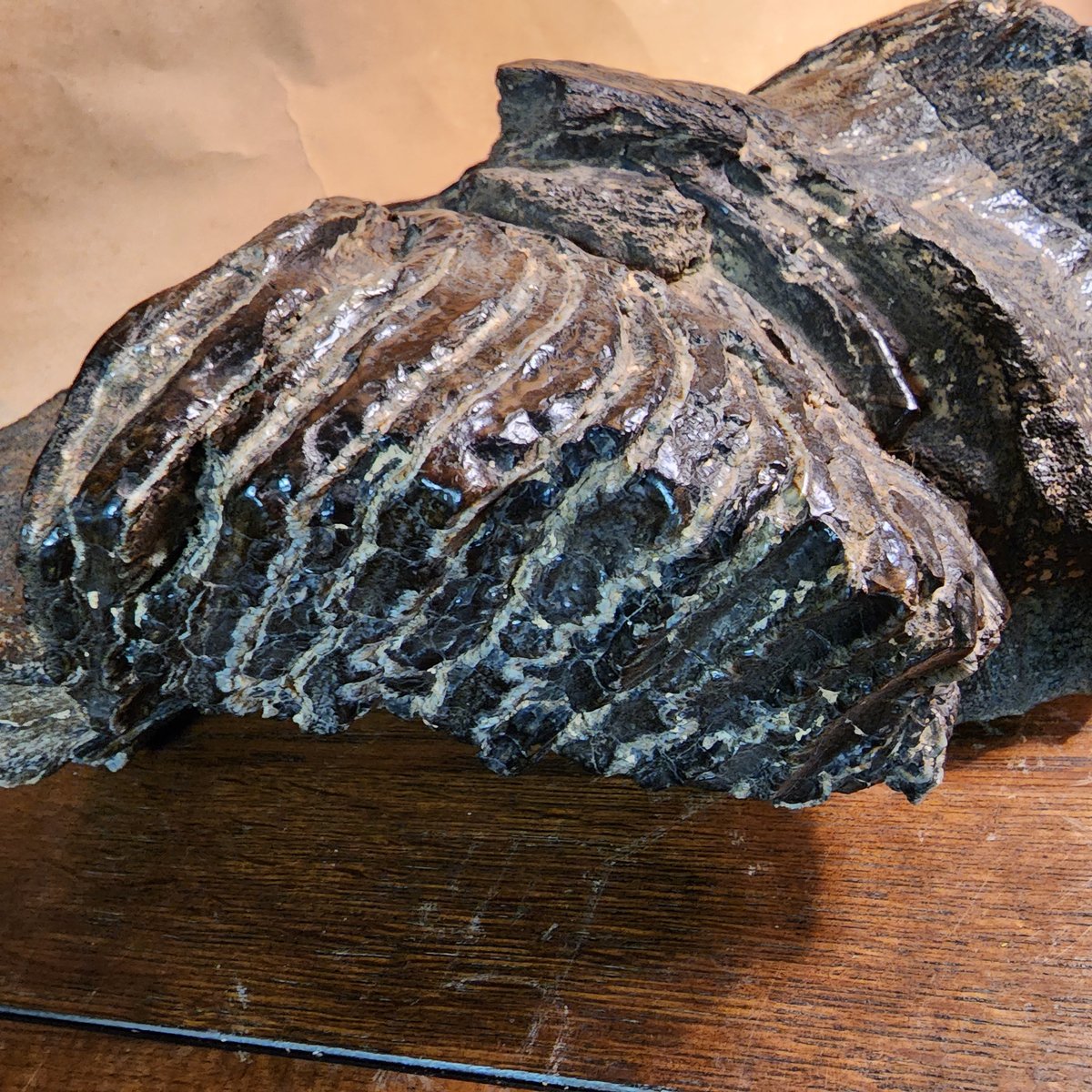
The fossil record of Einiosaurus is exceptionally rich, though geographically restricted. To date, fossils of Einiosaurus have only been found in the upper portions of the Two Medicine Formation in northwestern Montana, specifically within the boundaries of the Blackfeet Indian Reservation. The known specimens are derived almost entirely from a few massive, low-diversity bonebeds, the most famous being the Canyon Bonebed discovered by Jack Horner. These bonebeds have yielded the remains of at least 15 individuals, though the actual number of animals preserved in these deposits is likely much higher. The preservation quality of the Einiosaurus fossils is generally excellent, with bones often found disarticulated but structurally intact, allowing for detailed anatomical study. The fossil assemblage includes individuals of various ontogenetic stages, from small juveniles to robust adults, providing a rare and invaluable dataset for studying the growth patterns, morphological changes, and population structure of a single dinosaur species. Skulls, while often disarticulated, are well-represented, allowing for precise reconstructions of the complex cranial ornamentation. Postcranial elements, including vertebrae, limb bones, and pelvic girdles, are abundant, offering a comprehensive understanding of the animal's overall body proportions and biomechanics. The concentration of these fossils in specific bonebeds not only facilitates detailed anatomical research but also provides critical taphonomic data regarding the environmental conditions and depositional processes of the Late Cretaceous coastal plains.
While perhaps not as globally recognized as its famous cousin Triceratops, Einiosaurus has nonetheless made a significant impact on popular culture and public fascination with dinosaurs. Its unique, forward-curving horn and spiked frill make it a visually striking and highly recognizable dinosaur, leading to its frequent inclusion in dinosaur encyclopedias, children's books, and paleoart reconstructions. Einiosaurus has appeared in various dinosaur-themed video games, documentaries, and toy lines, often highlighted for its bizarre appearance and herding behavior. In the realm of education and public outreach, the Museum of the Rockies in Bozeman, Montana, plays a central role, housing the primary collection of Einiosaurus fossils and featuring spectacular mounted skeletons and life-sized reconstructions that draw visitors from around the world. These exhibits not only showcase the impressive anatomy of Einiosaurus but also serve as powerful educational tools, illustrating concepts of evolution, social behavior, and the dynamic ecosystems of the Late Cretaceous period, thereby cementing Einiosaurus as a vital ambassador for paleontology.
Classification
Time Period
Discovery
Location
Montana, USA
Formation
Two Medicine Formation
Frequently Asked Questions
What is Einiosaurus?
Einiosaurus procurvicornis is a medium-sized, herbivorous ceratopsian dinosaur that lived during the Late Cretaceous period, approximately 74.5 to 74 million years ago, in what is now northwestern Montana, United States. Belonging to the centrosaurine subfamily of horned dinosaurs, this remarkable c...
When did Einiosaurus live?
Einiosaurus lived during the cretaceous period of the mesozoic era approximately 75-74 million years ago.
Where was Einiosaurus discovered?
Fossils of Einiosaurus were discovered in Montana, USA in the Two Medicine Formation.
What did Einiosaurus eat?
Einiosaurus was a herbivore. It lived in terrestrial habitats.
What type of fossil is Einiosaurus?
Einiosaurus is preserved as a body fossil. The preservation quality is excellent.
Related Specimens
From the mesozoic era · body fossils