Eryops
Eryops megacephalus
Image: Image sourced via web search (Fair use / Educational)
About Eryops
Eryops megacephalus, whose name translates to drawn-out face and large head, was a genus of extinct, semi-aquatic temnospondyl amphibian that lived during the Early Permian period, approximately 295 to 270 million years ago. Primarily found in the fossil-rich deposits of the southwestern United States, particularly the famous Texas Red Beds, Eryops represents one of the most iconic and well-understood basal tetrapods of the entire Paleozoic era. Its robust skeleton and transitional features provide crucial, unparalleled insights into the early evolution of land-dwelling vertebrates and the complex ecological dynamics of Permian freshwater ecosystems. As one of the largest land animals of its time, Eryops dominated its environment, serving as an apex predator in a world that was undergoing massive climatic and geological shifts following the Carboniferous rainforest collapse. The significance of Eryops in paleontology cannot be overstated; it serves as a fundamental reference point for understanding the anatomical and physiological hurdles that early tetrapods had to overcome to conquer the terrestrial realm. By studying its heavily ossified skeleton, researchers have been able to piece together the evolutionary puzzle of how life transitioned from the buoyant support of aquatic environments to the harsh, gravity-dominated reality of dry land.
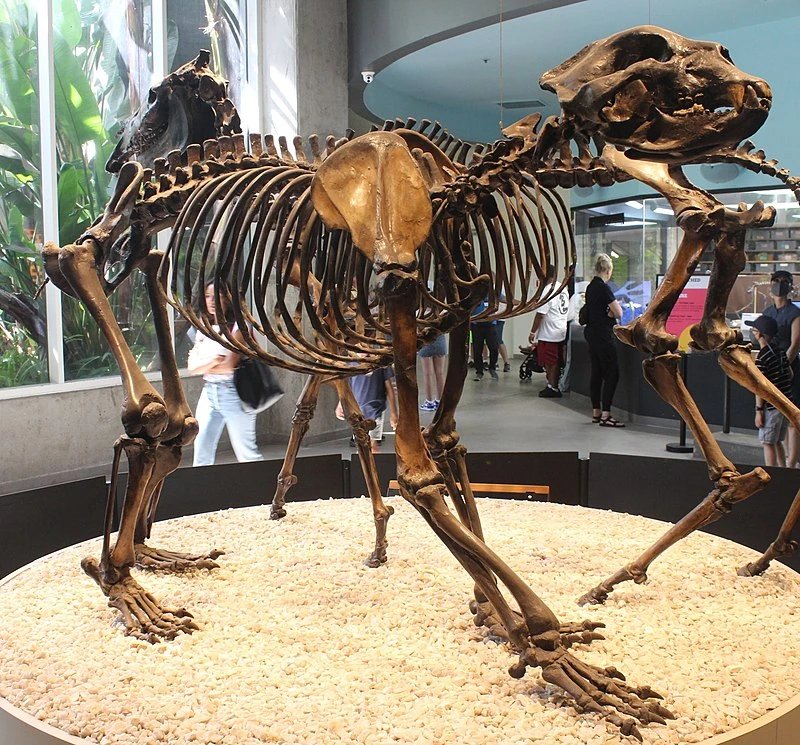
Eryops was a heavily built, formidable animal, measuring between 1.5 and 3 meters in length and weighing an estimated 90 to 160 kilograms, with some estimates suggesting particularly large individuals could have exceeded 200 kilograms. In terms of scale and ecological niche, it would have closely resembled a modern American alligator in its overall proportions, albeit with a shorter, thicker tail and a much more sprawling, muscular limb posture. The most distinctive and striking feature of Eryops was its massive, flattened skull, which could reach up to 60 centimeters in length. This enormous cranium was heavily ossified, covered in intricate, rugose dermal pitting, and equipped with a terrifying array of sharp, conical teeth. The margins of the jaws were lined with numerous smaller teeth, while the palate featured massive, recurved fangs designed for gripping and holding struggling, slippery prey. Its eyes were positioned dorsally on the top of the skull, strongly suggesting a habit of resting just below the water's surface to ambush unsuspecting animals. The postcranial skeleton of Eryops was remarkably robust and heavily built, featuring a strong, fully ossified vertebral column of the rhachitomous type. This complex vertebral structure, consisting of a crescent-shaped intercentrum and paired pleurocentra, supported a powerful network of epaxial muscles that held the animal's body off the ground. The pectoral and pelvic girdles were massive and heavily reinforced, anchoring short, incredibly thick limbs that ended in broad, spreading digits. Unlike the smooth, permeable skin of modern lissamphibians, Eryops possessed thick, leathery skin reinforced with bony osteoderms and scales, particularly on its ventral surface, which would have provided essential protection against both the abrasive terrain and the desiccating effects of the terrestrial environment.
As an apex predator of its Early Permian ecosystem, Eryops was a dedicated, obligate carnivore with a paleobiology heavily adapted for ambush hunting. Its diet likely consisted of a wide variety of prey, including large paleoniscoid fish, smaller amphibians, and early synapsids that ventured too close to the water's edge to drink. The biomechanics of its massive, heavily reinforced skull suggest that Eryops utilized a sit-and-wait strategy, lunging at prey with a sudden, incredibly powerful snap of its jaws. Unlike many modern aquatic predators that rely heavily on suction feeding to capture prey underwater, the structure of the hyoid apparatus and the robust nature of the jaw musculature in Eryops indicate it primarily used terrestrial-style biting and grabbing, even when fully submerged. Locomotion in Eryops was a subject of complex biomechanical adaptation and evolutionary compromise. While its sprawling limb posture and incredibly heavy build made it relatively slow and cumbersome on land compared to later reptiles, it was entirely capable of short, powerful bursts of speed. The robust limbs and heavily ossified girdles were capable of supporting its massive body weight entirely out of the water, representing a significant biomechanical advancement over earlier, more aquatic tetrapods. In the water, Eryops likely swam using lateral undulations of its muscular body and tail, though its relatively short tail suggests it was not a highly efficient, sustained pursuit swimmer, further supporting the ambush predator hypothesis. Growth patterns inferred from detailed bone histology and skeletochronology indicate a slow, sustained growth rate typical of ectothermic vertebrates. Its metabolism was heavily dependent on the ambient environmental temperatures of the Permian, meaning it likely spent significant time basking on riverbanks to raise its body temperature for optimal digestion and activity.
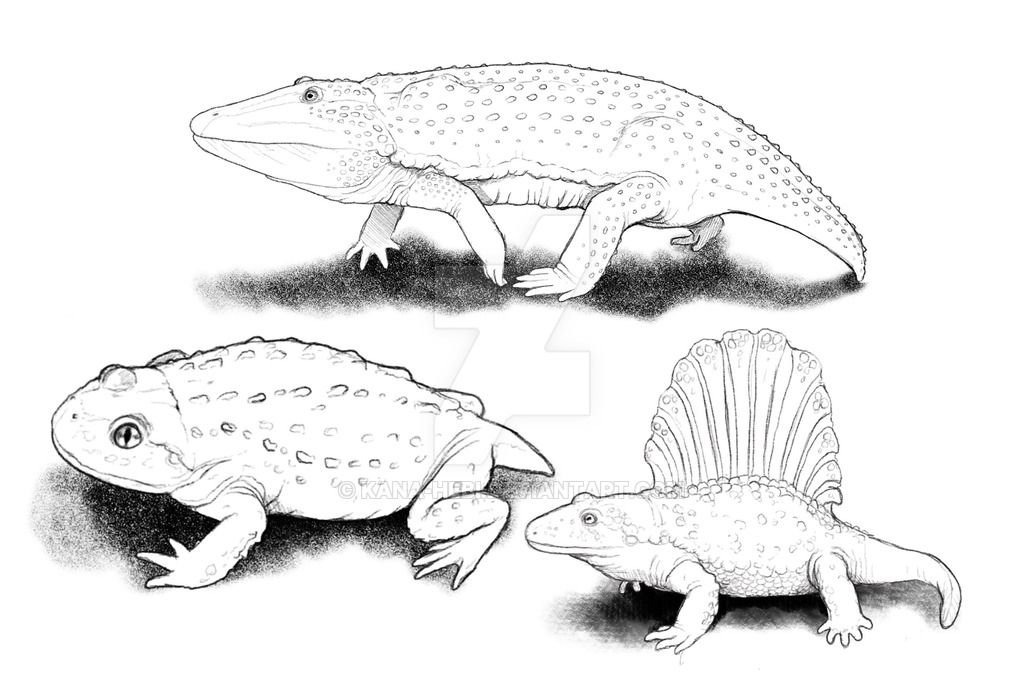
During the Early Permian, the world was vastly different from today, characterized by the massive supercontinent Pangaea and a global climate that was becoming increasingly arid and highly seasonal. The habitat of Eryops in what is now the southwestern United States consisted of vast, meandering river systems, expansive seasonal floodplains, and rich deltaic environments. The climate was characterized by distinct, intense wet and dry seasons, leading to the periodic formation of temporary pools, oxbow lakes, and vast mudflats. Eryops shared this dynamic, challenging ecosystem with a highly diverse array of bizarre Paleozoic fauna. Its contemporaries included the famous, sail-backed synapsid Dimetrodon, the large, herbivorous Edaphosaurus, and the bizarre, boomerang-headed amphibian Diplocaulus. In this complex food web, adult Eryops occupied the role of an apex semi-aquatic predator, directly analogous to modern crocodilians. They would have preyed upon freshwater xenacanthid sharks, heavily armored paleoniscoid fishes, and smaller tetrapods that shared the waterways. However, life was not without its dangers; juvenile Eryops would have been highly vulnerable to predation by larger amphibians, cannibalistic adults, and the increasingly dominant terrestrial synapsids. The intense seasonal aridity of the Early Permian environment meant that Eryops likely had to endure prolonged periods of severe drought. It is highly probable that these animals engaged in aestivation, burying themselves in the deep mud of drying riverbeds, or undertook arduous migrations along shrinking river channels to survive until the eventual return of the monsoonal rains.
The discovery history of Eryops is deeply intertwined with the chaotic and fiercely competitive early days of American vertebrate paleontology. The genus was first formally described in 1877 by the eminent and highly prolific paleontologist Edward Drinker Cope, during the absolute height of the infamous Bone Wars with his bitter rival, Othniel Charles Marsh. The type species, Eryops megacephalus, was based on fossil material collected from the Texas Red Beds, a vast geological formation that would soon become world-renowned for its exceptional, perfectly preserved Permian fossils. Cope's initial descriptions were based on somewhat fragmentary skull material, but subsequent, massive expeditions in the late nineteenth and early twentieth centuries yielded spectacular results. Expeditions led by legendary fossil hunters such as Charles Sternberg and later academic giants like Alfred Sherwood Romer recovered dozens of nearly complete, perfectly articulated skeletons. These incredible discoveries provided the scientific community with an unprecedented, highly detailed look at the anatomy of early tetrapods. The name Eryops, derived from the Greek words eryein, meaning drawn-out, and ops, meaning face, perfectly encapsulates the animal's elongated, highly distinctive cranial morphology. Over the ensuing decades, numerous specimens have been painstakingly excavated, ranging from isolated, scattered bones to spectacular, museum-quality articulated skeletons. Some of the most significant and historically important specimens are currently housed in the American Museum of Natural History in New York and the Field Museum of Natural History in Chicago, where they have served as the absolute foundation for over a century of rigorous paleontological research and public education.
In the grand, overarching scheme of vertebrate evolution, Eryops holds a position of immense, unparalleled significance. It belongs to the Temnospondyli, a highly diverse, incredibly successful, and long-lived clade of early tetrapods that thrived from the Carboniferous all the way to the Early Cretaceous periods. Eryops is specifically considered a basal euskelian temnospondyl, representing a crucial, highly informative transitional stage in the adaptation of vertebrates to life on land. While it was not a direct ancestor to modern amphibians, known as Lissamphibia, which are now generally thought to have evolved from a different, smaller group of temnospondyls or perhaps lepospondyls, Eryops perfectly exemplifies the massive anatomical innovations required for terrestrial survival. Its incredibly robust skeletal architecture, particularly the heavily strengthened vertebral column and fully ossified, massive limb girdles, demonstrates exactly how early tetrapods solved the immense biomechanical challenges of supporting their heavy bodies against gravity without the constant, buoyant support of water. Furthermore, the presence of a distinct tympanic notch at the back of the massive skull strongly suggests the development of a tympanum, or eardrum. This represents an absolutely essential evolutionary adaptation for hearing high-frequency airborne sounds, a necessity for a predator operating in a terrestrial environment. By meticulously studying the anatomy of Eryops, paleontologists can accurately trace the complex evolutionary trajectory of the tetrapod body plan, observing firsthand how aquatic, lobe-finned fishes gradually and painstakingly transformed into the incredibly diverse array of terrestrial vertebrates that populate the Earth today.
Despite over a century of intense, continuous study, Eryops remains the subject of ongoing scientific debates, controversies, and taxonomic revisions. One of the primary, most hotly contested controversies surrounds its exact locomotor capabilities and the true extent of its terrestrial versus aquatic habits. Early, historically entrenched interpretations, heavily influenced by its massive size and sprawling posture, depicted Eryops as a sluggish, almost exclusively aquatic bottom-dweller that rarely left the water. However, modern biomechanical analyses, computer modeling, and the discovery of matching fossil trackways suggest a much greater capacity for terrestrial locomotion, portraying it as a highly capable walker that frequently and actively ventured onto land to hunt or migrate. Another area of active, intense debate involves its specific feeding mechanics. While the traditional, long-held view maintained that Eryops used a simple, straightforward snapping bite, recent, highly sophisticated finite element analyses of its skull architecture indicate that the cranium could withstand massive torsional forces. This strongly suggests it may have engaged in death roll behaviors, remarkably similar to modern crocodiles, to dismember large, struggling prey. Additionally, the taxonomy of the Eryopidae family has undergone numerous, complex revisions. Several species previously assigned to the genus Eryops have been synonymized with Eryops megacephalus or entirely reclassified into new genera, as our modern understanding of temnospondyl ontogeny, growth stages, and intraspecific variation continues to rapidly improve.
The fossil record of Eryops is exceptionally rich, highly detailed, and incredibly abundant, making it without a doubt one of the best-known and most thoroughly studied Paleozoic amphibians in the world. The vast majority of these spectacular fossils are heavily concentrated in the Early Permian deposits of the southwestern United States. The Texas Red Beds, specifically encompassing the Admiral, Belle Plains, and Arroyo formations, are by far the most prolific and famous source of Eryops material. Additional, highly significant specimens have also been recovered from contemporaneous, closely related geological deposits in Oklahoma and New Mexico. The overall preservation quality of Eryops fossils is often excellent to exceptional, primarily owing to the rapid burial of the animals in fine-grained floodplain and river channel sediments during seasonal flooding events. While isolated, heavily ossified skull elements, robust jaws, and individual rhachitomous vertebrae are the most commonly found parts, dozens of nearly complete, perfectly articulated skeletons have been discovered over the past century. This incredible abundance of high-quality, three-dimensionally preserved material has allowed researchers to study the animal's anatomy in minute, painstaking detail, from the intricate, interlocking suturing of its massive skull roof to the delicate, microscopic structure of its inner ear. Famous, highly productive fossil sites, such as the legendary Geraldine Bonebed in Texas, have yielded massive, concentrated accumulations of Eryops remains, providing invaluable, highly detailed data on population dynamics, growth rates, and the broader paleoecology of the Early Permian.
Eryops has left a massive, lasting impact on popular culture and the general public's perception of prehistoric life before the age of dinosaurs. As one of the very first heavily armored, fearsome-looking amphibians to be discovered and fully reconstructed, it quickly became an absolute staple of early paleoart and museum exhibitions. The iconic, highly influential early twentieth-century murals painted by the legendary artist Charles R. Knight, which dramatically depicted Eryops lurking in murky Permian swamps alongside the sail-backed Dimetrodon, firmly cemented its monstrous image in the public consciousness. Today, spectacular, fully mounted Eryops skeletons are prominent, highly popular centerpieces in the Paleozoic halls of major natural history museums worldwide, including the Smithsonian and the American Museum of Natural History. These impressive displays serve as vital, highly effective educational tools to visually illustrate the monumental evolutionary transition of life from water to land. Its bizarre, almost alien appearance, resembling a terrifying hybrid of a giant salamander and a heavily armored crocodile, continues to captivate museum-goers of all ages. Eryops features frequently and prominently in television documentaries, educational books, and digital media focused on the Paleozoic era, ensuring that this magnificent, ancient predator remains a beloved and highly recognizable icon of paleontology.
Classification
Time Period
Discovery
Location
Texas, USA
Formation
Texas Red Beds
Frequently Asked Questions
What is Eryops?
Eryops megacephalus, whose name translates to drawn-out face and large head, was a genus of extinct, semi-aquatic temnospondyl amphibian that lived during the Early Permian period, approximately 295 to 270 million years ago. Primarily found in the fossil-rich deposits of the southwestern United Stat...
When did Eryops live?
Eryops lived during the permian period of the paleozoic era approximately 295-270 million years ago.
Where was Eryops discovered?
Fossils of Eryops were discovered in Texas, USA in the Texas Red Beds.
What did Eryops eat?
Eryops was a carnivore. It lived in semi-aquatic habitats.
What type of fossil is Eryops?
Eryops is preserved as a body fossil. The preservation quality is excellent.
Related Specimens
From the paleozoic era · body fossils