Daeodon
Daeodon shoshonensis
Image: Image sourced via web search (Fair use / Educational)
About Daeodon
Daeodon shoshonensis represents the largest and one of the last known members of the entelodonts, an extinct family of formidable omnivorous mammals that roamed North America during the early Miocene epoch. Often colloquially referred to as "hell pigs" or "terminator pigs," these creatures were not true pigs but belonged to a distinct lineage of artiodactyls, more closely related to modern hippos and cetaceans. Its reign from approximately 23 to 18 million years ago marks a significant period in mammalian evolution, showcasing a successful, large-bodied predator and scavenger that dominated its ecosystem before its eventual extinction.
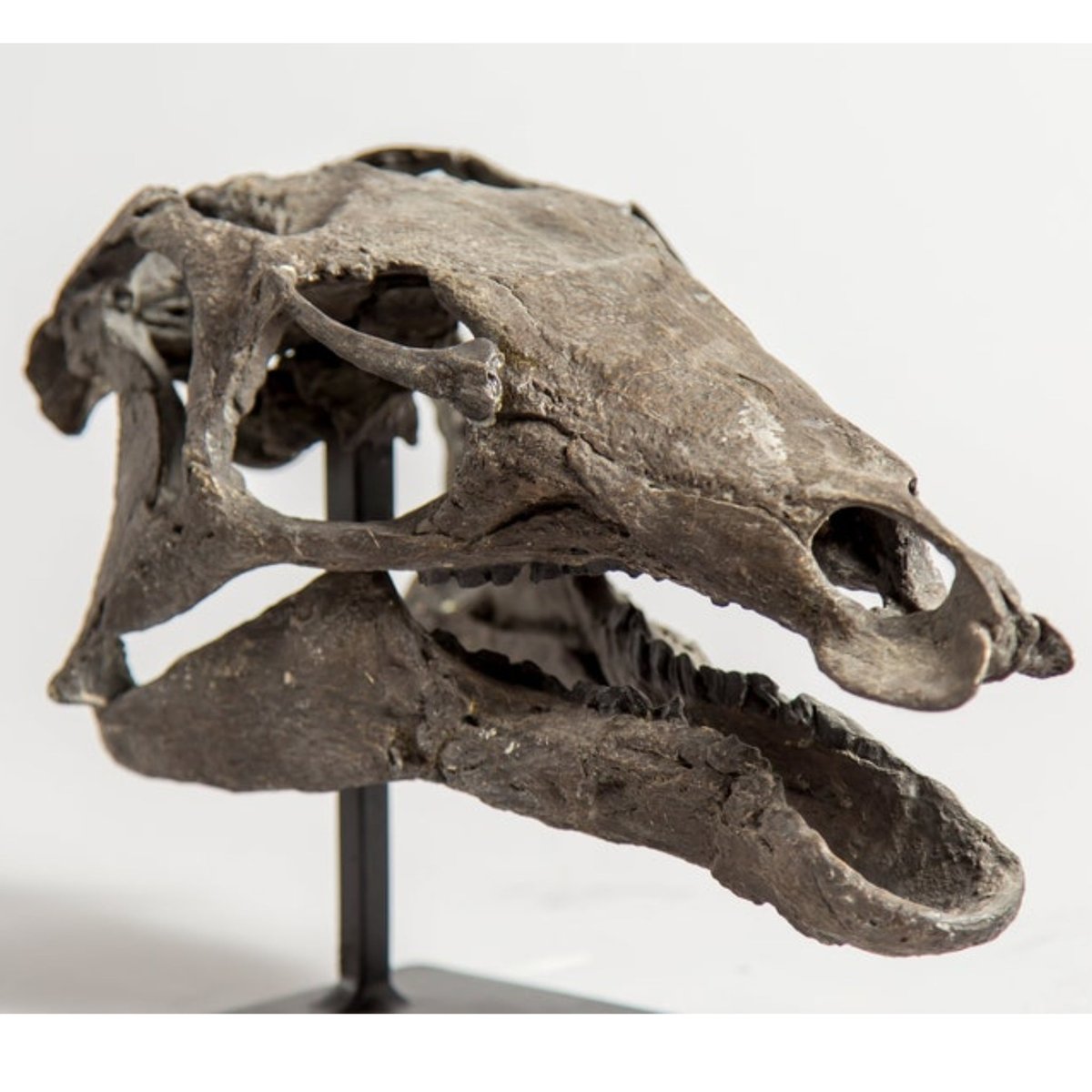
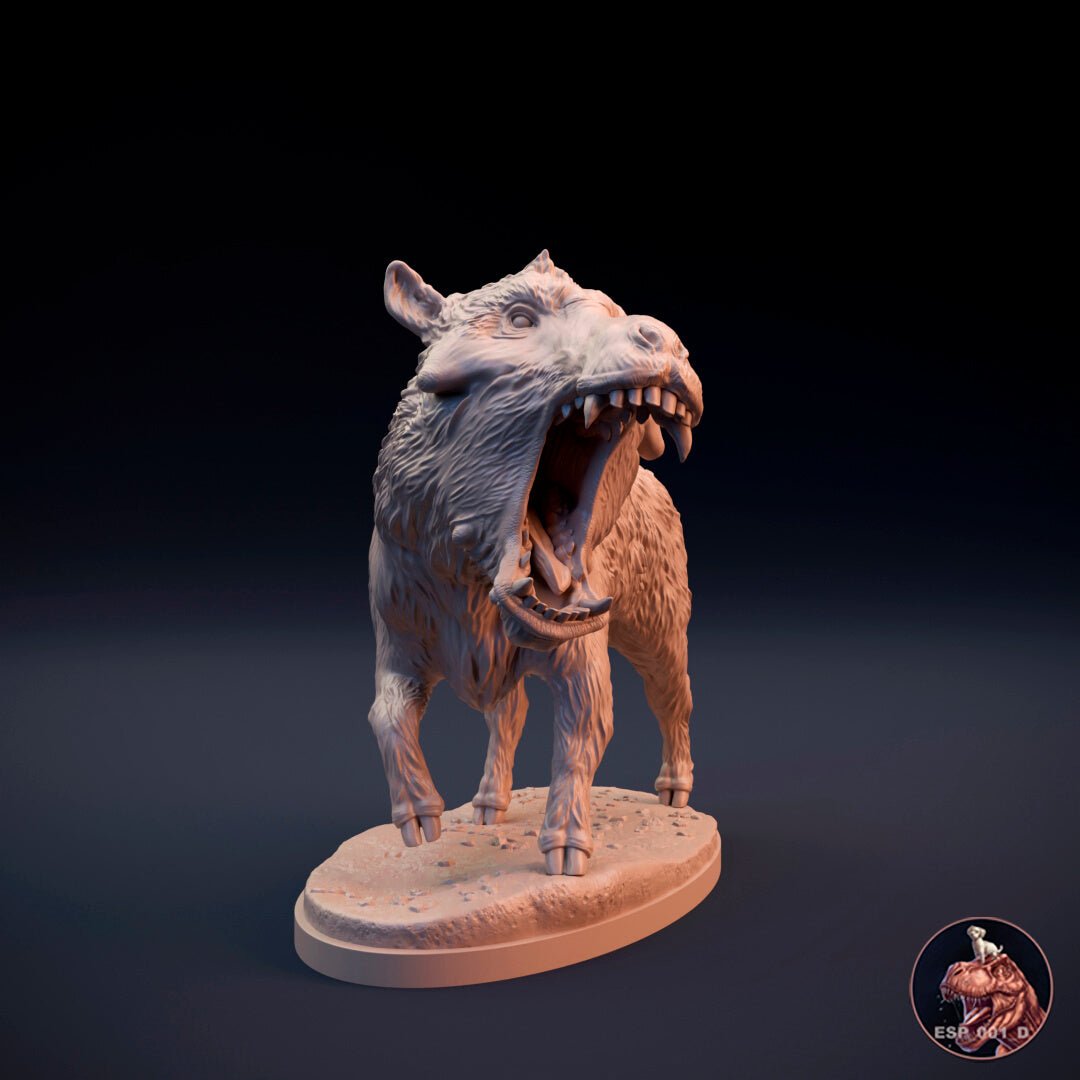
Daeodon was an animal of intimidating proportions, standing as one of the largest terrestrial predators of its time. An adult individual would have stood approximately 1.8 to 2.1 meters (5.9 to 6.9 feet) tall at the shoulder and measured around 3.6 meters (12 feet) in length from snout to tail. Weight estimates vary, but most paleontologists place a healthy adult between 600 and 1,000 kilograms (1,300 to 2,200 pounds), making it comparable in mass to a modern American bison or a small rhinoceros. Its most defining feature was its enormous skull, which could reach up to 90 centimeters (3 feet) in length. This massive head was equipped with powerful jaw muscles, evidenced by the large zygomatic arches (cheekbones) and sagittal crest running along the top of the skull, which provided extensive attachment points for these muscles. The skull also featured prominent bony flanges, or tubercles, protruding from the cheeks and lower jaw, the function of which is debated but may have been for muscle attachment, protection during combat, or species recognition. Its dentition was heterodont and formidable, comprising large, tusk-like canines, robust incisors for nipping and tearing, and broad, bunodont molars and premolars suited for crushing bone and tough plant material. The postcranial skeleton was robustly built, with long, powerful limbs adapted for terrestrial locomotion, ending in two-toed, cloven hooves characteristic of artiodactyls. Unlike modern pigs, its legs were relatively long and slender for its body size, suggesting it was a more capable runner than its bulky frame might imply.
The paleobiology of Daeodon points to a highly adaptable and opportunistic omnivore. Its dental morphology is a key indicator of a varied diet. The large canines and incisors were well-suited for dispatching prey and tearing flesh, while the powerful molars were ideal for crushing hard materials, including bone, nuts, and tough roots. Isotopic analysis of entelodont teeth supports this omnivorous lifestyle, showing a diet that included both plant and animal matter. Daeodon was likely an active predator, capable of running down prey such as the small horse Parahippus, the camelid Protolabis, or the hornless rhinoceros Menoceras. However, its immense size and powerful build also made it a highly effective kleptoparasite, or scavenger, capable of intimidating and driving off other predators, such as nimravids ('false saber-toothed cats') or amphicyonids ('bear-dogs'), from their kills. Evidence for this behavior comes from bite marks found on the fossils of other animals that match the distinct dental pattern of Daeodon. Social behavior is inferred from fossil evidence, particularly from skull injuries. Many Daeodon skulls show deep, healed gouges and puncture wounds on their faces, especially around the eyes and snout, which perfectly match the size and shape of another Daeodon's canines. This suggests intense intraspecific competition, likely for mates, territory, or dominance, involving violent face-biting contests, similar to behaviors seen in modern hippos. These animals were likely not solitary, possibly living in small social groups or 'sounders' where such dominance hierarchies would be established and maintained through aggressive displays and combat.
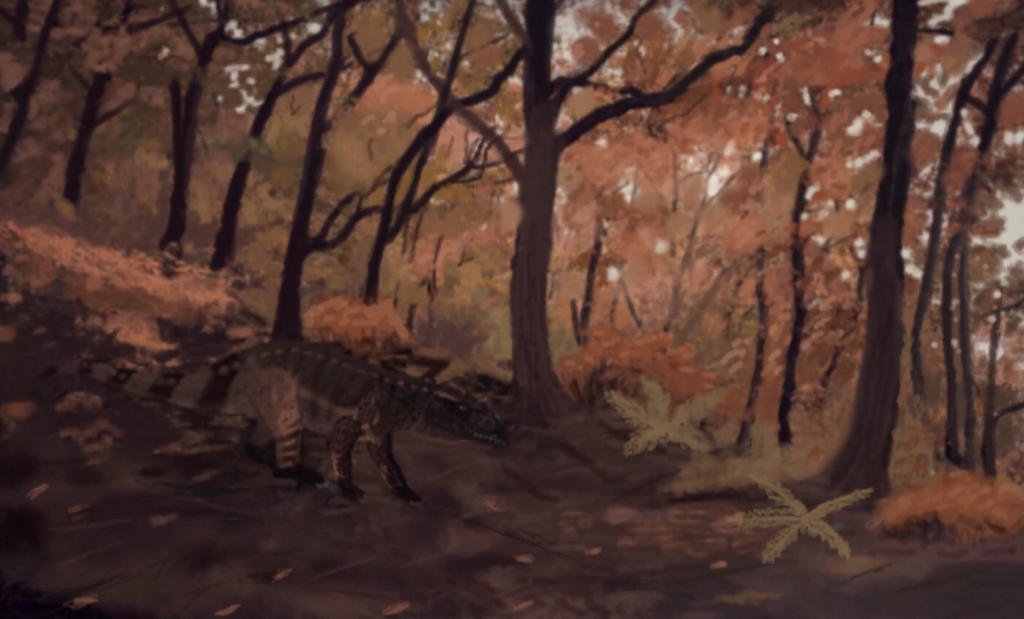
Daeodon lived during the early Miocene, a time of significant global cooling and drying following the warmer Oligocene. In North America, this climatic shift led to the expansion of open woodlands, savannas, and grasslands at the expense of dense forests. The environment of the John Day Formation in Oregon, where many Daeodon fossils are found, was a mosaic of riparian forests along waterways and more open, semi-arid plains. This habitat supported a diverse and rich megafauna, creating a complex ecosystem in which Daeodon occupied the niche of an apex predator and scavenger. It shared this landscape with a wide array of herbivores, which would have formed its prey base, including the aforementioned horses, camels, and rhinos, as well as chalicotheres like Moropus and oreodonts. Competition for resources was fierce. Daeodon contended with other large carnivores, most notably the formidable 'bear-dog' Amphicyon, which was of a similar size and also possessed bone-crushing capabilities. The presence of these two mega-carnivores suggests a degree of niche partitioning, with Daeodon perhaps being a more dominant scavenger and opportunistic hunter, while Amphicyon may have been a more specialized pursuit predator. The ecological pressure exerted by Daeodon would have been immense, influencing the behavior and evolution of both its prey and its competitors, solidifying its role as a keystone species in the early Miocene ecosystems of North America.
The discovery and naming history of Daeodon is complex and has been subject to considerable revision. The genus was first named by the renowned American paleontologist Edward Drinker Cope in 1878, based on a fragment of a lower jaw found in the John Day Formation of Oregon. The name Daeodon is derived from Greek, meaning "dreadful tooth" or "hostile tooth," a fitting descriptor for its formidable dentition. However, for much of the 20th century, the name Dinohyus ("terrible pig"), which was coined by Othniel Charles Marsh's student George Baur in 1890 for a nearly complete skeleton found in Nebraska (the Agate Springs specimen), became the more commonly used name for this giant entelodont. For decades, paleontologists considered Daeodon and Dinohyus to be separate genera. It was not until a comprehensive review of the Entelodontidae family by paleontologist Scott E. Foss in the early 2000s that the taxonomy was clarified. Foss demonstrated that Cope's original Daeodon specimen, though fragmentary, was diagnostic and had naming priority over Dinohyus according to the rules of zoological nomenclature. Consequently, all specimens previously assigned to Dinohyus, including the spectacular skeletons from the Agate Fossil Beds National Monument, were reclassified under the genus Daeodon, with Daeodon shoshonensis as the type species. This taxonomic consolidation was a crucial step in understanding the true identity and evolutionary history of North America's largest entelodont.
Daeodon's position in the tree of life provides critical insights into the evolution of artiodactyls, the order of even-toed ungulates. Entelodonts, the family to which Daeodon belongs, represent an early, successful offshoot of this lineage. For a long time, their pig-like appearance led to the assumption that they were closely related to Suidae (true pigs) and Tayassuidae (peccaries). However, more detailed anatomical studies, particularly of the ankle bones (astragalus), and subsequent molecular phylogenetic analyses have overturned this view. It is now widely accepted that entelodonts are part of the clade Cetancodontamorpha, which places them as more closely related to hippos and, more distantly, to cetaceans (whales and dolphins) than to pigs. This relationship highlights a fascinating chapter in mammalian evolution, where the ancestors of semi-aquatic hippos and fully aquatic whales had terrestrial cousins that evolved into apex predators. Daeodon, as the largest and one of the last of its kind, represents the culmination of the entelodont evolutionary trajectory. Its eventual extinction around 18 million years ago coincides with the arrival of more advanced and efficient predators like the bear-dogs and, later, large cats, suggesting that a combination of climate change altering habitats and increased competition from more specialized carnivores led to the downfall of this once-dominant lineage.
Despite the clarification of its genus name, scientific debates surrounding Daeodon and other entelodonts persist. One of the primary areas of discussion revolves around their precise feeding ecology. While the omnivorous, bone-crushing hypothesis is widely supported, the exact proportion of hunted versus scavenged food in their diet is still debated. Some researchers argue their limb structure suggests they were not fast enough to be effective pursuit predators of the swifter herbivores of the time, leaning more towards a model of them being dominant scavengers and ambush predators. Another point of contention is the function of the prominent bony flanges on their skulls. Hypotheses range from them being purely for visual display in courtship or threat rituals, to providing protection for the eyes and jaw during the violent face-biting combat evidenced by skull pathologies, or even serving as anchor points for exceptionally powerful jaw muscles. The exact social structure also remains speculative. While the evidence of intraspecific combat strongly suggests social interaction, the size and nature of their groups—whether they were solitary, lived in pairs, or formed larger, more complex social units—is difficult to determine definitively from the fossil record alone and remains a topic of active research and interpretation.
The fossil record of Daeodon is primarily concentrated in the western United States, with significant finds from the early Miocene deposits of Nebraska, Wyoming, South Dakota, Oregon, and Texas. The most famous and productive site is the Agate Fossil Beds National Monument in Nebraska, particularly the Carnegie Hill and University Hill quarries. These sites have yielded numerous well-preserved and often articulated skeletons, providing a comprehensive look at the animal's anatomy. The preservation quality of these specimens is generally good to excellent, allowing for detailed study of their skeletal morphology and pathologies. Skulls are relatively common finds due to their robust construction, and it is these fossils that often bear the dramatic evidence of face-biting behavior. While complete, articulated skeletons are less common than isolated elements, the wealth of material from sites like Agate Springs has made Daeodon one of the best-understood entelodonts. These fossil beds represent ancient waterholes where animals congregated and often perished, leading to a high concentration of remains from various species of the Miocene fauna.
Daeodon's fearsome appearance and dominant ecological role have earned it a significant place in popular culture and public imagination. Its common names, "hell pig" and "terminator pig," capture the public's fascination with this prehistoric beast. It is a staple in television documentaries about prehistoric life, often depicted as a brutish and aggressive scavenger, bullying other predators away from their kills. Notable appearances include the BBC series "Walking with Beasts" and National Geographic's "Prehistoric Predators." Major natural history museums, including the American Museum of Natural History in New York and the Field Museum in Chicago, feature impressive skeletal mounts of Daeodon (often still labeled as Dinohyus in older displays), showcasing its immense size and intimidating skull. These displays serve as powerful educational tools, illustrating the diversity of extinct mammals and the dynamic nature of prehistoric ecosystems, ensuring that the legacy of this "dreadful tooth" continues to inspire awe and curiosity.
Classification
Time Period
Discovery
Location
United States (Oregon)
Formation
John Day Formation
Frequently Asked Questions
What is Daeodon?
Daeodon shoshonensis represents the largest and one of the last known members of the entelodonts, an extinct family of formidable omnivorous mammals that roamed North America during the early Miocene epoch. Often colloquially referred to as "hell pigs" or "terminator pigs," these creatures were not ...
When did Daeodon live?
Daeodon lived during the neogene period of the cenozoic era approximately 23-18 million years ago.
Where was Daeodon discovered?
Fossils of Daeodon were discovered in United States (Oregon) in the John Day Formation.
What did Daeodon eat?
Daeodon was a omnivore. It lived in terrestrial habitats.
What type of fossil is Daeodon?
Daeodon is preserved as a body fossil. The preservation quality is good.
Related Specimens
From the cenozoic era · body fossils