Gorgonops
Gorgonops torvus
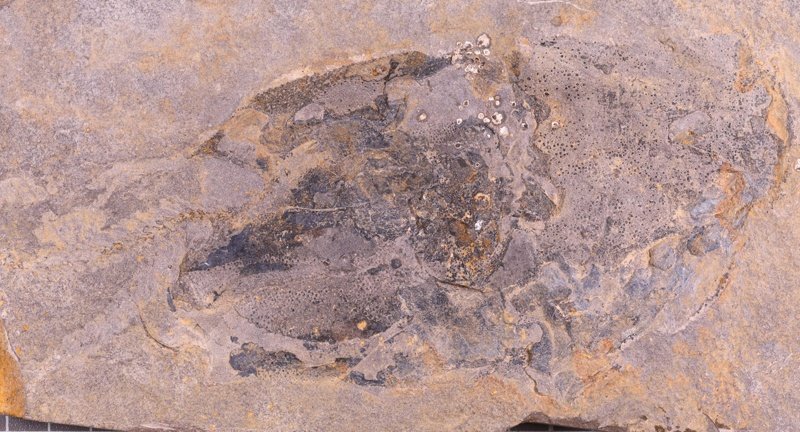
Image: Category:Gorgonops fossils - Wikimedia Commons (CC BY-SA)
About Gorgonops
Gorgonops, specifically the type species Gorgonops torvus, was a formidable apex predator that dominated the terrestrial ecosystems of southern Africa during the Late Permian period, approximately 260 to 254 million years ago. As a prominent member of the gorgonopsids, a specialized clade of advanced therapsids, this creature represents a crucial evolutionary stage in the synapsid lineage that would eventually give rise to all modern mammals. Its existence provides a vital window into the complex and diverse ecosystems that flourished just prior to the devastating Permian-Triassic extinction event, highlighting a time when mammal-like reptiles, rather than dinosaurs, ruled the Earth.
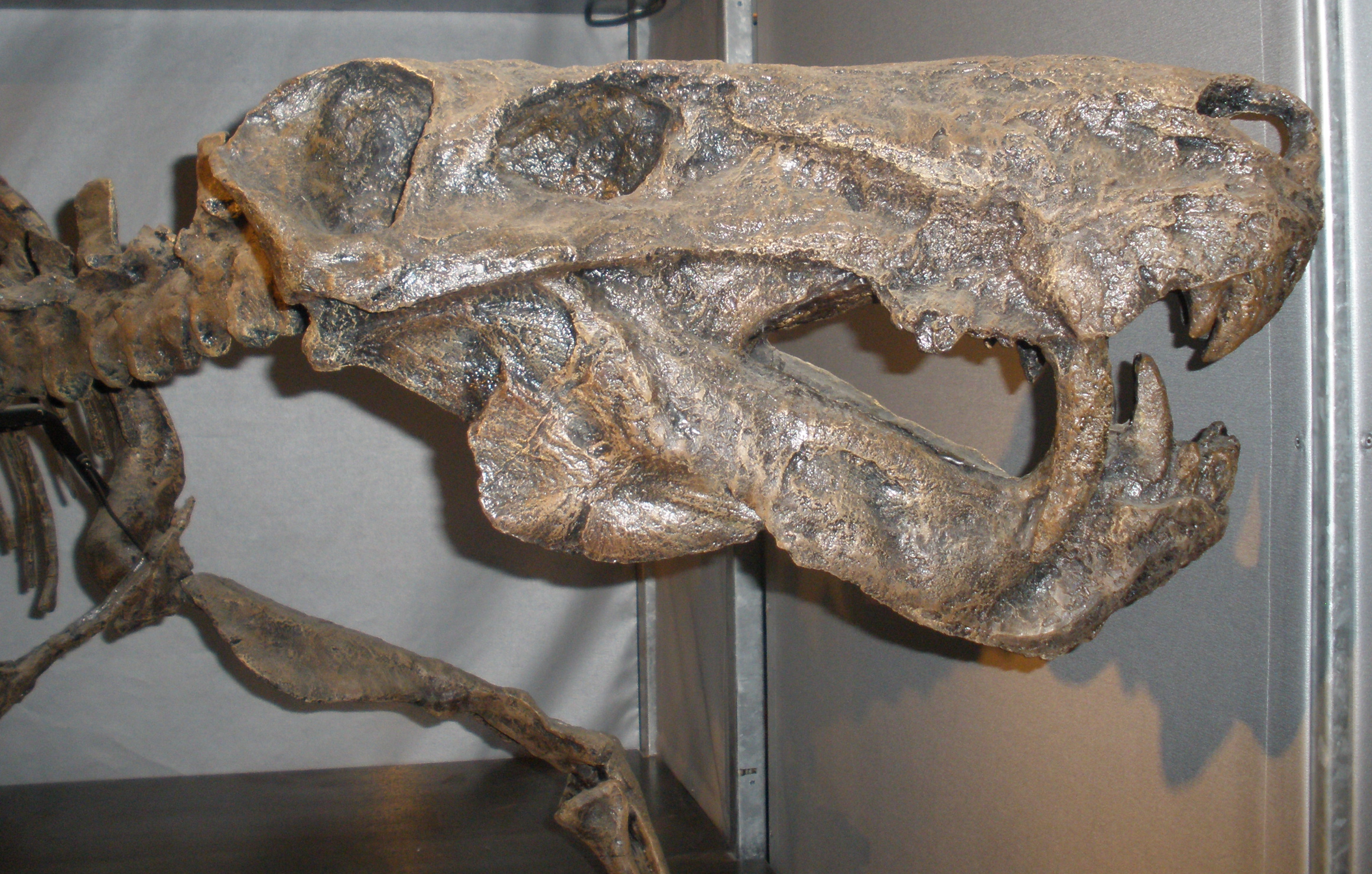
Physically, Gorgonops was a powerfully built, quadrupedal carnivore that exhibited a fascinating blend of reptilian and mammalian characteristics, reaching lengths of roughly 200 to 300 centimeters from snout to tail. Estimates suggest that a fully grown adult could weigh anywhere from two hundred to three hundred kilograms, making it a heavily muscled and imposing figure in its environment. The skull of Gorgonops was particularly robust and elongated, measuring up to thirty-five centimeters in length, and was engineered to withstand immense biomechanical stress during prey capture. Its most striking and terrifying feature was undoubtedly its dentition, characterized by a pair of enormous, saber-like maxillary canine teeth that could grow up to twelve centimeters long. These formidable fangs were complemented by smaller, sharp incisors at the front of the snout for gripping, and a reduced number of post-canine teeth, indicating a highly specialized diet focused on shearing flesh rather than chewing. The postcranial skeleton of Gorgonops reveals a creature built for both strength and improved mobility compared to its ancestors. Unlike earlier sprawling pelycosaurs, Gorgonops possessed a more erect posture, with its limbs positioned further underneath its body. This semi-erect stance was supported by a deep ribcage, a strong vertebral column, and heavily ossified limb bones, which together allowed for a longer stride and greater agility. In many ways, its overall build and biomechanics would have superficially resembled a cross between a modern monitor lizard and a heavily built mammalian predator like a bear or a large big cat, albeit with a distinctly prehistoric and scaly or possibly glandular skin covering, the exact nature of which remains a subject of scientific inquiry.
In terms of paleobiology, Gorgonops was an obligate hypercarnivore, occupying the very top of the Late Permian food chain. Its feeding strategy was likely heavily reliant on ambush tactics, utilizing its powerful build and semi-erect gait to launch rapid, short-distance sprints to overtake unsuspecting prey. The massive saber-like canines were not designed for bone-crushing, but rather for delivering deep, lethal puncture wounds to the soft tissues, throats, or flanks of large herbivores. Once the jaws clamped down, the powerful neck muscles would aid in tearing flesh, allowing the predator to wait for its victim to succumb to blood loss or shock, a tactic similar to that hypothesized for later saber-toothed cats like Smilodon. Biomechanical studies of the gorgonopsid jaw suggest a remarkable gape, allowing the jaws to open wide enough to clear the massive canines for a killing strike. Locomotion in Gorgonops represents a significant evolutionary leap. The repositioning of the limbs beneath the body not only provided better weight support but also facilitated more efficient forward propulsion, enabling bursts of speed that would have been impossible for the sprawling reptiles of the Early Permian. Behavioral inferences drawn from the fossil record and comparative anatomy suggest that Gorgonops may have been a solitary hunter, given the massive caloric requirements of such a large, active predator. Growth patterns analyzed through bone histology indicate that gorgonopsids experienced relatively rapid growth rates during their early years, a trait that aligns more closely with the endothermic or mesothermic metabolisms of later mammals than with the slow, indeterminate growth of ectothermic reptiles. This suggests that Gorgonops may have possessed a higher metabolic rate, requiring a constant and substantial intake of meat to fuel its active lifestyle.
The ecological context in which Gorgonops thrived was the vast, arid to semi-arid landscape of the Karoo Basin in what is now South Africa, during the Wuchiapingian age of the Late Permian. The climate of this era was characterized by highly seasonal rainfall, resulting in a dynamic environment of expansive floodplains, meandering river systems, and sparse, drought-resistant vegetation such as Glossopteris ferns and early gymnosperms. In this challenging habitat, Gorgonops reigned as the undisputed apex predator, a crucial regulator of the local food web. It co-existed with a diverse array of peculiar fauna, most notably the large, heavily armored pareiasaurs like Bradysaurus, and an abundance of varied dicynodonts, which were stout, tusked, herbivorous therapsids that likely formed the bulk of its diet. The presence of such massive herbivores necessitated the evolution of a predator capable of taking them down, and Gorgonops, with its saber teeth and powerful build, was perfectly adapted for this ecological niche. The predator-prey dynamics of the Beaufort Group ecosystems were complex, with Gorgonops likely targeting the sick, young, or old members of these herbivore herds. Alongside Gorgonops lived smaller predators, including therocephalians and smaller gorgonopsid species, which occupied lower trophic levels and likely scavenged the remains of Gorgonops kills or hunted smaller prey. This intricate web of life highlights a highly structured and mature terrestrial ecosystem that had evolved over millions of years, one that was entirely dominated by the synapsid lineage long before the first dinosaur ever walked the Earth.
The discovery history of Gorgonops is deeply intertwined with the early days of vertebrate paleontology and the exploration of the rich fossil beds of South Africa. The first fossilized remains of this remarkable creature were discovered in the late nineteenth century in the Karoo Basin, a geological marvel that has since yielded some of the most important Permian and Triassic fossils in the world. The type specimen, consisting of a partial skull, was formally described and named in 1876 by the renowned British anatomist and paleontologist Sir Richard Owen. Owen, a towering figure in Victorian science who also coined the term Dinosauria, was struck by the fearsome appearance of the skull and its massive teeth. He bestowed upon it the name Gorgonops torvus, which translates from Greek and Latin as the grim or savage Gorgon face, a fitting tribute to the mythical Greek monsters known for their terrifying visages. For many decades, the holotype skull remained the primary source of information about the genus. However, subsequent expeditions throughout the twentieth century, led by prominent paleontologists such as Robert Broom and later researchers from the Iziko South African Museum and the University of the Witwatersrand, uncovered more complete cranial and postcranial material. These discoveries, particularly those from the Tropidostoma and Cistecephalus Assemblage Zones of the Beaufort Group, allowed scientists to piece together the full anatomical picture of Gorgonops. The naming history of gorgonopsids has been historically complex, with many fragmentary specimens being assigned to new genera and species over the years, leading to a tangled taxonomic web that modern paleontologists are still working to unravel.
The evolutionary significance of Gorgonops cannot be overstated, as it occupies a critical transitional position in the tree of life, bridging the anatomical gap between primitive reptile-like ancestors and the highly derived mammalian lineage. As a therapsid, Gorgonops belonged to the synapsid clade, the group of amniotes that includes modern mammals and all their extinct relatives. Gorgonops and its kin showcase a suite of transitional features that document the gradual acquisition of mammalian traits. Most notably, the differentiation of its teeth into incisors, canines, and post-canines is a hallmark of mammalian heterodonty, a stark contrast to the uniform, peg-like teeth of most reptiles. This dental specialization allowed for more efficient processing of food, a necessary adaptation for supporting higher metabolic rates. Furthermore, the modifications in the temporal fenestrae, the openings at the back of the skull, provided attachment points for larger and more complex jaw muscles, hinting at the evolutionary trajectory that would eventually lead to the mammalian jaw joint and middle ear. The semi-erect posture of Gorgonops also reflects a crucial biomechanical shift towards the parasagittal gait seen in modern mammals, where the limbs move parallel to the vertebral column. While Gorgonops itself left no direct descendants, as the entire gorgonopsid lineage was extinguished at the end of the Permian, it serves as a spectacular evolutionary model. It demonstrates how the synapsid body plan was being actively modified and optimized for active, predatory lifestyles millions of years before the first true mammals appeared in the Late Triassic.
Despite over a century of study, Gorgonops remains the subject of several ongoing scientific debates and controversies. One of the most persistent issues is the taxonomic dispute surrounding the genus and the broader Gorgonopsidae family. Historically, paleontologists engaged in a practice of over-splitting, naming new species based on minor variations in crushed or distorted skulls. Recent revisions by researchers such as Christian Kammerer have sought to clean up this taxonomy, synonymizing many dubious names and reducing the number of valid Gorgonops species, though the exact boundaries between closely related genera remain contentious. Another area of active debate concerns the behavior and soft tissue anatomy of these animals. For instance, the extent of their endothermy, or warm-bloodedness, is heavily debated. While bone histology suggests elevated metabolic rates, it is unclear if they possessed hair or fur for insulation, or if they relied on other mechanisms to regulate body temperature. Additionally, the exact mechanics of their saber-toothed bite are still analyzed through advanced computer modeling, with scientists debating whether they used a neck-driven shearing bite or a more jaw-driven crushing mechanism, and how their cranial kinesis accommodated such massive teeth without fracturing the skull during a struggle.
The fossil record of Gorgonops is primarily restricted to the Beaufort Group of the Karoo Basin in South Africa, a geological formation renowned for its continuous sedimentary sequence spanning the Permian-Triassic boundary. The geographic distribution of confirmed Gorgonops fossils is relatively localized to this region, though related gorgonopsids have been found as far afield as Russia and other parts of Africa, indicating a widespread distribution of the family across the supercontinent of Pangea. The number of specimens definitively assigned to Gorgonops torvus is relatively small compared to the abundant herbivorous dicynodonts found in the same strata, which is consistent with its role as an apex predator at the top of the food pyramid. The preservation quality of these fossils varies greatly; while some skulls are exquisitely preserved in three dimensions within hard calcareous nodules, many others have suffered from severe taphonomic distortion, having been crushed by the weight of overlying sediments over hundreds of millions of years. Famous sites within the Karoo, such as the areas around Beaufort West and Graaff-Reinet, have yielded the most significant specimens, providing the empirical foundation for our understanding of this magnificent predator and the vanished world it inhabited.
The cultural impact of Gorgonops, while perhaps not as ubiquitous as that of popular dinosaurs like Tyrannosaurus rex, is nonetheless significant in the realm of paleontology and science communication. Casts and original fossils of Gorgonops are proudly displayed in major natural history museums around the world, including the Natural History Museum in London and the Iziko South African Museum in Cape Town, where they serve as awe-inspiring educational tools. In popular culture, Gorgonops has gained considerable recognition through appearances in acclaimed science documentaries, most notably the BBC series Walking with Monsters, and in science fiction television shows like Primeval, where its terrifying visage and saber teeth captured the public imagination. These media representations, while sometimes taking artistic liberties, play a crucial role in educating the public about the deep history of life on Earth, highlighting the fascinating and often overlooked era of the Permian period and the incredible mammal-like reptiles that ruled long before the age of dinosaurs.
Classification
Time Period
Discovery
Location
Karoo Basin, South Africa
Formation
Beaufort Group
Frequently Asked Questions
What is Gorgonops?
Gorgonops, specifically the type species Gorgonops torvus, was a formidable apex predator that dominated the terrestrial ecosystems of southern Africa during the Late Permian period, approximately 260 to 254 million years ago. As a prominent member of the gorgonopsids, a specialized clade of advance...
When did Gorgonops live?
Gorgonops lived during the permian period of the paleozoic era approximately 260-254 million years ago.
Where was Gorgonops discovered?
Fossils of Gorgonops were discovered in Karoo Basin, South Africa in the Beaufort Group.
What did Gorgonops eat?
Gorgonops was a carnivore. It lived in terrestrial habitats.
What type of fossil is Gorgonops?
Gorgonops is preserved as a body fossil. The preservation quality is good.
Related Specimens
From the paleozoic era · body fossils