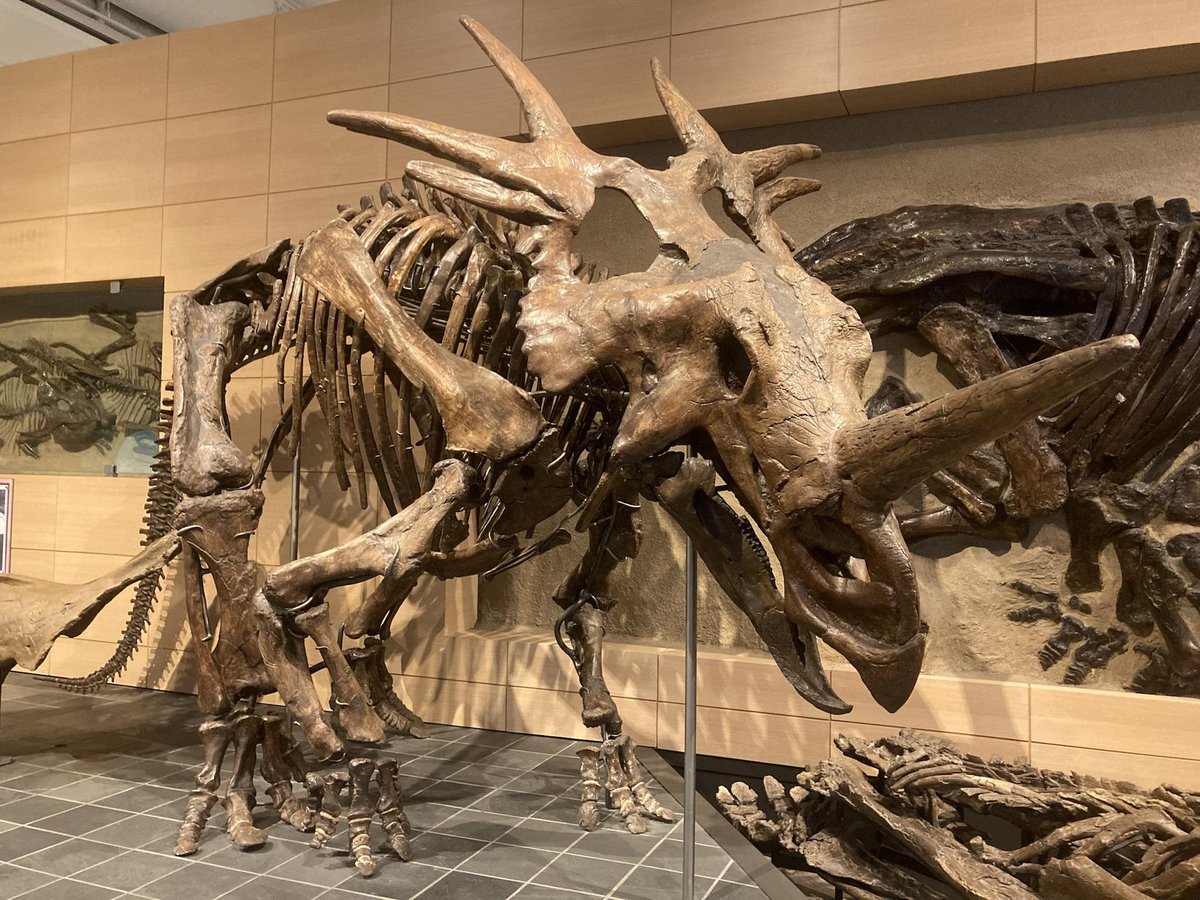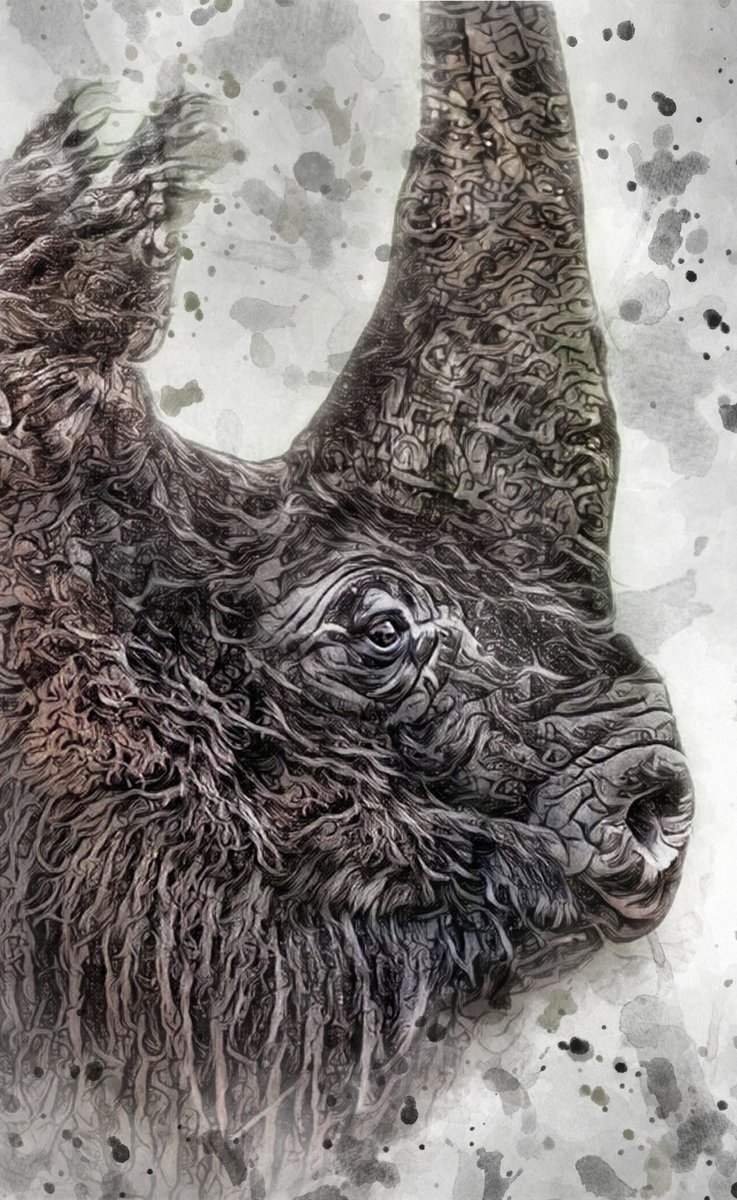
Elasmotherium
Elasmotherium sibiricum
Image: Image sourced via web search (Fair use / Educational)
About Elasmotherium
Elasmotherium sibiricum, often called the 'Siberian Unicorn,' was a colossal species of rhinoceros that inhabited the vast grasslands of Eurasia during the Pleistocene epoch. This megafaunal herbivore is renowned for the prominent, single horn that likely adorned its forehead, a feature that has fueled both scientific debate and popular imagination. Its existence, stretching from approximately 2.6 million years ago until its surprisingly recent extinction around 29,000 years ago, provides a critical window into the dynamic ecosystems of the Ice Age and the factors that led to the demise of many of its largest inhabitants.
In terms of physical stature, Elasmotherium was one of the largest rhinoceroses to have ever lived, rivaling the size of a modern African elephant. It stood approximately 2 meters (6.6 feet) tall at the shoulder and measured up to 5 meters (16.4 feet) in body length. Weight estimates for this immense creature vary, but most paleontologists place it in the range of 3.5 to 4.5 metric tons (7,700 to 9,900 pounds), making it a truly formidable presence on the Pleistocene steppe. Its most defining characteristic was a massive, bony dome on its forehead, known as a frontal boss, which served as the anchor for a single, enormous horn. While the horn itself, being made of keratin, has not fossilized, the size and texture of the boss—which could be up to 13 centimeters (5 inches) high and featured a roughened surface with blood vessel impressions—suggests it supported a horn of exceptional size, possibly exceeding 1 meter in length. Its body was robust and stocky, supported by powerful, pillar-like legs that were longer and more slender than those of modern rhinos, hinting at a greater capacity for running. Its teeth were high-crowned (hypsodont), perfectly adapted for grinding tough, abrasive vegetation.
The paleobiology of Elasmotherium is primarily inferred from its specialized anatomy and the environments it inhabited. Its hypsodont molars, which grew continuously throughout its life, are a clear indication of a diet centered on abrasive grasses and other tough, low-lying vegetation typical of steppe environments. This dental structure was essential for processing large quantities of silica-rich plants, which would quickly wear down the teeth of less-adapted herbivores. Isotope analysis of its fossilized teeth supports this conclusion, revealing a diet almost exclusively composed of C4 grasses. Its long legs suggest it was more cursorial than modern rhinoceroses, capable of sustained running over open terrain, likely to traverse large distances between grazing patches or to escape predators. While direct evidence of social behavior is scarce, its large size would have offered significant protection from predators. It is plausible that Elasmotherium lived either solitarily or in small family groups, similar to its modern relatives. The massive horn was likely a multi-purpose tool, used for defense against predators like cave hyenas or scimitar-toothed cats, for intraspecific competition between males for mates or territory, and potentially for clearing snow to access buried vegetation during harsh winters.
Elasmotherium lived in the Mammoth Steppe, a vast, cold, and dry ecosystem that stretched from Western Europe across Asia to North America during the Pleistocene. This environment was not a uniform grassland but a mosaic of grasses, herbs, and scattered shrubs, supporting a diverse community of megafauna. The climate was characterized by long, cold winters and short, cool summers. Elasmotherium shared this habitat with a host of other iconic Ice Age animals, including the woolly mammoth (Mammuthus primigenius), woolly rhinoceros (Coelodonta antiquitatis), steppe bison (Bison priscus), and wild horses (Equus ferus). As a large grazer, it occupied a crucial position in the food web, converting vast amounts of plant biomass into a food source for the era's top predators. While a healthy adult Elasmotherium would have been a difficult target, juveniles, the old, or the infirm may have fallen prey to pack-hunting cave hyenas (Crocuta crocuta spelaea) or the formidable scimitar-toothed cat (Homotherium latidens). Its existence was intricately tied to the health of the steppe ecosystem, and its eventual extinction was likely linked to the climatic changes at the end of the Pleistocene that caused this habitat to shrink and fragment.
The discovery history of Elasmotherium dates back to the early 19th century, a formative period for the science of paleontology. The genus was first described and named in 1808 by the German-Russian paleontologist Johann Fischer von Waldheim, who was the director of the Natural History Museum at Moscow University. The name 'Elasmotherium' derives from the Greek 'elasmos' (laminated) and 'therion' (beast), referring to the laminated, folded enamel structure of its molar teeth. The initial description was based on a fossilized lower jaw, teeth, and other fragments found in the Siberian region of the Russian Empire. The most famous and complete specimen, a nearly intact skull, was discovered in 1877 near the village of Kozlovskaya in the Stavropol region of Russia. This particular skull, with its massive frontal dome, provided the first definitive evidence for the placement and potential size of its single horn, cementing its 'unicorn' image. Over the subsequent decades, numerous fossils, primarily skulls, jaws, and teeth, have been unearthed across a wide geographic range, from the Don River basin in Russia to Kazakhstan and northern China, gradually building a more complete picture of this magnificent animal.
Elasmotherium belongs to the family Rhinocerotidae, which includes all modern and extinct rhinoceroses. Within this family, it is the type genus for the subfamily Elasmotheriinae, a distinct lineage of rhinos that diverged from the lineage leading to modern rhinos (Rhinocerotinae) during the Oligocene, over 30 million years ago. This subfamily is characterized by its large size, hypsodont teeth, and a tendency towards developing a single frontal horn. Elasmotherium represents the culmination and the final member of this evolutionary line. Its specialized adaptations, particularly its extreme hypsodonty and cursorial limbs, illustrate a powerful case of adaptive radiation in response to the expansion of open-grassland environments during the Cenozoic. It serves as a prime example of how megafauna evolved to exploit the specific ecological niches of the Pleistocene steppe. Its closest living relatives are the five modern species of rhinoceros, though the evolutionary gap between them is vast, highlighting the significant diversity that the rhino family has lost over geological time. Recent DNA analysis has confirmed that the Elasmotheriinae split from the Rhinocerotinae around 47.3 million years ago, making them a very ancient and distinct branch of the rhino family tree.
The most prominent scientific debate surrounding Elasmotherium has long been the size, shape, and even the existence of its horn. While the massive frontal boss is undeniable proof of a horn's presence, its exact morphology remains speculative. Some early reconstructions depicted a short, stout horn, while others imagined a slender, pointed horn of immense length. Another area of debate concerns its posture and locomotion. While traditionally depicted with a body plan similar to modern rhinos, some researchers, citing its relatively long legs, have proposed a more horse-like, semi-unguligrade posture, suggesting it was a more capable runner than previously thought. Perhaps the most significant recent revision to our understanding of Elasmotherium concerns its extinction timeline. For many years, it was believed to have vanished around 200,000 years ago, well before the last glacial maximum. However, a 2018 study led by Adrian Lister, using improved radiocarbon dating on 23 specimens, revealed that Elasmotherium survived until at least 29,000 years ago in Eastern Europe and Central Asia. This revised timeline places its extinction squarely within the Late Pleistocene extinction event and suggests it may have coexisted with modern humans.
The fossil record of Elasmotherium is widespread but often fragmentary. Fossils are found across a vast swath of Eurasia, with significant discoveries made in Russia (particularly in Siberia and the Volga-Don region), Ukraine, Kazakhstan, Uzbekistan, and northern China. The most commonly found remains are its highly durable and distinctive high-crowned molars and robust lower jaws. Complete skeletons are exceptionally rare, but several well-preserved skulls, like the one from Stavropol, provide invaluable anatomical information. The quality of preservation is generally good, especially for dental and cranial material found in Pleistocene loess and alluvial deposits. Famous fossil sites include the banks of the Volga and Don rivers in Russia and various localities in Kazakhstan, which have yielded a significant number of Elasmotherium remains. The abundance of teeth and jaw fragments compared to postcranial bones suggests that many fossils may have been transported by water after the animal's death, with heavier cranial elements being more likely to be preserved.
Elasmotherium sibiricum has captured the public imagination as the 'Siberian Unicorn,' a real-world basis for the mythical creature. This association has made it a popular subject in paleoart, documentaries about Ice Age life, and museum exhibits. Its immense size and unique, single-horned appearance make it a charismatic example of Pleistocene megafauna, often displayed alongside the woolly mammoth and saber-toothed cat. Major natural history museums, such as the Paleontological Institute in Moscow and the Natural History Museum in London, feature impressive skulls and other fossil material of Elasmotherium, educating the public about the lost diversity of the rhinoceros family and the dramatic environmental changes that occurred at the end of the last Ice Age. Its story serves as a powerful reminder of the incredible creatures that once roamed the Earth and the fragility of even the most formidable species in the face of climate change.
Classification
Time Period
Discovery
Location
Siberia, Russian Empire
Formation
Various Pleistocene deposits across Eurasia
Frequently Asked Questions
What is Elasmotherium?
Elasmotherium sibiricum, often called the 'Siberian Unicorn,' was a colossal species of rhinoceros that inhabited the vast grasslands of Eurasia during the Pleistocene epoch. This megafaunal herbivore is renowned for the prominent, single horn that likely adorned its forehead, a feature that has fue...
When did Elasmotherium live?
Elasmotherium lived during the quaternary period of the cenozoic era approximately 2.6-0.029 million years ago.
Where was Elasmotherium discovered?
Fossils of Elasmotherium were discovered in Siberia, Russian Empire in the Various Pleistocene deposits across Eurasia.
What did Elasmotherium eat?
Elasmotherium was a herbivore. It lived in terrestrial habitats.
What type of fossil is Elasmotherium?
Elasmotherium is preserved as a body fossil. The preservation quality is good.
Related Specimens
From the cenozoic era · body fossils