Styxosaurus
Styxosaurus snowii
Image: Image sourced via web search (Fair use / Educational)
About Styxosaurus
Styxosaurus snowii was a colossal marine reptile, a type of long-necked plesiosaur that patrolled the vast inland seas of the Late Cretaceous period. Flourishing between approximately 85 and 80 million years ago, its remains are primarily found in deposits that once formed the Western Interior Seaway, an epicontinental sea that bisected North America. As a highly specialized member of the Elasmosauridae family, Styxosaurus represents a pinnacle of adaptation for marine predation, and its fossils provide critical insights into the structure and dynamics of ancient oceanic ecosystems during one of the warmest periods in Earth's history. Its name, meaning 'Styx River Lizard,' evokes the mythological Greek underworld, a fitting moniker for a formidable predator from a long-vanished world.
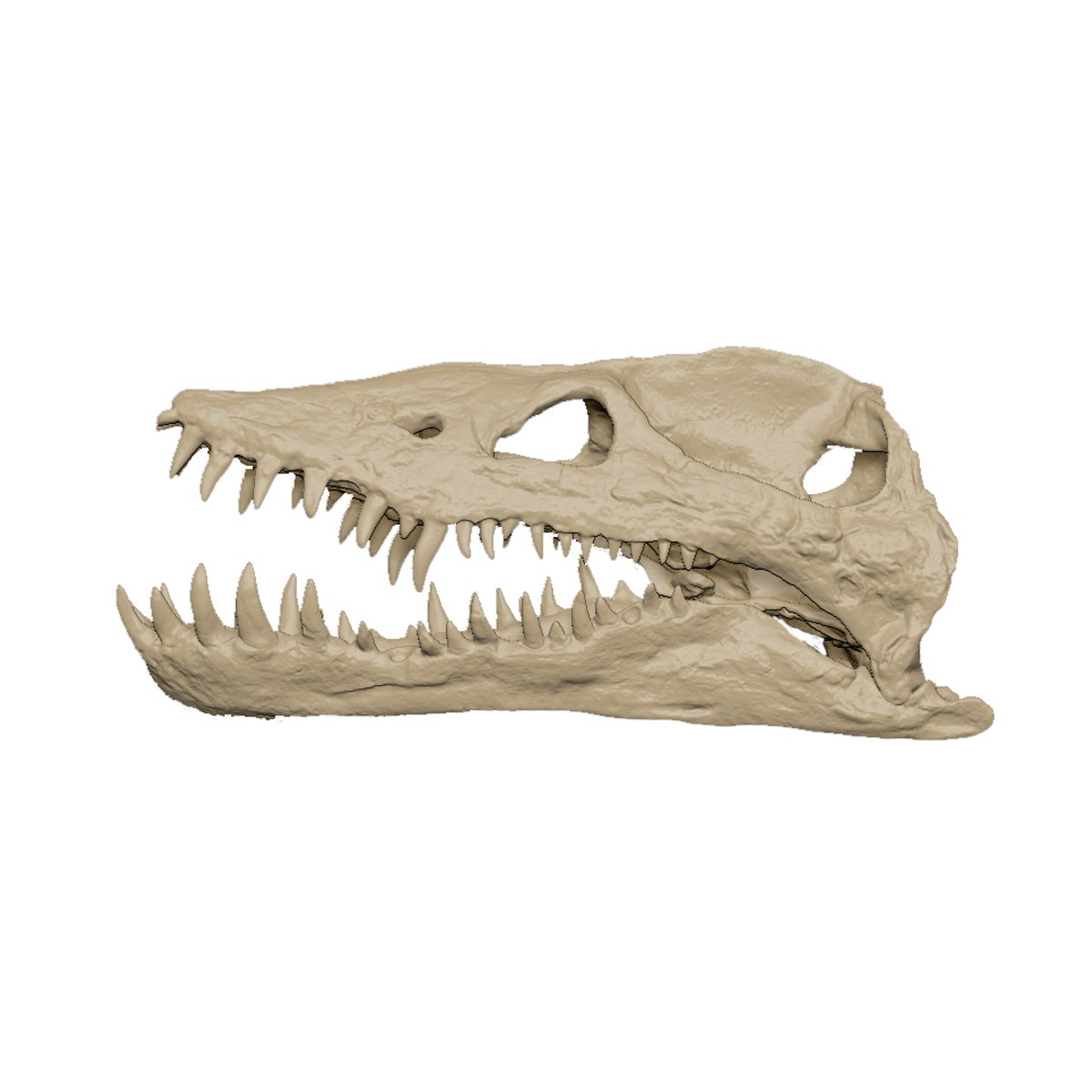
The most striking feature of Styxosaurus was its extraordinarily long neck, which accounted for roughly half of its total body length of 10 to 11 meters (about 33 to 36 feet). This neck was composed of an impressive number of vertebrae, between 60 and 72, which provided a unique combination of length and stiffness, unlike the flexible 'swan neck' often depicted in older illustrations. The skull was relatively small, measuring around 40-50 centimeters, and was equipped with a formidable battery of long, slender, interlocking teeth, perfectly suited for ensnaring slippery prey like fish and squid. Its body was broad, flattened, and teardrop-shaped, an efficient hydrodynamic design for moving through water. Propulsion was generated by four large, powerful flippers, which it likely used in a flight-like motion similar to modern sea turtles or penguins. Weight estimates for an adult Styxosaurus range from 3 to 4 metric tons, placing it on par with a large modern Orca or a small bus, making it one of the apex predators of its environment. The tail was relatively short and likely served primarily as a rudder for steering rather than for propulsion.
The paleobiology of Styxosaurus reveals a highly adapted marine predator. Its dental morphology—long, conical, and interlocking teeth—strongly suggests a diet consisting primarily of small to medium-sized fish and cephalopods like belemnites and squid. It was not equipped to tackle large armored prey. The function of its incredibly long neck has been a subject of debate, but the prevailing theory is that it acted as a hunting tool. Styxosaurus could have approached schools of fish from below, using the murky depths to conceal its large body while extending its small head and long neck into the school to snatch unsuspecting prey. This 'stalk-and-strike' strategy would have been highly effective. Locomotion was achieved through powerful, coordinated strokes of its four flippers, likely allowing for sustained cruising speeds and bursts of acceleration to chase down prey. There is no direct evidence for social behavior, but like many large marine animals today, it is plausible they were solitary hunters. Gastroliths, or stomach stones, have been found in the abdominal region of some elasmosaur specimens, suggesting they were ingested to aid in buoyancy control or to help grind up food in the digestive tract.
Styxosaurus lived in the Western Interior Seaway, a warm, shallow epicontinental sea that covered the central portion of North America during the Late Cretaceous. This seaway was a vibrant and dangerous ecosystem teeming with life. The climate was subtropical to tropical, with no polar ice caps and significantly higher sea levels than today. Styxosaurus shared its habitat with a diverse array of marine fauna. It would have preyed upon fish such as Enchodus and the large, 4-meter-long Xiphactinus, as well as various species of squid and ammonites. However, Styxosaurus was not the undisputed apex predator. It was itself potential prey for the giant mosasaur Tylosaurus, a massive 15-meter-long marine lizard that occupied the top of the food web. Other contemporaries included the diving bird Hesperornis, the giant sea turtle Archelon, and other plesiosaurs like the short-necked Polycotylus. Styxosaurus occupied a high trophic level, acting as a large mesopredator, crucial in controlling fish populations while navigating the constant threat from larger, more powerful predators in this dynamic and competitive marine environment.
The discovery history of Styxosaurus is intertwined with the 'Bone Wars' of the late 19th century. The holotype specimen (KUVP 1301), a nearly complete skull and a series of 20 vertebrae, was discovered in the Smoky Hill Chalk of Logan County, Kansas, by Judge E.P. West. It was acquired by the University of Kansas and described by the paleontologist Samuel Wendell Williston in 1890. Williston initially named it Cimoliasaurus snowii in honor of Francis H. Snow, the chancellor of the university. However, the famous paleontologist Edward Drinker Cope later acquired a more complete postcranial skeleton from the same region and, believing it to be a new genus, named it Elasmosaurus marshii in a jab at his rival, Othniel Charles Marsh. It was not until 1943 that paleontologist Samuel Paul Welles, in his comprehensive review of elasmosaurs, recognized that these specimens belonged to a distinct genus, which he named Styxosaurus. He designated Williston's original skull as the type specimen for Styxosaurus snowii. Another species, Styxosaurus browni, was later named, but subsequent analysis has synonymized it with Hydralmosaurus, leaving S. snowii as the sole recognized species of the genus.
Styxosaurus holds significant evolutionary importance as a classic representative of the Elasmosauridae, a family of plesiosaurs that pushed the anatomical limits of neck elongation. This group demonstrates an extreme example of specialized adaptation within the larger Plesiosauria clade. The evolutionary trend towards longer necks, seen across multiple plesiosaur lineages, reached its zenith in elasmosaurs like Styxosaurus and its close relative Elasmosaurus. This adaptation highlights the intense selective pressures in Mesozoic marine ecosystems that favored novel hunting strategies. Plesiosaurs, including Styxosaurus, are diapsid reptiles, but their exact placement within the reptile family tree is still debated, with some studies placing them near the lineage leading to turtles, and others suggesting a different archosauromorph ancestry. They have no direct modern descendants, as the entire plesiosaur lineage went extinct during the Cretaceous-Paleogene extinction event 66 million years ago. Studying Styxosaurus helps paleontologists understand the diversity of marine reptile forms and the ecological niches they occupied before the rise of marine mammals.
Despite its well-established status, some scientific debates concerning Styxosaurus persist. A primary area of discussion revolves around the precise function and flexibility of the elasmosaurid neck. Early reconstructions depicted it as a highly flexible, snake-like appendage capable of striking in any direction. However, modern biomechanical studies, led by researchers like Danielle Dufault, have shown that the vertebral structure would have made the neck relatively stiff, especially at its base, with most flexibility concentrated closer to the head. This supports the 'stalking from below' hunting hypothesis over the 'serpentine strike' model. Furthermore, the taxonomy within Elasmosauridae is complex and frequently revised. For a time, a second species, 'Styxosaurus browni,' was recognized, but it was later reassigned to the genus Hydralmosaurus by Kenneth Carpenter in 1999, based on differences in the pectoral girdle. Such re-evaluations are common in paleontology as new specimens are found and new analytical techniques are applied, continually refining our understanding of these ancient creatures.
The fossil record of Styxosaurus is primarily concentrated in the Niobrara Formation of the central United States, particularly the Smoky Hill Chalk Member in Kansas. This geological unit is world-renowned for its exceptional preservation of Late Cretaceous marine vertebrates. Several good to excellent specimens of Styxosaurus are known, including skulls and substantial portions of the postcranial skeleton. The holotype (KUVP 1301) at the University of Kansas Natural History Museum and other significant specimens housed at institutions like the South Dakota School of Mines and Technology provide a robust basis for our anatomical understanding of the genus. While not as common as some other Niobrara fossils like the fish Xiphactinus, Styxosaurus remains are sufficiently numerous to be considered uncommon rather than rare. The fine-grained chalk deposits allow for high-fidelity preservation of skeletal elements, offering detailed insights into its osteology, though soft tissues are not preserved.
Styxosaurus, along with its more famous cousin Elasmosaurus, has cemented the image of the long-necked sea serpent in the public consciousness. Its dramatic and almost mythical appearance has made it a popular subject in books, documentaries, and museum exhibits worldwide. Notable mounted skeletons or casts of Styxosaurus can be seen at the University of Kansas Natural History Museum and the South Dakota School of Mines and Technology's Museum of Geology. While it may not have the same level of name recognition as Tyrannosaurus rex, its unique and bizarre anatomy serves as a powerful educational tool, captivating audiences and illustrating the incredible diversity of life that existed in Earth's ancient oceans.
Classification
Time Period
Discovery
Location
Kansas, USA
Formation
Niobrara Formation (Smoky Hill Chalk Member)
Frequently Asked Questions
What is Styxosaurus?
Styxosaurus snowii was a colossal marine reptile, a type of long-necked plesiosaur that patrolled the vast inland seas of the Late Cretaceous period. Flourishing between approximately 85 and 80 million years ago, its remains are primarily found in deposits that once formed the Western Interior Seawa...
When did Styxosaurus live?
Styxosaurus lived during the cretaceous period of the mesozoic era approximately 85-80 million years ago.
Where was Styxosaurus discovered?
Fossils of Styxosaurus were discovered in Kansas, USA in the Niobrara Formation (Smoky Hill Chalk Member).
What did Styxosaurus eat?
Styxosaurus was a carnivore. It lived in marine habitats.
What type of fossil is Styxosaurus?
Styxosaurus is preserved as a body fossil. The preservation quality is good.
Related Specimens
From the mesozoic era · body fossils