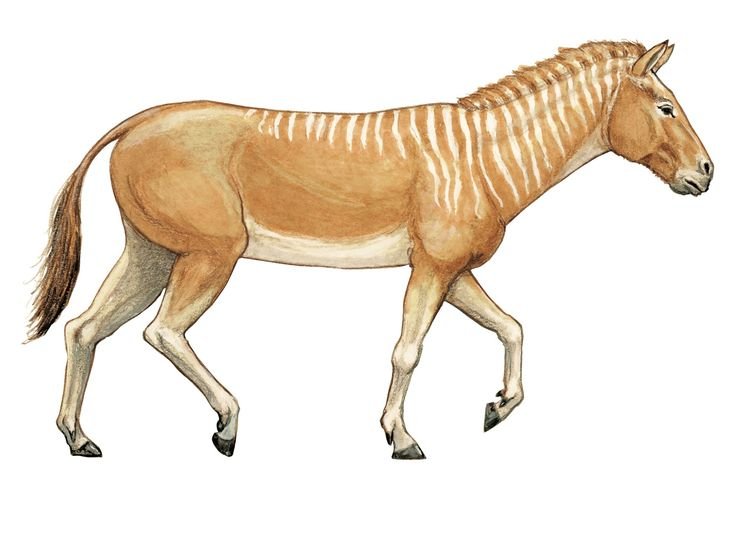
Merychippus
Merychippus insignis
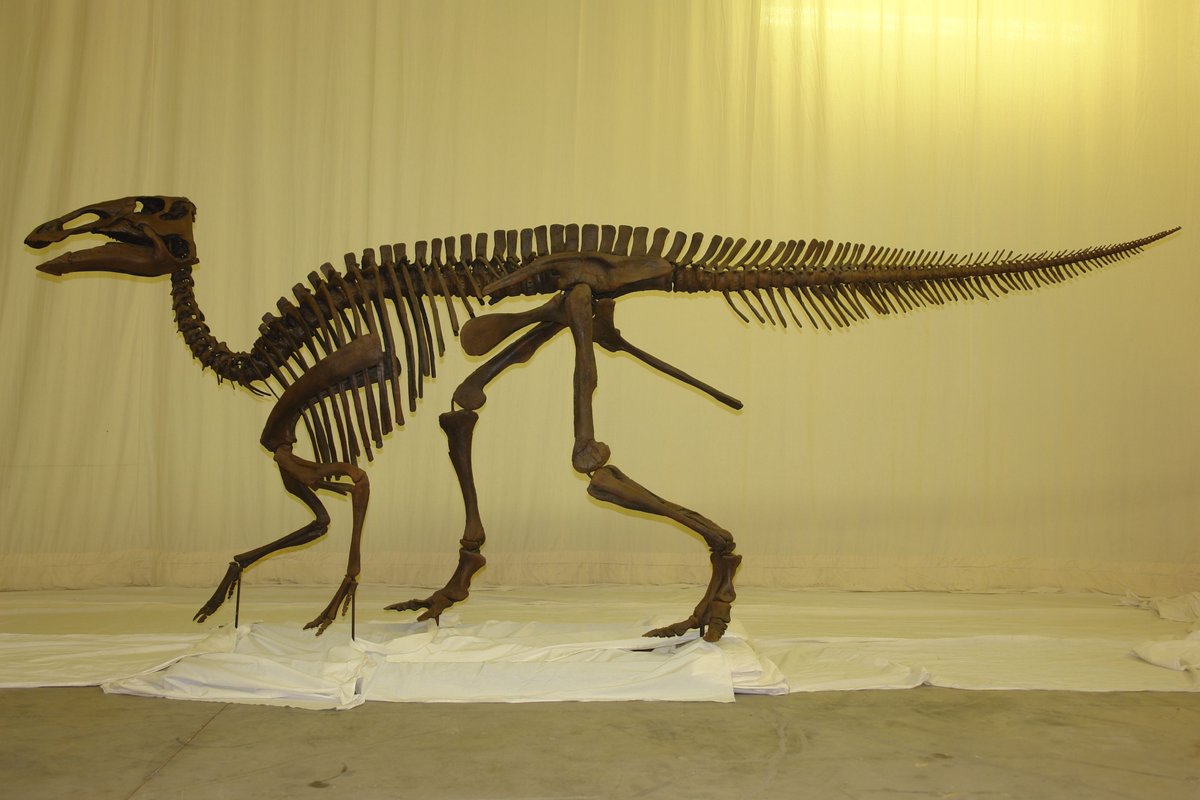
Image: Image sourced via web search (Fair use / Educational)
About Merychippus
Merychippus represents a pivotal genus in the evolutionary history of horses, marking a significant transition from small, browsing forest-dwellers to larger, grazing plains animals. Flourishing during the middle Miocene Epoch, approximately 17 to 11 million years ago, this mammal was widespread across the grasslands of North America. Its name, meaning 'ruminant horse,' is a slight misnomer based on early interpretations, but it aptly captures the profound dietary and anatomical shifts occurring within the equid lineage during this period, making it a cornerstone for understanding the rise of modern Equus.
Merychippus was a medium-sized equid, standing approximately 89-100 centimeters (about 35-39 inches) at the shoulder, comparable in height to a modern pony or a large dog like a Great Dane. Its body length was around 1.8 meters (6 feet), and weight estimates range from 70 to 200 kilograms (150 to 440 pounds), depending on the species and individual. The most striking anatomical feature of Merychippus was its feet. While it still possessed three toes on each foot, the central toe was significantly larger and bore the majority of the animal's weight, ending in a true hoof. The two side toes were much smaller, vestigial, and typically did not touch the ground except when running on soft terrain. This tridactyl but functionally monodactyl arrangement was a crucial intermediate step towards the single-toed condition of modern horses. Its skeleton showed other advancements for a cursorial lifestyle, including longer, more slender limb bones and a more rigid spinal column, which reduced flexibility but increased stability for efficient, high-speed running. The skull of Merychippus was distinctly more horse-like than its predecessors, with a deeper jaw, a longer face (diastema) between the incisors and cheek teeth, and eyes set further back, providing a wider field of view to spot predators on the open plains.
The paleobiology of Merychippus reflects its adaptation to a changing environment. Its dentition provides the most compelling evidence for a major dietary shift. Unlike earlier equids with low-crowned (brachydont) teeth suited for soft leaves, Merychippus developed high-crowned (hypsodont) teeth with complex ridges of enamel and a covering of cementum. This dental innovation was a direct adaptation to a diet of abrasive grasses, which were becoming widespread during the Miocene. The tough silica in grasses rapidly wears down teeth, and the hypsodont condition provided a much longer-lasting chewing surface. This shift to grazing fundamentally altered equid evolution. Locomotion was also transformed; the development of a spring-like ligament system in the legs, combined with the functionally single-toed foot, allowed for more efficient, energy-saving movement across open terrain. This cursorial adaptation was essential for both migrating to find fresh pasture and for outrunning predators. Fossil evidence, particularly bonebeds containing multiple individuals, suggests Merychippus was a social, herding animal, a behavior that would have offered protection against predation and facilitated group migration, much like modern wild horses.
Merychippus lived during the Miocene Climatic Optimum, a period of global warmth that gave way to cooler, drier conditions. This climatic shift spurred the expansion of vast grasslands and savannas across North America, replacing the previously dominant forests and woodlands. This new biome, the prairie, was the stage upon which Merychippus evolved and thrived. Its ecosystem was rich and diverse, populated by a megafauna that included early proboscideans like Gomphotherium, various species of camels (e.g., Aepycamelus), rhinos (e.g., Teleoceras), and the peculiar chalicotheres (e.g., Moropus). As a primary consumer, Merychippus occupied a crucial position in the food web, converting plant matter into a protein source for a host of formidable predators. Its main threats would have come from large, bone-crushing 'dog-bears' like Amphicyon, saber-toothed cats such as Machairodus, and nimravids like Barbourofelis. The evolutionary pressures exerted by these predators undoubtedly drove the selection for increased speed, stamina, and herding behavior in Merychippus, shaping it into a highly successful plains herbivore.
The discovery and study of Merychippus are closely tied to the great paleontological explorations of the American West in the 19th century. The genus was first named and described by the renowned paleontologist Joseph Leidy in 1856, based on fossil teeth and bone fragments recovered from the Miocene deposits of Nebraska. Leidy's initial work laid the foundation for understanding this transitional horse. However, it was the subsequent extensive fieldwork by paleontologists like Othniel Charles Marsh and Edward Drinker Cope during the 'Bone Wars' that unearthed a wealth of Merychippus fossils, allowing for a much more complete picture of its anatomy and diversity. One of the most significant sites for Merychippus fossils is the Agate Fossil Beds National Monument in Nebraska, where mass mortality assemblages, likely the result of drought, have preserved hundreds of skeletons. These bonebeds, particularly those in the Harrison and Sheep Creek Formations, have provided invaluable data on population structure, age distribution, and social behavior. While no single Merychippus specimen has achieved the popular fame of a 'Sue' or 'Lucy,' the sheer volume of well-preserved material has made it one of the best-understood fossil mammals.
Merychippus holds a paramount position in the evolutionary narrative of the horse family, Equidae. It is widely considered the ancestor of at least 19 subsequent equid genera that radiated during the late Miocene, a period often called the 'Merychippine radiation.' This explosive diversification led to the three major lineages of modern equids: the hipparionines (a successful but ultimately extinct side-branch), the protohippines, and the true equines, which ultimately led to the modern genus Equus (horses, donkeys, and zebras). Merychippus perfectly illustrates the concept of mosaic evolution, showcasing a mix of ancestral and derived traits. It retained the three-toed feet of its ancestors like Miohippus but possessed the advanced hypsodont teeth and longer limbs characteristic of later grazing horses. This combination of features makes it a classic example of a transitional fossil, beautifully documenting a major ecological and adaptive shift. The evolution from a small, browsing, forest-dwelling animal to the larger, grazing, plains-running Merychippus is one of the most complete and compelling evolutionary sequences in the entire fossil record, frequently cited in textbooks as a prime example of macroevolutionary change in response to environmental pressures.
Despite its well-established role in equid evolution, Merychippus is not without its scientific debates, primarily concerning its taxonomy. The genus has historically been treated as a 'wastebasket taxon,' a category into which numerous species of three-toed, hypsodont horses from the Miocene were placed. Over the years, paleontologists have recognized that Merychippus, as traditionally defined, is paraphyletic, meaning it does not include all descendants of its common ancestor. Modern cladistic analyses have sought to resolve this by re-evaluating the many species assigned to the genus. Researchers like Bruce MacFadden have worked to untangle these relationships, resulting in the reclassification of many former Merychippus species into new genera such as Acritohippus, Cormohipparion, and Protohippus. Today, the genus Merychippus is restricted to a more specific group of species, with Merychippus insignis often considered the type species. This ongoing taxonomic revision highlights the dynamic nature of paleontology, where new analytical methods continually refine our understanding of evolutionary relationships, even for well-known and extensively studied fossils.
The fossil record of Merychippus is exceptionally rich and geographically concentrated in North America. Fossils are particularly abundant in the Great Plains region of the United States, with major finds in Nebraska, South Dakota, Colorado, Texas, and California. The Agate Fossil Beds in Nebraska are world-famous for their dense concentrations of Merychippus skeletons, offering a unique snapshot of Miocene life. Other important localities include the Barstow Formation in California and various sites in the Texas Panhandle. The abundance of fossils is partly due to the animal's success and large population sizes, and partly to the depositional environments of the Miocene, where river systems and volcanic ashfalls frequently buried and preserved animal remains. Complete or nearly complete skeletons are known, providing paleontologists with detailed anatomical information. The quality of preservation is often good to excellent, allowing for detailed studies of dental microwear to confirm diet and limb bone histology to analyze growth rates. This robust fossil record makes Merychippus a model organism for studying mammalian evolution.
While not a household name like Tyrannosaurus or Triceratops, Merychippus holds a significant place in science education and museum exhibits worldwide. It is a star player in any display illustrating the evolution of the horse, a classic and easily understood example of evolutionary change over time. Its skeleton, with its distinctive three-toed feet, serves as a tangible link between the small, dog-sized early horses and the large, single-hoofed animals of today. Major natural history museums, including the American Museum of Natural History in New York and the Field Museum in Chicago, feature Merychippus in their iconic horse evolution displays. Through these exhibits and its prominent role in biology and paleontology textbooks, Merychippus continues to be a powerful tool for communicating the principles of natural selection and adaptation to the public.
Classification
Time Period
Discovery
Location
North America (specifically Nebraska, USA)
Formation
Harrison Formation, Sheep Creek Formation, Olcott Formation
Frequently Asked Questions
What is Merychippus?
Merychippus represents a pivotal genus in the evolutionary history of horses, marking a significant transition from small, browsing forest-dwellers to larger, grazing plains animals. Flourishing during the middle Miocene Epoch, approximately 17 to 11 million years ago, this mammal was widespread acr...
When did Merychippus live?
Merychippus lived during the neogene period of the cenozoic era approximately 17-11 million years ago.
Where was Merychippus discovered?
Fossils of Merychippus were discovered in North America (specifically Nebraska, USA) in the Harrison Formation, Sheep Creek Formation, Olcott Formation.
What did Merychippus eat?
Merychippus was a herbivore. It lived in terrestrial habitats.
What type of fossil is Merychippus?
Merychippus is preserved as a body fossil. The preservation quality is good.
Related Specimens
From the cenozoic era · body fossils

/cc86f4a1bc00.jpg)