Lingula
Lingula anatina
Image: Image sourced via web search (Fair use / Educational)
About Lingula
Lingula is an inarticulate brachiopod, a type of shelled marine invertebrate, renowned in paleontology as one of the most enduring 'living fossils' on Earth. First appearing in the fossil record during the Early Ordovician period approximately 485 million years ago, its genus has persisted with remarkably little morphological change to the present day. This extraordinary longevity makes Lingula a crucial subject for studying evolutionary stasis, paleoecology, and the resilience of life through multiple mass extinction events.
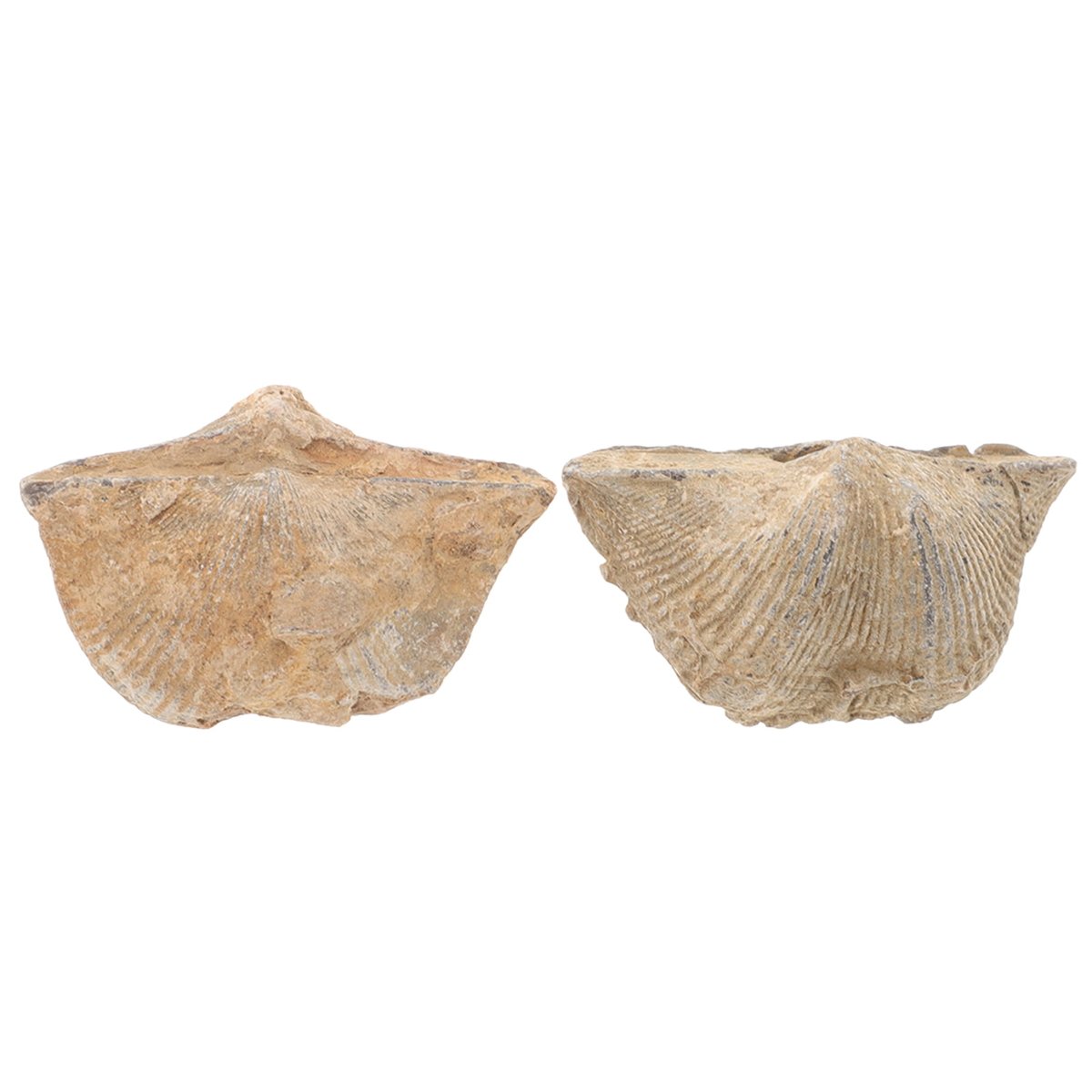
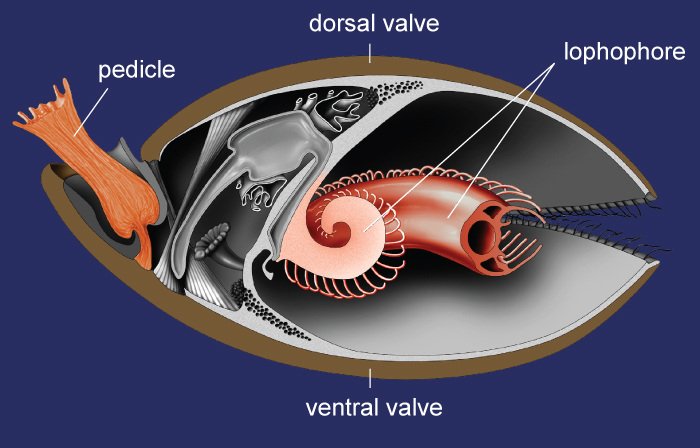
The physical form of Lingula is deceptively simple, yet highly adapted for its specific ecological niche. The organism consists of two unhinged, oblong shells, or valves, composed of calcium phosphate reinforced with chitin, a composition distinct from the calcium carbonate shells of most other brachiopods and mollusks. These valves, which are typically tan, greenish, or brownish in color, are bilaterally symmetrical and range in length from 2 to 8 centimeters. Their shape is often compared to a small duck's bill or a fingernail, giving rise to the common name 'duck-bill brachiopod'. The two valves are held together solely by a complex system of muscles, which allows for more flexible movement than the tooth-and-socket hinge of articulate brachiopods. Protruding from the posterior end of the shell is a long, fleshy, muscular stalk called a pedicle. This pedicle can be several times the length of the shell and is used to anchor the animal within its burrow in soft, sandy, or muddy substrates. Internally, the most prominent feature is the lophophore, a specialized feeding organ consisting of a crown of ciliated tentacles used to generate water currents and filter out plankton and organic detritus from the surrounding water. Unlike its ancient relatives, modern Lingula anatina possesses a complex circulatory system with a contractile heart, red blood containing the respiratory pigment hemerythrin, and well-developed digestive and nervous systems.
Lingula is a classic example of a sessile, infaunal filter-feeder. It lives in vertical burrows excavated in intertidal and subtidal soft sediments, a lifestyle that has remained consistent for nearly half a billion years. Using its powerful pedicle, Lingula can rapidly retract deep into its burrow when threatened by predators or exposed by a receding tide. The feeding process is passive yet efficient. The animal positions itself near the top of its burrow, with the anterior edges of its valves slightly agape. By rhythmically beating the cilia on its lophophore, it creates a current that draws water into the shell cavity. Food particles are trapped in mucus on the tentacles and then transported to the mouth located at the base of the lophophore. This feeding strategy allows it to thrive in nutrient-rich, often low-oxygen, estuarine environments. Its metabolism is relatively low, consistent with its sedentary lifestyle. Growth is slow, with individuals taking several years to reach maturity. Reproduction is sexual, with external fertilization; individuals release gametes into the water column, and the resulting larvae are free-swimming for a few weeks before settling on a suitable substrate to begin their benthic existence. This life history strategy has proven incredibly successful, enabling the genus to survive and prosper through geologic time.
The ecological context of early Lingula during the Ordovician period was a world vastly different from today's. The continents were arranged primarily in the Southern Hemisphere, dominated by the supercontinent Gondwana. Sea levels were exceptionally high, creating vast, shallow epicontinental seas that provided ideal habitats for marine life. The climate was generally warm and greenhouse-like. In these seas, Lingula shared its environment with a burgeoning diversity of life, including the first jawless fish (agnathans), trilobites, graptolites, nautiloids, and vast reef systems built by stromatoporoids and early corals. As a primary consumer, Lingula occupied a foundational position in the food web, feeding on phytoplankton and organic debris. It, in turn, was likely prey for durophagous (shell-crushing) predators such as certain trilobites, eurypterids (sea scorpions), and early cephalopods. Its ability to quickly retreat into its burrow was its primary defense mechanism. The preference of Lingula for nearshore, often brackish and low-oxygen environments, may have been a key factor in its survival, as these habitats often acted as refugia during major extinction events that devastated the more complex ecosystems of the open ocean and reefs.
The discovery and naming history of Lingula is intertwined with the early development of natural history and paleontology. The living animal was known to science before its fossil nature was fully appreciated. The species Lingula anatina was first formally described by the French naturalist Jean-Baptiste Lamarck in 1801, based on modern specimens. The genus name, Lingula, was coined even earlier by Jean Guillaume Bruguière in 1797, derived from the Latin 'lingua' for 'tongue', referencing the shell's shape. As the science of geology progressed in the 19th century, naturalists like James Sowerby in Britain began recognizing that fossil shells found in ancient Paleozoic rocks were virtually identical to these modern 'tongue shells'. This realization was profound, providing one of the earliest and most compelling examples of a 'living fossil'—a term later popularized by Charles Darwin. Because the genus is so widespread and its form so conserved, there isn't a single 'holotype' fossil specimen of monumental fame like a 'Sue' or 'Lucy'; rather, its significance lies in the sheer abundance and global distribution of its fossils throughout the Phanerozoic rock record, from the Ordovician of Wales to the Cretaceous of Japan and the Cenozoic of Australia.
The evolutionary significance of Lingula cannot be overstated. It represents an extraordinary case of morphological stasis, a phenomenon where a lineage shows very little physical change over vast stretches of geological time. While molecular studies of modern Lingula anatina reveal significant genetic divergence from its Paleozoic ancestors, its external morphology and ecological strategy have remained remarkably constant. This makes Lingula a key case study in debates about the tempo and mode of evolution. It challenges the idea that constant, gradual change is the universal rule, suggesting that once a species perfects a highly successful and resilient body plan and life strategy for a stable niche, selective pressures may act to conserve that form rather than change it. As a member of the Phylum Brachiopoda, Lingula belongs to the Lophotrochozoa, a major superphylum of protostome animals. Its ancient lineage provides a vital window into the early evolution of this group and the establishment of benthic marine communities following the Cambrian Explosion. Its phosphatic shell composition is also considered a primitive trait among brachiopods, offering clues about the biomineralization processes of early animals.
Despite its apparent simplicity and stability, Lingula is not without scientific debate. The primary controversy revolves around the concept of 'stasis' itself. Some paleontologists argue that the lack of morphological change is real and reflects a perfectly adapted 'generalist' strategy that has allowed it to weather environmental crises. Others contend that the perceived stasis is an illusion, a taxonomic artifact of lumping genetically distinct but morphologically similar species under a single genus name over 500 million years. This debate is fueled by molecular clock data from modern populations, which suggests that the current species, Lingula anatina, may have diverged from other lingulids more recently than the fossil record implies. Essentially, the question is whether Lingula is one continuous, slowly evolving lineage or a series of cryptic species that have repeatedly and convergently evolved the same optimal body plan for their specific infaunal niche. Resolving this requires a careful synthesis of paleontological, genetic, and developmental data. Furthermore, the precise environmental tolerances of ancient Lingula are debated, with some studies suggesting they were restricted to nearshore, low-salinity waters, while other fossil finds place them in more open marine settings.
The fossil record of Lingula is exceptionally robust and geographically widespread, a testament to its long-term success. Fossils are found on every continent, in marine sedimentary rocks dating from the Ordovician period right through the Mesozoic and Cenozoic eras to the present. The preservation quality is often good to excellent. Because their shells are made of durable calcium phosphate, they are more resistant to dissolution than the calcium carbonate shells of many other marine organisms, allowing them to be preserved in a wider range of geochemical conditions. Often, they are found in dense assemblages, sometimes forming entire 'Lingula beds' that represent ancient nearshore or tidal flat environments. These fossil beds are invaluable paleoenvironmental indicators. Famous fossil sites yielding Lingula include the Ordovician strata of Wales and the Baltic region, the Devonian shales of North America, and the Permian deposits of Australia. The preservation is typically of the disarticulated valves, but occasionally articulated specimens are found in their life position within fossilized burrows, providing direct evidence of their infaunal lifestyle.
In terms of cultural impact, Lingula is more of a scientific icon than a public one. While it lacks the dramatic appeal of a Tyrannosaurus or a Triceratops, it holds a place of reverence among geologists and evolutionary biologists as the ultimate survivor. It is a staple organism in university paleontology and biology textbooks, used to illustrate concepts like living fossils, evolutionary stasis, and the diversity of brachiopods. Major natural history museums, such as the Smithsonian National Museum of Natural History in Washington, D.C., and the Natural History Museum in London, feature Lingula fossils in their Paleozoic life displays. They serve a crucial educational purpose, demonstrating that evolution is not always about dramatic change and that some of the most successful life forms are those that found a winning strategy early on and stuck with it through cataclysmic changes that wiped out 99% of all other species.
Classification
Time Period
Discovery
Location
Global, with early descriptions from specimens found in the Indo-Pacific region.
Formation
Found in various shallow marine sandstone and mudstone formations globally.
Frequently Asked Questions
What is Lingula?
Lingula is an inarticulate brachiopod, a type of shelled marine invertebrate, renowned in paleontology as one of the most enduring 'living fossils' on Earth. First appearing in the fossil record during the Early Ordovician period approximately 485 million years ago, its genus has persisted with rema...
When did Lingula live?
Lingula lived during the ordovician period of the paleozoic era approximately 485-0 million years ago.
Where was Lingula discovered?
Fossils of Lingula were discovered in Global, with early descriptions from specimens found in the Indo-Pacific region. in the Found in various shallow marine sandstone and mudstone formations globally..
What did Lingula eat?
Lingula was a filter-feeder. It lived in marine, infaunal (burrowing) habitats.
What type of fossil is Lingula?
Lingula is preserved as a body fossil. The preservation quality is good.
Related Specimens
From the paleozoic era · body fossils