Lystrosaurus
Lystrosaurus murrayi
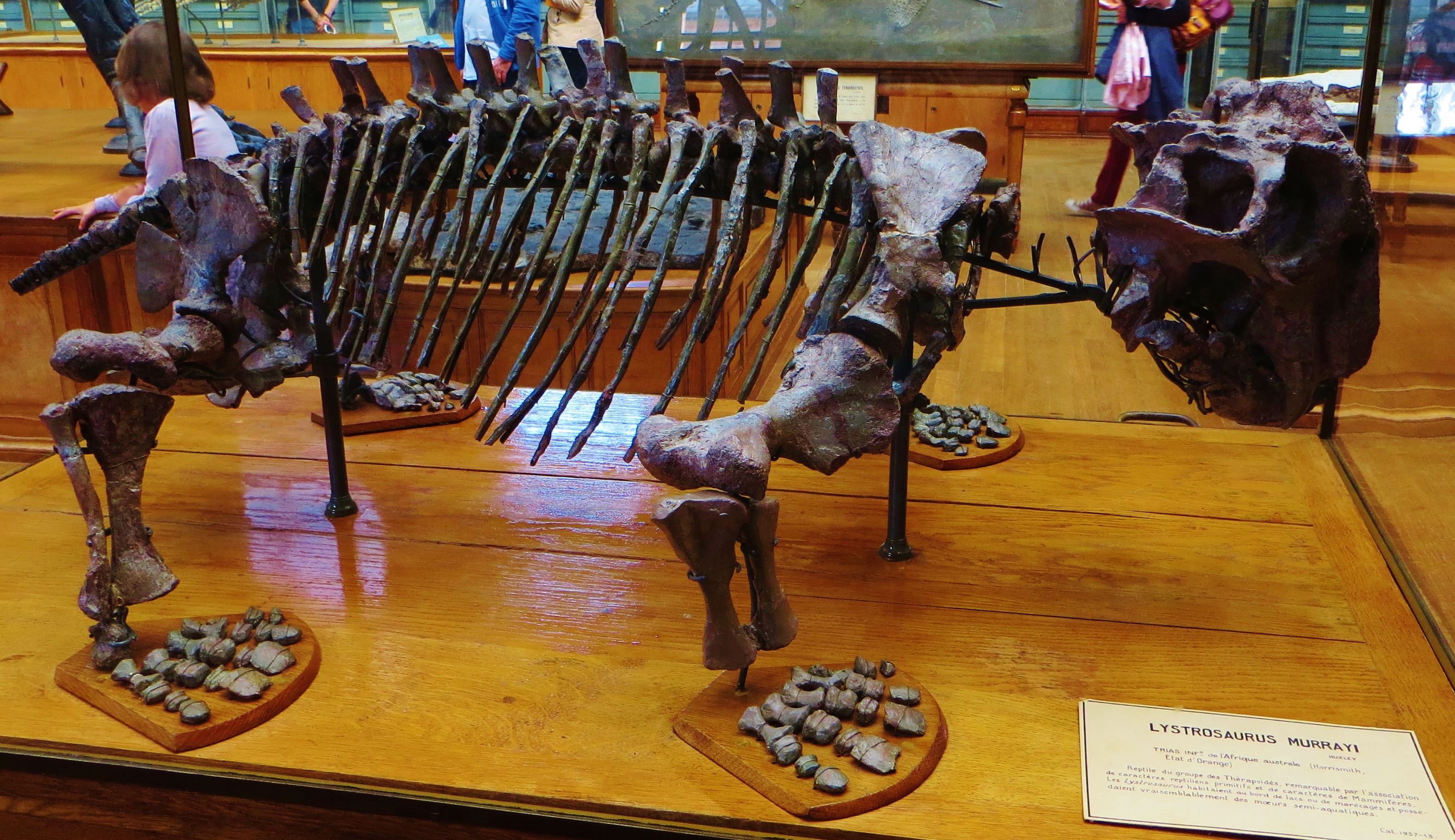
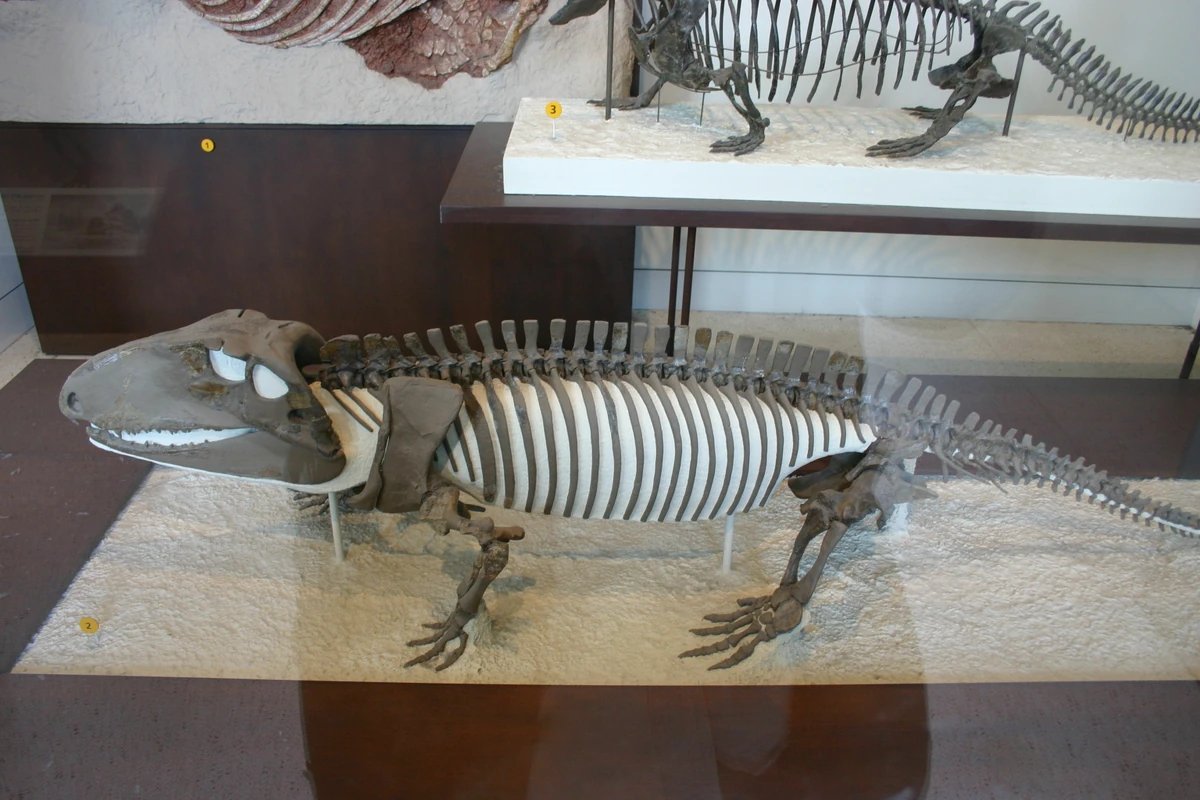
Image: File:Lystrosaurus murrayi 7.JPG - Wikimedia Commons (CC BY-SA)
About Lystrosaurus
Lystrosaurus murrayi is one of the most remarkable and scientifically significant vertebrates in the history of life on Earth, representing a genus of dicynodont therapsids that lived bridging the catastrophic boundary between the Late Permian and Early Triassic periods, approximately 255 to 250 million years ago. Often referred to as a shovel lizard due to the unique morphology of its skull, this resilient herbivore achieved unprecedented global dominance in the immediate aftermath of the Permian-Triassic extinction event, the most severe biodiversity crisis in the fossil record. Originating in the terrestrial ecosystems of the Karoo Basin in present-day South Africa, specifically within the geological strata of the Balfour and Katberg formations, Lystrosaurus murrayi serves as the ultimate disaster taxon, providing paleontologists with critical insights into survival, adaptation, and the recovery of complex ecosystems following near-total biospheric collapse.
In terms of its physical description, Lystrosaurus murrayi was a robust, heavily built animal that is frequently compared to a modern pig in both size and general proportions, though its anatomy was entirely distinct from any living mammal or reptile. An adult Lystrosaurus murrayi typically reached lengths of approximately ninety centimeters, with an estimated body mass ranging from ninety to one hundred kilograms, making it a medium-sized terrestrial vertebrate for its time. The most distinctive feature of Lystrosaurus was its highly specialized, short, and unusually deep skull. The snout was abruptly truncated, giving the animal a flat-faced appearance, and the front of the jaws lacked teeth entirely. Instead, the upper and lower jaws were encased in a sharp, keratinous beak, similar to that of a modern tortoise, which was highly adapted for shearing tough, fibrous vegetation. Protruding downward from the upper jaw were two prominent, continuously growing canine tusks. These tusks were deeply rooted and robust, showing wear patterns that strongly suggest they were used for digging and rooting in the soil rather than for combat or display. The postcranial skeleton of Lystrosaurus murrayi was equally specialized. It possessed a massive, barrel-shaped rib cage that housed the large, complex digestive tract necessary for processing low-quality plant matter. Its forelimbs were exceptionally powerful, heavily muscled, and significantly more robust than its hindlimbs. The bone structure of the front legs, including broad humeri and specialized joints, indicates a sprawling, semi-erect posture that provided immense leverage. This anatomical configuration, combined with broad, sturdy hands equipped with strong claws, made Lystrosaurus a highly capable digger, perfectly engineered for moving large amounts of earth.
The paleobiology of Lystrosaurus murrayi reveals a highly adaptable and specialized organism whose behaviors were perfectly suited to the deteriorating environmental conditions of the Late Permian and Early Triassic. As an obligate herbivore, its diet consisted primarily of tough, drought-resistant plants, including ferns, seed ferns like Glossopteris, and horsetails. The combination of its shearing beak and powerful jaw musculature allowed it to process this coarse vegetation efficiently. Furthermore, its prominent tusks and powerful forelimbs indicate that it frequently engaged in foraging for subterranean food sources, such as roots, rhizomes, and tubers, which would have been vital nutritional resources during prolonged periods of drought. Locomotion in Lystrosaurus was characterized by a slow, deliberate, sprawling gait, meaning it was not built for speed but rather for power and endurance. Perhaps the most crucial aspect of its paleobiology was its burrowing behavior. Fossil evidence, including the discovery of Lystrosaurus skeletons preserved within the casts of ancient burrows, confirms that these animals were active diggers. Constructing and retreating into burrows would have provided Lystrosaurus with a stable microclimate, shielding it from the extreme temperature fluctuations, harsh storms, and atmospheric changes that characterized the Permian-Triassic boundary. Behavioral inferences drawn from the immense bone beds found in the Karoo Basin suggest that Lystrosaurus was a highly social animal, likely congregating in large herds. This gregarious behavior may have offered protection against predators and facilitated the location of scarce water and food resources. Recent histological studies of Lystrosaurus tusks have also revealed fascinating growth patterns. Cross-sections of the tusks show distinct growth rings, similar to tree rings, which indicate periods of rapid growth interspersed with periods of severe environmental stress. These stress lines are particularly pronounced in specimens from the Early Triassic, highlighting the incredibly harsh conditions these animals endured and their physiological resilience.
The ecological context in which Lystrosaurus murrayi existed was one of profound and violent transition. During the Late Permian, the Earths landmasses were fused into the supercontinent of Pangea, creating a vast, contiguous terrestrial environment. The climate of the Karoo Basin during this time was generally semi-arid with distinct seasonal rainfall, supporting a diverse ecosystem of therapsids, pareiasaurs, and early archosauromorphs. In this Late Permian ecosystem, Lystrosaurus was a relatively minor component of the fauna, existing alongside massive predators like the gorgonopsians and larger herbivorous dicynodonts. However, the eruption of the Siberian Traps triggered the Permian-Triassic extinction event, releasing massive quantities of greenhouse gases, causing extreme global warming, acid rain, and the collapse of global food webs. Approximately ninety percent of all species perished. In the devastated, post-apocalyptic landscape of the Early Triassic, the ecological context shifted dramatically. The climate became hyper-arid, hotter, and highly unpredictable. The complex forests of the Permian were replaced by sparse, opportunistic vegetation. It was in this desolate environment that Lystrosaurus murrayi thrived. With its predators and competitors eradicated, Lystrosaurus experienced an explosive population boom, an ecological phenomenon known as a disaster taxon proliferation. In the Early Triassic Katberg Formation, Lystrosaurus fossils account for an astonishing ninety-five percent of all terrestrial vertebrate remains. It occupied the foundational position in the simplified Early Triassic food web, serving as the primary consumer of the surviving vegetation. Its only significant predators during this time were early archosauriforms, such as the crocodile-like Proterosuchus, which likely ambushed Lystrosaurus near scarce water sources.
The discovery history of Lystrosaurus is deeply intertwined with the foundational years of vertebrate paleontology and the exploration of the South African Karoo Basin. The first fossils of what would eventually be recognized as Lystrosaurus were discovered in the mid-nineteenth century by amateur fossil hunters and colonial administrators in the Cape Colony. The specific epithet murrayi was established when the eminent British anatomist Thomas Henry Huxley described a skull sent to London, initially naming it Dicynodon murrayi in 1859. The genus name Lystrosaurus, meaning shovel lizard, was later coined by the prolific American paleontologist Edward Drinker Cope in 1870, based on the unique, shovel-like morphology of the skull. Throughout the late nineteenth and early twentieth centuries, the renowned South African paleontologist Robert Broom dedicated decades to excavating and describing the immense wealth of Lystrosaurus fossils found in the Karoo Basin. Broom was instrumental in recognizing the sheer abundance of these animals and their stratigraphic importance. Key specimens collected during this era, many of which are still housed in the Iziko South African Museum in Cape Town, formed the basis for our understanding of dicynodont anatomy. The discovery of Lystrosaurus was not limited to South Africa; subsequent expeditions in the twentieth century unearthed identical fossils in the Panchet Formation of India and the Jiucaiyuan Formation of China. Perhaps the most dramatic discovery occurred in 1969, when an expedition led by American paleontologist Edwin Colbert discovered Lystrosaurus fossils at Coalsack Bluff in the Transantarctic Mountains of Antarctica. This monumental find provided undeniable, concrete biological evidence for the theory of continental drift, proving that these disparate landmasses were once joined.
The evolutionary significance of Lystrosaurus murrayi cannot be overstated, as it occupies a critical position in the evolutionary tree of synapsids, the lineage that eventually gave rise to modern mammals. As a dicynodont, Lystrosaurus belonged to a highly successful group of non-mammalian therapsids that dominated terrestrial herbivory for millions of years. While Lystrosaurus itself is not a direct ancestor to modern mammals, it is a close evolutionary cousin, representing a highly specialized side branch of the therapsid family tree. Its anatomy exhibits a fascinating mix of primitive and derived features. The presence of a secondary palate, a feature it shares with mammals, allowed Lystrosaurus to breathe continuously while chewing or holding food in its mouth, a significant evolutionary advancement for processing vegetation. Furthermore, the specialized articulation of its jaw, which allowed for a sliding, fore-and-aft motion to shear plant matter, demonstrates a high degree of evolutionary innovation in cranial mechanics. The survival of the Lystrosaurus lineage across the Permian-Triassic boundary is a testament to the evolutionary advantages of generalized adaptability and behavioral flexibility, such as burrowing. By surviving the Great Dying, Lystrosaurus and its surviving therapsid relatives carried the synapsid lineage into the Mesozoic era. Although the dicynodonts eventually went extinct in the Late Triassic, outcompeted by the rising dinosaurs, the evolutionary legacy of the therapsids continued through the cynodonts, which ultimately evolved into the first true mammals. Therefore, studying Lystrosaurus provides crucial data on the anatomical and physiological traits that allowed the broader mammalian stem lineage to endure the most catastrophic event in Earths history.
Despite its abundance in the fossil record, Lystrosaurus has been the subject of numerous scientific debates and controversies over the decades. One of the most enduring debates has centered on its taxonomy. Because Lystrosaurus fossils are so common and exhibit a high degree of morphological variation, early paleontologists named over two dozen distinct species within the genus. However, modern researchers utilizing advanced morphometric analyses and a better understanding of taphonomic distortion the warping of bones during fossilization have drastically revised this taxonomy. Today, the scientific consensus recognizes only a handful of valid species, with Lystrosaurus murrayi, Lystrosaurus declivis, and Lystrosaurus maccaigi being the most prominent, attributing much of the previously perceived diversity to differences in age, sex, and post-mortem crushing. Another major historical controversy involved the lifestyle of Lystrosaurus. For much of the twentieth century, based on the high placement of its eyes and nostrils on its skull, scientists believed Lystrosaurus was a semi-aquatic animal, living much like a modern hippopotamus in swamps and rivers. It was only in the late twentieth and early twenty-first centuries that detailed biomechanical studies of its limbs and the discovery of fossilized burrows definitively shifted the consensus to a fully terrestrial, burrowing lifestyle. Recent debates have also focused on the exact physiological mechanisms that allowed it to survive the extinction event, with some researchers proposing that Lystrosaurus possessed a specialized respiratory system capable of functioning in the oxygen-poor, carbon dioxide-rich atmosphere of the Early Triassic.
The fossil record of Lystrosaurus is arguably one of the most robust and geographically extensive of any terrestrial vertebrate from the Paleozoic or Mesozoic eras. The sheer number of specimens numbers in the tens of thousands, with the Karoo Basin of South Africa remaining the most prolific source. In the sedimentary layers of the Early Triassic Katberg Formation, Lystrosaurus fossils are so densely packed that they define an entire biostratigraphic unit known as the Lystrosaurus Assemblage Zone. This zone serves as a globally recognized geological marker for the immediate aftermath of the Permian-Triassic extinction. The preservation quality of these fossils ranges from isolated, weathered bone fragments to perfectly articulated, complete skeletons preserved within their collapsed burrows. Beyond South Africa, the geographic distribution of Lystrosaurus is a testament to the interconnected nature of the Pangean supercontinent. Abundant and well-preserved specimens have been excavated from the Panchet Formation in India, the Fremouw Formation in Antarctica, the widespread terrestrial red beds of Russia, and the Xinjiang region of northwestern China. Famous fossil sites, such as the Bethulie district in South Africa and Coalsack Bluff in Antarctica, have yielded specimens that have fundamentally shaped our understanding of biostratigraphy and paleogeography. The global ubiquity of Lystrosaurus in Early Triassic rocks makes it an indispensable index fossil, allowing geologists to accurately date and correlate rock formations across different continents.
The cultural impact of Lystrosaurus, while perhaps not as pronounced as that of popular dinosaurs like Tyrannosaurus rex, is deeply significant within the realms of science education and natural history. Lystrosaurus skeletons are prominent centerpieces in major natural history museums worldwide, including the American Museum of Natural History in New York and the Iziko South African Museum, where they are used to educate the public about the realities of mass extinction and continental drift. In popular culture, Lystrosaurus has been featured in acclaimed paleontology documentaries, most notably the BBC series Walking with Monsters, which vividly brought its post-apocalyptic struggle for survival to life for millions of viewers. Ultimately, Lystrosaurus stands as a powerful educational symbol of biological resilience, illustrating how life can endure and adapt even in the face of near-total planetary devastation.
Classification
Time Period
Discovery
Location
Karoo Basin, South Africa
Formation
Balfour Formation, Katberg Formation
Frequently Asked Questions
What is Lystrosaurus?
Lystrosaurus murrayi is one of the most remarkable and scientifically significant vertebrates in the history of life on Earth, representing a genus of dicynodont therapsids that lived bridging the catastrophic boundary between the Late Permian and Early Triassic periods, approximately 255 to 250 mil...
When did Lystrosaurus live?
Lystrosaurus lived during the permian period of the paleozoic era approximately 255-250 million years ago.
Where was Lystrosaurus discovered?
Fossils of Lystrosaurus were discovered in Karoo Basin, South Africa in the Balfour Formation, Katberg Formation.
What did Lystrosaurus eat?
Lystrosaurus was a herbivore. It lived in terrestrial habitats.
What type of fossil is Lystrosaurus?
Lystrosaurus is preserved as a body fossil. The preservation quality is excellent.
Related Specimens
From the paleozoic era · body fossils

/e01cc4f7f656.jpg)