Ornithomimus
Ornithomimus edmontonicus
Image: Image sourced via web search (Fair use / Educational)
About Ornithomimus
Ornithomimus edmontonicus was a swift, bipedal dinosaur that roamed the floodplains of western North America during the Late Cretaceous period, approximately 77 to 66 million years ago. As a member of the Ornithomimidae family, its name, meaning 'bird mimic,' aptly describes its ostrich-like appearance and likely behavior, making it a key subject for understanding the diversity and ecology of non-avian dinosaurs just before their mass extinction. Its fossils provide crucial insights into the evolution of theropods, particularly the development of features convergent with modern flightless birds.
Resembling a modern ostrich in both size and general build, Ornithomimus edmontonicus was a lightly constructed dinosaur. It reached an adult length of approximately 3.5 to 3.8 meters (about 11.5 to 12.5 feet) from snout to tail tip and stood about 2 meters tall at the hip. Weight estimates for this gracile animal typically range from 100 to 170 kilograms (220 to 375 pounds), comparable to an adult male ostrich. Its most distinctive features included a small, toothless skull with a keratinous beak, or rhamphotheca, large orbits suggesting keen eyesight, and a long, flexible neck. The forelimbs were long and slender, ending in three-fingered hands with relatively straight, pointed claws. Its hindlimbs were exceptionally long and powerful, particularly the tibia and metatarsals, which were elongated to a degree indicative of a highly cursorial, or running, lifestyle. A long, stiff tail acted as a counterbalance while running at high speeds. While direct fossil evidence of feathers on Ornithomimus edmontonicus itself is lacking, closely related ornithomimids like Dromiceiomimus and Ornithomimus velox have been found with feather impressions, including pennaceous feathers on the arms forming wing-like structures. It is therefore widely accepted that Ornithomimus edmontonicus was also feathered, likely with a downy body covering for insulation and more complex feathers on its arms, which may have been used for display or brooding.
The paleobiology of Ornithomimus edmontonicus reveals a versatile and adaptable animal. Its toothless beak suggests a varied, omnivorous diet. While initially thought to be a carnivore preying on small lizards and mammals, the lack of serrated teeth and the presence of gastroliths (stomach stones) in some related species point towards a significant herbivorous component to its diet. It likely consumed a mix of plant matter, such as leaves, fruits, and seeds, supplemented with insects, eggs, and small vertebrates. Its long fingers and claws may have been used to hook branches or dig for food. Locomotion was a key aspect of its survival; the elongated hindlimbs and lightweight skeleton were adaptations for speed, with estimates suggesting it could reach or exceed speeds of 60 kilometers per hour (around 40 mph), making it one of the fastest dinosaurs of its time. This speed was crucial for evading large predators like Tyrannosaurus rex and Albertosaurus. Fossil evidence from bonebeds containing multiple individuals suggests that Ornithomimus may have been gregarious, living and moving in flocks. This social behavior would have offered protection through collective vigilance and may have been related to migratory patterns or breeding. Growth studies based on bone histology indicate a rapid growth rate, reaching near-adult size in a few years, a common strategy among dinosaurs.
Ornithomimus edmontonicus inhabited the lush, subtropical coastal and floodplain environments of Late Cretaceous Laramidia, the western landmass of North America. During the Campanian and Maastrichtian ages, this region was characterized by a warm, humid climate with distinct wet and dry seasons, supporting dense forests of conifers, ferns, and flowering plants, interspersed with rivers, swamps, and deltas. This was a vibrant and crowded ecosystem. Ornithomimus shared its habitat with a diverse array of other dinosaurs, placing it within a complex food web. It was a mid-sized omnivore, likely occupying a niche similar to modern ratites. It would have browsed on low-lying vegetation while also opportunistically feeding on smaller animals. Its primary predators were the large tyrannosaurids that dominated the apex predator role, including Albertosaurus, Gorgosaurus, and in its final million years, Tyrannosaurus rex. Ornithomimus's primary defense was its incredible speed and agility, allowing it to outrun these powerful carnivores. It co-existed with massive horned dinosaurs like Triceratops and Torosaurus, armored ankylosaurs such as Ankylosaurus and Edmontonia, and vast herds of hadrosaurs like Edmontosaurus, creating one of the most well-documented and diverse dinosaur faunas known to paleontology.
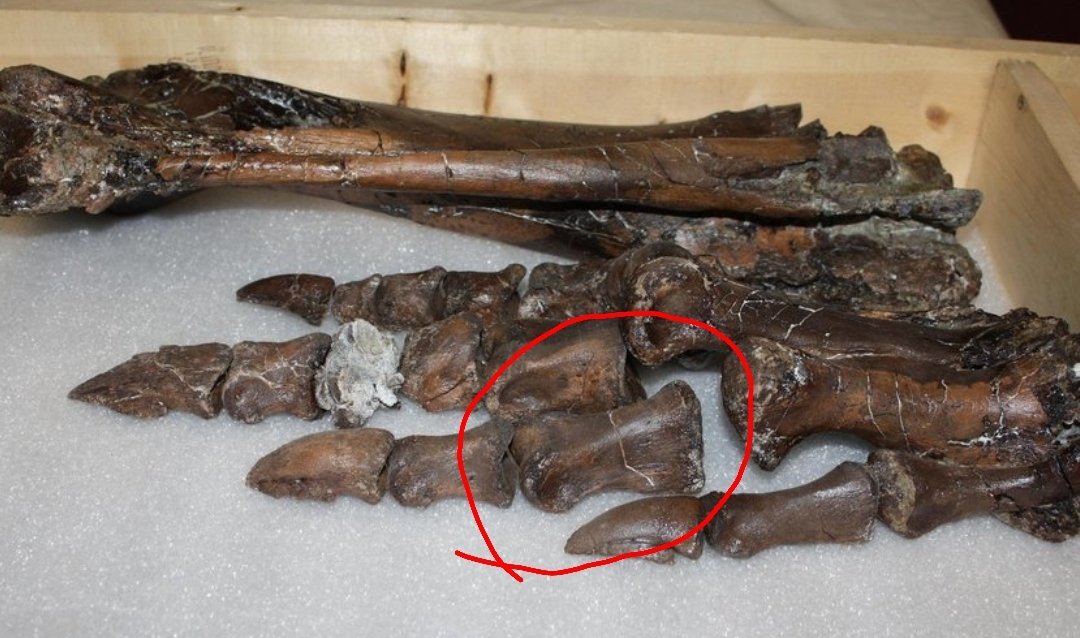
The discovery history of Ornithomimus is intertwined with the early 'dinosaur rush' in North America. The genus was first named by the prolific American paleontologist Othniel Charles Marsh in 1890 based on partial hand and foot bones from the Maastrichtian-age Denver Formation in Colorado. However, the species Ornithomimus edmontonicus has a more specific origin. It was named by Charles M. Sternberg in 1933, based on a nearly complete and beautifully preserved skeleton (specimen CMN 8632) discovered in the Horseshoe Canyon Formation near Edmonton, Alberta, Canada. This specimen, often referred to as the 'Edmonton Ornithomimus,' became the quintessential example of the genus and provided paleontologists with a detailed understanding of its anatomy. Sternberg's work distinguished it from the earlier, more fragmentary material. For many years, numerous ornithomimid species from across North America were lumped into the genus Ornithomimus, creating considerable taxonomic confusion. It was only through later, more detailed analyses in the late 20th and early 21st centuries that paleontologists began to untangle this complexity, restricting the genus and recognizing O. edmontonicus as the most well-supported and well-known species.
Ornithomimus holds significant evolutionary importance as a classic representative of the Ornithomimosauria, a clade of theropod dinosaurs that display remarkable convergent evolution with modern flightless birds like ostriches. This group demonstrates the diverse evolutionary pathways taken by theropods, moving away from the classic large-predator model. Ornithomimosaurs are part of the broader group Coelurosauria, which also includes tyrannosaurs, dromaeosaurs (raptors), and birds themselves. The anatomy of Ornithomimus, with its lightweight skeleton, long legs, and likely feathered body, highlights many of the traits that were being selected for in the lineage leading to avians, even though ornithomimosaurs represent a separate, non-avian branch. The discovery of feathers on its relatives solidified the understanding that complex feathers were widespread among coelurosaurs and were not exclusive to the direct ancestors of birds. The evolution of a toothless beak in this lineage is another key feature, showing a dietary shift away from pure carnivory that occurred independently in several dinosaur groups. Thus, Ornithomimus serves as a crucial data point for understanding the radiation of theropods and the mosaic evolution of bird-like characteristics.
Despite being a well-known dinosaur, Ornithomimus has been at the center of several scientific debates, primarily concerning its taxonomy. For decades, the genus became a 'wastebasket taxon,' with many poorly understood ornithomimid fossils from North America being assigned to it. More recent studies have worked to resolve this, reassigning some species to new genera like Struthiomimus and Dromiceiomimus, while synonymizing others. The exact number of valid Ornithomimus species is still debated, though O. edmontonicus is widely considered valid and is the best-represented. Another area of discussion revolves around its diet. While the omnivorous hypothesis is now dominant, the precise ratio of plant to animal matter remains uncertain. The function of the wing-like feathers on the arms of related species is also a topic of interest. While too small for flight, they may have been used for mating displays, threat posturing, or covering eggs during incubation, providing clues to complex behaviors in these non-avian dinosaurs.
The fossil record of Ornithomimus edmontonicus is quite robust, making it one of the better-understood dinosaurs of its kind. Fossils are primarily found in the Late Cretaceous rock formations of western North America, particularly in Alberta, Canada, and the western United States (Montana, Wyoming, South Dakota). The most significant localities include the Horseshoe Canyon Formation and the Dinosaur Park Formation in Alberta, as well as the Hell Creek Formation in the USA. Dozens of specimens are known, ranging from isolated bones to several nearly complete, articulated skeletons. The quality of preservation is often good, providing detailed anatomical information. The abundance of fossils, including some bonebeds with multiple individuals, has allowed for studies of its growth patterns (ontogeny) and potential social behavior. Famous museum collections, such as those at the Royal Tyrrell Museum of Palaeontology in Alberta and the Canadian Museum of Nature in Ottawa, hold many of the most important Ornithomimus specimens.
In popular culture, Ornithomimus has cemented its place as the 'ostrich dinosaur.' It is frequently featured in dinosaur books, documentaries, and museum exhibits as a prime example of speed and adaptation in the Mesozoic world. Its dramatic appearance, often depicted in full stride being pursued by a Tyrannosaurus rex, has made it a memorable figure. While not as famous as Triceratops or T. rex, it appeared memorably in the film Jurassic Park, where a flock of similar-looking Gallimimus (a close relative) is seen stampeding across a field. This scene, more than any other, has defined the public's image of ornithomimids as swift, flocking animals. Major museums worldwide, including the American Museum of Natural History and the Royal Tyrrell Museum, feature impressive skeletal mounts of Ornithomimus, educating the public about the incredible diversity of dinosaur forms and behaviors.
Classification
Time Period
Discovery
Location
Alberta, Canada
Formation
Horseshoe Canyon Formation, Dinosaur Park Formation, Hell Creek Formation
Frequently Asked Questions
What is Ornithomimus?
Ornithomimus edmontonicus was a swift, bipedal dinosaur that roamed the floodplains of western North America during the Late Cretaceous period, approximately 77 to 66 million years ago. As a member of the Ornithomimidae family, its name, meaning 'bird mimic,' aptly describes its ostrich-like appeara...
When did Ornithomimus live?
Ornithomimus lived during the cretaceous period of the mesozoic era approximately 77-66 million years ago.
Where was Ornithomimus discovered?
Fossils of Ornithomimus were discovered in Alberta, Canada in the Horseshoe Canyon Formation, Dinosaur Park Formation, Hell Creek Formation.
What did Ornithomimus eat?
Ornithomimus was a omnivore. It lived in terrestrial (floodplains, coastal plains, forests) habitats.
What type of fossil is Ornithomimus?
Ornithomimus is preserved as a body fossil. The preservation quality is good.
Related Specimens
From the mesozoic era · body fossils