Megacerops
Megacerops coloradensis
Image: Image sourced via web search (Fair use / Educational)
About Megacerops
Megacerops was a colossal herbivorous mammal that roamed the floodplains and woodlands of North America during the Late Eocene epoch, approximately 38 to 33 million years ago. As one of the largest and most recognizable members of the extinct family Brontotheriidae, its fossils provide a crucial window into the evolution of megafauna following the age of dinosaurs. Its most striking feature, a large, Y-shaped horn on its snout, has made it a subject of both scientific study and public fascination, emblematic of the strange and wonderful mammalian experiments of the Paleogene.
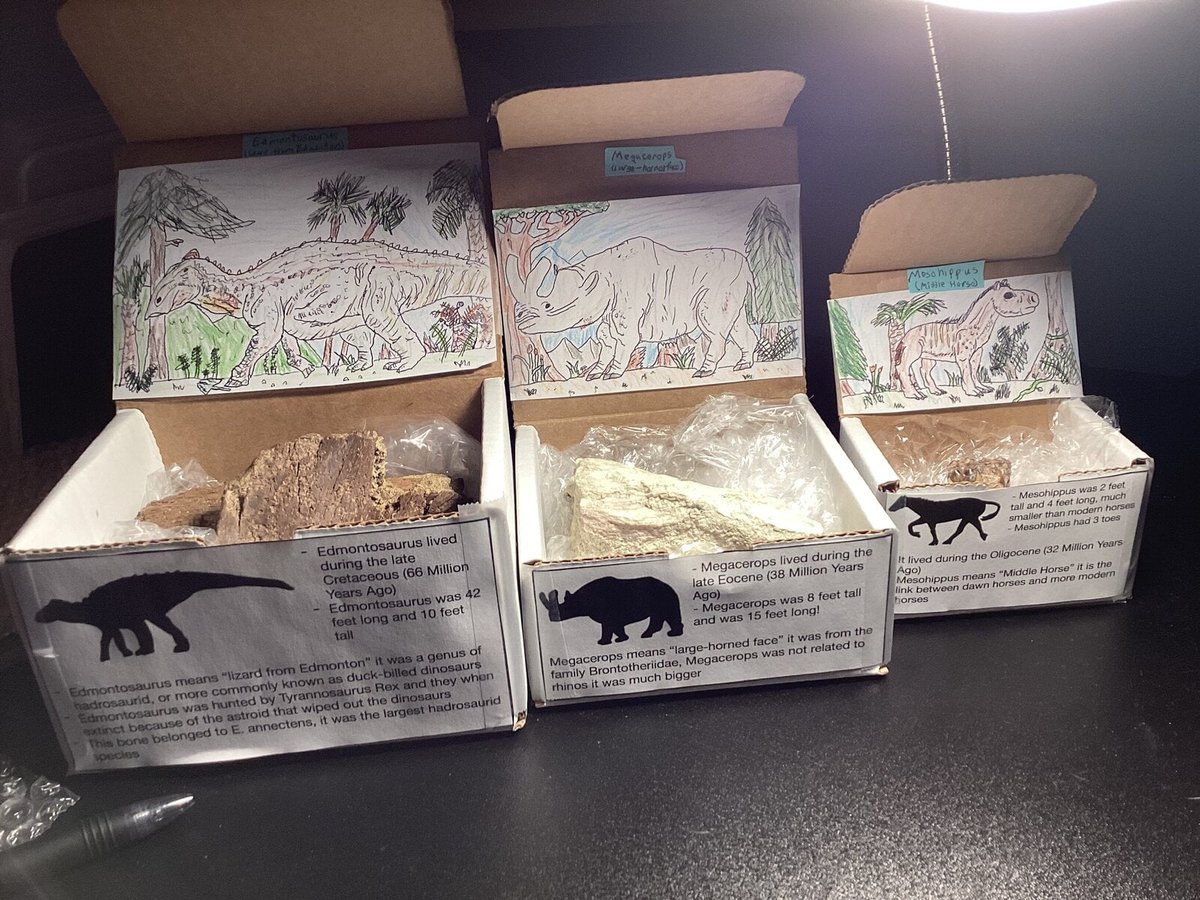
Megacerops was an imposing animal, comparable in size to a large modern rhinoceros or a small elephant. A mature adult stood approximately 2.5 meters (about 8.2 feet) tall at the shoulder and reached a body length of 4 to 5 meters (13 to 16 feet). Weight estimates vary, but most paleontologists place it in the range of 3 to 4 metric tons (3.3 to 4.4 short tons), making it one of the largest land mammals of its time. Its skeleton was robustly built to support this immense mass, with thick, pillar-like legs and broad, four-toed front feet and three-toed hind feet. The most distinctive feature was its skull, which bore a massive, blunt, Y-shaped bony protuberance over the nose. This was not a true horn made of keratin like those of cattle, but a solid bone structure covered in skin, similar to the ossicones of a giraffe. The horn was sexually dimorphic, being significantly larger and more robust in males than in females, suggesting a role in display or intraspecific combat. Its skull was long and low, and its vertebral column featured elongated neural spines over the shoulder region, indicating the attachment point for powerful neck and shoulder muscles needed to support the heavy head.
The paleobiology of Megacerops is primarily inferred from its skeletal anatomy and the rich fossil record. Its low-crowned (brachydont) teeth with simple, rounded cusps indicate a diet of soft vegetation. It was a browser, feeding on leaves, soft shoots, and fruits rather than tough, abrasive grasses, which had not yet become widespread. The position of its eyes, set high on the skull, and its large nasal cavity suggest it had a good sense of smell and a wide field of vision, useful for detecting predators. Its sturdy, columnar legs were not built for speed; Megacerops was a graviportal (weight-bearing) walker, moving with a slow, deliberate gait similar to modern elephants and rhinos. The pronounced sexual dimorphism of the nasal horn is strong evidence for complex social behavior. Males likely engaged in ritualized combat, using their horns to shove and wrestle with rivals for mating rights or territory, much like modern giraffes use their necks or deer use their antlers. It is plausible they lived in small herds or family groups, providing some protection for their young against the formidable predators of the Eocene.
Megacerops inhabited a world vastly different from today's. During the Late Eocene, North America experienced a warm, subtropical climate, though it was gradually cooling from the greenhouse conditions of the early Eocene. The landscape of the Great Plains, where its fossils are most abundant, was not open grassland but a mosaic of woodlands, riverine forests, and open floodplains. This environment supported a diverse array of fauna. Megacerops shared its habitat with other large herbivores like the early horse Mesohippus, the camel-like Poebrotherium, and various oreodonts. In this ecosystem, Megacerops occupied the niche of a mega-browser, consuming large quantities of low-lying vegetation. Its primary predators would have been large creodonts like Hyaenodon, a powerful carnivore with bone-crushing jaws, and possibly nimravids, the so-called 'false saber-toothed cats'. While a healthy adult Megacerops would have been a formidable opponent, the young, old, or sick would have been vulnerable, placing it firmly in the middle of the food web as both a major consumer and a potential prey item for the era's apex predators.
The discovery history of Megacerops is intertwined with the great 'Bone Wars' of the late 19th century. The first significant fossils were found in the White River Badlands of South Dakota, Nebraska, and Colorado. Paleontologist Joseph Leidy first described the genus in 1870, naming it Megacerops ('large-horned face'). However, the taxonomic history is notoriously complex due to the competitive rush to name new species. Othniel Charles Marsh of Yale and Edward Drinker Cope of Philadelphia independently discovered and named numerous specimens, often based on slight variations in horn shape or size, which are now understood to be due to age, sex, or individual variation. This led to a proliferation of names, including Brontotherium ('thunder beast'), Titanotherium ('titan beast'), and Brontops ('thunder face'). For many years, these were considered distinct genera. It was not until the 20th century, primarily through the work of paleontologist Henry Fairfield Osborn, that a comprehensive review consolidated these various names under the principle of priority, re-establishing Megacerops as the valid senior synonym. One of the most famous and complete skeletons, often labeled Brontotherium, is prominently displayed at the American Museum of Natural History in New York.
Megacerops represents the pinnacle of brontothere evolution. This family, belonging to the order Perissodactyla (odd-toed ungulates), is most closely related to modern rhinos, tapirs, and horses. The brontotheres originated in North America in the Early Eocene as small, hornless animals like Eotitanops. Over 20 million years, they underwent a dramatic evolutionary radiation, rapidly increasing in size and developing progressively larger and more elaborate bony horns on their snouts. Megacerops showcases the extreme of this trend, demonstrating a classic example of an evolutionary arms race driven by sexual selection, where males with larger horns had greater reproductive success. This specialization, however, may have contributed to their downfall. The lineage was an evolutionary dead-end; brontotheres left no modern descendants. Their extinction at the Eocene-Oligocene boundary (around 33.9 Mya) is linked to major environmental changes, including a significant global cooling event (the Grande Coupure) that transformed their lush, forested habitats into drier, more open environments, and altered the available vegetation, to which their specialized browsing teeth were ill-suited.
The primary scientific debate surrounding Megacerops has been its convoluted taxonomy. For over a century, paleontologists argued over the validity of dozens of proposed genera and species. The confusion stemmed from early paleontologists failing to recognize the extent of individual, sexual, and age-related variation within a single population. The horns of males grew larger and more robust with age, and females had much smaller horns, leading to different forms being classified as separate species. The comprehensive 1941 monograph by H. F. Osborn on the Titanotheres helped to clarify the situation, but it was later work by researchers like Bryn Mader in the late 20th and early 21st centuries that rigorously synonymized most of the genera, including the famous Brontotherium, under the single genus Megacerops. While this view is now widely accepted, some debate continues on the exact number of valid species within the genus, with Megacerops coloradensis being the most commonly recognized type species.
The fossil record of Megacerops is exceptionally rich and geographically concentrated in the White River Formation of South Dakota, Nebraska, Wyoming, and Colorado. This geological formation is renowned for its vast deposits of Late Eocene and Early Oligocene terrestrial fossils, often preserved with remarkable completeness. Hundreds, if not thousands, of Megacerops specimens are known, ranging from isolated teeth and bone fragments to complete, articulated skeletons. The abundance of fossils is partly due to the environment they inhabited; seasonal floods on the ancient floodplains would have rapidly buried carcasses in sediment, leading to excellent preservation. This wealth of material has allowed paleontologists to study population dynamics, growth series (ontogeny), and sexual dimorphism in a level of detail rarely possible for extinct animals. Major collections of Megacerops fossils are housed at institutions like the American Museum of Natural History, the Yale Peabody Museum, and the Field Museum.
Due to its impressive size and bizarre appearance, Megacerops (often under its more evocative synonym, Brontotherium) has secured a place in popular culture. It is a staple in museum exhibits on prehistoric mammals, with dramatic skeletal mounts often depicting males locked in combat. It has appeared in numerous documentaries, including 'Walking with Beasts', where it was portrayed as a territorial and aggressive animal. Its image is frequently used in books and illustrations about the Cenozoic Era, serving as a classic example of the megafauna that rose to prominence after the extinction of the dinosaurs. This public visibility makes Megacerops a valuable educational tool for teaching concepts of evolution, extinction, and life in the ancient past.
Classification
Time Period
Discovery
Location
North America (specifically Colorado, USA)
Formation
White River Formation (including Chadron and Brule Formations)
Frequently Asked Questions
What is Megacerops?
Megacerops was a colossal herbivorous mammal that roamed the floodplains and woodlands of North America during the Late Eocene epoch, approximately 38 to 33 million years ago. As one of the largest and most recognizable members of the extinct family Brontotheriidae, its fossils provide a crucial win...
When did Megacerops live?
Megacerops lived during the paleogene period of the cenozoic era approximately 38-33 million years ago.
Where was Megacerops discovered?
Fossils of Megacerops were discovered in North America (specifically Colorado, USA) in the White River Formation (including Chadron and Brule Formations).
What did Megacerops eat?
Megacerops was a herbivore. It lived in terrestrial habitats.
What type of fossil is Megacerops?
Megacerops is preserved as a body fossil. The preservation quality is excellent.
Related Specimens
From the cenozoic era · body fossils