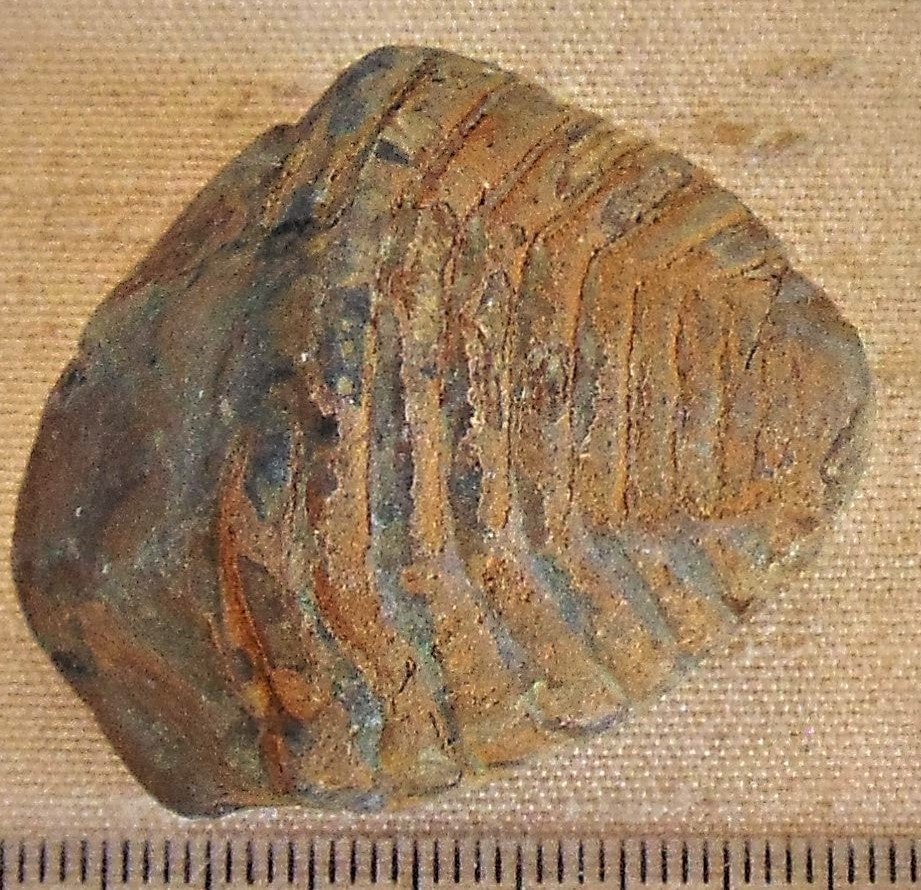
Cladoselache
Cladoselache fyleri
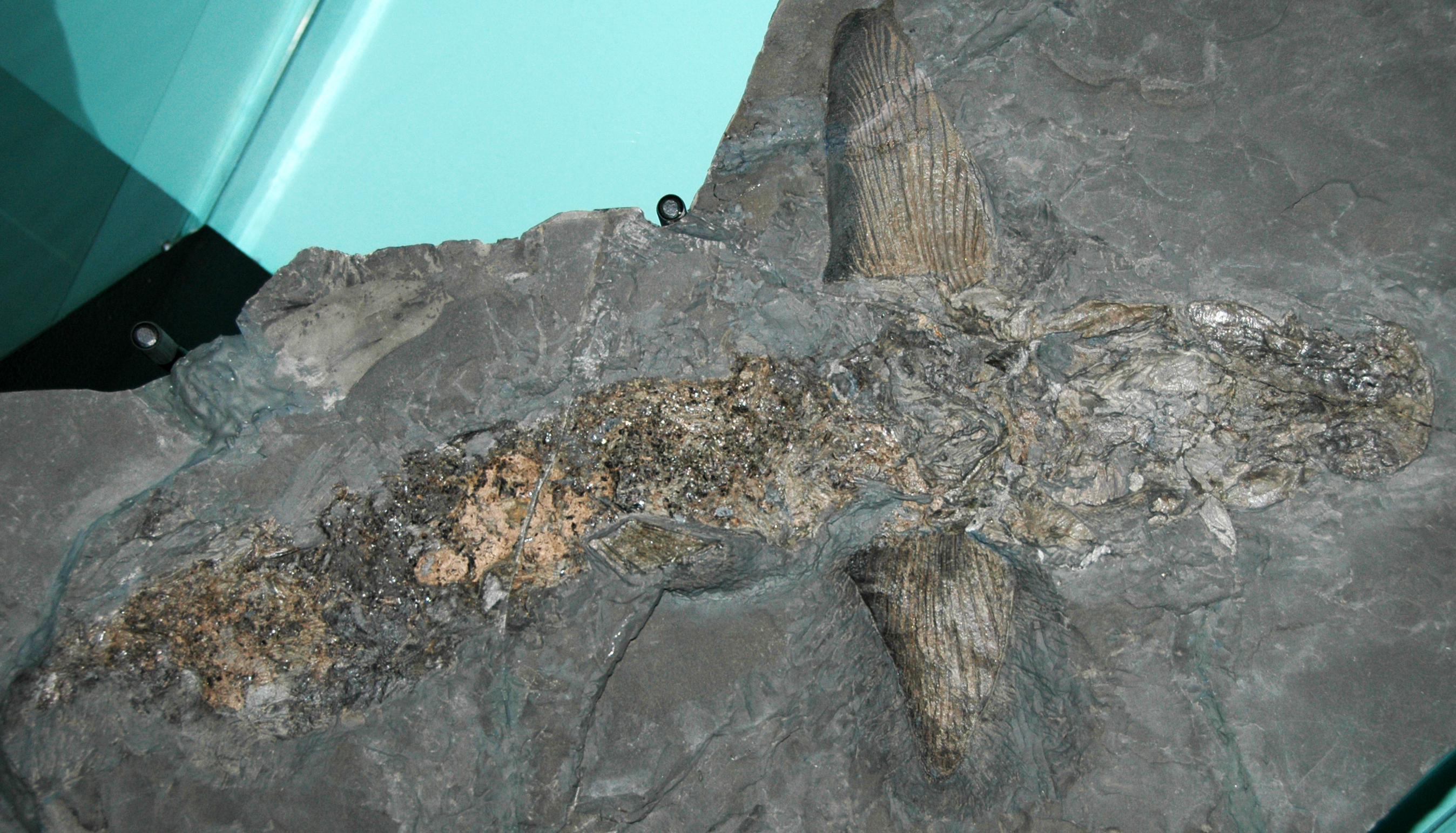
Image: File:Cladoselache fyleri fossil.jpg - Wikimedia Commons (CC BY-SA)
About Cladoselache
Cladoselache fyleri stands as one of the most profoundly important and widely recognized early chondrichthyans in the history of vertebrate paleontology, representing a crucial baseline for the study of ancient cartilaginous fishes. Roaming the shallow, warm epicontinental seas of the Late Devonian period between 380 and 360 million years ago, this primitive shark provides an unparalleled window into the evolutionary trajectory of early marine predators. First unearthed in the late nineteenth century from the exceptionally preserved deposits of the Cleveland Shale in Ohio, the United States, Cladoselache offers an unprecedented look into Paleozoic marine ecosystems and the deep-time origins of one of Earth's most enduring and successful predatory lineages.
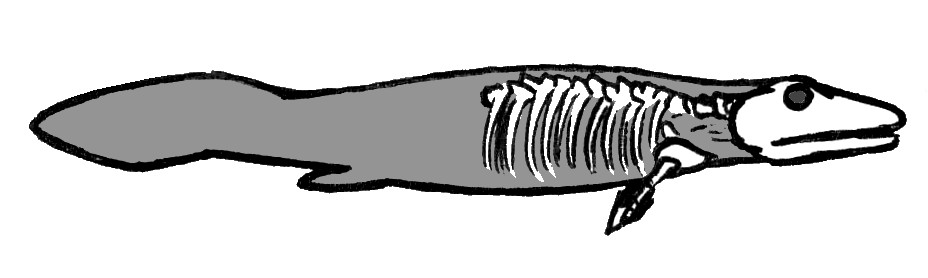
In terms of physical description, Cladoselache fyleri exhibited a fascinating blend of primitive and highly specialized anatomical traits that distinguish it sharply from the sharks swimming in modern oceans. Reaching maximum lengths of approximately 1.8 meters, or nearly six feet, and weighing an estimated twenty to thirty kilograms, it possessed a distinctly streamlined, torpedo-shaped body that was built for sustained, high-speed swimming. Unlike modern elasmobranchs, which are almost entirely covered in a tough armor of tooth-like dermal denticles, Cladoselache largely lacked these abrasive scales across its body. Instead, its skin was mostly smooth, with small patches of denticles restricted to the areas immediately surrounding its large, forward-facing eyes, the edges of its mouth, and the leading margins of its fins. Its head was relatively short and blunt, and in a stark departure from the underslung mouths of contemporary sharks, the mouth of Cladoselache was located at the very front of its snout in a terminal position. This gaping maw was lined with multiple rows of specialized cladodont teeth, which were characterized by a prominent central cusp flanked by several smaller lateral cusps. These teeth were not designed for shearing or tearing large chunks of flesh, but rather for grasping and holding onto slippery, struggling prey. The fin arrangement of Cladoselache was equally distinctive. It possessed two dorsal fins, each supported by a stout, triangular spine composed of dentine and enameloid, though these spines were deeply embedded in the musculature and barely protruded above the skin. Its pectoral fins were broad, triangular, and attached to the body by a wide base, lacking the flexible, narrow articulation seen in modern sharks, which means they functioned more like the rigid hydroplanes of a submarine than the highly maneuverable fins of a great white shark. Perhaps the most striking feature was its deeply forked, lunate tail fin. While internally asymmetrical, with the vertebral column extending into the upper lobe, the tail was externally symmetrical, closely resembling the caudal fins of modern high-speed pelagic fishes like tuna or mackerel sharks. This homocercal-like tail design, combined with lateral keels on the caudal peduncle, indicates that Cladoselache was a highly active, fast-swimming predator capable of rapid acceleration and sustained cruising in the open ocean.
The paleobiology of Cladoselache fyleri reveals a highly active and ecologically specialized predator perfectly adapted to the dynamic marine environments of the Late Devonian. Its diet and feeding strategies are remarkably well-documented, thanks to the extraordinary preservation of fossilized stomach contents found within numerous specimens. These gastric residues indicate that Cladoselache was a formidable carnivore that fed primarily on smaller ray-finned fishes, such as the early actinopterygian Kentuckia, as well as squid-like cephalopods, primitive crustaceans, and occasionally the jawless conodont animals. Interestingly, the fossilized remains of the ray-finned fishes found within the digestive tracts of Cladoselache are almost always oriented tail-first. This consistent orientation suggests a highly specific pursuit and capture strategy: Cladoselache likely chased down its fast-moving prey from behind, using its superior speed to overtake them, and swallowed them whole while still swimming forward. The grasping nature of its multi-cusped cladodont teeth perfectly supported this feeding method, allowing the shark to secure slippery prey before swallowing it intact. Locomotion was driven by the powerful, side-to-side sweeping of its lunate tail, while its broad, rigid pectoral fins provided lift to counteract the downward pitch generated by the tail's movement. The large size of its eye orbits suggests that vision played a primary role in hunting, allowing it to spot prey in the sunlit upper layers of the water column. However, the reproductive behavior of Cladoselache remains one of its most perplexing biological mysteries. In virtually all known modern and extinct cartilaginous fishes, males possess modified pelvic fins called claspers, which are used for internal fertilization. Despite the discovery of hundreds of exquisitely preserved Cladoselache specimens, including many that preserve delicate soft tissues, claspers have never been definitively identified in this genus. This absence has led paleontologists to infer that Cladoselache may have utilized a different, perhaps more primitive, method of reproduction, or that the claspers were simply not preserved, though the latter seems unlikely given the fidelity of the Cleveland Shale fossils. Growth patterns inferred from the spacing of growth rings in their dorsal fin spines suggest a relatively rapid initial growth phase followed by a slowing of growth upon reaching sexual maturity, a pattern consistent with many active pelagic predators.
The ecological context in which Cladoselache fyleri lived was characterized by the warm, shallow epicontinental seas that covered much of the North American landmass during the Late Devonian period, an era often colloquially referred to as the Age of Fishes. The specific environment represented by the Cleveland Shale was a stratified marine basin known as the Appalachian Basin. The upper layers of this sea were well-oxygenated, sunlit, and teeming with a diverse array of marine life, providing an ideal hunting ground for a fast-paced visual predator like Cladoselache. However, the bottom waters of this basin were highly anoxic, devoid of oxygen and hostile to most forms of benthic life. This stark stratification played a crucial role in the preservation of the fossils, but it also dictated the ecological boundaries of the living animals, restricting Cladoselache to the pelagic zone. In this vibrant ecosystem, Cladoselache occupied a mid-to-high trophic level, acting as a primary predator of small to medium-sized fishes and invertebrates. However, it was far from the apex predator of its realm. It shared its habitat with the massive, heavily armored arthrodire placoderms, most notably the terrifying Dunkleosteus terrelli, which could reach lengths of up to six meters or more and possessed shearing bony plates capable of biting through armor and bone. Cladoselache likely relied on its superior speed and agility to evade these colossal predators. The ecosystem also included other large placoderms like the filter-feeding Titanichthys, early lobe-finned fishes, and a variety of early chondrichthyans and acanthodians. The presence of Cladoselache in this complex food web highlights a period of intense evolutionary experimentation and competition, where the fast, unarmored, and highly mobile body plan of early sharks was being tested against the heavily armored, slower-moving placoderms that dominated the Devonian seas.
The discovery history of Cladoselache fyleri is deeply intertwined with the golden age of American paleontology in the late nineteenth century. The first specimens were discovered in the 1880s by Dr. William Clark, a physician and amateur paleontologist who spent his free time scouring the ravines and riverbanks of the Cleveland area, particularly along Big Creek, for fossils eroding out of the dark, slaty rock of the Cleveland Shale. Clark's meticulous collecting efforts yielded strange, shark-like remains preserved within flattened, lenticular concretions. He brought these remarkable finds to the attention of the scientific community, eventually passing them to the prominent American paleontologist John Strong Newberry. However, it was the British-born paleontologist Edward Waller Claypole who first formally described the material, initially assigning it to a different genus before the distinctiveness of the fossils was fully recognized. The genus Cladoselache was officially erected by Bashford Dean in 1894, a brilliant ichthyologist and paleontologist working at the American Museum of Natural History. Dean recognized that these fossils represented a completely new and incredibly primitive type of shark. The specific epithet, fyleri, was named in honor of a local Ohio resident who had assisted in the collection of the specimens. Throughout the late nineteenth and early twentieth centuries, massive excavation efforts in the Cleveland Shale, often funded by wealthy patrons and museums, uncovered hundreds of additional specimens. These key specimens, many of which were prepared using the painstaking techniques of the era, revealed the astonishing soft-tissue preservation that would make Cladoselache world-famous. The work of Bashford Dean and later researchers like Charles Eastman solidified the importance of the Cleveland Shale discoveries, transforming a local geological curiosity into one of the most important paleontological sites in the world for understanding early vertebrate evolution.
The evolutionary significance of Cladoselache fyleri cannot be overstated, as it occupies a foundational place near the very base of the chondrichthyan tree of life. For decades, it was considered the archetypal primitive shark, providing the standard anatomical model against which all other early cartilaginous fishes were compared. Its anatomy presents a fascinating mosaic of transitional features that bridge the gap between even older, more basal jawed vertebrates and the more derived elasmobranchs that would eventually dominate the world's oceans. The terminal position of its mouth and the broad-based, relatively inflexible nature of its pectoral fins are considered highly primitive traits, reminiscent of the ancestral condition of jawed fishes before the evolution of the underslung jaw and highly mobile fins seen in modern sharks. The jaw suspension of Cladoselache was amphistylic, meaning the upper jaw was supported both by the braincase and the hyomandibular bone, a transitional state between the primitive condition and the highly flexible jaws of modern sharks. By studying Cladoselache, scientists have been able to trace the evolutionary steps that led to the development of the modern shark body plan, including the gradual reduction of the broad fin bases to allow for greater maneuverability, the migration of the mouth to a ventral position to facilitate different feeding strategies, and the proliferation of dermal denticles for hydrodynamic efficiency and protection. While it is not considered a direct ancestor to modern sharks, rays, or chimaeras, Cladoselache represents a highly successful early offshoot of the chondrichthyan lineage, demonstrating that the basic torpedo-shaped, fast-swimming predatory body plan evolved very early in the history of cartilaginous fishes and has remained a successful ecological strategy for nearly four hundred million years.
Despite its status as one of the best-known Paleozoic sharks, Cladoselache fyleri remains the subject of several ongoing scientific debates and taxonomic revisions. The most enduring controversy surrounds its reproductive biology, specifically the aforementioned lack of claspers. For over a century, paleontologists have debated whether the absence of these copulatory organs in Cladoselache means that this genus utilized external fertilization, much like modern bony fishes, or if the claspers were simply cartilaginous structures that failed to fossilize, though the preservation of delicate structures like kidneys and muscle fibers makes the latter argument difficult to sustain. Some researchers have even proposed that all known specimens of Cladoselache might be female, perhaps representing a population that segregated by sex, a behavior observed in some modern shark species. Another significant debate involves its exact phylogenetic placement. While traditionally viewed as a basal elasmobranch, recent cladistic analyses incorporating new fossil discoveries of other early chondrichthyans have suggested that Cladoselache might belong to a distinct, extinct clade known as the Symmoriiformes, or perhaps sits even closer to the divergence point between elasmobranchs and holocephalans. These taxonomic disputes highlight the complexities of untangling deep-time evolutionary relationships, especially when dealing with lineages that exhibit a mix of highly specialized and primitive traits.
The fossil record of Cladoselache fyleri is almost entirely restricted to the Cleveland Shale formation of northern Ohio, though fragmentary remains of related species have been tentatively identified in other Late Devonian deposits in North America and Europe. The Cleveland Shale has yielded an astonishing number of specimens, with hundreds of individual fossils housed in museum collections around the world. The preservation quality of these fossils is what truly sets them apart. When a Cladoselache died, its body sank into the anoxic, toxic bottom waters of the Appalachian Basin. The lack of oxygen prevented scavenging by benthic organisms and severely inhibited bacterial decay. As the carcass lay in the fine-grained mud, chemical reactions between the decaying organic matter and the surrounding sediments led to the rapid precipitation of minerals, forming hard, protective concretions around the body before it could be crushed by the accumulating sediment above. This unique taphonomic process resulted in the three-dimensional preservation of not just the cartilaginous skeleton and teeth, but also incredible soft-tissue details. Paleontologists have identified fossilized muscle fibers, the distinct outlines of the kidneys, traces of the digestive tract, and even the microscopic structure of the skin. The Cleveland area, particularly the Rocky River valley and Big Creek, remains the most famous and productive site for these exceptional fossils.
The cultural impact of Cladoselache fyleri is most deeply felt in its home state of Ohio and within the global paleontological community. It is a centerpiece of the paleontology exhibits at the Cleveland Museum of Natural History, where spectacular, fully articulated specimens are displayed alongside the massive skulls of Dunkleosteus, bringing the ancient Devonian seas to life for thousands of visitors each year. In popular culture, Cladoselache frequently appears in documentaries, books, and educational materials focusing on prehistoric life and the evolution of sharks, often serving as the prime example of what the earliest sharks looked like. Its educational importance is immense, as it provides a tangible, visually striking example of evolutionary transition and the incredible preservation potential of the fossil record, inspiring future generations of scientists and fossil enthusiasts.
Classification
Time Period
Discovery
Location
Cleveland, Ohio, USA
Formation
Cleveland Shale
Frequently Asked Questions
What is Cladoselache?
Cladoselache fyleri stands as one of the most profoundly important and widely recognized early chondrichthyans in the history of vertebrate paleontology, representing a crucial baseline for the study of ancient cartilaginous fishes. Roaming the shallow, warm epicontinental seas of the Late Devonian ...
When did Cladoselache live?
Cladoselache lived during the devonian period of the paleozoic era approximately 380-360 million years ago.
Where was Cladoselache discovered?
Fossils of Cladoselache were discovered in Cleveland, Ohio, USA in the Cleveland Shale.
What did Cladoselache eat?
Cladoselache was a carnivore. It lived in marine habitats.
What type of fossil is Cladoselache?
Cladoselache is preserved as a permineralized fossil. The preservation quality is exceptional.
Related Specimens
From the paleozoic era · permineralized fossils