Metoposaurus
Metoposaurus diagnosticus
Image: Image sourced via web search (Fair use / Educational)
About Metoposaurus
Metoposaurus diagnosticus was a large, semi-aquatic temnospondyl amphibian that thrived in the freshwater ecosystems of the Late Triassic period, approximately 230 to 215 million years ago. As a prominent member of the Metoposauridae family, its fossils are found across what is now Europe, North America, and India, indicating a widespread distribution across the supercontinent of Pangaea. Its unique anatomy and the discovery of mass mortality sites have made Metoposaurus a key subject for understanding Triassic freshwater paleoecology, amphibian evolution, and the environmental pressures leading up to the end-Triassic mass extinction.
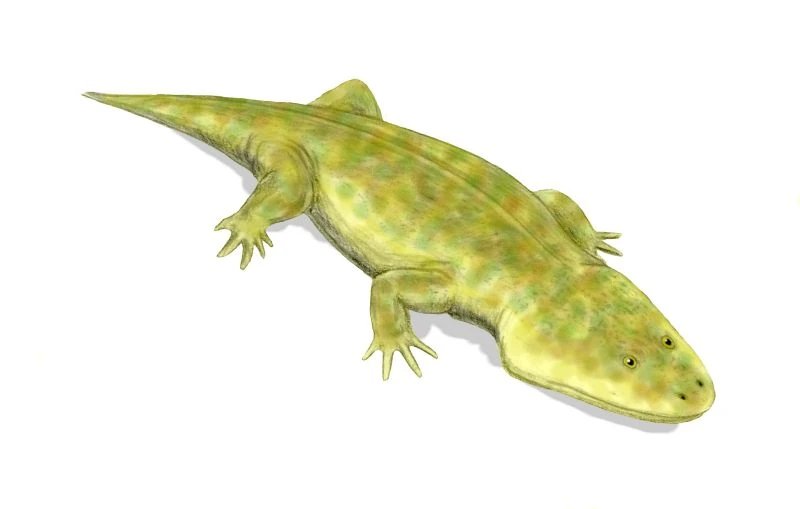
Metoposaurus was a formidable creature, reaching lengths of 2 to 3 meters (about 6.5 to 10 feet) and weighing an estimated 100 to 200 kilograms (220 to 440 pounds), comparable in size to a large modern alligator or crocodile. Its most striking feature was its enormous, flat, and broad skull, which could measure over 60 centimeters (2 feet) in length. This skull was heavily ossified and textured with a distinctive honeycomb-like pitting, which likely supported a tough, leathery skin. The eyes were positioned far forward and high on the skull, a classic adaptation for an ambush predator lying in wait just below the water's surface, similar to modern crocodilians. Its wide jaws were lined with numerous small, sharp, conical teeth, ideal for grasping slippery prey like fish. The body was relatively flat and broad, supported by weak, sprawling limbs that were ill-suited for extensive terrestrial locomotion, suggesting an almost entirely aquatic lifestyle. The tail was likely flattened and muscular, used for propulsion in the water. Its skeletal structure, particularly the robust skull and relatively weak postcranial skeleton, paints a clear picture of a specialized, bottom-dwelling aquatic predator.
As an apex predator in its freshwater habitat, Metoposaurus was a carnivore with a diet consisting primarily of fish, smaller amphibians, and possibly any terrestrial animals that ventured too close to the water's edge. Its feeding strategy was likely that of a sit-and-wait ambush predator. With its eyes positioned like periscopes, it would remain submerged and motionless, waiting for prey to swim or wander within striking distance. The wide gape of its jaws would have allowed it to create a powerful suction effect by rapidly opening its mouth, drawing water and the unfortunate victim in, a method known as suction feeding. The small, sharp teeth would have then secured the struggling prey. Locomotion was primarily aquatic; the weak limbs were likely used for punting along the riverbed or for minor steering, while the powerful tail provided the main propulsive force for short bursts of speed to capture prey. There is strong evidence for gregarious behavior, as many fossil sites contain mass assemblages of dozens or even hundreds of individuals. These bonebeds are often interpreted as the result of mass die-offs during seasonal droughts, where large groups of Metoposaurus became trapped in shrinking pools of water, suggesting they congregated in large numbers during certain times of the year.
The Late Triassic world of Metoposaurus was a harsh and seasonally variable environment. The supercontinent Pangaea was largely arid to semi-arid, characterized by a monsoonal climate with distinct wet and dry seasons. Metoposaurus inhabited the extensive river systems, lakes, and ephemeral pools that dotted this landscape. During the wet season, these waterways would have been teeming with life, providing ample food. Co-existing fauna included various other large amphibians like the giant Cyclotosaurus, early dinosaurs such as Plateosaurus and Efraasia on the floodplains, crocodile-line archosaurs (phytosaurs like Mystriosuchus and aetosaurs like Aetosaurus), and a variety of fish, including lungfish and coelacanths, which formed the primary prey base. Metoposaurus occupied a high trophic level within these aquatic ecosystems, competing with phytosaurs for resources. The primary threat to Metoposaurus was not other predators but the climate itself. The seasonal droughts could be severe, leading to the evaporation of their aquatic habitats and resulting in the mass mortality events so well-preserved in the fossil record. This environmental pressure was a defining feature of its existence.
The discovery history of Metoposaurus dates back to the mid-19th century. The German paleontologist Hermann von Meyer first described the genus in 1842 based on a cranial fragment found in the Keuper deposits of Germany. He named the type species *Metoposaurus diagnosticus*. The name 'Metoposaurus' translates to 'front lizard,' likely referencing the forward placement of its eyes on the skull. For decades, knowledge of the animal was based on fragmentary remains. A significant leap in understanding came with the work of the Polish paleontologist Julian Olempska-Roniewicz and her colleagues in the 20th century, who studied the remarkable fossil site at Krasiejów in Poland. This site, a former clay pit, has yielded a massive bonebed containing the disarticulated remains of thousands of Metoposaurus individuals, alongside other Triassic fauna. This lagerstätte provided an unprecedented wealth of material, allowing for detailed anatomical reconstructions, growth studies, and paleoecological interpretations. Another key species, *Metoposaurus maleriensis*, was described from the Maleri Formation in India, highlighting the genus's broad geographic range across Pangaea. These mass assemblages, particularly the one at Krasiejów, are among the most important temnospondyl fossil sites in the world.
Metoposaurus holds a significant place in the evolutionary history of amphibians. It belongs to the order Temnospondyli, a large and diverse group of early amphibians that flourished from the Carboniferous to the Cretaceous period. Within this order, it is a member of the family Metoposauridae, a group of specialized, large-headed, aquatic predators that were particularly successful during the Late Triassic. Temnospondyls are considered to be part of the amphibian stem group, closely related to the ancestors of modern amphibians (lissamphibians: frogs, salamanders, and caecilians), though the exact relationship is a subject of ongoing research. Metoposaurus represents a pinnacle of adaptation for a specific ecological niche—the large, aquatic ambush predator. Its specialized anatomy, including the flattened skull and reduced limbs, showcases an evolutionary trend towards an increasingly aquatic lifestyle seen in many temnospondyl lineages. The success and subsequent extinction of the metoposaurids at the end of the Triassic provide a case study in how specialized groups can thrive under specific environmental conditions but are vulnerable to large-scale climatic and environmental shifts, such as those that characterized the Triassic-Jurassic extinction event.
Despite being a well-known genus, Metoposaurus is still the subject of scientific debate. One major area of discussion revolves around its taxonomy and the validity of different species. For years, numerous species were named based on fossils from Europe, North America, and India. However, recent studies, such as the 2015 analysis by Stephen Brusatte and colleagues, have suggested that many of these may not be distinct species but rather represent geographic or individual variation within a few valid species, or perhaps even a single, widespread species like *M. diagnosticus*. Another debate centers on the interpretation of the mass mortality bonebeds. While the prevailing hypothesis is that they represent death assemblages caused by seasonal drought, some researchers have proposed alternative scenarios, such as disease outbreaks or catastrophic floods that concentrated carcasses in one area. Furthermore, the exact mechanics of its feeding—the relative importance of suction versus biting—and its metabolic rate continue to be areas of active research, with scientists using biomechanical models and bone histology to infer its life history and physiology.
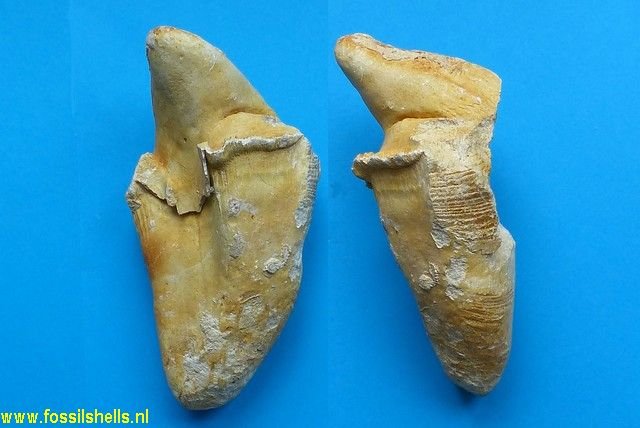
The fossil record of Metoposaurus is extensive, making it one of the most common and well-understood large temnospondyls of the Late Triassic. Its fossils are primarily found in deposits across the former supercontinent of Pangaea. Major sites are concentrated in the Keuper Group of Germany and Poland, most notably the famous Krasiejów locality. In North America, related or identical species are found in the Chinle Formation of the southwestern United States, part of the 'red beds' that preserve a rich Triassic ecosystem. Fossils have also been recovered from the Maleri Formation in India. The preservation is often excellent, though fossils are typically disarticulated, especially in the mass bonebeds. Skulls and dermal armor (interclavicles) are the most commonly preserved elements due to their robust nature. The sheer quantity of material from sites like Krasiejów has allowed for detailed statistical analysis of population structure, ontogeny (growth stages), and paleopathology, providing a remarkably complete picture of this ancient amphibian's life and death.
Metoposaurus has made a modest but notable impact on popular culture and public education. As a classic example of a giant prehistoric amphibian, it is frequently featured in museum exhibits on the Triassic period. Skeletons and reconstructions of Metoposaurus can be seen in major institutions such as the Polish Academy of Sciences' Institute of Paleobiology in Warsaw and the State Museum of Natural History in Stuttgart. Its dramatic life story, particularly the mass death scenes in drying pools, is a powerful narrative used in documentaries and books to illustrate the harshness of the Triassic environment. While not as famous as dinosaurs, its bizarre, toilet-seat-shaped head and impressive size make it a memorable creature for museum visitors and a valuable tool for teaching about amphibian evolution and life before the dinosaurs came to dominate the planet.
Classification
Time Period
Discovery
Location
Germany
Formation
Keuper Group (including the Schilfsandstein and Stubensandstein Formations)
Frequently Asked Questions
What is Metoposaurus?
Metoposaurus diagnosticus was a large, semi-aquatic temnospondyl amphibian that thrived in the freshwater ecosystems of the Late Triassic period, approximately 230 to 215 million years ago. As a prominent member of the Metoposauridae family, its fossils are found across what is now Europe, North Ame...
When did Metoposaurus live?
Metoposaurus lived during the triassic period of the mesozoic era approximately 230-215 million years ago.
Where was Metoposaurus discovered?
Fossils of Metoposaurus were discovered in Germany in the Keuper Group (including the Schilfsandstein and Stubensandstein Formations).
What did Metoposaurus eat?
Metoposaurus was a carnivore. It lived in freshwater, semi-aquatic habitats.
What type of fossil is Metoposaurus?
Metoposaurus is preserved as a body fossil. The preservation quality is good.
Related Specimens
From the mesozoic era · body fossils