Naraoia
Naraoia compacta
Image: Image sourced via web search (Fair use / Educational)
About Naraoia
Naraoia compacta is an extinct species of soft-bodied arthropod that thrived during the Middle Cambrian period, approximately 508 to 505 million years ago. Found primarily in the legendary Burgess Shale deposits of British Columbia, Canada, this remarkable organism represents a crucial piece of the puzzle in understanding early arthropod evolution and the explosive diversification of life known as the Cambrian Explosion. Unlike the heavily calcified trilobites that dominate the Paleozoic fossil record, Naraoia possessed an unmineralized exoskeleton, making its preservation a rare and extraordinary event that provides a unique window into the soft-tissue anatomy of early marine life. Its significance in paleontology cannot be overstated, as the detailed study of its appendages and internal organs fundamentally reshaped our understanding of arthropod phylogeny, demonstrating that the basic trilobite body plan existed in forms lacking a hard, mineralized shell.
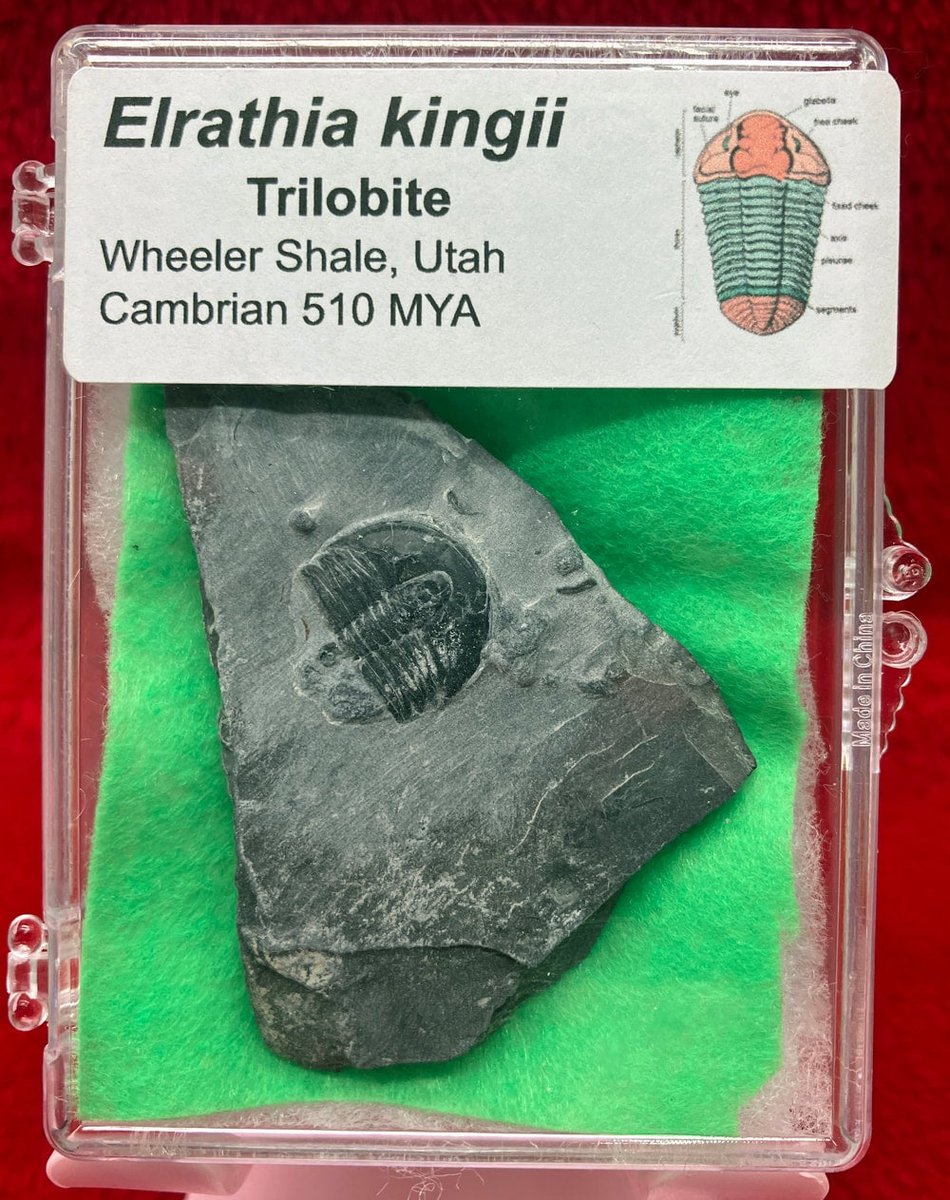
In terms of physical description, Naraoia compacta was a relatively small marine organism, typically measuring between 2 and 4 centimeters in length, making it roughly the size of a modern pillbug or a small shrimp. Its most distinctive anatomical feature was its bipartite dorsal exoskeleton, which consisted of two large, uncalcified, and roughly oval shields: a cephalic (head) shield and a posterior (body) shield. These shields completely covered the animal from above, obscuring its complex underlying anatomy. Unlike true trilobites, Naraoia lacked a segmented thorax visible from the dorsal side, as the two shields articulated directly with one another. Because the exoskeleton was not reinforced with calcium carbonate, it was highly flexible, likely giving the living animal a somewhat leathery texture. Beneath these protective shields lay a complex array of appendages. The head region bore a pair of long, multi-segmented antennae, followed by three pairs of biramous (two-branched) appendages. The posterior body shield covered numerous additional pairs of similar biramous limbs. Each of these limbs consisted of a stout, segmented walking leg (the endopod) and a feathery, gill-bearing outer branch (the exopod). One of the most spectacular features preserved in many Naraoia specimens is the highly complex, branching gut diverticula located in the head region. These digestive glands, which resemble a dense network of veins or roots, extended laterally from the main alimentary canal and were likely used to process and absorb nutrients.
Paleobiological inferences suggest that Naraoia compacta was a benthic organism, meaning it lived on or near the seafloor. Its diet and feeding strategies have been the subject of considerable study, with most evidence pointing toward it being a deposit feeder or a scavenger. The complex, highly branched gut diverticula in its head shield suggest an advanced digestive system capable of processing large volumes of nutrient-poor sediment or extracting maximum nutrition from scavenged organic matter. The animal likely used its biramous appendages to navigate the muddy substrate of the Cambrian seafloor. The stout inner branches of its legs were well-suited for walking and digging, while the feathery outer branches would have been used for respiration, acting as gills to extract oxygen from the surrounding water. It is also possible that the rhythmic beating of these exopods could have generated water currents to sweep small food particles toward the ventral midline and up to the mouth. Growth in Naraoia, as in all arthropods, would have occurred through periodic molting (ecdysis). Because its exoskeleton was unmineralized, the molting process might have been slightly less metabolically demanding than that of its heavily calcified trilobite cousins, though it still left the animal temporarily vulnerable to predators until its new cuticle hardened.
The ecological context of Naraoia compacta is deeply tied to the vibrant and alien world of the Cambrian seas. During this time, the Earth's climate was generally warm, and the continents were largely concentrated in the Southern Hemisphere, with vast, shallow epicontinental seas providing ideal habitats for the rapid diversification of marine life. The Burgess Shale environment, where Naraoia lived, was situated along a massive underwater cliff known as the Cathedral Escarpment. This habitat was teeming with a bizarre array of early animals, including sponges, brachiopods, priapulid worms, and an astonishing variety of arthropods. Naraoia shared its ecosystem with iconic Cambrian creatures such as the five-eyed Opabinia, the spiky Hallucigenia, and the fearsome apex predator Anomalocaris. In this complex food web, Naraoia likely occupied a lower to middle trophic level. As a deposit feeder or scavenger, it played a crucial role in recycling organic matter on the seafloor. However, its lack of a hard, mineralized shell made it highly vulnerable to predation. The large, grasping appendages and formidable circular mouthparts of Anomalocaris and other early radiodonts would have made short work of Naraoia's leathery exoskeleton, suggesting that its primary defense mechanisms were likely camouflage, burrowing into the soft mud, or remaining hidden among the benthic flora and fauna.
The discovery history of Naraoia is a fascinating chapter in the annals of paleontology, deeply intertwined with the exploration of the Burgess Shale. The first specimens of Naraoia compacta were discovered in 1909 by the legendary American paleontologist Charles Doolittle Walcott, who systematically excavated the Burgess Shale in the Rocky Mountains of British Columbia over several field seasons. Walcott formally named the genus and species in 1912. The name 'Naraoia' is derived from Narao, the name of a group of small lakes in the Cataract Brook valley near the fossil site. Initially, Walcott misinterpreted the anatomy of Naraoia. Because he could only see the two large, unsegmented shields, he classified it as a branchiopod crustacean, completely missing its hidden, trilobite-like appendages. This misclassification stood for over half a century. It was not until the 1970s, during a massive reinvestigation of the Burgess Shale fauna led by Harry Whittington of the University of Cambridge, that the true nature of Naraoia was revealed. Whittington meticulously dissected the fossils, carefully removing microscopic layers of rock to expose the delicate appendages hidden beneath the dorsal shields. In a landmark 1977 monograph, Whittington demonstrated conclusively that Naraoia possessed biramous limbs and antennae identical to those of trilobites, fundamentally changing its taxonomic placement and our understanding of early arthropod diversity.
The evolutionary significance of Naraoia compacta is profound, as it serves as a critical transitional form that illuminates the early radiation of the arthropod lineage. Following Whittington's redescription, Naraoia was recognized as a member of the Nektaspida (or Nectaspida), an extinct order of soft-bodied arthropods that are widely considered to be the sister group to the true trilobites. This relationship is of immense importance because it demonstrates that the complex, biramous limb structure and the basic anatomical organization of trilobites evolved before the acquisition of a biomineralized exoskeleton. For decades, the fossil record of early arthropods was heavily biased toward creatures with hard shells, leading to a skewed understanding of their evolutionary history. Naraoia proves that a vast, hidden diversity of soft-bodied 'trilobitomorphs' existed alongside their more famous, hard-shelled relatives. Furthermore, the study of Naraoia's internal anatomy, particularly its complex gut diverticula, has provided vital clues about the physiological adaptations that allowed early arthropods to exploit new ecological niches during the Cambrian Explosion, setting the stage for them to become the most diverse and abundant animal phylum on Earth.
Despite its well-studied anatomy, Naraoia has been the subject of ongoing scientific debates and taxonomic revisions. The most significant historical debate, of course, was its initial classification as a crustacean by Walcott versus its later identification as a trilobite relative by Whittington. Even after its trilobite affinities were established, exact phylogenetic placement remained a topic of intense discussion. Some researchers argued that Nektaspids should be classified as true trilobites that had secondarily lost their calcified shells, perhaps as an adaptation to a specific lifestyle or environment. However, modern cladistic analyses generally support the view that Nektaspids are a distinct, basal sister clade to the biomineralized trilobites. More recently, debates have centered on the exact function of the highly branched gut diverticula. While most agree they were digestive, some paleontologists have proposed that they might have also played a role in storing nutrients or even housing symbiotic bacteria to aid in the breakdown of complex organic compounds found in the Cambrian mud.
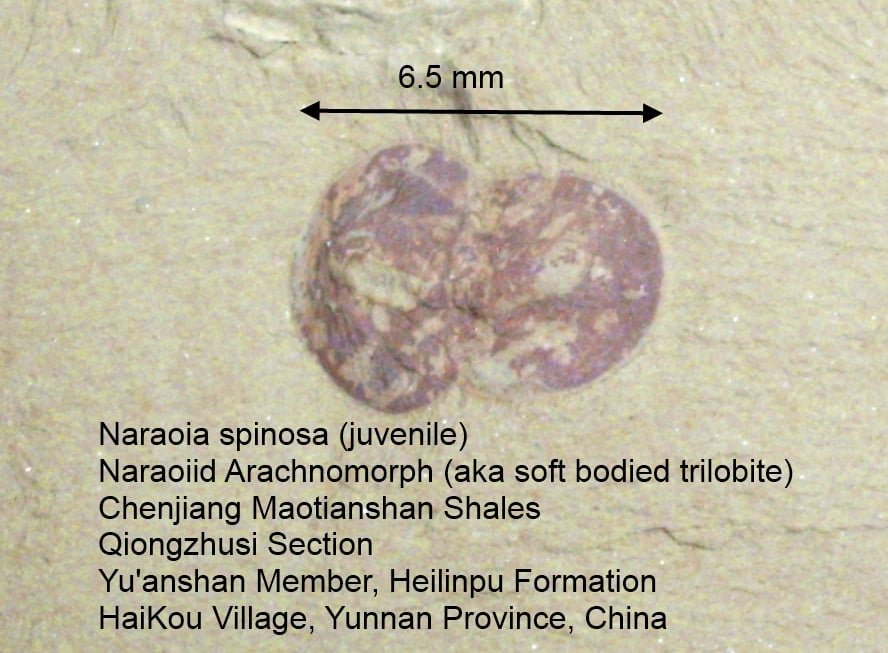
The fossil record of Naraoia is heavily dependent on sites of exceptional preservation, known as Konservat-Lagerstätten, because its uncalcified exoskeleton would normally decay long before fossilization could occur. The vast majority of Naraoia compacta specimens have been recovered from the Walcott Quarry of the Burgess Shale in British Columbia, where thousands of individuals have been collected, making it one of the more common arthropods in that specific deposit. The preservation quality in the Burgess Shale is legendary; the organisms were rapidly buried in fine-grained mudslides in an anoxic (oxygen-poor) environment, which halted decay and allowed the soft tissues to be preserved as thin, highly detailed carbonaceous films. Beyond Canada, other species of Naraoia, such as Naraoia spinosa, have been discovered in the equally famous Chengjiang biota of Yunnan Province, China, which is slightly older than the Burgess Shale. These Chinese specimens have corroborated the anatomical findings from Canada and demonstrated that the genus had a widespread geographic distribution across the Cambrian world.
In terms of cultural impact, Naraoia may not have the mainstream pop-culture recognition of a Tyrannosaurus rex, but it holds a revered status among paleontology enthusiasts and evolutionary biologists. It is frequently featured in museum exhibits dedicated to the Cambrian Explosion, with notable displays at the Royal Ontario Museum in Toronto and the Smithsonian National Museum of Natural History in Washington, D.C. In educational settings, Naraoia is often used as a textbook example of how new fossil discoveries and meticulous preparation techniques can overturn long-held scientific assumptions, highlighting the self-correcting nature of the scientific method. Its bizarre, shield-like appearance and its role as the 'soft-bodied trilobite' continue to captivate the public imagination, serving as a testament to the strange and wonderful diversity of life that existed half a billion years ago.
Classification
Time Period
Discovery
Location
British Columbia, Canada
Formation
Burgess Shale
Frequently Asked Questions
What is Naraoia?
Naraoia compacta is an extinct species of soft-bodied arthropod that thrived during the Middle Cambrian period, approximately 508 to 505 million years ago. Found primarily in the legendary Burgess Shale deposits of British Columbia, Canada, this remarkable organism represents a crucial piece of the ...
When did Naraoia live?
Naraoia lived during the cambrian period of the paleozoic era approximately 508-505 million years ago.
Where was Naraoia discovered?
Fossils of Naraoia were discovered in British Columbia, Canada in the Burgess Shale.
What did Naraoia eat?
Naraoia was a detritivore. It lived in marine habitats.
What type of fossil is Naraoia?
Naraoia is preserved as a body fossil. The preservation quality is exceptional.
Related Specimens
From the paleozoic era · body fossils