Darwinius (Ida)
Darwinius masillae
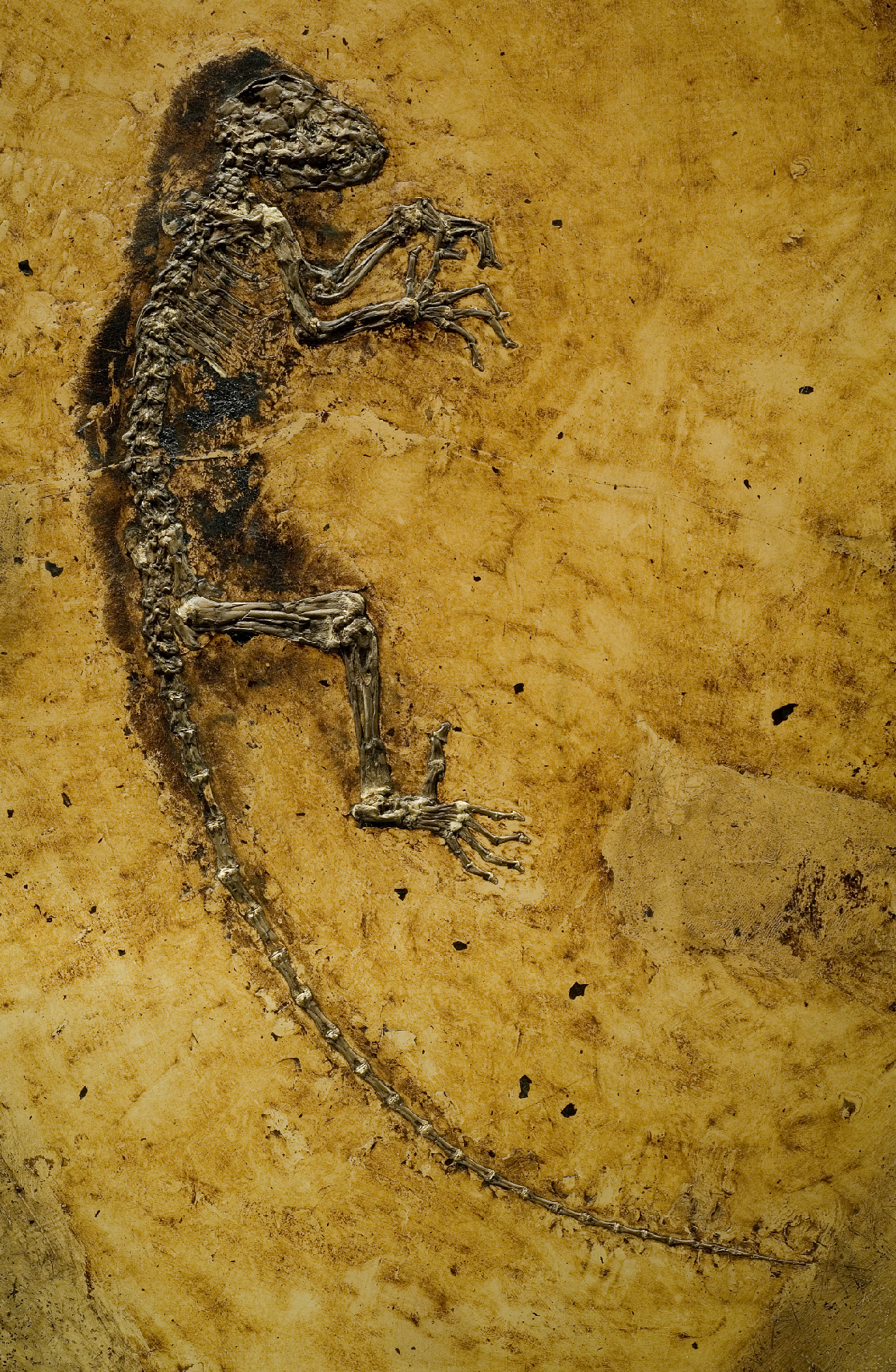
Image: File:Darwinius masillae PMO 214.214.jpg - Wikimedia Commons (CC BY-SA)
About Darwinius (Ida)
Darwinius masillae, widely known by the nickname Ida, is an extinct species of adapiform primate that lived approximately 47 million years ago during the Lutetian stage of the Middle Eocene epoch. Discovered in the Messel Pit of Germany, this remarkable creature represents one of the most complete and exceptionally preserved primate fossils ever brought to light, offering an unprecedented glimpse into the early evolution of the primate lineage. As a key representative of the Paleogene mammalian fauna, Darwinius provides critical insights into the anatomy, ecology, and evolutionary trajectory of early primates as they adapted to the dense, subtropical forests of Eocene Europe.
Measuring approximately 58 centimeters in total length, Darwinius masillae was a relatively small primate, roughly comparable in size to a modern-day squirrel or a small lemur. More than half of this length was accounted for by a long, robust, and bushy tail, which would have served as a crucial counterbalance for navigating the complex three-dimensional environment of the forest canopy. The estimated body mass of the living animal was likely between 600 and 900 grams, making it a lightweight and agile creature. The skeletal anatomy of Darwinius reveals a suite of features characteristic of early primates, particularly those adapted for an arboreal lifestyle. The hands and feet were highly specialized, featuring long, flexible digits equipped with flattened nails rather than the sharp claws seen in many contemporary mammals. The presence of a truly opposable thumb and an opposable big toe indicates a powerful grasping ability, allowing the animal to firmly grip branches and vines. The skull of Darwinius was relatively short and broad, housing forward-facing eyes that provided the stereoscopic vision necessary for accurate depth perception during leaping and climbing. The dental formula of the specimen, which includes developing adult teeth alongside deciduous teeth, indicates that Ida was a juvenile, likely around nine to ten months old at the time of her death. Her teeth featured broad, flat molars suited for processing plant material, lacking the specialized tooth comb found in modern strepsirrhines. The exceptional preservation of the fossil also reveals the outline of her soft tissues and a dense coat of fur, confirming that she was a heavily insulated mammal. Furthermore, the absence of a penis bone and the overall pelvic structure confirm that the specimen is female.
The paleobiology of Darwinius masillae paints a picture of a highly specialized, arboreal herbivore that spent its life entirely within the forest canopy. Based on the remarkable preservation of her stomach contents, paleontologists have been able to determine her exact diet with an unprecedented level of certainty. The fossilized remains within her digestive tract consist exclusively of chewed leaves, seeds, and fruit remnants, with no evidence of insect or animal matter. This confirms that Darwinius was a dedicated folivore and frugivore, utilizing her broad molars to shear and crush tough plant fibers. Her feeding strategies likely involved slow, deliberate foraging among the terminal branches of Eocene trees, using her grasping hands to pull food toward her mouth. Locomotory analysis of her postcranial skeleton suggests that Darwinius was an agile, quadrupedal climber rather than a vertical clinger and leaper like some modern lemurs. Her robust limb bones, particularly the well-developed radius and ulna in the forelimbs and the tibia and fibula in the hindlimbs, provided a wide range of motion and rotational flexibility. This would have allowed her to navigate the complex, interlocking branches of the canopy with ease, distributing her weight across multiple supports. The fact that the Ida specimen was a juvenile provides valuable insights into the growth patterns and life history of early primates. The state of her dental eruption, with the first adult molars just beginning to emerge, suggests a relatively slow developmental rate compared to non-primate mammals of similar size, a hallmark of the primate order that correlates with extended maternal care and complex social behaviors. However, a healed fracture on her right wrist indicates that her life was not without peril; this injury likely hindered her climbing ability and may have ultimately contributed to her untimely death by causing her to fall into the waters of the Messel lake.
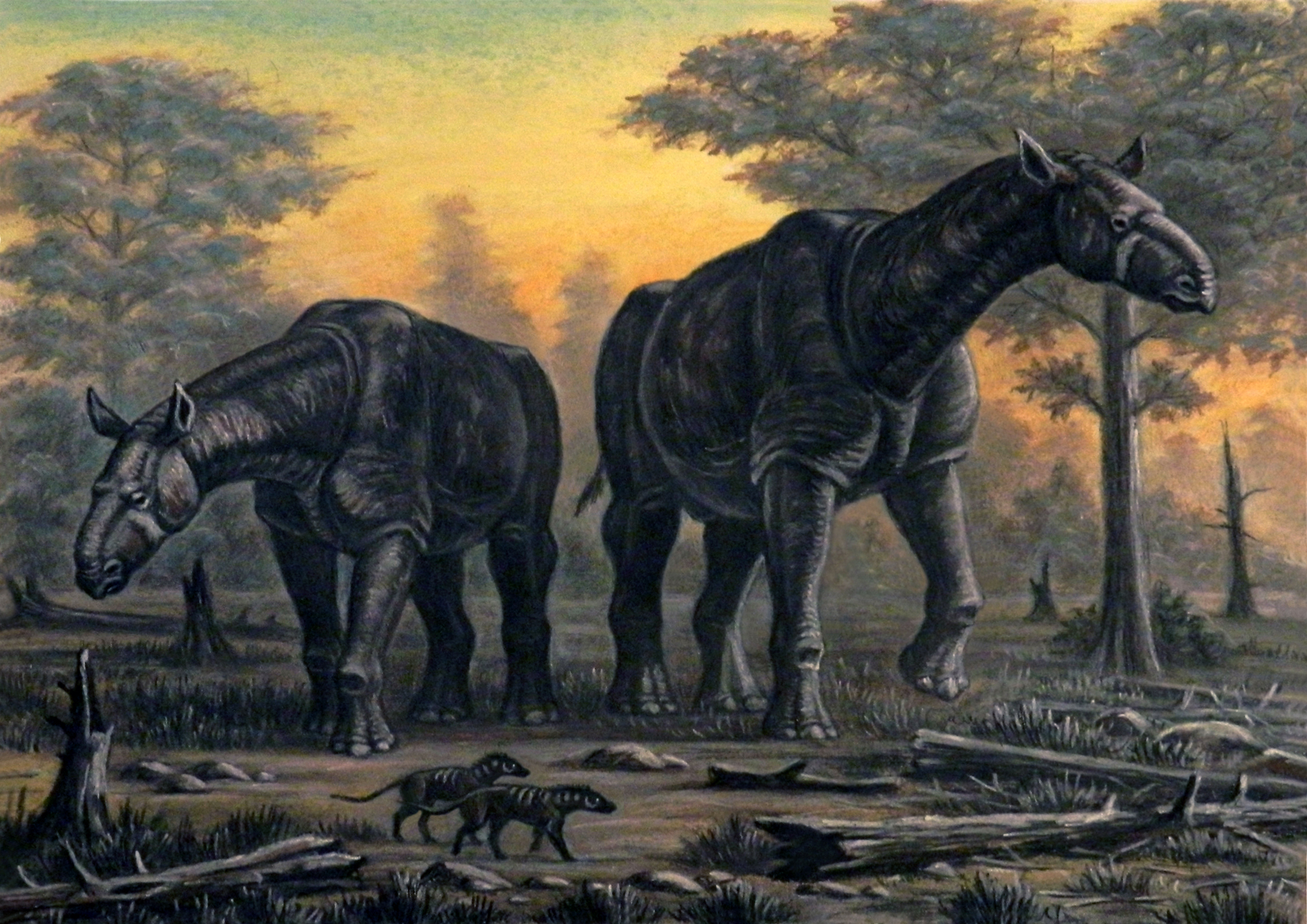
During the Middle Eocene, approximately 47 million years ago, the environment of the Messel Pit in what is now Germany was vastly different from the modern European landscape. The region was characterized by a paratropical to subtropical climate, featuring high temperatures, abundant rainfall, and a dense, multi-tiered rainforest canopy that surrounded a deep, volcanic crater lake. This lush ecosystem provided an ideal habitat for an arboreal primate like Darwinius masillae. The forest was dominated by a diverse array of broadleaved evergreen trees, palms, and climbing vines, creating a complex three-dimensional environment rich in ecological niches. Darwinius shared this vibrant habitat with a spectacular variety of co-existing species, many of which are also preserved in the Messel Formation. These included early horses like Propalaeotherium, which foraged on the forest floor, as well as an array of bats, rodents, and early carnivorans. In the canopy, Darwinius would have interacted with other arboreal mammals, birds, and reptiles. As a primary consumer, Darwinius occupied a crucial position in the Eocene food web, converting plant biomass into energy. However, her small size also made her vulnerable to predation. Potential predators in the Messel ecosystem included large arboreal snakes, crocodilians that lurked in the lake and along its edges, and large predatory birds such as the flightless Gastornis, though the latter was more likely terrestrial. The unique geological conditions of the Messel lake, which frequently experienced toxic algal blooms or releases of suffocating carbon dioxide gas from its volcanic depths, created a deadly trap for the animals living around it. It is highly probable that Darwinius, perhaps weakened by her wrist injury, was overcome by such toxic gases while drinking or foraging near the water's edge, leading to her drowning and subsequent preservation in the anoxic sediments at the bottom of the lake.
The discovery history of Darwinius masillae is as dramatic and complex as the fossil itself. The specimen was originally unearthed in 1983 by private fossil collectors at the Messel Pit, a disused oil shale quarry near Frankfurt, Germany, that has since been designated a UNESCO World Heritage site. Because it was collected privately, the fossil was split into two parts, known as the slab and the counterslab, and remained hidden from the scientific community for over two decades. The counterslab was eventually sold to a private museum in Wyoming, where it was partially restored and recognized as a primate, though its full significance was not immediately understood. The more complete main slab, however, remained in a private collection in Germany until 2006, when it was offered for sale to the scientific community. Recognizing the unparalleled importance of the specimen, Norwegian paleontologist Jorn Hurum orchestrated the purchase of the main slab by the Natural History Museum of Oslo. Hurum assembled an international team of experts, including Philip Gingerich from the University of Michigan and Jens Franzen from the Senckenberg Research Institute, to study the fossil in secret for two years. In 2009, the team formally described and named the species Darwinius masillae in the journal PLoS ONE. The genus name Darwinius was chosen to honor Charles Darwin on the bicentennial of his birth, while the specific epithet masillae refers to the Messel Pit. The specimen was affectionately nicknamed Ida, after Hurum's young daughter. The unveiling of Ida was accompanied by a massive, highly orchestrated media campaign, including a book, a television documentary, and a press conference in New York City, which brought unprecedented global attention to this single paleontological discovery.
The evolutionary significance of Darwinius masillae lies in its extraordinary completeness, which provides a definitive anatomical baseline for understanding early primate evolution. When first described, the research team controversially proposed that Darwinius represented a transitional form, or a missing link, that was situated near the base of the haplorhine lineage. Haplorhines are the clade that includes modern tarsiers, monkeys, apes, and humans. The authors argued that certain anatomical features of Darwinius, such as the lack of a grooming claw and the absence of a tooth comb, linked it more closely to anthropoids than to the strepsirrhine lineage, which includes modern lemurs and lorises. If this hypothesis were correct, Darwinius would be a direct early ancestor of the human lineage. However, this interpretation sparked immediate and intense scrutiny within the paleontological community. The prevailing consensus among primatologists is that Darwinius is a member of the Adapiformes, a highly successful radiation of early primates that flourished across the Northern Hemisphere during the Eocene. Adapiforms are generally considered to be stem strepsirrhines, meaning they are more closely related to the ancestors of modern lemurs than to the ancestors of monkeys and apes. Despite this phylogenetic reassignment, the evolutionary importance of Darwinius remains immense. Because early primate fossils typically consist only of isolated teeth or fragmented jawbones, the nearly perfect skeleton of Ida allows scientists to test hypotheses about primate functional morphology, locomotion, and dietary adaptations with a level of confidence that is usually impossible in vertebrate paleontology. She serves as a crucial reference point for understanding the primitive condition of all primates before the major evolutionary split between the lemur and monkey lineages.
The formal description of Darwinius masillae ignited one of the most heated scientific debates in modern paleontology, primarily centering around its taxonomic placement and the media spectacle surrounding its announcement. The original 2009 paper by Hurum, Gingerich, and colleagues suggested that Darwinius belonged to the haplorhine suborder, challenging the long-held view that adapiforms were on the strepsirrhine branch of the primate tree. Critics immediately pointed out that the cladistic analysis used in the original paper was limited in scope, analyzing too few morphological traits and omitting several key fossil taxa, such as the omomyids, which are widely accepted as true early haplorhines. Subsequent, more comprehensive phylogenetic analyses conducted by independent teams of researchers, including a major study by Erik Seiffert and colleagues later in 2009, firmly placed Darwinius within the Adapiformes, clustering it with other well-known European genera like Notharctus and Smilodectes. These studies demonstrated that the features Darwinius shared with anthropoids were likely the result of convergent evolution rather than shared ancestry. Furthermore, the scientific community heavily criticized the excessive hype and the missing link narrative promoted by the media campaign, arguing that it oversimplified the complex, branching nature of human evolution and misled the public. Despite these controversies, the debate itself spurred a renewed interest in Paleogene primate evolution, leading to more rigorous analytical methods and a deeper understanding of the anatomical diversity of early Cenozoic mammals.
The fossil record of Darwinius masillae is currently restricted to a single, spectacular individual, the holotype specimen known as Ida. This specimen is housed at the Natural History Museum in Oslo, Norway, while the counterslab resides in a private museum in the United States. Although Darwinius is known from only one individual, the quality of its preservation is unparalleled in the primate fossil record. The Messel Pit, where Ida was discovered, is a sedimentary deposit that exhibits extraordinary fossil preservation. The fine-grained oil shales of the Messel Formation were formed at the bottom of a deep lake, a low-oxygen environment that prevented scavenging and slowed bacterial decomposition. This unique setting allowed for the preservation of not just the articulated bones of Darwinius, but also the delicate carbonized outlines of her fur, soft tissues, and stomach contents. While Darwinius itself is a monotypic genus known from this single site, it belongs to a broader group of adapiform primates that have a rich fossil record across North America, Europe, and Asia during the Eocene. Other famous adapiforms from the Messel Pit include Europolemur and Godinotia, which provide comparative material that helps paleontologists contextualize the anatomy and ecology of Darwinius within the broader primate radiation of Eocene Europe.
The cultural impact of Darwinius masillae is arguably as significant as its scientific value, serving as a powerful case study in the intersection of paleontology, media, and public education. The 2009 unveiling of Ida was a global media event, accompanied by a popular science book and extensive coverage in major news outlets worldwide. While the missing link narrative was criticized by scientists, the sheer beauty and completeness of the fossil captivated the public imagination, bringing the obscure world of Eocene paleontology into mainstream consciousness. The specimen has since become a centerpiece of the Natural History Museum in Oslo, drawing thousands of visitors and serving as an invaluable educational tool for teaching the principles of evolution, fossilization, and comparative anatomy. Ida remains a cultural icon of paleontology, illustrating both the awe-inspiring nature of fossil discoveries and the rigorous, self-correcting nature of the scientific process.
Classification
Time Period
Discovery
Location
Messel Pit, Germany
Formation
Messel Formation
Frequently Asked Questions
What is Darwinius (Ida)?
Darwinius masillae, widely known by the nickname Ida, is an extinct species of adapiform primate that lived approximately 47 million years ago during the Lutetian stage of the Middle Eocene epoch. Discovered in the Messel Pit of Germany, this remarkable creature represents one of the most complete a...
When did Darwinius (Ida) live?
Darwinius (Ida) lived during the paleogene period of the cenozoic era approximately 47 million years ago.
Where was Darwinius (Ida) discovered?
Fossils of Darwinius (Ida) were discovered in Messel Pit, Germany in the Messel Formation.
What did Darwinius (Ida) eat?
Darwinius (Ida) was a herbivore. It lived in arboreal habitats.
What type of fossil is Darwinius (Ida)?
Darwinius (Ida) is preserved as a body fossil. The preservation quality is exceptional.
Related Specimens
From the cenozoic era · body fossils