Fossil Metasequoia
Metasequoia occidentalis
Image: Image sourced via web search (Fair use / Educational)
About Fossil Metasequoia
Metasequoia occidentalis, commonly known as the fossil Dawn Redwood, is an extinct species of coniferous tree that flourished across the Northern Hemisphere during the Paleogene and Neogene periods. This remarkable plant is a classic example of a 'living fossil', as the genus was first described from fossil evidence before a living relative, Metasequoia glyptostroboides, was discovered in China. Its widespread and well-preserved fossils provide an invaluable window into the temperate, high-latitude forests of the Cenozoic Era, offering crucial data on past climates and ecosystems.
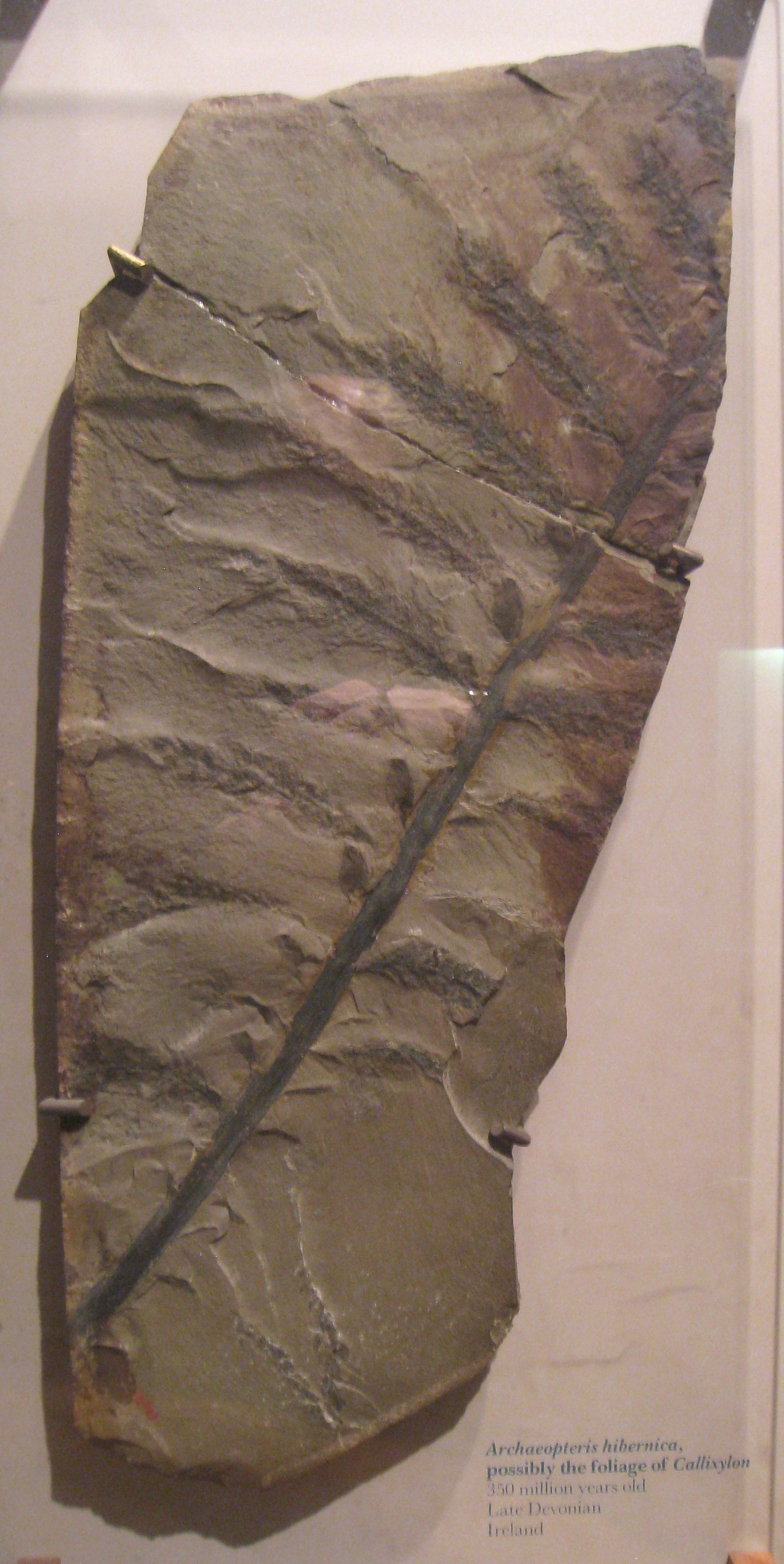
Metasequoia occidentalis was a large, deciduous conifer, reaching estimated heights of 30 to 50 meters (approximately 100 to 165 feet), with trunk diameters often exceeding 1 meter. Its overall size and form were very similar to its modern relative, the Dawn Redwood, and the coastal redwood, Sequoia sempervirens. The tree had a conical crown when young, which broadened with age, and a straight, buttressed trunk covered in fibrous, reddish-brown bark. Its most distinctive features, readily identifiable in the fossil record, are its delicate, feathery foliage and its unique branching pattern. The needle-like leaves were flat, soft, and arranged in an opposite, decussate pattern on the branchlets, a key diagnostic feature distinguishing it from the spirally arranged needles of the true redwoods (Sequoia) and bald cypresses (Taxodium), with which it was often confused. These entire leafy branchlets were deciduous, meaning they were shed annually in the autumn, a trait shared by its living counterpart. Fossil cones are also commonly found; they were small, globose to ovoid, and borne on long stalks, containing winged seeds adapted for wind dispersal. The exceptional preservation of entire fossilized forests, such as those on Axel Heiberg Island in the Canadian Arctic, allows for detailed reconstruction of its appearance and growth habit.
The paleobiology of Metasequoia occidentalis is understood through the study of its fossils and by analogy with its living relative. As a photosynthetic organism, it derived energy from sunlight, converting carbon dioxide and water into organic compounds. Its deciduous nature was a critical adaptation, allowing it to thrive in high-latitude environments characterized by months of continuous winter darkness, such as the polar regions during the Eocene. By shedding its foliage, the tree could conserve energy and water during the dark, cold winters when photosynthesis was impossible. Growth ring analysis from fossilized stumps indicates that these trees experienced rapid growth during the light-filled polar summers, reaching maturity relatively quickly. Metasequoia occidentalis was a foundational species in riparian and swamp ecosystems, forming dense forests in moist, well-drained soils along rivers and in floodplains. Its extensive root systems would have stabilized soils, while its annual leaf drop contributed a massive amount of organic matter, enriching the soil and supporting a complex community of decomposers. Reproduction was achieved through wind-pollinated cones, producing vast quantities of winged seeds that would have been dispersed widely by the wind, enabling the species to colonize new areas effectively.
During the Paleogene, the world of Metasequoia occidentalis was significantly warmer than today, a period often referred to as a 'greenhouse Earth'. There were no permanent polar ice caps, and temperate, forested ecosystems extended into the high Arctic. Metasequoia occidentalis was a dominant component of these polar forests, coexisting with a diverse array of other deciduous trees like birch (Betula), alder (Alnus), and the extinct katsura relative (Cercidiphyllum), as well as evergreen conifers. The understory would have included ferns, horsetails, and flowering shrubs. These forests supported a rich fauna, including early primates like Pelycodus, primitive tapirs, and large, flightless birds such as Gastornis. In the swamps and rivers where Metasequoia thrived, crocodilians and turtles were common, even within the Arctic Circle. As a primary producer, Metasequoia formed the base of the food web, providing food and habitat for a wide range of herbivorous insects and vertebrates. Its position as a keystone species in these high-latitude swamp forests meant its presence shaped the entire structure and function of the ecosystem, from soil formation to the distribution of animal life. The decline of these forests was directly linked to the global cooling trend that began in the late Eocene and accelerated into the Oligocene, which gradually restricted its range southward.
The discovery history of Metasequoia is one of the most famous stories in paleobotany. The genus was first established in 1941 by Japanese paleobotanist Shigeru Miki. He was studying fossil conifers from Pliocene clay deposits in Japan and recognized that certain specimens, previously misidentified as Sequoia or Taxodium, possessed a unique combination of features, most notably the opposite arrangement of their needles and cones. He named the new genus Metasequoia, meaning 'like Sequoia' or 'akin to Sequoia', to reflect its similarity to the modern redwood. For several years, Metasequoia was known only from the fossil record, which showed it had been widespread across North America, Europe, and Asia for millions of years before vanishing. The story took a dramatic turn in 1944 when Chinese forester Tsang Wang discovered a huge, unknown tree in a remote valley in Hubei province, China. Due to World War II, it was not until 1946 that botanists Wan-Chun Cheng and Hsen-Hsu Hu confirmed that this living tree was, in fact, a surviving species of Miki's fossil genus. In 1948, they formally named it Metasequoia glyptostroboides. This incredible discovery of a 'living fossil' caused a global sensation. Subsequent expeditions, notably one funded by the Arnold Arboretum of Harvard University, collected seeds, which were then distributed to botanical gardens worldwide, saving the species from potential extinction and allowing for its widespread study.
Metasequoia occidentalis holds immense evolutionary significance. It belongs to the family Cupressaceae, which includes modern redwoods, cypresses, and junipers. The fossil record demonstrates that the Sequoioideae subfamily, which includes Metasequoia, Sequoia, and Sequoiadendron, was far more diverse and geographically widespread during the Cenozoic than it is today. The survival of a single species, M. glyptostroboides, provides a direct, living link to these ancient forests. The genus represents a distinct evolutionary lineage that adapted to specific environmental conditions—namely, high-latitude, temperate, moist environments with extreme seasonal light variation. Its deciduous habit, a rarity among conifers, is a key evolutionary innovation that allowed it to dominate polar ecosystems where evergreen strategies were less successful. The study of M. occidentalis fossils, in conjunction with its living relative, offers a perfect case study in biogeography, illustrating how climatic change can dramatically contract a species' range from a near-global distribution to a tiny, relictual population. It serves as a powerful testament to the dynamic history of life and the profound impact of long-term environmental shifts on evolution and extinction.
While the identity of Metasequoia is well-established, some scientific discussion continues regarding its ecological role and the precise drivers of its extinction. Early interpretations focused solely on temperature as the limiting factor for its range. However, more recent research suggests that a combination of factors, including changes in precipitation patterns, increased seasonality, and competition from newly evolving angiosperm and conifer species, contributed to its decline. There is also ongoing research into the genetic diversity of the fossil populations compared to the extremely limited genetic bottleneck of the surviving M. glyptostroboides population. Understanding the paleo-physiology of M. occidentalis, such as its tolerance for waterlogged soils and its photosynthetic efficiency under the unique light conditions of the polar summer, remains an active area of investigation, aided by experiments on its living descendant. These studies help refine climate models and our understanding of how high-latitude ecosystems function under greenhouse conditions.
The fossil record of Metasequoia occidentalis is extensive and exceptionally well-preserved. Fossils are abundant across the Northern Hemisphere, with notable sites in western North America (from Alaska to California), Greenland, Svalbard, and Siberia. The most famous and scientifically important locality is on Axel Heiberg Island in the Canadian High Arctic, where entire mummified forests from the Eocene epoch are preserved. Here, stumps are still rooted in the ground, and the forest floor is littered with compressed leaves, cones, and seeds, all preserved without petrification in the permafrost. These 'fossil forests' provide an unparalleled, three-dimensional view of an ancient ecosystem. Other key North American sites include the Paleocene Fort Union Formation in Wyoming and Montana and the Eocene Chuckanut Formation in Washington state, which have yielded countless beautiful impression fossils of foliage and reproductive structures. The quality of preservation is often excellent, allowing for detailed anatomical and even cellular-level analysis.
The discovery of the living Metasequoia, after it was known only as a fossil, captured the public imagination and made it one of the most famous trees in the world. It became a symbol of persistence, survival, and the deep history of life on Earth. Today, the Dawn Redwood is a popular ornamental tree planted in parks, arboretums, and gardens worldwide, a living piece of the Paleogene brought into modern landscapes. Major natural history museums, such as the Smithsonian National Museum of Natural History and the Field Museum, often feature displays of M. occidentalis fossils to tell the story of ancient climates and this remarkable 'living fossil'. Its tale is a staple in both botany and paleontology education, serving as a perfect example of how the fossil record and the study of living organisms can inform one another.
Classification
Time Period
Discovery
Location
Western North America (specifically, Axel Heiberg Island, Canada for key early studies)
Formation
Various, including the Fort Union Formation and the Chuckanut Formation
Frequently Asked Questions
What is Fossil Metasequoia?
Metasequoia occidentalis, commonly known as the fossil Dawn Redwood, is an extinct species of coniferous tree that flourished across the Northern Hemisphere during the Paleogene and Neogene periods. This remarkable plant is a classic example of a 'living fossil', as the genus was first described fro...
When did Fossil Metasequoia live?
Fossil Metasequoia lived during the paleogene period of the cenozoic era approximately 66-23 million years ago.
Where was Fossil Metasequoia discovered?
Fossils of Fossil Metasequoia were discovered in Western North America (specifically, Axel Heiberg Island, Canada for key early studies) in the Various, including the Fort Union Formation and the Chuckanut Formation.
What did Fossil Metasequoia eat?
Fossil Metasequoia was a photosynthetic. It lived in terrestrial, freshwater swamp, riparian habitats.
What type of fossil is Fossil Metasequoia?
Fossil Metasequoia is preserved as a impression fossil. The preservation quality is excellent.
Related Specimens
From the cenozoic era · impression fossils