Tentaculites
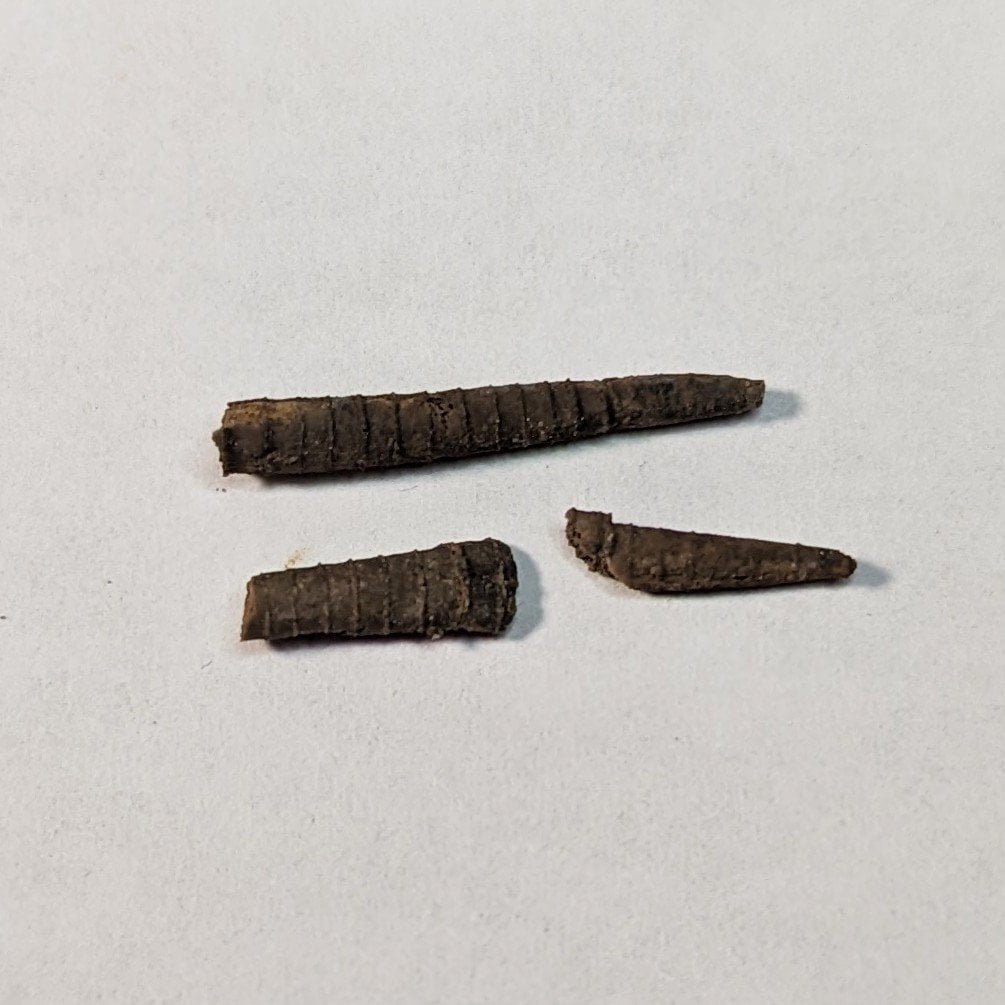
Tentaculites gyracanthus
Image: Image sourced via web search (Fair use / Educational)
About Tentaculites
Tentaculites gyracanthus is an extinct, enigmatic marine invertebrate that thrived during the Devonian Period, approximately 419 to 359 million years ago, within the Paleozoic Era. Characterized by its small, conical, heavily ringed calcareous shell, this organism is a prominent member of the class Tentaculita, a group whose exact taxonomic placement remains one of the enduring mysteries of invertebrate paleontology. Found in immense numbers in marine sedimentary rocks across the globe, particularly in North America and Europe, Tentaculites serves as an essential index fossil for biostratigraphic dating of Devonian strata. Its widespread distribution and sheer abundance make it a critical component for understanding the dynamics of ancient shallow marine ecosystems. Despite its diminutive size, often measuring only a few centimeters in length, Tentaculites gyracanthus played a significant role in the benthic and pelagic food webs of the Devonian seas. The significance of this organism in paleontology extends beyond its utility in stratigraphy; it represents a highly successful, yet ultimately doomed, evolutionary experiment in shell design and ecological adaptation. The study of Tentaculites provides a unique window into the biodiversity of the Paleozoic oceans, highlighting the complex and often bizarre forms of life that flourished long before the advent of modern marine faunas.
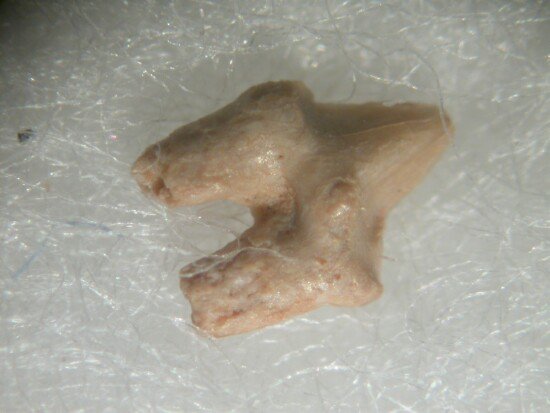
The physical anatomy of Tentaculites gyracanthus is primarily known from its distinctive, fossilized calcareous shell, as the soft tissues of the organism have never been definitively preserved. The shell is typically small, straight, and narrowly conical, tapering to a sharp, closed apex. In terms of dimensions, adult specimens of Tentaculites gyracanthus generally range from one to three centimeters in length, though some exceptional individuals may have grown slightly larger. The most striking and diagnostic feature of the shell is its external ornamentation, which consists of a series of prominent, transverse rings or annulations that encircle the cone at regular intervals. These primary rings are often interspersed with finer, secondary striations or growth lines, giving the shell a highly textured, almost corrugated appearance. This ribbed structure likely provided significant mechanical strength to the shell, protecting the soft-bodied animal inside from crushing predators and the turbulent forces of shallow marine environments. Internally, the shell is divided by a series of transverse septa in the apical region, creating small, isolated chambers, while the larger, open body chamber housed the living organism. The shell walls are relatively thick and composed of distinct layers of calcium carbonate, with a characteristic prismatic microstructure that distinguishes Tentaculites from other superficially similar conical fossils. When compared to modern animals, the shell of Tentaculites resembles a miniature, straight-shelled nautiloid or a heavily armored scaphopod, though it is much smaller. The soft anatomy of the animal remains entirely conjectural, but paleontologists hypothesize that it possessed a lophophore-like feeding apparatus that extended from the open aperture of the shell to capture suspended food particles from the water column.
The paleobiology of Tentaculites gyracanthus is a subject of ongoing scientific inquiry, with researchers relying heavily on functional morphology and paleoenvironmental context to reconstruct its lifestyle. It is widely accepted that Tentaculites was a marine filter-feeder, utilizing a specialized feeding apparatus to extract microscopic plankton, detritus, and organic matter from the surrounding seawater. The presence of the open body chamber suggests that the animal could extend its feeding tentacles into the water column and retract them quickly when threatened by predators. The locomotion and life habits of Tentaculites gyracanthus are somewhat debated, but the prevailing consensus suggests a predominantly benthic, or bottom-dwelling, existence for this particular species. The thick, heavily calcified shell would have been relatively dense, making active swimming or a fully pelagic lifestyle energetically costly and unlikely. Instead, it is hypothesized that Tentaculites gyracanthus lived partially buried in the soft muddy or sandy substrates of the seafloor, with its pointed apex anchored in the sediment and its wider aperture oriented upward into the water currents. This semi-infaunal posture would have provided stability in the shifting currents of shallow marine environments while allowing the animal to efficiently filter-feed. Some researchers, however, have proposed that certain species of Tentaculites may have been epi-benthic, crawling slowly across the seafloor, or even nektobenthic, capable of short bursts of swimming near the bottom. The growth patterns of Tentaculites are recorded in the transverse rings and fine striations of its shell, which represent episodic additions of calcium carbonate as the animal grew. These growth lines suggest a metabolism that was closely tied to environmental fluctuations, such as seasonal changes in water temperature, nutrient availability, and oceanic chemistry. The dense accumulations of Tentaculites fossils often found in specific sedimentary layers imply that these organisms may have lived in gregarious, high-density populations, potentially exhibiting synchronized spawning or other collective behaviors to maximize reproductive success in the competitive Devonian seas.
During the Devonian Period, often referred to as the Age of Fishes, the world was a vastly different place, characterized by high global sea levels, warm greenhouse climates, and the extensive development of shallow, epicontinental seas. Tentaculites gyracanthus inhabited these warm, sunlit, shallow marine environments, which were teeming with a diverse array of life. The geography of the Devonian was dominated by two massive supercontinents, Gondwana to the south and Euramerica near the equator, separated by the Rheic Ocean. Tentaculites gyracanthus is particularly well-known from the shallow seas that flooded the margins of Euramerica, in what is now North America and Europe. These marine ecosystems were characterized by massive, complex reef systems built not by modern corals, but by extinct tabulate and rugose corals, as well as sponge-like stromatoporoids. Within this vibrant ecological context, Tentaculites occupied a crucial niche as a primary consumer and filter-feeder, forming a vital link in the Devonian food web. It co-existed with a spectacular variety of marine invertebrates, including brachiopods, trilobites, crinoids, bivalves, and early cephalopods. As a small, abundant filter-feeder, Tentaculites gyracanthus would have been a primary food source for a variety of emerging predators. The Devonian seas saw the rapid diversification of jawed vertebrates, including the heavily armored placoderms, early sharks, and lobe-finned fishes, many of which possessed crushing dentition capable of breaking through the calcareous shells of benthic invertebrates. Additionally, predatory invertebrates such as eurypterids and large nautiloids likely preyed upon the dense beds of Tentaculites. The sheer abundance of Tentaculites fossils suggests that their primary defense mechanism was likely rapid reproduction and overwhelming numbers, a strategy common among small, vulnerable marine organisms. The eventual decline and extinction of the tentaculitids at the end of the Devonian may have been linked to the major extinction events of the period, such as the Kellwasser and Hangenberg events, which drastically altered ocean chemistry, caused widespread anoxia, and decimated the shallow marine reef ecosystems upon which these organisms depended.
The discovery and subsequent scientific description of Tentaculites gyracanthus are deeply intertwined with the early history of paleontology in North America during the 19th century. Fossils of the genus Tentaculites have been known to naturalists for centuries, often referred to in early literature as petrified needles or fossil screws due to their distinctive, ringed, conical shapes. However, the formal scientific recognition of the genus Tentaculites occurred in the early 19th century, with the genus being established by the Baltic German paleontologist Ernst Friedrich von Schlotheim in 1820. The specific species Tentaculites gyracanthus was later described and named by the eminent American paleontologist Amos Eaton in 1832. Eaton, a pioneer of American geology and botany, discovered these fossils during his extensive geological surveys of New York State, particularly within the fossil-rich strata of the Helderberg Escarpment and the Manlius Limestone formation. The specific epithet gyracanthus roughly translates to ringed spine, a fitting descriptor for the heavily annulated, needle-like shells. The study of Tentaculites gyracanthus was further advanced by James Hall, the legendary State Paleontologist of New York, who meticulously documented and illustrated thousands of Devonian invertebrate fossils in his monumental multi-volume work, Paleontology of New York. Hall's detailed descriptions and exquisite lithographic plates of Tentaculites specimens from the Manlius and Waterlime formations cemented the species' importance as a biostratigraphic marker for the Lower Devonian. The circumstances of these early discoveries were characterized by arduous fieldwork in the rugged terrain of upstate New York, where early geologists relied on horse-drawn wagons, hand tools, and keen observation to map the ancient strata. Over the decades, countless specimens of Tentaculites gyracanthus have been collected by both professional paleontologists and amateur rock hounds, making it one of the most recognizable and ubiquitous fossils of the Appalachian Basin. While there is no single famous individual specimen like 'Sue' or 'Lucy', the collective thousands of meticulously cataloged type specimens housed in institutions like the New York State Museum and the Smithsonian National Museum of Natural History serve as the foundation for our understanding of this enigmatic species.
The evolutionary significance of Tentaculites gyracanthus and the broader class Tentaculita lies in their status as a major, yet entirely extinct, lineage of marine invertebrates that challenges our understanding of animal phylogeny. Placing Tentaculites within the tree of life has proven to be an exceptionally difficult task, primarily because they possess a unique combination of morphological features that do not perfectly align with any single living phylum. They are generally considered to belong to the superphylum Lophotrochozoa, a massive clade of protostome animals that includes mollusks, annelid worms, brachiopods, and bryozoans. The presence of a calcareous shell with distinct microstructural layers strongly suggests an affinity with the Mollusca, and for many years, tentaculitids were classified as a bizarre, extinct class of mollusks, possibly related to pteropods or scaphopods. However, the internal septa and the specific prismatic structure of the shell also share striking similarities with the calcareous tubes secreted by certain marine annelid worms and the shells of some brachiopods. Furthermore, the hypothesized presence of a lophophore feeding structure links them conceptually to the lophophorate phyla. As an evolutionary experiment, Tentaculites represents a highly successful adaptation to the Paleozoic marine environment, achieving global distribution and massive population sizes before ultimately succumbing to extinction. Their evolutionary trajectory provides valuable insights into the plasticity of shell morphology and the convergent evolution of conical, protective structures among unrelated groups of benthic marine invertebrates. The study of Tentaculites highlights the reality that the Paleozoic oceans were populated by diverse lineages that have no direct modern descendants, serving as a reminder of the vast, lost biodiversity of Earth's deep past. While they left no living relatives, their fossilized remains continue to be crucial for understanding the evolutionary dynamics, adaptive radiations, and extinction patterns of early marine life.
The most prominent and enduring scientific debate surrounding Tentaculites gyracanthus concerns its taxonomic classification and phylogenetic affinities. Since its discovery, the genus has been bounced around the invertebrate taxonomic tree with dizzying frequency. Early paleontologists confidently classified them as pteropod mollusks due to their superficial resemblance to the shells of modern pelagic sea butterflies. However, subsequent microstructural analyses of the shell walls revealed significant differences from pteropods, leading to their reclassification. Some researchers have argued forcefully for an annelid affinity, suggesting that the shell is actually a calcareous tube secreted by a polychaete worm, similar to modern tube worms. Others have proposed that tentaculitids are closely related to brachiopods or phoronid worms, based on the internal septa and the presumed lophophore. Currently, the most widely accepted, albeit cautious, consensus places Tentaculita as an independent, extinct class of uncertain phylum-level placement within the Lophotrochozoa. Another area of ongoing debate involves their paleoecology and lifestyle. While T. gyracanthus is generally considered benthic, the exact orientation of the shell in life remains contested. Furthermore, the function of the internal septa is debated; some suggest they were used for buoyancy control, implying a more mobile lifestyle, while others argue they simply served to wall off abandoned, narrower sections of the shell as the animal grew.
The fossil record of Tentaculites gyracanthus is exceptionally robust, making it one of the most common and easily recognizable invertebrate fossils in specific Devonian strata. Geographically, fossils of this species are found in tremendous abundance across North America, particularly in the Appalachian Basin, encompassing New York, Pennsylvania, Maryland, and the Virginias. They are also found in corresponding Devonian deposits in Europe and other parts of the world that once formed the margins of the Laurussian paleocontinent. The preservation quality of Tentaculites fossils ranges from fair to excellent, depending on the sedimentary matrix. Because the shells were originally composed of robust calcium carbonate, they are highly resistant to taphonomic destruction and are often preserved in three-dimensional relief. In many limestone and shale formations, such as the Manlius Limestone of New York, Tentaculites shells are preserved in such staggering numbers that they form dense, monospecific shell beds known as tentaculite limestones. In these deposits, the rock is literally packed with thousands of the tiny, ringed cones, often aligned by ancient water currents, providing valuable paleocurrent data for geologists. Typically, only the hard calcareous shell is preserved; the soft tissues, tentacles, and internal organs have never been found fossilized. Famous fossil sites for T. gyracanthus include the classic Devonian outcrops of the Helderberg Escarpment near Albany, New York, and the fossil-rich ravines of the Finger Lakes region, where generations of geology students have collected these ubiquitous index fossils.
While Tentaculites gyracanthus may not possess the cinematic fame of a Tyrannosaurus rex or a Megalodon, it holds a special, enduring place in the culture of paleontology and amateur fossil collecting. Because they are so incredibly abundant and easily identifiable, Tentaculites are often among the very first fossils discovered by children and amateur rock hounds exploring the Devonian rocks of the American Northeast. They serve as a highly accessible gateway into the science of paleontology, sparking public fascination with deep time and ancient marine life. Notable displays of Tentaculites can be found in major natural history museums, including the American Museum of Natural History in New York and the Smithsonian Institution, where they are typically featured in dioramas and exhibits reconstructing Paleozoic seafloor environments. Educationally, they are indispensable tools in university geology courses, used to teach students about biostratigraphy, index fossils, and paleoenvironmental reconstruction.
Classification
Time Period
Discovery
Location
New York, USA
Formation
Manlius Limestone
Frequently Asked Questions
What is Tentaculites?
Tentaculites gyracanthus is an extinct, enigmatic marine invertebrate that thrived during the Devonian Period, approximately 419 to 359 million years ago, within the Paleozoic Era. Characterized by its small, conical, heavily ringed calcareous shell, this organism is a prominent member of the class ...
When did Tentaculites live?
Tentaculites lived during the devonian period of the paleozoic era approximately 419-359 million years ago.
Where was Tentaculites discovered?
Fossils of Tentaculites were discovered in New York, USA in the Manlius Limestone.
What did Tentaculites eat?
Tentaculites was a filter-feeder. It lived in marine habitats.
What type of fossil is Tentaculites?
Tentaculites is preserved as a body fossil. The preservation quality is good.
Related Specimens
From the paleozoic era · body fossils