Lepidodendron
Lepidodendron aculeatum
Image: File:Lepidodendron aculeatum.jpg - Wikimedia Commons (CC BY-SA)
About Lepidodendron
Lepidodendron, a monumental genus of primitive, tree-like plants, was a defining feature of the Paleozoic Era's Carboniferous Period, flourishing from approximately 359 to 299 million years ago. Commonly known as the "Scale Tree" due to the distinctive, reptile-skin-like pattern on its trunk, this organism was not a true tree but rather a giant lycophyte, a group whose modern relatives are the diminutive clubmosses. As a dominant component of the vast, globe-spanning coal swamp forests, Lepidodendron played a pivotal role in shaping the planet's atmosphere and geology, its immense biomass forming the foundation of the extensive coal seams that fuel modern society.
The physical appearance of Lepidodendron was unlike any plant alive today, a testament to the unique evolutionary pathways taken by early terrestrial flora. These colossal lycophytes could reach staggering heights of up to 40 meters (approximately 130 feet), with some estimates suggesting individuals may have even approached 50 meters, rivaling many modern forest canopy trees. Their trunks, which could exceed one meter in diameter at the base, were typically straight and columnar, exhibiting little to no branching until they reached their apex. This main trunk, technically a stem, was covered in a characteristic pattern of diamond-shaped leaf cushions, or bolsters, which were the attachment points for its simple, needle-like leaves. As the plant grew, it would shed its lower leaves, leaving behind these persistent, scale-like scars that give the genus its name, derived from the Greek words 'lepis' (scale) and 'dendron' (tree). The internal structure was also primitive; instead of dense, solid wood characteristic of modern trees, the trunk was composed of a relatively thin layer of woody tissue surrounding a large, soft, pithy core. This structure suggests that while tall, the plant was comparatively lightweight for its size. At its crown, the trunk would bifurcate dichotomously, splitting into two equal branches, which would then split again, forming a dense canopy of foliage.
As a photosynthetic organism, Lepidodendron's entire life strategy revolved around capturing sunlight to fuel its rapid growth. Its diet consisted of carbon dioxide, water, and sunlight, converted into energy through photosynthesis, which occurred in its abundant, grass-like leaves, known from the fossil record as Lepidophyllum. These plants were likely determinate growers, meaning they grew to a fixed maximum height before focusing their energy on reproduction, a life cycle more akin to some modern monocots like bamboo than to continuously growing woody trees. This "live fast, die young" strategy allowed them to quickly colonize the waterlogged swamp environments. Growth was incredibly rapid, with individuals potentially reaching their full height in just 10 to 15 years. Reproduction was achieved not through seeds, but through spores produced in cones, or strobili, which grew at the tips of the uppermost branches. These cones, known as Lepidostrobus, would release vast quantities of spores to be dispersed by wind, ensuring the propagation of the species across the swampy lowlands. The plant's life cycle was a single, massive reproductive event (monocarpic), after which the individual would die, collapsing into the swamp to begin the long process of coal formation.
Lepidodendron thrived in the unique ecological context of the Carboniferous Period, a time of exceptionally high atmospheric oxygen levels, estimated to be around 35%, and warm, humid, tropical conditions that prevailed across the supercontinent of Pangaea's equatorial regions. These plants were the keystone species of the vast coal swamp ecosystems that stretched across present-day North America, Europe, and parts of Asia. They formed a dense, multi-tiered forest canopy alongside other giant lycophytes like Sigillaria, towering calamite horsetails, and an understory of ferns and early seed plants (pteridosperms). This environment was home to a diverse array of fauna, including giant arthropods like the millipede-like Arthropleura, which could grow over two meters long and likely fed on the decaying plant litter, and the dragonfly-like Meganeura with a wingspan of 75 centimeters. Early tetrapods, such as the amphibian-like Eryops, patrolled the murky waters of the swamps. Lepidodendron, as the primary producer, formed the base of this complex food web, its immense productivity sustaining the entire ecosystem and fundamentally altering the global carbon cycle by sequestering vast amounts of carbon.
The discovery and understanding of Lepidodendron are intrinsically linked to the Industrial Revolution and the rise of coal mining in the 18th and 19th centuries. Miners in Europe and North America frequently encountered strange, patterned fossils embedded within coal seams and the surrounding shale and sandstone layers. These were initially objects of curiosity, sometimes mistaken for the skins of giant fish or reptiles. The formal scientific description began in the early 19th century. The influential work "Antediluvian Phytology" (1820) by British naturalist Edmund Tyrell Artis provided some of the earliest illustrations and descriptions. However, it was the German paleontologist Adolphe-Théodore Brongniart, often called the "father of paleobotany," who systematically studied these fossils in his "Histoire des végétaux fossiles" (1828–37), establishing a framework for classifying Carboniferous flora. The genus name Lepidodendron was coined by the German naturalist Kaspar Maria von Sternberg in 1820. A crucial breakthrough was the realization that different fossil parts, which had been given separate names—Stigmaria for the root-like structures, Lepidophyllum for leaves, and Lepidostrobus for cones—all belonged to the same parent organism. This synthesis was pieced together by numerous researchers, including the British geologist William Logan, who in 1840 demonstrated the in-situ connection between Stigmaria and a Lepidodendron trunk in a Welsh coal mine.
Lepidodendron occupies a critical position in the evolutionary history of plant life. It belongs to the division Lycopodiophyta, an ancient lineage of vascular plants that diverged from the branch leading to ferns and seed plants over 400 million years ago. During the Carboniferous, the lycophytes underwent a spectacular evolutionary radiation, producing arborescent (tree-like) forms that dominated terrestrial ecosystems, an ecological role they have long since relinquished. Lepidodendron represents the pinnacle of this trend, showcasing how this lineage independently evolved tree-like characteristics, such as tall, supportive trunks and complex branching systems, through a completely different anatomical plan than that of modern trees. This is a classic example of convergent evolution. While its modern relatives, the clubmosses (e.g., Lycopodium) and quillworts (Isoetes), are small, herbaceous plants, they share fundamental characteristics, including the production of spores in strobili and the presence of microphylls (simple leaves with a single vascular strand). The study of Lepidodendron and its relatives provides invaluable insight into the early experiments in plant gigantism and the ecological dynamics of Paleozoic terrestrial ecosystems before the rise of the gymnosperms and, much later, the angiosperms.
Despite its long history of study, Lepidodendron remains a subject of scientific debate, particularly concerning its precise taxonomy and life habits. The genus Lepidodendron itself is a form genus, a classification based on the distinctive bark pattern fossil. Because different parts of the plant (roots, leaves, cones) are often found separately, a complex system of nomenclature exists, and definitively linking all parts to a single biological species is challenging. There is ongoing discussion about the number of true species within the genus and their relationships to other giant lycophytes like Sigillaria. Furthermore, the exact mechanics of its growth and physiology are debated. While the rapid, monocarpic life cycle is widely accepted, the specific environmental triggers for its reproductive phase and the biomechanical limits of its lightweight trunk construction continue to be areas of active research and modeling. Revisions to its ecological role, such as its potential impact on local hydrology and sediment deposition, are constantly refining our understanding of the Carboniferous world.
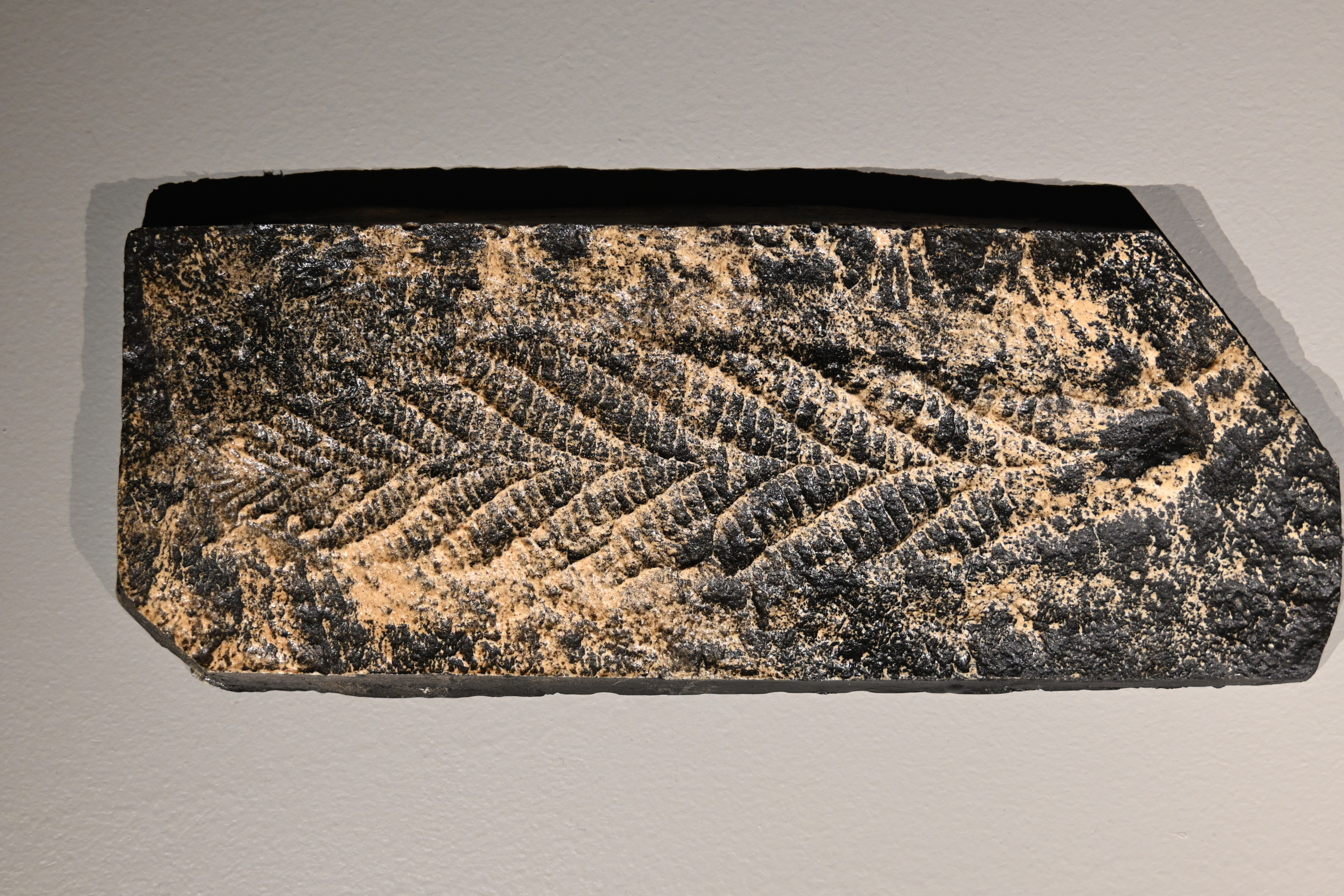
The fossil record of Lepidodendron is exceptionally abundant and widespread, making it one of the most recognizable and well-documented prehistoric plants. Its remains are found globally in Carboniferous deposits, with particularly rich occurrences in the Coal Measures of the United Kingdom, the Pennsylvanian strata of the eastern United States (especially Illinois, Ohio, and Pennsylvania), the Donets Basin of Ukraine, and coalfields in China. Fossils are preserved in several ways: as compression fossils, where the flattened organic remains leave a carbon film on shale; as casts and molds, which preserve the three-dimensional surface texture of the bark in sandstone; and occasionally as petrifactions, where cellular detail is preserved by mineralization. Perhaps most famously, entire fossilized forests have been discovered, such as the Fossil Grove in Glasgow, Scotland, and the fossil forests of Joggins, Nova Scotia, a UNESCO World Heritage Site, where upright stumps of Lepidodendron and other trees are preserved in their life positions, providing an unparalleled snapshot of a 300-million-year-old ecosystem.
The striking appearance and immense scale of Lepidodendron have secured its place in popular culture and public imagination as an icon of the primeval world. It is a staple feature in paleoart depicting the Carboniferous Period, its scaly trunk and sparse crown creating an alien yet recognizable forest landscape. Major natural history museums worldwide, including the Smithsonian National Museum of Natural History and the Field Museum in Chicago, feature impressive reconstructions and fossils of Lepidodendron in their paleontology exhibits. These displays serve a vital educational purpose, illustrating the dramatic changes in plant life over geologic time and visually connecting the abstract concept of fossil fuels to the ancient, living organisms from which they originated.
Classification
Time Period
Discovery
Location
Global, particularly in coal-bearing regions of Europe and North America
Formation
Coal Measures
Frequently Asked Questions
What is Lepidodendron?
Lepidodendron, a monumental genus of primitive, tree-like plants, was a defining feature of the Paleozoic Era's Carboniferous Period, flourishing from approximately 359 to 299 million years ago. Commonly known as the "Scale Tree" due to the distinctive, reptile-skin-like pattern on its trunk, this o...
When did Lepidodendron live?
Lepidodendron lived during the carboniferous period of the paleozoic era approximately 359-299 million years ago.
Where was Lepidodendron discovered?
Fossils of Lepidodendron were discovered in Global, particularly in coal-bearing regions of Europe and North America in the Coal Measures.
What did Lepidodendron eat?
Lepidodendron was a photosynthetic. It lived in terrestrial (coal swamp forests) habitats.
What type of fossil is Lepidodendron?
Lepidodendron is preserved as a impression fossil. The preservation quality is good.
Related Specimens
From the paleozoic era · impression fossils
/bf5239087f6c.png)