Microraptor
Microraptor gui
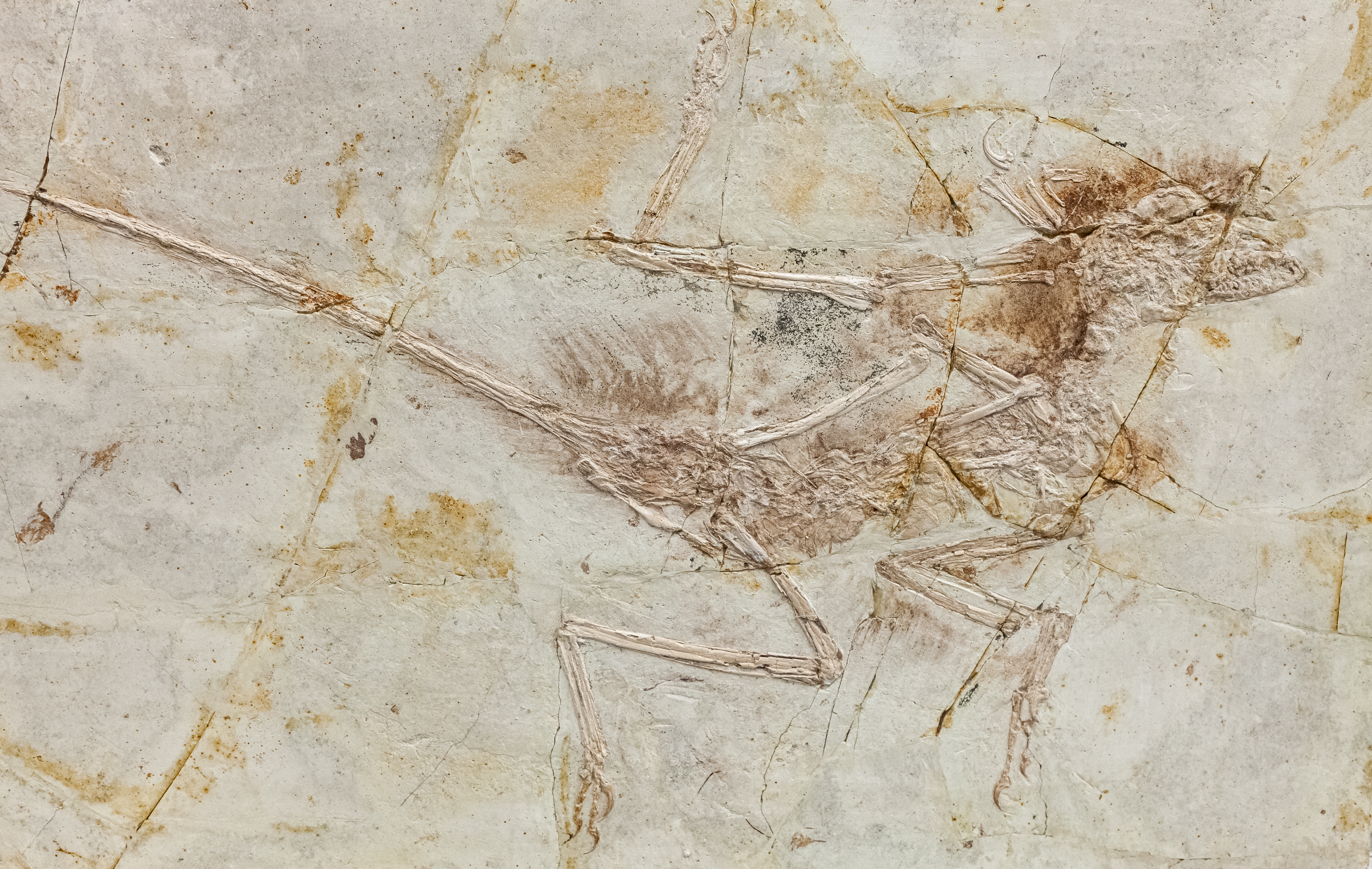
Image: File:Microraptor gui (BMNHC Ph763) NMNS.jpg - Wikimedia Commons (CC BY-SA)
About Microraptor
Microraptor gui is one of the most significant paleontological discoveries of the twenty-first century, representing a genus of small, four-winged dromaeosaurid dinosaurs that inhabited the dense, temperate forests of what is now northeastern China during the Early Cretaceous period of the Mesozoic era, approximately 120 million years ago. As a highly specialized arboreal predator, this remarkable creature provides a crucial, tangible evolutionary link between non-avian dinosaurs and modern birds. Its name, derived from Greek and Latin roots meaning small thief, perfectly encapsulates its diminutive size and carnivorous lifestyle. The discovery of Microraptor fundamentally altered the scientific understanding of the origin of avian flight, demonstrating that the evolutionary pathway to the skies was incredibly complex and involved a fascinating four-winged gliding stage that preceded the two-winged anatomy seen in all extant avian species.
Physically, Microraptor was a diminutive but anatomically astonishing creature, with adult individuals reaching total lengths of between 77 and 100 centimeters, though a significant portion of this length was dedicated to its long, bony tail. Weighing an estimated one kilogram, its skeletal structure was delicate and highly pneumatic, sharing numerous characteristics with both advanced theropod dinosaurs and early birds. The most distinctive and revolutionary feature of Microraptor was its extensive plumage, specifically the presence of long, asymmetrical pennaceous flight feathers on both its forelimbs and its hindlimbs, creating a unique four-winged configuration. The forelimb wings were similar in structure to those of modern birds, while the hindlimb wings featured feathers anchored directly to the metatarsal bones of the feet and the tibia. The tail was tipped with a diamond-shaped fan of elongated feathers, which likely provided aerodynamic stability and steering capabilities during aerial maneuvers. In a groundbreaking 2012 study led by paleontologist Quanguo Li, researchers analyzed fossilized melanosomes pigment-bearing organelles preserved within the fossilized feathers and determined that Microraptor possessed a glossy, iridescent black plumage, much like a modern crow or raven. This iridescence suggests that the feathers may have played a role in visual communication, species recognition, or sexual display, in addition to their primary aerodynamic functions. Its skull was narrow and equipped with small, serrated teeth adapted for grasping and slicing small prey, while its large eye sockets indicate acute vision necessary for navigating a complex forest environment.
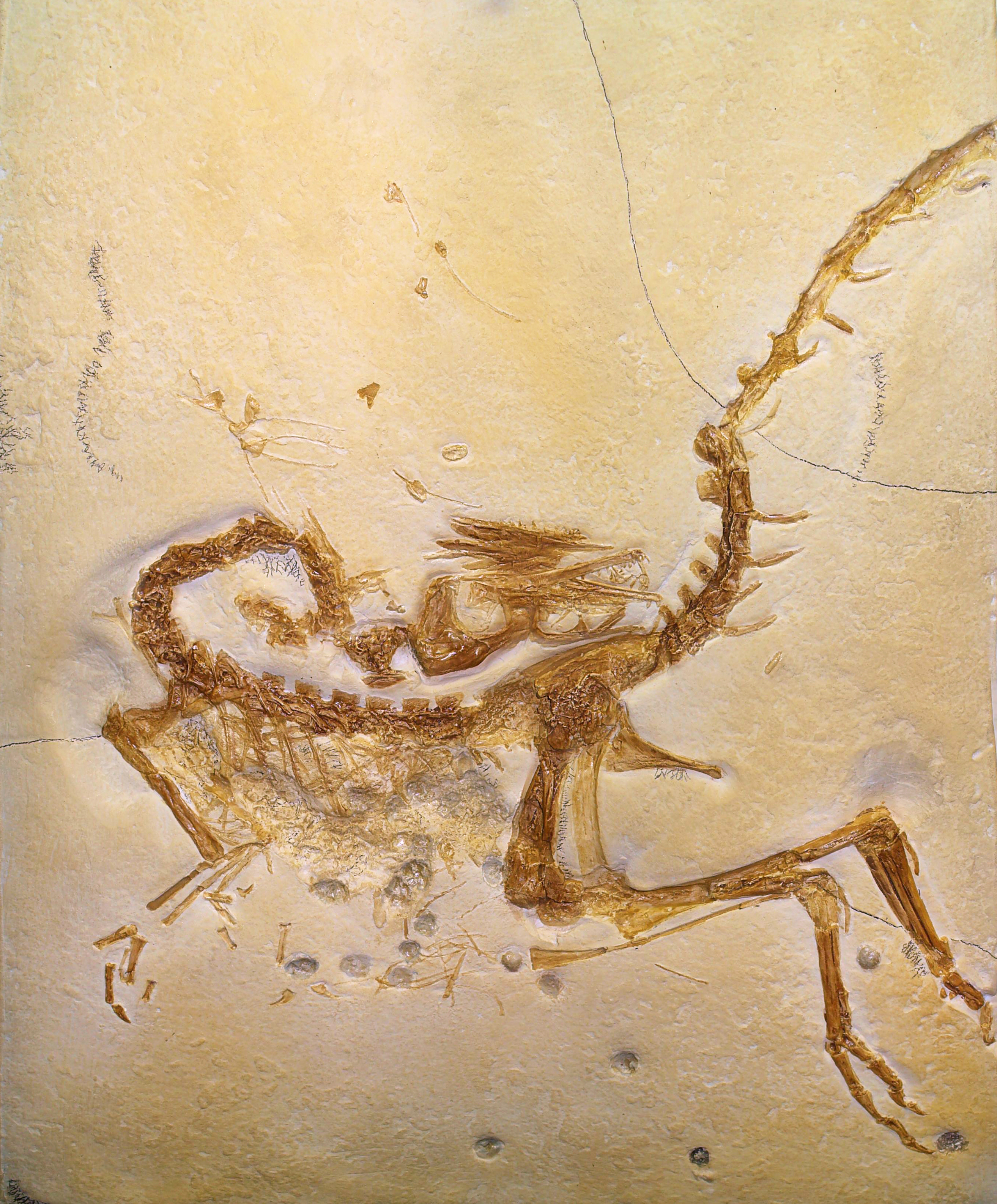
The paleobiology of Microraptor paints a picture of a highly agile, opportunistic predator perfectly adapted to its arboreal habitat. Fossil evidence has provided unprecedented insights into its diet, as several exceptionally preserved specimens have been discovered with their last meals still intact within their abdominal cavities. These gut contents reveal a diverse carnivorous diet that included small early mammals such as Eomaia and Sinodelphys, primitive enantiornithine birds, lizards, and even teleost fish. This varied diet indicates that Microraptor was an active hunter capable of exploiting multiple ecological niches, hunting both in the forest canopy and near the water bodies that dotted its environment. Its locomotion has been the subject of intense study, with its four-winged anatomy strongly suggesting it was an adept glider. It likely utilized its sharp, curved claws to scale the trunks of large trees before launching itself into the air, using its forelimbs and hindlimbs to create a broad aerodynamic surface to glide from branch to branch or to ambush prey on the forest floor. The presence of a sclerotic ring in its eye, a bony structure that supports the eyeball, has allowed researchers to infer its activity patterns. Comparisons of the internal diameter of the sclerotic ring to the overall size of the eye socket suggest that Microraptor may have been nocturnal or crepuscular, hunting under the cover of darkness or twilight, which would have allowed it to avoid larger diurnal predators and compete effectively for nocturnal prey. Growth patterns analyzed through bone histology indicate that, like many small theropods, Microraptor grew rapidly during its early life, reaching skeletal maturity within a few years.
The ecological context in which Microraptor thrived was the vibrant and highly diverse Jehol Biota, specifically within the Jiufotang Formation of Liaoning Province. During the Early Cretaceous, approximately 120 million years ago, this region was characterized by a temperate, heavily forested landscape interspersed with extensive freshwater lakes and active stratovolcanoes. The climate was seasonal, with distinct wet and dry periods, and the frequent volcanic eruptions periodically blanketed the region in fine ash, which was responsible for the exceptional preservation of the fossils found there. Microraptor shared this lush ecosystem with a staggering array of flora and fauna. The forest canopy was dominated by conifers, ginkgoes, and early angiosperms, providing ample habitat for arboreal creatures. Microraptor co-existed with numerous other feathered dinosaurs, including the slightly larger dromaeosaurid Sinornithosaurus and the early bird Confuciusornis. The lakes were teeming with fish and amphibians, while the skies above were patrolled by various pterosaurs. On the ground, early ceratopsians like Psittacosaurus foraged among the underbrush, stalked by larger tyrannosauroid predators such as Sinotyrannus. Within this complex food web, Microraptor occupied the role of a mesopredator. It was large enough to prey upon the abundant small vertebrates and insects of the forest but was itself vulnerable to predation by larger theropods and possibly large pterosaurs. Its arboreal lifestyle and gliding capabilities were likely crucial adaptations for survival, allowing it to exploit the three-dimensional space of the forest canopy to hunt effectively and evade ground-based threats.
The discovery history of Microraptor is a fascinating chapter in modern paleontology, deeply intertwined with the exploration of the fossil-rich beds of Liaoning Province. The genus was first described and named in 2000 by the renowned Chinese paleontologist Xu Xing and his colleagues, based on a specimen named Microraptor zhaoianus. However, it was the subsequent discovery of Microraptor gui, described by Xu Xing and his team in 2003, that truly captivated the scientific community and the public. This specific species was named in honor of Chinese paleontologist Gu Zhiwei and was based on a spectacularly preserved specimen that clearly displayed the asymmetrical flight feathers on both the arms and legs, providing the first undeniable evidence of a four-winged dinosaur. The discovery of Microraptor also played a pivotal role in resolving the infamous Archaeoraptor scandal of 1999, in which a composite fossil was fraudulently presented as a missing link between dinosaurs and birds. Xu Xing was instrumental in exposing the forgery, demonstrating that the tail of the fake Archaeoraptor actually belonged to a newly discovered, genuinely feathered dinosaur, which he later named Microraptor. Since these initial discoveries, paleontologists have unearthed hundreds of Microraptor specimens from the Jiufotang Formation, making it one of the most abundant and well-represented theropod dinosaurs in the fossil record. These discoveries were made primarily by local farmers who quarry the fossiliferous shale, and the specimens were subsequently acquired and studied by institutions such as the Institute of Vertebrate Paleontology and Paleoanthropology in Beijing.
The evolutionary significance of Microraptor cannot be overstated, as it occupies a critical position in the tree of life, specifically within the clade Paraves, which encompasses dromaeosaurids, troodontids, and avialans. Microraptor belongs to a specific subfamily of dromaeosaurids known as the Microraptoria, which were characterized by their small size and arboreal adaptations. Its existence provides profound insights into the evolutionary transition from ground-dwelling theropod dinosaurs to powered flying birds. Remarkably, the four-winged anatomy of Microraptor vindicated a nearly century-old hypothesis proposed by the American naturalist William Beebe in 1915. Beebe had theorized that the evolution of avian flight must have involved an intermediate tetrapteryx stage, where early bird ancestors utilized both their arms and legs to glide. For decades, this hypothesis lacked fossil evidence, until the discovery of Microraptor gui provided a stunningly precise anatomical match to Beebe's theoretical model. While Microraptor itself is generally considered a side branch of the avian family tree rather than a direct ancestor of modern birds, its anatomy demonstrates that the genetic and developmental potential for four-winged flight was present in the common ancestor of dromaeosaurids and birds. This suggests that the earliest true birds may have also passed through a four-winged gliding phase before evolutionary pressures led to the reduction of hindlimb feathers and the specialization of the forelimbs for powered, two-winged flight.
Despite the wealth of fossil evidence, Microraptor remains the subject of intense scientific debates, particularly regarding its aerodynamic capabilities and its exact method of locomotion. One of the primary controversies centers on whether Microraptor was strictly a passive glider or if it was capable of true powered flight. Some biomechanical models suggest that its flight muscles were not sufficiently developed for sustained flapping, while others argue that it could have engaged in short bursts of powered flight to supplement its gliding. Another major debate involves the posture of its hindlimbs during flight. Early reconstructions proposed that Microraptor splayed its hind legs outward in a sprawling posture to create a flat aerodynamic surface, similar to a flying squirrel. However, subsequent anatomical studies of the dromaeosaurid hip joint indicated that such a sprawling posture was anatomically impossible without dislocating the femur. Current consensus suggests that the hind legs were held beneath the body during flight, with the feathers extending backward to create a staggered, biplane-like wing configuration. Additionally, there are ongoing taxonomic disputes regarding the various species assigned to the genus Microraptor. While Microraptor zhaoianus, Microraptor gui, and Microraptor hanqingi have been described as distinct species based on minor skeletal differences and size variations, some paleontologists argue that these differences merely represent individual variation, sexual dimorphism, or different growth stages within a single species.
The fossil record of Microraptor is extraordinarily rich, restricted geographically to the Liaoning Province of northeastern China, specifically within the strata of the Jiufotang Formation. To date, over three hundred individual specimens have been recovered, making it one of the most thoroughly documented non-avian dinosaurs in existence. The preservation quality of these fossils is world-renowned, a direct result of the unique taphonomic conditions of the Jehol Biota. When these animals died, they frequently fell into deep, anoxic lakes where they were rapidly buried by fine-grained volcanic ash. This oxygen-poor environment prevented scavenging and bacterial decay, allowing for the exquisite preservation of delicate soft tissues that are almost never fossilized elsewhere. The fossils routinely preserve not only the complete, articulated skeletons but also the carbonized impressions of the entire plumage, detailing the structure of individual feathers down to the microscopic barbs and barbules. Furthermore, the preservation of melanosomes within these feather impressions has opened up the entirely new field of paleocolor, allowing scientists to reconstruct the actual life appearance of an extinct dinosaur with unprecedented accuracy. Famous fossil sites, such as the quarries near Chaoyang, continue to yield new specimens, providing an ever-expanding dataset for paleontologists to study the anatomy, variation, and ecology of this crucial transitional fossil.
The cultural impact of Microraptor has been profound, playing a major role in shifting the public perception of dinosaurs from sluggish, scaly reptiles to active, feathered creatures closely related to birds. It has been prominently featured in numerous museum exhibitions worldwide, with life-sized models and cast skeletons drawing immense crowds and serving as powerful educational tools for explaining evolutionary theory. Microraptor has also been the subject of major television documentaries, most notably the acclaimed Nova special The Four-Winged Dinosaur, which detailed the scientific efforts to reconstruct its flight capabilities using wind tunnel models. By bridging the conceptual gap between dinosaurs and birds in a visually striking and easily understandable way, Microraptor has become an iconic ambassador for modern paleontology, inspiring a new generation of scientists and dinosaur enthusiasts.
Classification
Time Period
Discovery
Location
Liaoning Province, China
Formation
Jiufotang Formation
Frequently Asked Questions
What is Microraptor?
Microraptor gui is one of the most significant paleontological discoveries of the twenty-first century, representing a genus of small, four-winged dromaeosaurid dinosaurs that inhabited the dense, temperate forests of what is now northeastern China during the Early Cretaceous period of the Mesozoic ...
When did Microraptor live?
Microraptor lived during the cretaceous period of the mesozoic era approximately 120 million years ago.
Where was Microraptor discovered?
Fossils of Microraptor were discovered in Liaoning Province, China in the Jiufotang Formation.
What did Microraptor eat?
Microraptor was a carnivore. It lived in arboreal habitats.
What type of fossil is Microraptor?
Microraptor is preserved as a carbonized fossil. The preservation quality is exceptional.
Related Specimens
From the mesozoic era · carbonized fossils