Pelagornis
Pelagornis sandersi
Image: Image sourced via web search (Fair use / Educational)
About Pelagornis
Pelagornis sandersi is an extinct species of flying bird that lived during the late Oligocene to early Miocene epochs, approximately 25 to 28 million years ago. Belonging to the extinct family Pelagornithidae, commonly known as the pseudo-toothed birds, this remarkable organism is widely celebrated in the paleontological community for holding the record as one of the largest flying birds ever discovered, possessing a wingspan that rivaled or exceeded that of the legendary Argentavis magnificens. Soaring over the ancient oceans of what is now the southeastern United States, Pelagornis sandersi represents a pinnacle of avian aerodynamic evolution. Its discovery has profoundly impacted our understanding of the upper limits of flight in vertebrates, challenging previous biomechanical models regarding the maximum body size and wingspan that can be sustained by a flying bird. As a master of the prehistoric skies, this colossal seabird provides crucial insights into the marine ecosystems of the Cenozoic era and the evolutionary trajectory of specialized pelagic avifauna.
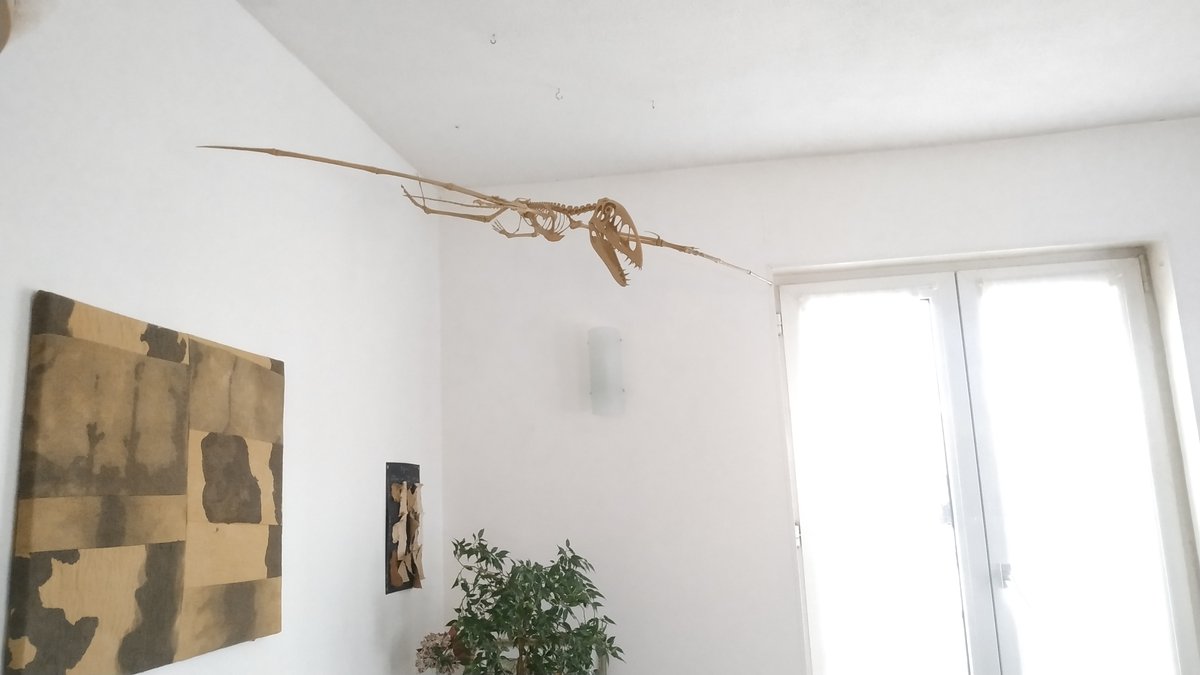
The physical dimensions of Pelagornis sandersi are nothing short of staggering, with its most defining feature being an immense wingspan estimated to range between 6.1 and 7.4 meters (20 to 24 feet). To put this into perspective, its wingspan was more than twice that of the modern wandering albatross, which holds the record for the largest wingspan among living birds at roughly 3.5 meters. Despite its massive aerial footprint, Pelagornis sandersi was remarkably lightweight, with body mass estimates ranging from 22 to 40 kilograms (48 to 88 pounds). This extreme lightness was achieved through highly pneumatized, paper-thin bones that minimized weight while maintaining structural integrity. The skull of Pelagornis sandersi was elongated and featured the characteristic "pseudo-teeth" of its family—bony, tooth-like projections extending directly from the jawbones rather than true teeth set in sockets. These serrations were covered in a keratinous sheath in life, creating a formidable trapping mechanism for slippery prey. Its hind limbs were relatively short and stout, suggesting that while it was an unparalleled aeronaut, it was likely clumsy and awkward on land. The wing bones, particularly the humerus, radius, and ulna, were exceptionally elongated and locked into place to form rigid, highly efficient airfoils, indicating a creature built almost entirely for sustained gliding rather than powered, flapping flight.
The paleobiology of Pelagornis sandersi is a fascinating study in extreme adaptation. Given its immense wingspan and relatively low body mass, biomechanical modeling indicates that sustained flapping flight would have been metabolically impossible. Instead, Pelagornis sandersi relied heavily on dynamic soaring, a flight technique utilized by modern albatrosses where the bird extracts energy from wind shear over the ocean waves to stay aloft for days or even weeks without flapping its wings. Its long, slender wings had a very high aspect ratio, maximizing lift and minimizing drag. When it came to feeding, Pelagornis sandersi was a dedicated marine carnivore, primarily a piscivore and teuthivore. It likely hunted by flying low over the water's surface, using its pseudo-toothed beak to snatch soft-bodied prey such as squid, eels, and schooling fish from the upper water column. The bony projections in its beak were perfectly adapted to grip slippery, wriggling prey, preventing them from escaping once caught. Because of its massive wings and short legs, taking off from a flat surface would have been incredibly difficult; it is hypothesized that Pelagornis sandersi required a running start downhill or a strong headwind to become airborne, much like modern hang gliders. Its social behavior remains speculative, but like many modern pelagic seabirds, it may have congregated in large nesting colonies on isolated, predator-free islands or coastal cliffs.
During the time Pelagornis sandersi lived, the Earth was undergoing significant climatic and geographical shifts. The late Oligocene to early Miocene was a period of transition, with global temperatures gradually cooling and the Antarctic ice sheet expanding, which led to fluctuating sea levels and the creation of rich, shallow marine environments. The fossil remains of Pelagornis sandersi were recovered from the Chandler Bridge Formation in South Carolina, an area that, 25 to 28 million years ago, was a vibrant, shallow subtropical ocean teeming with life. This marine ecosystem was highly productive, supporting a diverse food web. Pelagornis sandersi shared its habitat with early baleen whales, primitive toothed whales, sea turtles, and a variety of sharks, including early relatives of the megalodon. As an apex aerial predator, it occupied a unique ecological niche, exploiting the abundant surface-dwelling marine life. The upwelling of nutrient-rich waters in these prehistoric oceans would have provided the necessary food resources to sustain such a massive, metabolically demanding creature. Its ability to traverse vast oceanic distances meant it could follow seasonal migrations of prey, making it a crucial link in the global marine food web of the Cenozoic.
The discovery of Pelagornis sandersi is a classic tale of serendipity in paleontology. The holotype specimen (Charleston Museum specimen ChM PV4768) was unearthed in 1983 during the construction of a new terminal at the Charleston International Airport in South Carolina. Excavation equipment operators noticed the massive bones in the earth and halted work, allowing Albert Sanders, the former curator of natural history at the Charleston Museum, to lead a rapid rescue excavation. The specimen was remarkably well-preserved, consisting of a nearly complete skull, right and left humeri, radius, ulna, and various other postcranial elements. For decades, the fossil remained in the museum's collections, recognized as a giant pelagornithid but not formally described. It wasn't until 2014 that paleontologist Dr. Daniel Ksepka conducted a comprehensive study of the remains, formally naming the species Pelagornis sandersi in honor of Albert Sanders. Ksepka's use of advanced computer modeling to estimate the bird's wingspan and flight capabilities brought the specimen to global attention, cementing its status as a record-breaking discovery and a crown jewel of the Charleston Museum's paleontological collection.
Evolutionarily, Pelagornis sandersi represents the zenith of the Pelagornithidae, a highly successful family of seabirds that originated in the late Paleocene and survived for over 50 million years before going extinct in the Pliocene. The exact placement of pelagornithids within the avian tree of life has been a subject of considerable debate, with various studies linking them to either the Pelecaniformes (pelicans, cormorants) or the Anseriformes (waterfowl). Current consensus leans toward them being a sister group to the Anseriformes, making them giant, highly modified relatives of modern ducks and geese. Pelagornis sandersi is crucial for understanding the evolutionary limits of avian size. It demonstrates that birds could achieve wingspans far exceeding the theoretical maximums previously proposed by aerodynamicists. The eventual extinction of the pelagornithids, including the descendants of P. sandersi, is thought to be linked to changing ocean currents, cooling global climates, and the emergence of new marine predators, such as advanced delphinids and pinnipeds, which may have outcompeted them for food resources or disrupted their nesting grounds.
Despite the comprehensive studies conducted on Pelagornis sandersi, it remains the subject of several scientific debates. The most prominent controversy surrounds the exact measurement of its wingspan. Because the primary feathers are not preserved, the total wingspan must be extrapolated from the lengths of the arm bones and comparisons with modern birds. While Ksepka's estimate of 6.1 to 7.4 meters is widely accepted, some researchers argue for the lower end of this spectrum, suggesting that the primary feathers may not have been as proportionally long as those of modern albatrosses. Another area of debate involves its method of takeoff. While the "running start" hypothesis is popular, some biomechanists argue that its leg muscles were too weak to achieve the necessary speed, proposing instead that it relied entirely on cliff-diving to become airborne. Furthermore, the exact taxonomic affinities of the Pelagornithidae continue to be refined as new molecular and morphological data from extant and extinct birds are analyzed, keeping Pelagornis sandersi at the center of discussions regarding early neoavian evolution.
The fossil record of Pelagornis sandersi is currently limited to the holotype specimen found in South Carolina, making it an incredibly rare find. However, the broader fossil record of the genus Pelagornis and the family Pelagornithidae is global, with specimens recovered from every continent, including Antarctica. The rarity of complete pelagornithid fossils is primarily due to their extremely thin, pneumatized bones, which were highly susceptible to crushing and degradation during the fossilization process. Typically, only fragmented wing bones or isolated jaw segments bearing the distinctive pseudo-teeth are found. The exceptional preservation of the P. sandersi holotype, which includes a delicate, nearly intact skull and articulated wing elements, is attributed to its rapid burial in fine-grained marine sediments. The Chandler Bridge Formation, where it was discovered, is renowned for its exceptional preservation of marine vertebrates, providing a crucial window into the marine life of the Oligocene epoch.
In popular culture, Pelagornis sandersi has captured the public imagination as the "largest flying bird of all time," frequently appearing in science documentaries, paleontology books, and media articles discussing prehistoric giants. It dethroned Argentavis from the top spot in the public consciousness regarding wingspan, though Argentavis remains the heaviest flying bird. The holotype specimen is proudly displayed at the Charleston Museum, where it serves as a major educational tool, illustrating concepts of aerodynamics, evolutionary gigantism, and prehistoric marine ecology. Its striking appearance, characterized by its massive wings and toothy grin, makes it a favorite subject for paleoartists, ensuring that Pelagornis sandersi remains a legendary figure in the pantheon of prehistoric life.
Classification
Time Period
Discovery
Location
South Carolina, USA
Formation
Chandler Bridge Formation
Frequently Asked Questions
What is Pelagornis?
Pelagornis sandersi is an extinct species of flying bird that lived during the late Oligocene to early Miocene epochs, approximately 25 to 28 million years ago. Belonging to the extinct family Pelagornithidae, commonly known as the pseudo-toothed birds, this remarkable organism is widely celebrated ...
When did Pelagornis live?
Pelagornis lived during the neogene period of the cenozoic era approximately 28-25 million years ago.
Where was Pelagornis discovered?
Fossils of Pelagornis were discovered in South Carolina, USA in the Chandler Bridge Formation.
What did Pelagornis eat?
Pelagornis was a carnivore. It lived in aerial, marine habitats.
What type of fossil is Pelagornis?
Pelagornis is preserved as a body fossil. The preservation quality is good.
Related Specimens
From the cenozoic era · body fossils