Tuojiangosaurus
Tuojiangosaurus multispinus
Image: Image sourced via web search (Fair use / Educational)
About Tuojiangosaurus
Tuojiangosaurus multispinus, meaning "Tuo River lizard with many spines," is a genus of herbivorous stegosaurid dinosaur that lived during the Late Jurassic period, approximately 163 to 155 million years ago, in what is now the Sichuan Province of China. As one of the best-preserved and most completely understood stegosaurs discovered in Asia, it holds immense significance in the field of paleontology. Its discovery provided crucial evidence regarding the geographic distribution and evolutionary radiation of thyreophoran dinosaurs across the supercontinent of Pangaea before its complete fragmentation. Tuojiangosaurus stands as a testament to the rich dinosaurian ecosystems of East Asia during the Mesozoic era, offering a vital comparative counterpart to the more famous North American stegosaurs like Stegosaurus.
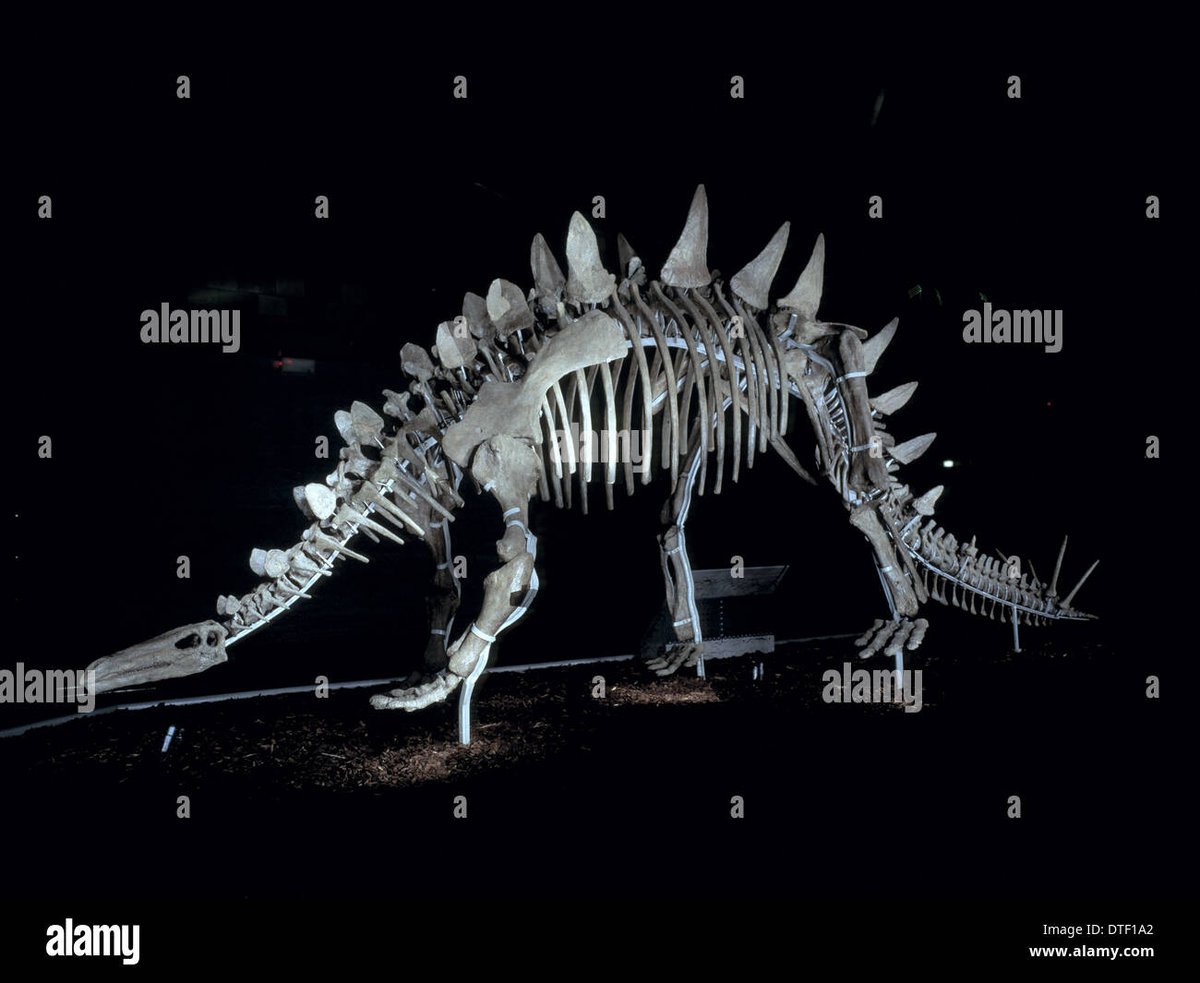
In terms of physical dimensions, Tuojiangosaurus was a large, heavily built quadrupedal herbivore. Paleontologists estimate its total body length to have been approximately 7 meters (about 23 feet), which translates to roughly 700 centimeters, and its weight is estimated to have been between 2.5 and 3 metric tons. To put this into perspective, Tuojiangosaurus was roughly the size of a modern Asian elephant, albeit much lower to the ground and significantly longer due to its extensive tail and neck. The most distinctive anatomical feature of Tuojiangosaurus is its impressive array of dorsal plates and spikes. Unlike the broad, leaf-shaped plates of its North American cousin Stegosaurus, Tuojiangosaurus possessed tall, narrow, and highly pointed plates that ran in two alternating rows along its back, beginning just behind the head and extending to the hips. There were approximately fifteen pairs of these modified osteoderms. Over the hips and down the tail, these plates transitioned into robust, conical spikes, culminating in a formidable weapon at the end of the tail known as a thagomizer. This thagomizer consisted of two pairs of large, outward-pointing spikes projecting at an angle of approximately 45 degrees. The skull of Tuojiangosaurus was characteristically small, elongated, and low, housing a tiny brain cavity relative to its massive body size. Its jaws were lined with small, peg-like, triangular teeth adapted for stripping foliage, and the front of the snout featured a toothless beak. The forelimbs were significantly shorter than the hindlimbs, giving the animal a pronounced downward slope from the hips to the head, which kept its feeding apparatus close to the ground. The robust skeletal structure, particularly the massive limb bones and broad pelvis, indicates an animal built for stability and defense rather than speed.
The paleobiology of Tuojiangosaurus reveals an animal highly specialized for low-level browsing. Given its short neck and the downward-sloping posture dictated by its limb proportions, Tuojiangosaurus primarily fed on vegetation located within a meter or two of the ground. Its diet likely consisted of ferns, cycads, horsetails, and low-growing bennettitaleans, which were abundant in the Late Jurassic understory. The small, triangular teeth were not suited for chewing or grinding tough plant material; instead, Tuojiangosaurus likely stripped leaves and swallowed them whole. Digestion was almost certainly facilitated by a massive hindgut, where bacterial fermentation broke down the fibrous plant matter, a process requiring a large, barrel-shaped ribcage to house the extensive digestive tract. Some researchers have suggested the possibility of gastroliths (stomach stones) aiding in this process, though direct fossil evidence for this in Tuojiangosaurus remains sparse. In terms of locomotion, Tuojiangosaurus was an obligate quadruped, moving at a slow, deliberate pace. Its trackways and biomechanical models suggest a maximum walking speed of perhaps 5 to 8 kilometers per hour. When threatened, it could not outrun predators; instead, it relied on its formidable tail spikes for defense. The flexibility of the tail base, combined with massive muscle attachments on the caudal vertebrae, indicates that Tuojiangosaurus could swing its thagomizer with devastating force, capable of puncturing bone and inflicting lethal wounds on attacking theropods. Socially, while some stegosaurs are thought to have been solitary, the discovery of multiple individuals in close proximity in various formations suggests they may have formed loose herds or aggregations, possibly for protection or during seasonal migrations, though definitive evidence of complex social structures remains elusive. Growth patterns inferred from bone histology suggest a relatively slow growth rate compared to some other dinosaur lineages, taking several years to reach full adult size and sexual maturity.
The world in which Tuojiangosaurus lived was vastly different from today. During the Late Jurassic, the Sichuan Basin was part of a massive, low-lying floodplain characterized by a warm, humid, and highly seasonal subtropical climate. The environment was dominated by vast river systems, shallow lakes, and dense forests of conifers, ginkgoes, and seed ferns, interspersed with open fern prairies. This lush, verdant landscape provided an endless supply of food for a diverse array of herbivorous dinosaurs. Tuojiangosaurus shared its habitat with an extraordinary cast of prehistoric creatures, most notably the gigantic mamenchisaurid sauropods like Mamenchisaurus and Omeisaurus, whose incredibly long necks allowed them to exploit the high canopy, thus avoiding direct competition with the low-browsing Tuojiangosaurus. Other herbivores in this ecosystem included small ornithopods and early marginocephalians. However, this environment was also fraught with danger. The apex predators of the Upper Shaximiao Formation were large, formidable metriacanthosaurid theropods such as Yangchuanosaurus and Sinraptor. Yangchuanosaurus, measuring up to 10 meters in length, was a massive carnivore equipped with powerful jaws and serrated teeth, perfectly capable of preying on a subadult or injured Tuojiangosaurus. The evolutionary arms race between these massive predators and heavily armored prey is vividly illustrated by the defensive adaptations of Tuojiangosaurus. Its dorsal plates may have served a dual purpose: making the animal appear larger and more intimidating to predators, and possibly aiding in thermoregulation by absorbing or dissipating heat, although the latter theory is heavily debated among paleontologists today. The ecological web of the Late Jurassic Sichuan Basin was complex, with Tuojiangosaurus occupying a crucial niche as a primary consumer of low-lying vegetation, shaping the understory plant communities through its continuous browsing.
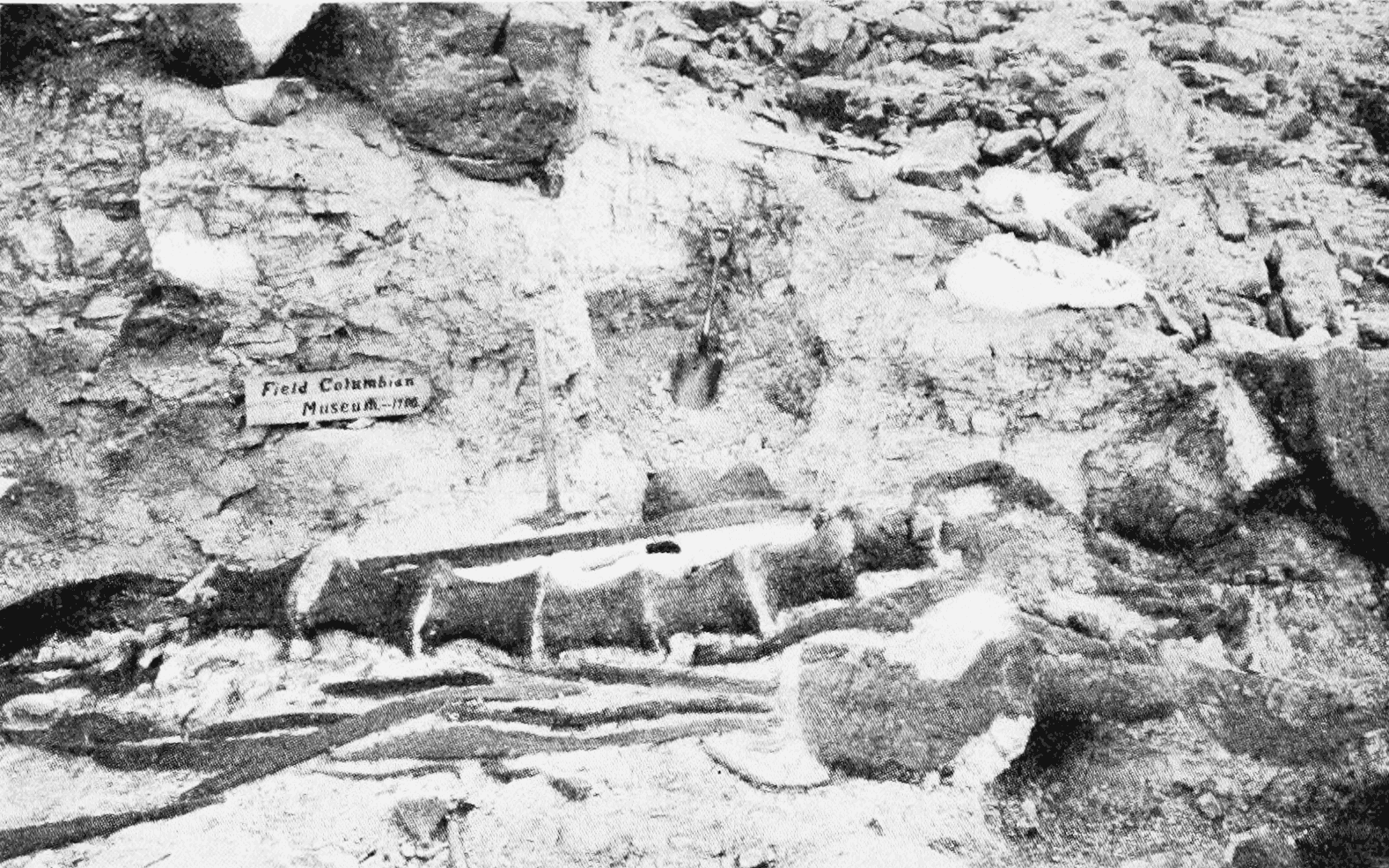
The discovery of Tuojiangosaurus marks a significant milestone in the history of Chinese paleontology. The first fossils of this remarkable dinosaur were unearthed in 1977 during the construction of the Wujiaba Dam in Zigong, Sichuan Province. The excavation was led by the renowned Chinese paleontologist Dong Zhiming, often referred to as the "father of Chinese dinosaur paleontology," along with his colleagues Li Xuanmin, Zhou Shiwu, and Zhang Yihong. The construction workers initially stumbled upon massive fossilized bones embedded in the hard sandstone of the Upper Shaximiao Formation, prompting a rapid and extensive paleontological rescue operation. The team successfully recovered the remains of at least two individuals, including a remarkably complete skeleton that was missing only parts of the skull, the lower jaw, and the distal end of the tail. This holotype specimen, officially designated as CV 209, remains one of the most complete stegosaur skeletons ever found in Asia. In 1977, Dong Zhiming and his team formally described and named the genus and species Tuojiangosaurus multispinus. The generic name, Tuojiangosaurus, is derived from the Tuo River (Tuojiang), a major tributary of the Yangtze River that flows near the discovery site, combined with the Greek word "sauros," meaning lizard. The specific epithet, multispinus, translates to "many-spined" in Latin, a fitting tribute to the numerous tall plates and spikes adorning the animal's back and tail. The discovery of Tuojiangosaurus was a watershed moment, as it provided the first nearly complete look at an Asian stegosaur, dramatically expanding the known geographic range and morphological diversity of the Stegosauria clade. The fossils were meticulously prepared and eventually mounted for display, becoming a centerpiece of the newly established Zigong Dinosaur Museum, which was built directly over the Dashanpu fossil site to preserve and showcase the incredible paleontological wealth of the region.
Tuojiangosaurus occupies a pivotal position in the evolutionary tree of thyreophoran (armor-bearing) dinosaurs. Taxonomically, it is classified within the family Stegosauridae, a group of quadrupedal ornithischians characterized by their distinctive double rows of dorsal plates and tail spikes. Within this family, Tuojiangosaurus is often considered a relatively basal (primitive) member compared to the highly derived Stegosaurinae, which includes the famous North American Stegosaurus. The anatomical features of Tuojiangosaurus, particularly its tall, narrow, spike-like plates, suggest a close evolutionary relationship with other Asian and European stegosaurs, such as the European Loricatosaurus and the African Kentrosaurus. This morphological similarity across different continents provides compelling evidence for the widespread distribution of stegosaur ancestors across the supercontinent of Pangaea during the Middle to Late Jurassic before the landmasses fully separated. Furthermore, Tuojiangosaurus exhibits several transitional features that help paleontologists trace the evolutionary trajectory of the clade. For instance, its shoulder anatomy and the arrangement of its sacral vertebrae show intermediate states between earlier, more primitive thyreophorans like Huayangosaurus (also found in China, but in older rocks) and the later, more advanced stegosaurids. The presence of Tuojiangosaurus in the Late Jurassic of Asia indicates that stegosaurs underwent a significant evolutionary radiation in this region, adapting to various ecological niches and developing diverse arrays of dermal armor. Studying Tuojiangosaurus allows scientists to better understand the biomechanical constraints and evolutionary pressures that shaped the unique body plans of these iconic dinosaurs, highlighting a successful, albeit ultimately doomed, evolutionary strategy of heavy armor and low-speed browsing that persisted for millions of years before the group's eventual decline and extinction in the Early Cretaceous.
Despite being one of the best-known Asian stegosaurs, Tuojiangosaurus remains the subject of several ongoing scientific debates. One of the primary controversies surrounds the exact arrangement of its dorsal plates. While early reconstructions, guided by Dong Zhiming, depicted the plates arranged in perfectly symmetrical pairs along the back, later biomechanical and comparative studies have suggested that, like Stegosaurus, the plates may have been arranged in an alternating, staggered pattern. This debate is complicated by the fact that the plates were not directly attached to the skeleton but were embedded in the skin, meaning their exact life position is often lost during fossilization. Another area of debate involves the function of these plates. While the defensive function of the tail spikes (thagomizer) is universally accepted, the purpose of the dorsal plates is highly contested. Some researchers argue they were primarily for display and species recognition, while others maintain they played a role in thermoregulation, acting as radiators to dissipate heat. Additionally, the exact phylogenetic placement of Tuojiangosaurus within Stegosauridae is frequently revised as new cladistic analyses are performed and new stegosaur species are discovered, with some studies placing it closer to Kentrosaurus and others suggesting a closer affinity to the North American taxa.
The fossil record of Tuojiangosaurus is relatively robust compared to many other dinosaur genera, primarily due to the exceptional preservation conditions found in the Sichuan Basin. The fossils are exclusively recovered from the Upper Shaximiao Formation, a geological unit composed mainly of purple-red mudstones and sandstones deposited in a fluvial-lacustrine environment. To date, several specimens have been identified, but the most significant remains the holotype (CV 209), which preserves over half of the skeleton, including the vertebral column, the pelvis, the limbs, and a nearly complete set of dermal armor (plates and spikes). The preservation quality is generally considered good to excellent, with the bones often exhibiting fine surface details and minimal distortion. Typically, the most commonly preserved parts are the robust limb bones, the massive vertebrae, and the dense osteoderms, while the fragile skull elements and the delicate bones of the hands and feet are more rarely found. The Dashanpu dinosaur quarry in Zigong, where Tuojiangosaurus was discovered, is one of the most famous and prolific Middle-to-Late Jurassic fossil sites in the world, yielding thousands of dinosaur bones and providing an unparalleled window into the Mesozoic ecosystems of East Asia.
Tuojiangosaurus has made a significant cultural impact, particularly in its native China, where it is celebrated as a national paleontological treasure. The mounted skeleton at the Zigong Dinosaur Museum is a major tourist attraction, drawing millions of visitors and playing a crucial role in public science education. Internationally, Tuojiangosaurus frequently appears in dinosaur encyclopedias, children's books, and documentaries as the quintessential representative of Asian stegosaurs. It has also been featured in various video games and paleontology-themed media, such as the Jurassic World Evolution franchise, where its distinctive spiky appearance makes it a fan favorite. Its discovery helped shift the global focus of paleontology toward the rich fossil beds of China, sparking widespread public fascination with the unique dinosaur faunas of Asia.
Classification
Time Period
Discovery
Location
China
Formation
Upper Shaximiao Formation
Frequently Asked Questions
What is Tuojiangosaurus?
Tuojiangosaurus multispinus, meaning "Tuo River lizard with many spines," is a genus of herbivorous stegosaurid dinosaur that lived during the Late Jurassic period, approximately 163 to 155 million years ago, in what is now the Sichuan Province of China. As one of the best-preserved and most complet...
When did Tuojiangosaurus live?
Tuojiangosaurus lived during the jurassic period of the mesozoic era approximately 163-155 million years ago.
Where was Tuojiangosaurus discovered?
Fossils of Tuojiangosaurus were discovered in China in the Upper Shaximiao Formation.
What did Tuojiangosaurus eat?
Tuojiangosaurus was a herbivore. It lived in terrestrial habitats.
What type of fossil is Tuojiangosaurus?
Tuojiangosaurus is preserved as a body fossil. The preservation quality is good.
Related Specimens
From the mesozoic era · body fossils