Probainognathus
Probainognathus jenseni
Image: Image sourced via web search (Fair use / Educational)
About Probainognathus
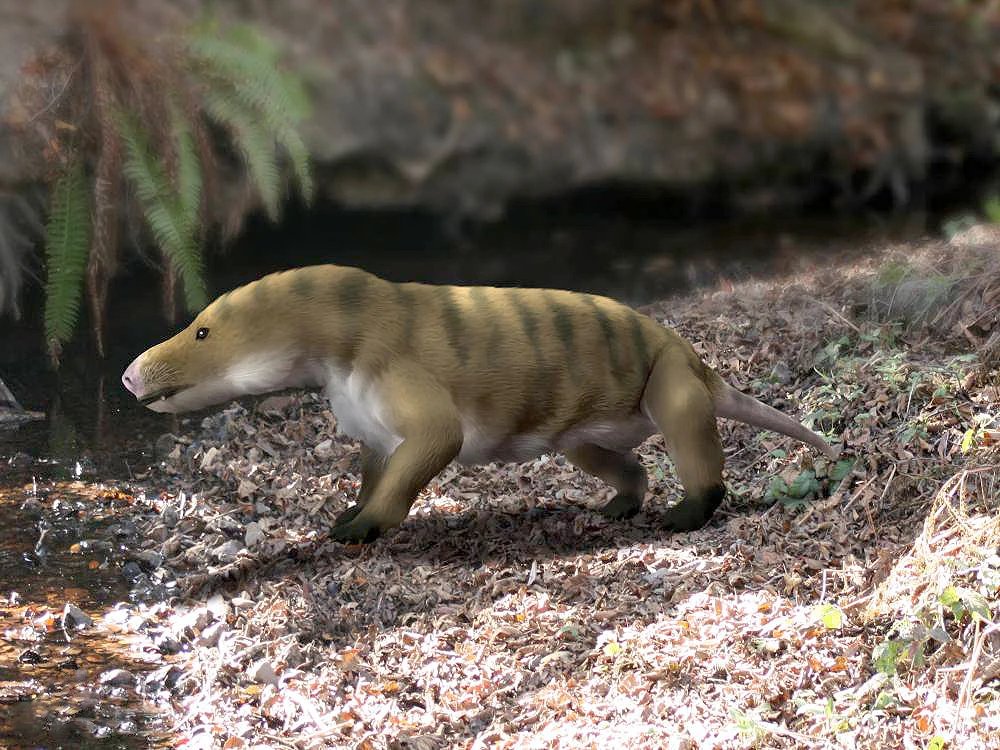
Probainognathus jenseni represents a pivotal genus of non-mammalian cynodont that thrived during the Late Triassic period, approximately 235 to 225 million years ago. This small, superficially shrew-like creature inhabited the ancient supercontinent of Gondwana, with its fossil remains being unearthed in what is now modern-day Argentina. Its profound significance in paleontology stems from its remarkably close relationship to the direct ancestors of all mammals, showcasing a mosaic of reptilian and mammalian anatomical features that illuminate the gradual evolutionary transition from early synapsids to the first true mammals.
Probainognathus was a diminutive animal, with an estimated total body length of only about 10 centimeters (approximately 4 inches), making it comparable in size to a modern mouse or shrew. Its estimated weight would have been minimal, likely only a few dozen grams. Despite its small stature, its skeleton reveals a suite of advanced, mammal-like characteristics. The skull, which is the most well-studied part of its anatomy, is particularly revealing. It possessed a relatively large braincase compared to more primitive cynodonts, suggesting enhanced cognitive and sensory capabilities. A key feature was the presence of a double jaw joint, a classic transitional state in mammalian evolution. It retained the ancestral reptilian jaw joint between the quadrate and articular bones, but simultaneously possessed a newly forming, secondary joint between the dentary and squamosal bones—the very same joint that constitutes the sole jaw articulation in all modern mammals. This dual-joint system provided a stronger, more efficient bite. The dentition was heterodont, meaning it had differentiated teeth for different functions: small incisors at the front for nipping, prominent canines for piercing, and complex, multi-cusped postcanine teeth (cheek teeth) for shearing and crushing. This dental complexity allowed for more thorough food processing before swallowing, a hallmark of mammalian digestion. The postcranial skeleton, though less completely known, indicates a semi-sprawling to more erect posture, an improvement over the fully sprawling gait of its ancestors, allowing for greater agility and speed. Inferences about soft tissue suggest it likely had whiskers and fur, adaptations for insulation and sensory perception consistent with an active, possibly endothermic (warm-blooded) lifestyle.
Based on its sharp, differentiated teeth, Probainognathus was an active carnivore, likely preying on small invertebrates such as insects, worms, and possibly very small vertebrates like lizards or the young of other synapsids. Its complex postcanine teeth were well-suited for shearing the tough exoskeletons of arthropods. The advanced jaw structure and powerful adductor muscles, indicated by a large temporal fenestra, would have delivered a precise and forceful bite. Its relatively agile, semi-erect locomotion would have made it a nimble hunter, capable of pursuing prey through the undergrowth of its Triassic environment. There is no direct fossil evidence for social behavior, but like many small, active predators today, it may have been primarily solitary or lived in small family groups. Growth patterns are not well understood, but like other advanced cynodonts, it likely grew relatively quickly to maturity. The combination of inferred fur, complex dentition, and agile posture strongly suggests a high metabolic rate, pointing towards endothermy or near-endothermy. This would have enabled a more active lifestyle, including potential nocturnal or crepuscular (active at dawn and dusk) activity to avoid larger predators and the heat of the day, a behavioral trait that would become characteristic of early mammals.
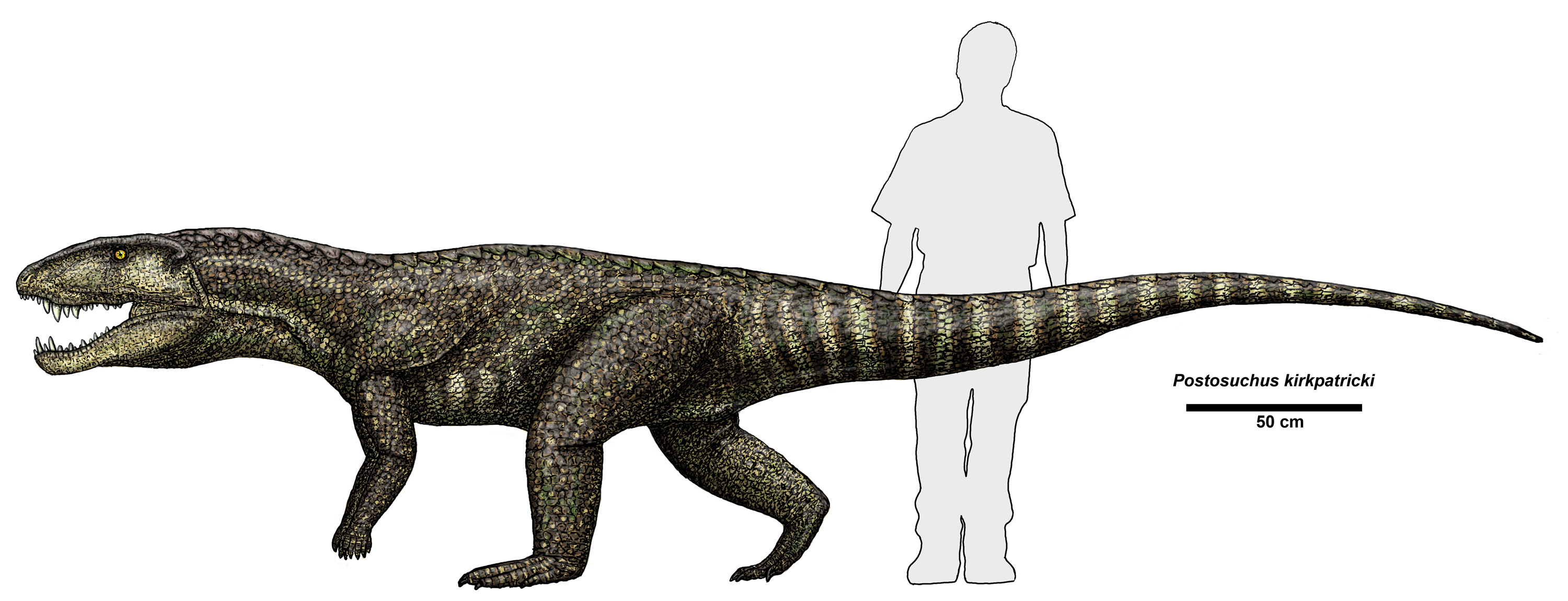
Probainognathus lived in the Chañares Formation of Argentina, a region that during the Late Triassic was part of the vast supercontinent Gondwana. The climate was seasonally arid to semi-arid, characterized by distinct wet and dry seasons. The environment was a floodplain or riverine system, with braided streams and lakes interspersed with vegetated areas dominated by ferns, seed ferns, and conifers. This ecosystem supported a diverse and dynamic fauna. Probainognathus occupied a niche as a small insectivore/carnivore, likely near the bottom of the vertebrate food web. It shared its world with a variety of other creatures, including formidable predators and large herbivores. Co-existing fauna included other cynodonts like Massetognathus, a larger herbivore, and Chiniquodon, a carnivorous contemporary. The apex predators of this environment were large archosaurs, such as the rauisuchian Saurosuchus, a fearsome quadrupedal carnivore that would have posed a significant threat to smaller animals like Probainognathus. The herbivorous rhynchosaurs and large dicynodonts, such as Dinodontosaurus, were also prominent members of the community. Probainognathus would have competed for insectivorous prey with other small tetrapods and likely served as a food source for a variety of larger predators, navigating a complex and dangerous world where survival depended on speed, stealth, and sensory acuity.
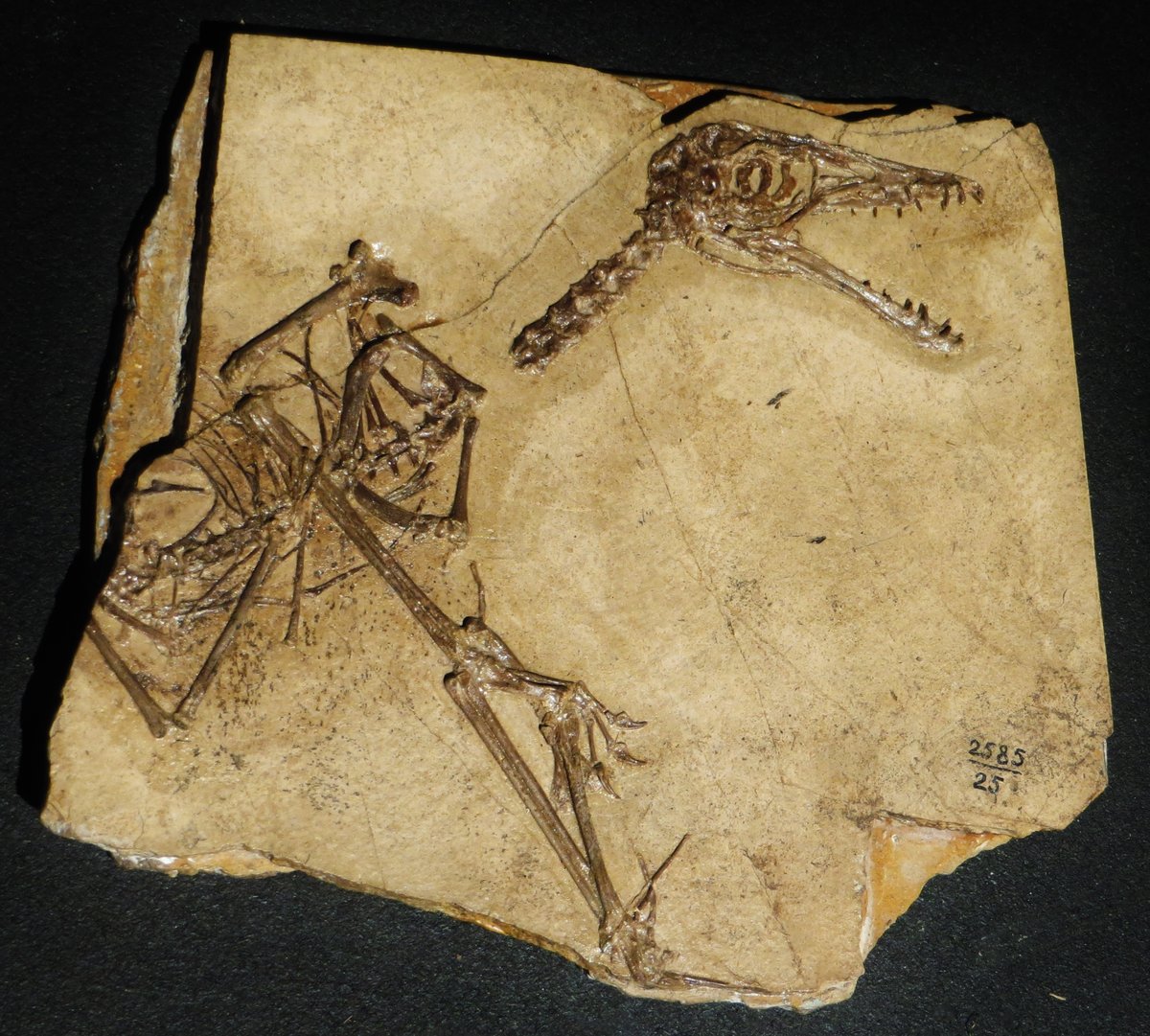
The discovery of Probainognathus is credited to the renowned paleontologist Alfred Sherwood Romer, a leading figure in 20th-century vertebrate paleontology. During expeditions to the Ischigualasto-Villa Unión Basin in northwestern Argentina in the late 1950s and 1960s, Romer and his team from Harvard University's Museum of Comparative Zoology uncovered a wealth of Triassic fossils. The key fossil locality was the Chañares Formation, known for its exceptional preservation of terrestrial vertebrates. In 1970, Romer formally described the genus and the type species, Probainognathus jenseni. The genus name translates to "progressive jaw," a direct reference to its advanced, mammal-like jaw articulation. The species name, jenseni, honors Dr. James A. Jensen, a skilled fossil preparator and collector who was instrumental in the fieldwork that led to its discovery. The holotype specimen (MCZ 3773) consists of a well-preserved skull and partial mandible, which provided the crucial anatomical details for Romer's initial description. Subsequent discoveries have provided more material, including additional skulls and some postcranial elements, solidifying our understanding of this important transitional fossil. These finds have cemented the Chañares Formation as a critical window into the evolution of mammals during the Triassic.
Probainognathus holds a place of immense evolutionary significance as a member of the Probainognathia, a clade of cynodonts that includes mammals as its only living descendants. It is one of the best examples of a transitional fossil, beautifully illustrating the stepwise acquisition of mammalian traits. Its most celebrated feature is the double jaw joint. This anatomical arrangement is the perfect intermediate stage between the ancestral reptilian condition (quadrate-articular joint) and the derived mammalian condition (dentary-squamosal joint). In the evolutionary sequence, the original jaw bones, the articular and quadrate, were shrinking and becoming less involved in jaw mechanics, while the dentary bone of the lower jaw was expanding backward to make contact with the squamosal bone of the skull. In Probainognathus, both joints were functional. Over millions of years, the quadrate and articular would completely detach from the jaw, migrate into the middle ear, and become the incus and malleus (anvil and stirrup) ear ossicles, respectively—a key diagnostic feature of all mammals. Probainognathus captures this process mid-stream, providing powerful evidence for this remarkable evolutionary transformation. Its complex, multi-cusped teeth, enlarged braincase, and the beginnings of a secondary palate also foreshadow the mammalian condition, highlighting how a suite of interconnected traits evolved together to pave the way for the first true mammals.
While the overall position of Probainognathus as a close relative of mammals is firmly established, some scientific debates persist regarding the finer details of its relationships. Its exact placement within the broader group of Eucynodontia has been subject to revision as new fossils are found and new analytical techniques are applied. For a time, it was considered a member of the family Chiniquodontidae, but further analysis led to the establishment of its own family, Probainognathidae. The precise branching order between probainognathians, tritylodontids, and the earliest mammaliaforms is a topic of ongoing phylogenetic research. Another area of discussion revolves around its physiology. While the evidence strongly points towards endothermy, the exact metabolic rate and whether it was fully warm-blooded like modern mammals or possessed an intermediate metabolic state is difficult to determine definitively from fossils alone. New analytical methods, such as bone histology and isotopic analysis, may one day provide clearer answers to these questions about its life history and physiology, further refining our understanding of this crucial mammalian ancestor.
The fossil record of Probainognathus is geographically restricted but locally significant. All known specimens have been recovered from the Chañares Formation in the La Rioja Province of Argentina. This geological unit is famous for its mass mortality assemblages, where numerous skeletons of different species are found together, believed to have been victims of sudden events like volcanic ash falls or flash floods. These conditions led to rapid burial and excellent preservation. Several well-preserved skulls of Probainognathus are known, which is fortunate as the skull contains the most diagnostically important features for understanding its evolutionary position. The holotype specimen, housed at the Museum of Comparative Zoology at Harvard, remains a cornerstone of its study. While postcranial remains are rarer and more fragmentary, the available material has been sufficient to reconstruct its general body plan and posture. The concentration of fossils in this specific formation makes it a key site for studying the rise of mammal ancestors in the Late Triassic, with Probainognathus being one of its most important inhabitants.
Despite its immense scientific importance, Probainognathus is not a widely recognized name in popular culture, unlike dinosaurs such as Tyrannosaurus or Triceratops. Its small size and transitional, non-dinosaurian nature mean it is rarely featured in blockbuster films or television documentaries. However, it holds a vital place in paleontological education and museum exhibits focused on the evolution of mammals. Casts of its skull, particularly those highlighting the unique double jaw joint, are often used in university-level biology and paleontology courses as a prime example of a transitional fossil. Major natural history museums, such as the Museum of Comparative Zoology at Harvard University and the Museo de La Plata in Argentina, hold and display important specimens, ensuring its story is told to those interested in the deep history of our own lineage. For students of evolution, Probainognathus is a celebrated icon, a tangible link in the great chain of life connecting ancient reptiles to the first mammals.
Classification
Time Period
Discovery
Location
Argentina
Formation
Chañares Formation
Frequently Asked Questions
What is Probainognathus?
Probainognathus jenseni represents a pivotal genus of non-mammalian cynodont that thrived during the Late Triassic period, approximately 235 to 225 million years ago. This small, superficially shrew-like creature inhabited the ancient supercontinent of Gondwana, with its fossil remains being unearth...
When did Probainognathus live?
Probainognathus lived during the triassic period of the mesozoic era approximately 235-225 million years ago.
Where was Probainognathus discovered?
Fossils of Probainognathus were discovered in Argentina in the Chañares Formation.
What did Probainognathus eat?
Probainognathus was a carnivore. It lived in terrestrial habitats.
What type of fossil is Probainognathus?
Probainognathus is preserved as a body fossil. The preservation quality is good.
Related Specimens
From the mesozoic era · body fossils